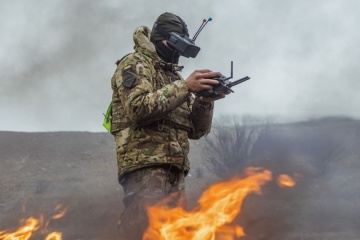
Ukraine’s forces stop Russian advance on Lyman front using night FPV drones
Pilots from the SIGNUM battalion disrupted a Russian military advance on the Lyman front using night-time FPV drones.
 Founded in 1918
Sunday, 19 April 2026, 06:30
18 February 2026
Pilots from the SIGNUM battalion disrupted a Russian military advance on the Lyman front using night-time FPV drones.
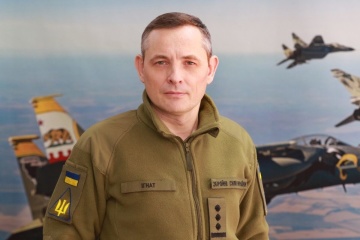
Yuriy Ignat, head of the communications department of the Air Force Command of the Armed Forces of Ukraine, has denied reports by a French outlet claiming that foreign pilots are involved in protecting Ukraine’s airspace.

The counterintelligence unit of the Security Service of Ukraine (SBU) has detained a boiler house security guard who was directing Russian strikes on Sloviansk in the Donetsk region.
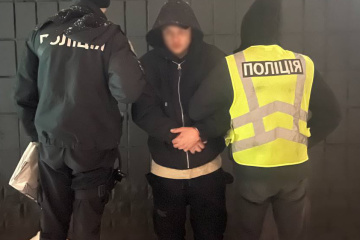
Operatives of the Solomianskyi district police department in Kyiv, together with officers of the criminal investigation department of the Kyiv police headquarters, have detained a man suspected of setting fire to seven vehicles between December 2025 and early January 2026.
17 February 2026
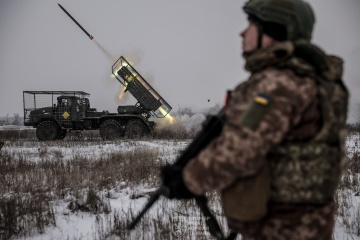
A total of 137 combat clashes were recorded along the frontline, with Russian forces carrying out nearly 30 attacks against Ukrainian Defense Forces positions in the Huliaipole sector.

In January, the work of the Engineering Troops of the Support Forces and engineering units of other branches of the Armed Forces of Ukraine, including the Ground Forces, Unmanned Systems Forces, and Air Assault Forces, resulted in the elimination of nearly 700 invaders and the destruction of 110 weapons systems and pieces of military equipment.
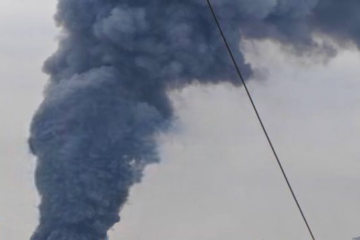
Russian forces carried out a drone attack on Zaporizhzhia, damaging residential buildings and killing a woman who sustained injuries.
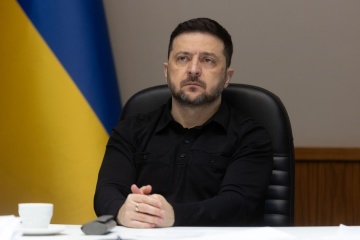
The Ukrainian people would reject a peace agreement at a referendum if it envisaged “handing over” Donbas to Russia. However, they would be more likely to support freezing the current front line.

More than 80% of all military support for Ukraine is currently coordinated and delivered through NATO.
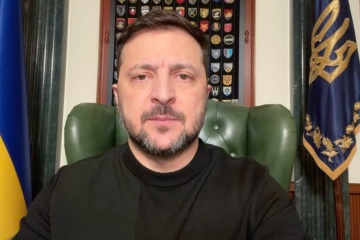
Ukraine is serious about ending the war, while Russia carried out a massive attack even on the day talks were held in Geneva.
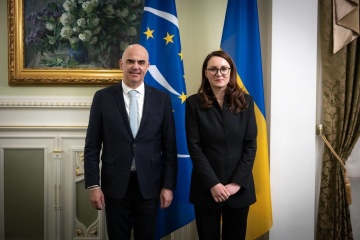
Prime Minister of Ukraine Yuliia Svyrydenko and Secretary General of the Council of Europe Alain Berset have discussed the opening of a representative office of the Council of Europe Development Bank in Ukraine.

The first day of trilateral negotiations in Geneva, involving representatives from Ukraine, the United States, and Russia, has concluded. Political and military working groups are set to resume their sessions tomorrow morning.

More than 15,000 civilians have been killed and over 41,000 injured in Ukraine since the beginning of Russia's full-scale invasion.
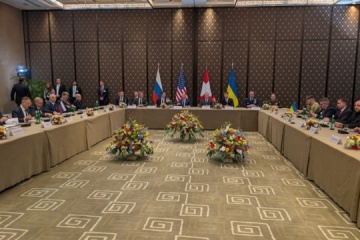
Advisors on security issues from European leaders have also arrived in Geneva, where trilateral talks between the delegations of Ukraine, the United States, and Russia are taking place today. However, they are not directly present in the negotiation room.

Ukraine Could Become Japan’s Most Important Defense Partner
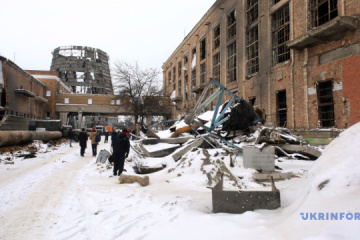
The regions of Ukraine most vulnerable to Russian strikes are constantly changing, as Russia acts in a concentrated manner, selecting specific directions for massive combined attacks.
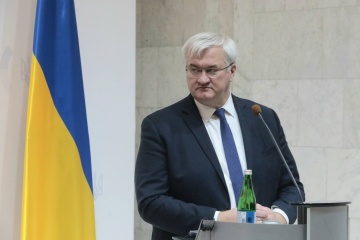
Russia is deliberately striking American businesses in Ukraine, with 47% of U.S. companies operating in the country affected since the start of the full-scale war.

Ukraine's Deputy Energy Minister Anatolii Kutsevol, together with U.S. Senators Richard Blumenthal and Sheldon Whitehouse, visited a combined heat and power (CHP) plant in Kyiv that was damaged by Russian attacks.
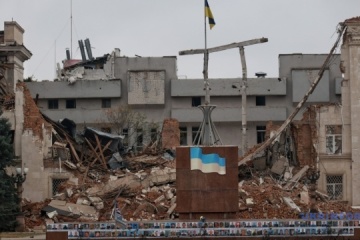
Russian forces are using cluster munitions against residential neighborhoods in Kherson and remotely planting mines in city streets and coastal areas using drones, primarily harming civilians.
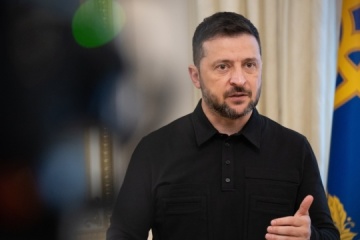
Ukrainian President Volodymyr Zelensky has said that the number of children returned from under Russian control as part of the Bring Kids Back UA initiative has reached 2,000.
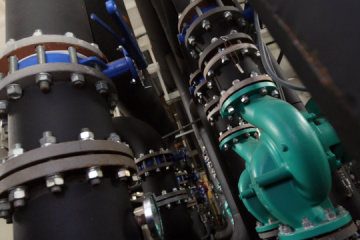
In Kyiv, heat has been restored to all 2,600 buildings that were without heating following the February 12 attack.
In the Kherson community, critical infrastructure has been damaged due to shelling, causing power outages in the Dniprovskyi district.
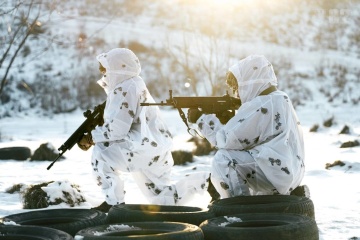
Since the beginning of the day, there have been 53 combat engagements between the Defense Forces of Ukraine and Russian troops, with the enemy showing the greatest activity in the Huliaipole and Pokrovsk sectors.
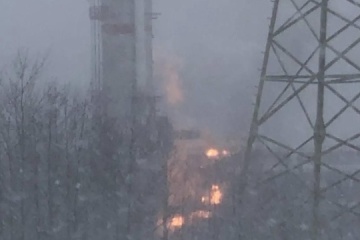
On the night of February 17, drones operated by the Alpha Special Operations Center of the Security Service of Ukraine (SSU) hit one of the largest producers of explosives in Russia and Europe – Metafrax Chemicals.
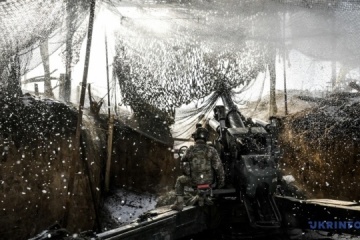
In the Kupiansk sector, Ukrainian troops are maintaining designated defensive lines despite attempts by Russian invaders to improve their tactical position and advance, mostly on foot, taking advantage of difficult weather conditions and terrain features.
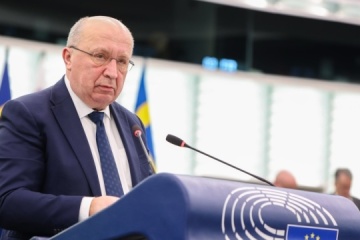
While European soldiers are filling out permit paperwork, Russians will seize the Suwalki gap, warned European Commissioner for Defence and Space Andrius Kubilius, speaking about the need to simplify the movement of troops and military equipment across the borders of EU member states.

The EU High Representative for Foreign Affairs and Security Policy, Kaja Kallas, circulated a document among EU member states outlining the concessions Russia must make during diplomatic negotiations with Ukraine, mediated by the United States.
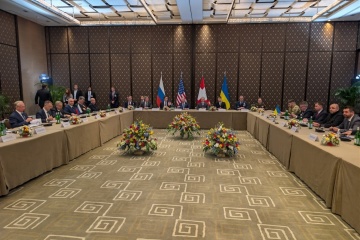
In Geneva, a new round of talks in a trilateral format involving representatives of Ukraine, the United States, and Russia is getting underway. The Ukrainian delegation has work parameters approved by the President of Ukraine and a clear mandate.

On Tuesday, February 17, the Latvian government decided to allocate EUR 10 million to support Ukraine under the NATO initiative called PURL.
Japanese society has come to better understand and sympathize with Ukraine over the four years of Russia’s full-scale aggression. However, deeply rooted pacifism and the perception of military aid as a “tool for killing” continue to restrain broader support for Kyiv’s defense needs.