Russia becomes market of forced substitutes for foreign companies, FISU says
According to Ukrinform, the Foreign Intelligence Service of Ukraine reported this.
“What seemed like a stable market with a wide selection of international brands just a few years ago has now turned into a landscape of forced substitutes, parallel imports, and rising prices. And, judging by recent surveys, a significant portion of the population openly views this as a loss,” the FISU noted.
According to a study by the Group 7/89 association, 56% of Russian citizens surveyed would like to see foreign companies return to the market. The greatest demand is for automotive brands, the film industry, software developers, and manufacturers of everyday consumer goods.
The technology and industrial sectors were hit the hardest. Following the departure of giants such as Microsoft, Oracle, Adobe, Autodesk, and others, the Russian software market found itself in an artificial state of isolation. This has led to higher prices, reduced competition, and a situation in which businesses are forced to either adapt to a limited selection or seek complex alternatives. As a result, import substitution has become a forced replacement with no alternatives as good as global products.
The situation with everyday consumer goods is no less telling. Food, cosmetics, and household appliances have become significantly more expensive due to parallel imports and logistical complications. Some Russians openly admit that, after all, there are “no equivalents” in Russia.
Sociological data also reveal a deep divide within Russian society itself. Young people are the most eager for the return of foreign companies (84% in the 18–29 age group). The older generation, however, is more reserved. At the same time, demand for the return of global businesses is significantly higher in large cities than in small towns and villages, where part of the population is less dependent on international brands.
“The conclusion here is quite obvious: as long as Russia continues to wage war against Ukraine, it will remain isolated, and the market will remain in a state of losses and expensive substitutes,” the Foreign Intelligence Service noted.
As reported by Ukrinform, the number of companies with foreign capital in Russia has decreased by 35%.
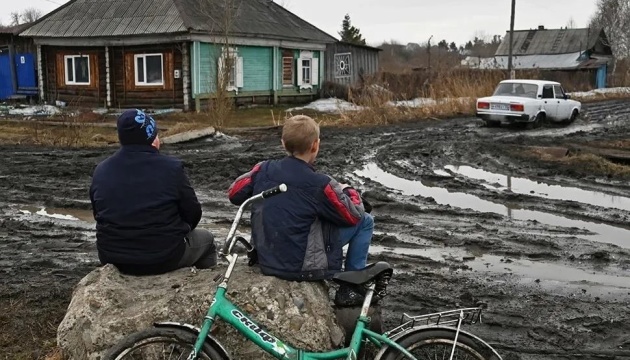
Photo: Foreign Intelligence Service of Ukraine