Austrian expert: Middle East escalation could strengthen Russia in war against Ukraine
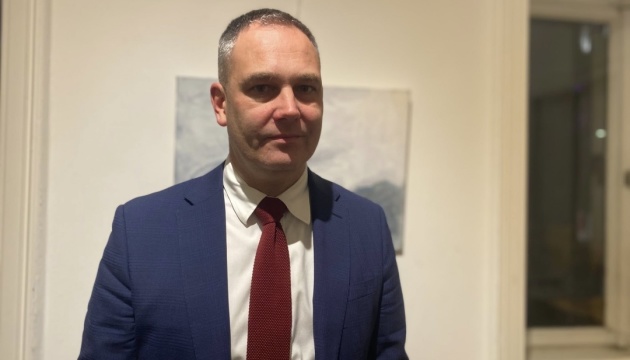
This was stated in an interview with Ukrinform by Austrian military expert and lecturer at the Austrian National Defense Academy Gustav Gressel.
"High oil prices are beneficial to Putin. The first wave of Russian rearmament was financed by high energy prices after the invasion of Iraq in 2003, and, unfortunately, it was not possible to finally say goodbye to this era of high energy prices. Putin is already beginning to actively play the energy card. China and India used to get most of their oil from the Persian Gulf, and now both countries will turn to Russia. This is not a good development," Gressel commented on the question of how the escalation in the Middle East will affect Russia's war against Ukraine.
According to him, everything “will largely depend on how long it lasts.”
The expert also warned of possible problems with the supply of Patriot air defense systems and missiles for them.
"In addition, the supply of Patriot systems will become more difficult. First, some of the missiles have already been used. Second, with the ongoing instability in the Persian Gulf, there'll be growing long-term demand for these systems from countries in the region. This could be a problem next military winter. Neither the US can ramp up production capacity for Patriot fast enough, nor can the Europeans for Aster-30," he said.
According to Gressel, Ukraine has not yet made much progress with the FP-5, FP-7, and Grom-2 systems. "In general, to survive the next military winter, Ukraine needs to destroy about a quarter of Russian missiles before they are launched. And this percentage is likely to increase. This is a problem, firstly, because of the limited number of strike assets, and secondly, because of the speed of target detection. It is not easy to catch an Iskander launcher," he said.
Commenting on the prospects for the situation around Iran, the Austrian military expert expressed his conviction that it is impossible to overthrow the Iranian regime with air strikes alone – a ground military presence is necessary for this.
"The political goals of the US are not clearly defined. For Israel, it's simple: it wants to weaken Iran's military potential as much as possible so that Iran ceases to pose a threat to Israel for a long time. But what exactly the US is aiming for is less clear. It is impossible to overthrow the mullahs' regime without ground troops. It is also impossible to fully verify the abandonment of the nuclear program without at least a temporary presence on the ground. But who will provide it? For how long? And will there be any at all?" Gressel noted.
The expert also drew attention to the inconsistency of Iran's strategy in response to the strikes by the US and Israel. “Iran's attack on US bases in the Persian Gulf was expected. But strikes on British and French bases in Cyprus and the Emirates, on Turkey, Azerbaijan, Oman? Oman was a patient mediator, Turkey also remained neutral,” he said.
According to Gressel, such actions by Tehran actually strengthen international support for Washington's operation. “In this way, Iran is actually rallying even the initial critics of the US-Israeli operation around Washington's position,” he added.
As reported by Ukrinform, attacks by Israel and the US and bombings by Iran have led to the precautionary closure of oil and gas facilities across the Middle East. In particular, several companies in Iraqi Kurdistan have suspended production at their fields. The Israeli government has instructed Chevron to temporarily close the giant Leviathan gas field.