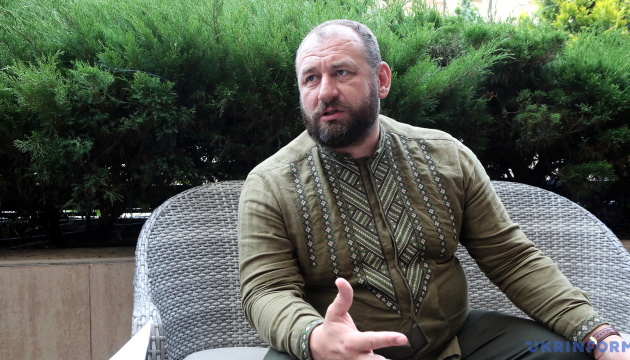
Ambassador to Hungary: Ukraine must maintain close communication with Orbán’s supporters
This was stated by Ukraine’s Ambassador to Hungary, Fedir Shandor, during an online appearance at the expert discussion “Russian Influence Operations During Election Campaigns in EU and Eastern Partnership Countries in 2024–2025: Lessons for Ukraine,” according to a Ukrinform correspondent.
Shandor noted that in the context of Ukraine’s current communication with Hungarian society, the results of the recent parliamentary elections must be taken into account. He recalled that over 3 million Hungarians voted for the “Tisza” party, which, as a percentage of the country’s population, is an “extremely large” figure.
“But I want to mention another figure: 2.2 million voters cast their ballots for the Fidesz party and over 300,000 for the ultra-nationalists of the Mi Hazánk party… What does this tell us? That 2.5 million voters are the people we need to work with, because they haven’t disappeared; for some reason they bought into these narratives—this is Russian disinformation—and for some reason decided to vote based on the messages spread on Facebook, which is the number one social media platform in Hungary,” said the Ukrainian ambassador.
He added that Ukraine needs to communicate closely with this group of “Hungarian voters, or our neighbors.”
According to the diplomat, the main reason for the defeat of Viktor Orbán’s ruling party was that voters had grown tired of the narrative that Ukraine is “to blame” for any Hungarian problems—whether related to utilities, education, healthcare, or roads.
Shandor noted that very rapid changes and new intergovernmental communication have now begun at the highest level between Ukraine and Hungary. And at the level of public relations between the countries, in his opinion, one must take into account, in particular, the fact that Hungary has hosted the largest number of Ukrainian children for vacation—5,443 children, mostly from military families. In addition, Ukraine and Hungary have the largest number of sister cities.
“If a Hungarian mayor is friends with a Ukrainian mayor, no one will be able to push Russian disinformation on him… If Ukrainian and Hungarian children play sports together, participate in cultural events, and spend time at camps, that’s communication—no one can impose their views on these people… Only those who have no communication with others are susceptible to disinformation: a person who watches TV and doesn’t interact with real people is easy to manipulate,” the Ukrainian ambassador believes.
In conclusion, he noted that the main way to combat disinformation is through an individual approach.
“The recent elections in Hungary showed that those mayors, even from Fidesz circles, who communicated with Ukrainian mayors were, at the very least, neutral,” the diplomat noted.
As reported by Ukrinform, Ukraine and Hungary began expert-level consultations on Wednesday, May 20.