NATO expert: Orbán hits new low, anti-Ukrainian policy shows weakness
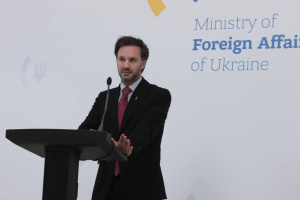
This was stated in an interview with Ukrinform by Gerlinde Niehus, former Deputy Director for Defense and Security Cooperation at NATO and former European Commission official.
"What Hungary is doing remains completely untenable and unacceptable. Hungary had already approved the financial support package back in December, so backtracking on that agreement is clearly a new low. It is another blatant violation of EU principles," the expert commented on the recent EU summit and Hungary’s continued blocking of the loan for Ukraine.
According to her, Orbán’s anti-Ukrainian policy is driven by his election campaign and is a sign of weakness.
“I think he is essentially doing this as part of his election campaign. He knows that he is lagging behind his competitor, Péter Magyar, by around 9-10 percent, according to what I’ve seen. So he is instrumentalizing these arguments in order to rally domestic support. Whether this will work again remains to be seen. In many ways, however, it is a sign of weakness," Niehus stated.
The expert noted that the conclusions of the EU summit, adopted by 25 member states, clearly state that the European Council “expects the first tranche for Ukraine in early April.”
“Whether the 25 heads of state and government can present an alternative solution to meet Ukraine’s financial needs after all – as promised by Commission President von der Leyen at the end of the summit – remains to be seen, as does a possible end to the Hungarian veto following the elections on 12 April,” she noted.
At the same time, Niehus believes that “This episode also shines a spotlight on the credibility and capacity to act of the EU as a whole. Under these circumstances, can the EU still be regarded as a reliable and capable partner for a country under attack such as Ukraine? One thing is certain, however: the incident reveals the Union’s structural paralysis and underscores its urgent need for reform.”
As reported by Ukrinform, in the final document following the European Council meeting, the 25 leaders expressed support for the loan to Ukraine for 2026–2027 and expressed hope that the first disbursement would take place in early April 2026.
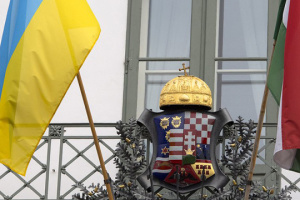
Hungary continues to block the technical launch of the loan, insisting on the resumption of Russian oil transit through Ukrainian territory.
European Commission President Ursula von der Leyen stated that the EU will find ways to disburse the promised EUR 90 billion loan to Ukraine despite Hungary’s resistance.
Photo courtesy of Gerlinda Niehus