
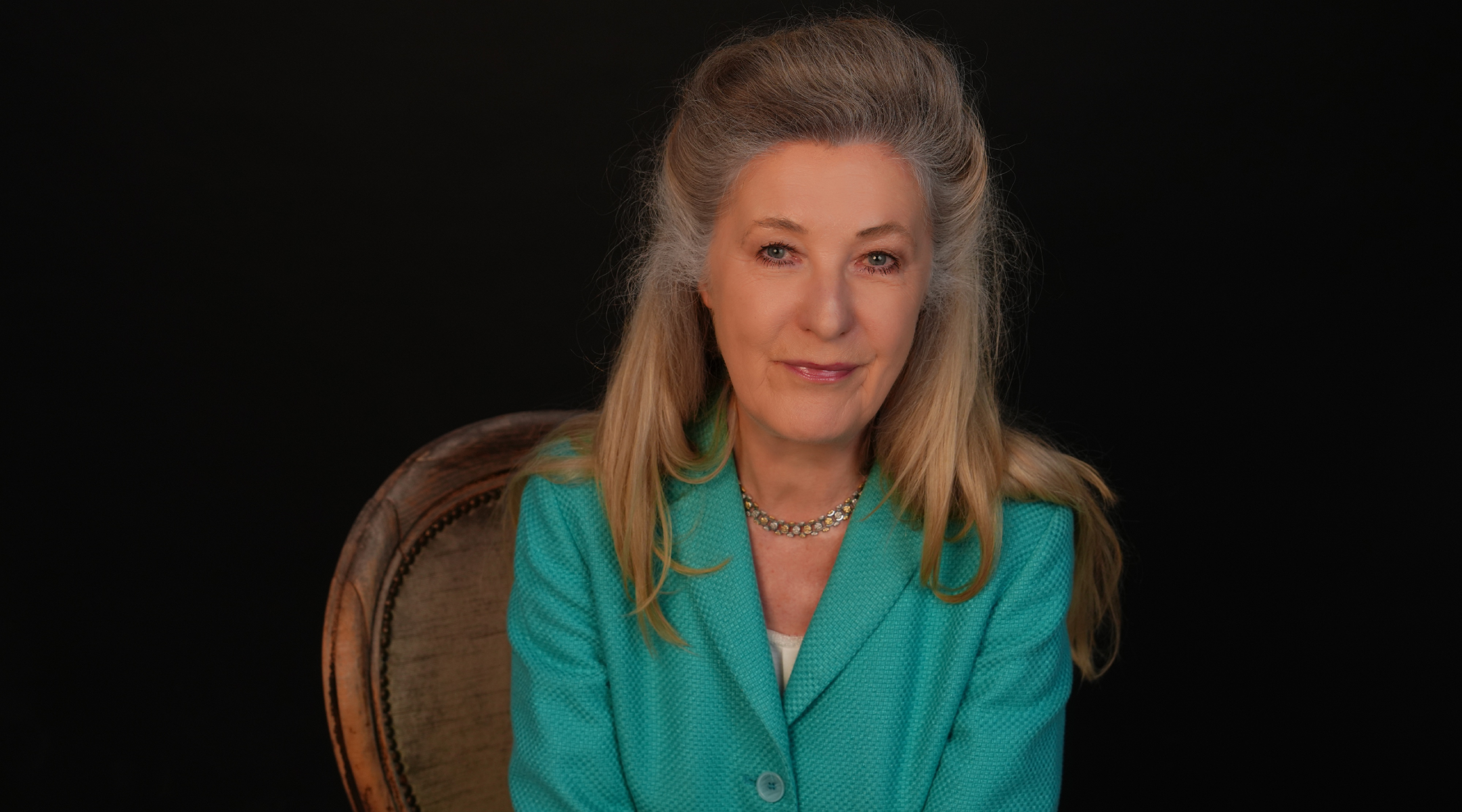
International security expert Gerlinde Niehus has more than 25 years of experience working within NATO structures and the European Commission, where she held various positions. At NATO Headquarters, she was responsible for security cooperation with the Alliance’s partners and also led communications and engagement with civil society. This professional background enables her to comprehensively assess developments in Europe and the broader transatlantic security environment.
An Ukrinform correspondent spoke with Gerlinde Niehus about Ukraine’s prospects for membership in the European Union and NATO, the EU’s systemic problem with Hungary, and the future of the Alliance in the era of Trump, as well as the threat of a Russian attack on NATO territory and Ukraine’s role in European security.
According to the expert, Europeans, “who still lack courage,” underestimate the enormous added value that Ukraine already brings – from its unique experience of modern warfare to a high level of innovation, societal resilience, and national unity. In her view, Ukraine should be seen as an integral element of the future European security system, rather than merely an object of support. Full integration of Ukraine into Europe’s strategic planning, including defense structures, is a key component that is currently missing in broader discussions on the continent’s security.
HUNGARY'S ACTIONS ARE ABSOLUTELY UNACCEPTABLE AND UNJUSTIFIED
- Looking back at the recent EU summit, Hungary maintained its blocking position on key decisions regarding Ukraine – even amidst high pressures from other member states. How do you assess this outcome?
- Well, I think what Hungary is doing remains completely untenable and unacceptable. Hungary had already approved the financial support package back in December, so backtracking on that agreement is clearly a new low. It is another blatant violation of EU principles.
There is a bit of silver lining for Ukraine: The Summit conclusions issued by 25 Member States clearly indicate that the European Council “looks forward to the first disbursement to Ukraine by the beginning of April.“
Whether the 25 heads of state and government can present an alternative solution to meet Ukraine’s financial needs after all – as promised by Commission President von der Leyen at the end of the summit – remains to be seen, as does a possible end to the Hungarian veto following the elections on 12 April.
Ultimately, this episode also shines a spotlight on the credibility and capacity to act of the EU as a whole. Under these circumstances, can the EU still be regarded as a reliable and capable partner for a country under attack such as Ukraine? One thing is certain, however: the incident reveals the Union’s structural paralysis and underscores its urgent need for reform.
- How do you assess Viktor Orbán's position in general, especially given his increasingly anti-Ukrainian rhetoric?
- I think he is essentially doing this as part of his election campaign. He knows that he is lagging behind his competitor, Péter Magyar, by around 9-10 percent, according to what I’ve seen. So he is instrumentalizing these arguments in order to rally domestic support. Whether this will work again remains to be seen. In many ways, however, it is a sign of weakness.

WITH "REVERSE ENLARGEMENT," UKRAINE'S ACCESSION TO THE EU AS EARLY AS 2027 IS REALISTIC
- Hungary has also been blocking the opening of EU accession clusters for Ukraine. What practical options do Ukraine and its partners have to overcome this deadlock, in your opinion?
- I am a strong supporter of the Commission’s proposal of “reverse enlargement.” This would mean agreeing in principle that a country – Ukraine, but also other candidate countries –becomes a member of the EU and is then progressively phased in over time, receiving rights and obligations step by step.
For me, the imperative is to anchor Ukraine and other candidate countries firmly within the European family. If we leave them in limbo, this increases the risk that developments will be derailed by hostile actors such as Russia. Georgia is a case in point! So we need to pursue this geostrategic approach and convince those member states that have been reluctant so far that this is ultimately in their own interest. If we miss this opportunity, the price Europeans will pay collectively will be of historic proportions.
- There are growing discussions about moving from unanimity to qualified majority voting in EU enlargement decisions. Do you see this reform as feasible, and how could it be implemented in practice?
- These discussions have been ongoing for years, if not decades. There is broad agreement in diagnosing the problem: unanimity in foreign, security and defence matters is an obstacle. However, there has been very limited progress in actually introducing qualified majority voting.
This is why I believe that, as part of a broader solution, we need to rely more on Coalitions of the Willing and act outside the institutional frameworks of NATO and the EU – unless these are able to generate reforms overcoming these blockages. But we would lose very valuable time! Coalitions of the Willing can exclude persistent blockers, i.e. Russia’s Trojan horses: to date in particular Hungary and, increasingly, Slovakia.
At least for an interim phase, this would be a more results-oriented solution. Moreover, a Coalition of the Willing could already include Ukraine as one of Europe’s strongest armed forces, tested over years of war against Russia. Europeans have a strong interest in integrating Ukraine into their defence and security planning and structures, and such coalitions provide a practical way to do so.
- How do you assess the current timeline and prospects for Ukraine’s EU membership?
- If we pursue the reverse enlargement approach I mentioned earlier, the timeline could be relatively short. I am aware that your President has mentioned 2027 – if this model is adopted, that could be achievable.
Ukraine has recently received information on the remaining three clusters to be negotiated, and there is still significant work to be done in terms of reforms. It is also important that progress is not derailed domestically, for instance by unstable parliamentary majorities. Ultimately, however, we should be as ambitious as possible and ensure that more reluctant EU member states understand that this is in their best interest.
UKRAINE MUST MOVE ON PARALLEL TRACKS: EU MEMBERSHIP AND INTEGRATION INTO DEFENSE "COALITIONS OF THE WILLING"
- Some argue that EU membership itself could serve as a long-term security guarantee for Ukraine. Do you agree with this assessment?
- EU membership is not the same as NATO membership, but it is the next best option. At the same time, we should consider, as mentioned earlier, building a European defence and security framework based on the Coalition of the Willing, which could complement EU membership.
Such a framework would allow Ukraine to be integrated into European defence planning and the evolving security architecture. It could also enable initiatives such as the long-overdue Sky Shield over uncontested Ukrainian territory. This would provide practical security measures that EU membership alone cannot immediately deliver.
Within the EU, there is still ongoing discussion about how to operationalize Article 42.7 on mutual assistance. So far, in cases of military threats, the EU continues to rely on NATO – and that is where blockages are set to occur. Therefore, Ukraine should pursue a dual-track approach: pushing for EU membership as a strategic objective, while simultaneously integrating into Coalitions of the Willing.
- From a practical standpoint, does Ukraine already meet the key criteria for NATO membership? If political decisions were made, how quickly could Ukraine realistically be integrated into NATO structures?
- At present, there is no political consensus – less than ever. The United States has been reluctant, also under President Biden, to integrate Ukraine into NATO. In fact, this debate has been ongoing at least since the 2008 Bucharest NATO Summit. At the time, in particular Germany and France blocked the then US plan to offer NATO’s Membership Action Plan to both Ukraine and Georgia. The succumbed to pressure from Putin. In that sense, NATO and its member states have missed the opportunity, and Ukraine – and indeed all of us – are now paying the price.
Would Ukraine add significant value to NATO? Absolutely. No European army has comparable experience in high-intensity warfare against Russia. However, the argument from many NATO members remains that a country at war cannot be admitted to NATO.
A COMPREHENSIVE AND SYSTEMATIC "EUROPEANIZATION OF NATO" IS NEEDED
- Does NATO’s collective defence model remain reliable, or does it need to be adapted to current circumstances?
- NATO’s credibility has been significantly undermined by recurrent statements from Donald Trump questioning the commitment to Article 5, NATO’s collective defence clause. He repeated this very recently when he did not get instant European support for his illegal war against Iran.
As a result, NATO’s deterrence and defence credibility has suffered. This makes it all the more important for Europeans to work towards a comprehensive and systematic “Europeanization” of NATO – gradually replacing American forces, capabilities and structures so that NATO evolves into a more European-led organization, together with Canada.
If this does not happen, Europe will remain overly dependent on the United States, which no longer behaves as a reliable partner.
- In this context, the idea of a European Defence Union is gaining more traction. Could this become a real pillar of European security, and how could it be structured within the EU framework?
- For now, much depends on the level of ambition. Current plans for a European Defence Union are relatively limited, focusing on areas such as a single market for defence, joint production, and capability development.
However, the fundamental issue is that the EU treaties still refer to NATO when it comes to collective defence for most member states. At the same time, NATO itself has become less reliable in the current context.
In essence, I believe we need to stop thinking in separate EU and NATO silos. Our overarching vision must be to achieve a high degree of European strategic independence and capacity to act. We can advance this through Coalitions of the Willing and the Europeanization of NATO. Whether we call this a European Defence Union or “European NATO” is ultimately secondary. What matters is having the necessary structures, policies, and capabilities to deter and defend against the main threat – Russia – on our own and without US support.
In the long-run the political dynamics of establishing European strategic independence could even lead to the creation of a new organization that combines elements of both EU and NATO structures. However, this is long-term.
In the interim, the most practical approach is to rely on Coalitions of the Willing and to accelerate the Europeanization of NATO. Over time, such efforts could evolve organically into a new European security and defence architecture.
- As I understand it, the idea of European armed forces is not considered feasible or realistic at this stage.
- So far, nations have been very reluctant to go down that route, because armed forces remain national assets. Each country decides how and where to deploy its forces – whether in the context of NATO, the EU, or UN operations. Establishing a fully integrated joint force would therefore be a major step.
However, if we are serious about European strategic independence and the Europeanization of NATO, we will need some form of standing forces that can be deployed at short notice. Whether we call them “European forces” or “forces of Europe” is largely a matter of semantics. What matters is that we develop the necessary capabilities, the backbone to Europe’s military force – and that we do so in a way that limits, or at best avoids, dependence on the United States.
EUROPE SHOULD LINK SUPPORT FOR TRUMP ON IRAN TO THE SUPPLY OF WEAPONS FOR UKRAINE
- Donald Trump has recently said that NATO faces a very difficult future if the European allies do not do more – including in the Middle East. How do you interpret these statements?
- It is blackmail – and not for the first time. He already threatened to withdraw from NATO back in 2018, and he is doing so again now. I hope that Europeans will stand together, push back, and not give in. If you give in to a bully, you only encourage him to hit you even harder.
At the same time, Europeans should learn how to play hardball: If Trump is in need of aid, Europeans should consider – cool-headed and clear-eyed – what they could offer – but only in return for key concessions from Donald Trump. So, for example, Europeans should make aid conditional upon Ukraine receiving US weapons in support of its defence.
- So this is not about the scenario of a possible US withdrawal from NATO?
- That is what he is threatening. However, such a move would require approval from Congress, and it is unclear whether he would obtain it. Nevertheless, the damage is already being done, because he is undermining NATO’s credibility – to Vladimir Putin’s delight – and signaling to Allies that the United States is an unreliable partner.
If solidarity is conditional on accepting unrelated demands, then that is not an Alliance among Allies – it is coercion.

RUSSIA MAY CARRY OUT A PROVOCATION AGAINST A NATO MEMBER STATE IN THE NEAR FUTURE
- On NATO and Russia: Chief of German General Staff Carsten Breuer has warned that Russia could be ready to attack NATO by 2029. Do you share this assessment, and what should be done to prepare? Would NATO respond collectively in such a scenario?
- There are two key points here. First, we need to learn from Ukraine. What Russia is waging there is, in my view, a form of total war, while Ukraine is responding with what could be described as total defence – not just military force, but also societal resilience, self-mobilization, and rapid innovation.
This is the model European countries need to adopt. Some, like Finland and other Nordic states, have already made significant progress in this direction. Others – such as Germany and France, and many others – still have a long way to go.
Europe must move towards a comprehensive total defence approach. If Russia were to attack a NATO country, we should not assume a limited scenario – it could go far beyond a “little green men” situation in Estonia. We must prepare for many scenarios, based on Russia’s total war approach.
Second, as for NATO’s response, the formal position remains that every inch of NATO territory will be defended. But in practice, things may be more complicated. If Russia were to occupy initially a small portion of a NATO country, such as Estonia, or disrupt a strategic corridor, the affected country (or countries) could invoke consultations under Article 4, or even request activation of Article 5.
However, Article 5 requires unanimity. Would the United States agree to invoke it over a limited territorial incursion? Would they consider it worth the risk? I have serious doubts. And if that fails, it would effectively mark the political end of NATO.
- Does this mean that now – or in the near future – could be the most opportune moment for Russia to provoke a NATO member, for example in the Baltic states?
- Yes, now or in the near future. I would not focus too much on specific timelines – whether 2027 or 2029 – but I believe that this is not a distant threat.
We also need to consider the broader strategic picture. European security risks related to Russia must be assessed in conjunction with potential crises involving China and Taiwan. These are not separate theatres. There is a high likelihood that Moscow and Beijing would coordinate their actions in some form. Europeans need to take this interconnection into account.
UKRAINE IS NOT A PETITIONER, BUT A PROVIDER OF CRITICAL EXPERIENCE, INNOVATION, AND RESILIENCE
- Ukraine continues to rely on Western support, but assistance is often described as too slow and insufficient. How do you assess the current level and speed of support?
- Europeans have in essence replaced US support which came to a grinding halt under Donald Trump. There are still shortcomings - too little, too late, with too many caveats - but in general Europeans have compensated for the cessation of U.S. support. The key exception remains US intelligence sharing for targeting purposes.
The US / Isreali war against Iran now has implications for Ukraine: Via NATO’s so-called PURL initiative, EU donors have been able to purchase US weapons for Ukraine, including HIMARS and Patriot systems. This is becoming more difficult now because the US has fewer stocks available after its ill-conceived war against Iran.
But on a larger scale: What Europeans still do not fully grasp is the enormous added value Ukraine brings to Europe and the role model it represents. We have already spoken about total defence, but there is also Ukraine’s incredible innovation capacity (where Europe is lagging), national unity and strong leadership. We must stop seeing Ukraine only as a petitioner that needs help – it is also a provider of critical experience, innovation, and resilience.
Ukraine has a lot to offer us – it is a role model, and that is why we must integrate it fully into our plans for the future European security architecture. This is a key element that is still missing from the broader strategic debate.
TRUMP WANTS TO GET THE UKRAINE ISSUE OFF THE TABLE, RATHER THAN ACHIEVE A JUST PEACE
- How realistic are the prospects for a negotiated end to the war in 2026?
- Putin is not interested in a just and fair peace. He believes time is on his side – and Donald Trump gives him every reason to think so every single day. The war against Iran is another example: rising oil prices are once again filling Russia’s war chest, and Trump is lifting sanctions against Russia!
In fact, also Donald Trump is not interested in a just and fair peace. Trump simply wants to get the Ukraine issue off the table so he can reset relations with Russia.
So Ukraine is keeping up the face-saving attitude, which I think is the only thing you can do right now in order not to be again put under even more pressure from Trump. The bitter irony is that Trump favors the aggressor, Putin’s Russia, and pressures the victim, Ukraine.
This war could actually end very quickly if Trump were to exert real pressure on Putin, or if he simply gave Ukraine everything it needs to win on its own terms without limiting aid. The same applies to the Europeans – for example, if Germany finally delivered TAURUS long-range missiles and so on.
With more courage on the European side and better strategic understanding on Trump’s side, this war could be over very soon. Unfortunately, we are dealing with an erratic and unreliable US president and Europeans who still lack courage.
- Finally, how could the war in the Middle East affect Russia’s war against Ukraine?
- It is another gift to Russia, unfortunately. It diverts a lot of international attention away from Ukraine and helps Russia through higher oil prices.
So overall it is bad news for Ukraine – with one small silver lining. The US and countries in the region have already asked Ukraine for advice and support on how to deal with Iranian drone swarms. Ukraine can demonstrate once again its enormous added value in this field.
- Trump has claimed they don’t need any Ukrainian help because “America is the best at drones”.
- That is simply another lie.
Vasyl Korotkyi, Berlin
Photos provided by Gerlinde Niehus