G7 Foreign Minister’s Meeting in Canada: Key Outcomes and Discussions
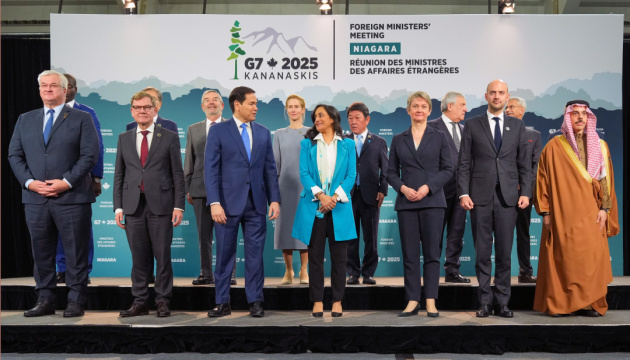
The G7 Foreign Ministers of Canada, France, Germany, Italy, Japan, the United Kingdom, and the United States of America, and the High Representative of the European Union, met under Canada’s G7 Presidency, in Niagara, outside Toronto, on November 11-12, 2025, to address pressing global security and economic challenges. Foreign ministers from several outreach countries, including Ukraine, Brazil, India, the Kingdom of Saudi Arabia, Mexico, the Republic of Korea, and South Africa joined specific sessions to foster broader international collaboration. The two-day meeting was one of the key events held under the Canadian G7 Presidency.
Key topics and statements included:
Support for Ukraine: Ministers reiterated their unwavering support for Ukraine's defense against Russia and strongly condemned Russia's attacks on the Ukrainian energy grid. Ukraine's Foreign Minister participated in a dedicated session to press for further support, including air defense systems to counter aerial attacks.
Middle East Conflict: The G7 welcomed the ceasefire in the Gaza conflict and the release of hostages, while stressing the urgency of increasing humanitarian aid flows and the need for a political solution.
Maritime Security: A joint statement emphasized the importance of maritime security and the commitment to address threats like sanctions evasion by Russia's "Shadow Fleet," hybrid threats to undersea infrastructure, and illicit trade.
Economic Resilience and Critical Minerals: Discussions focused on strengthening supply chains for critical minerals, addressing market distortions, and reducing economic dependencies on non-market economies like China.
Indo-Pacific and China: Ministers discussed stability in the Indo-Pacific region, opposed unilateral attempts to change the status quo in the Taiwan Strait by force, and called on China to improve military transparency.
The meeting produced several joint statements on these various topics, reinforcing G7 coordination on major international affairs.
Whilst the Joint Statement of G7 Foreign Minister’s meeting in Niagara was cautiously worded and diplomatic, Ukraine’s presence at the meeting was highly noticeable.
UKRAINE IN THE SPOTLIGHT
“We will start tomorrow with a meeting with Ukraine’s Foreign Minister Andriy Sybiha to reaffirm our collective support for Ukraine in the face of Russian aggression,” Canadian Foreign Minister Anita Anand, said in remarks ahead of the gathering.
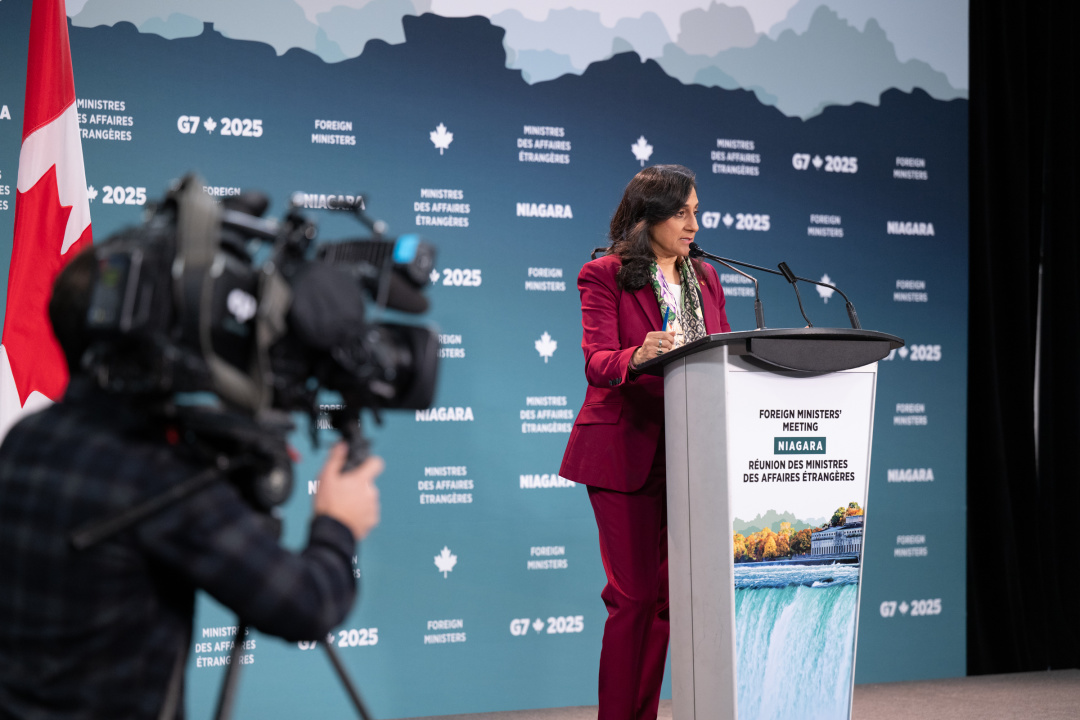
Anita Anand. Photo via G7.Canada.ca
As a matter of fact, the theme of Ukraine was present in almost every session, from defense and energy to maritime security.
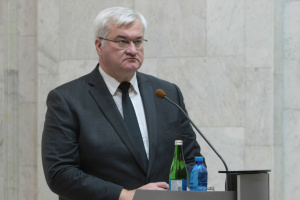
Ukrainian Foreign Minister Andriy Sybiha arrived in Canada with a clear agenda. “We will talk about specific things: strengthening Ukraine’s long-range capabilities, as well as increasing investments in our innovative products and defense industry, which is currently the fastest growing worldwide,” he said.
Sybiha emphasized that Ukraine is ready not only to accept assistance, but also to share experience, technology, and produce weapons jointly with allies. “This will be our contribution to your security,” the minister said. His message was clear: the Ukrainian armed forces, containing the aggressor for almost four years now, are evolving to become not just a consumer, but also a generator of new defense solutions for the democratic world.
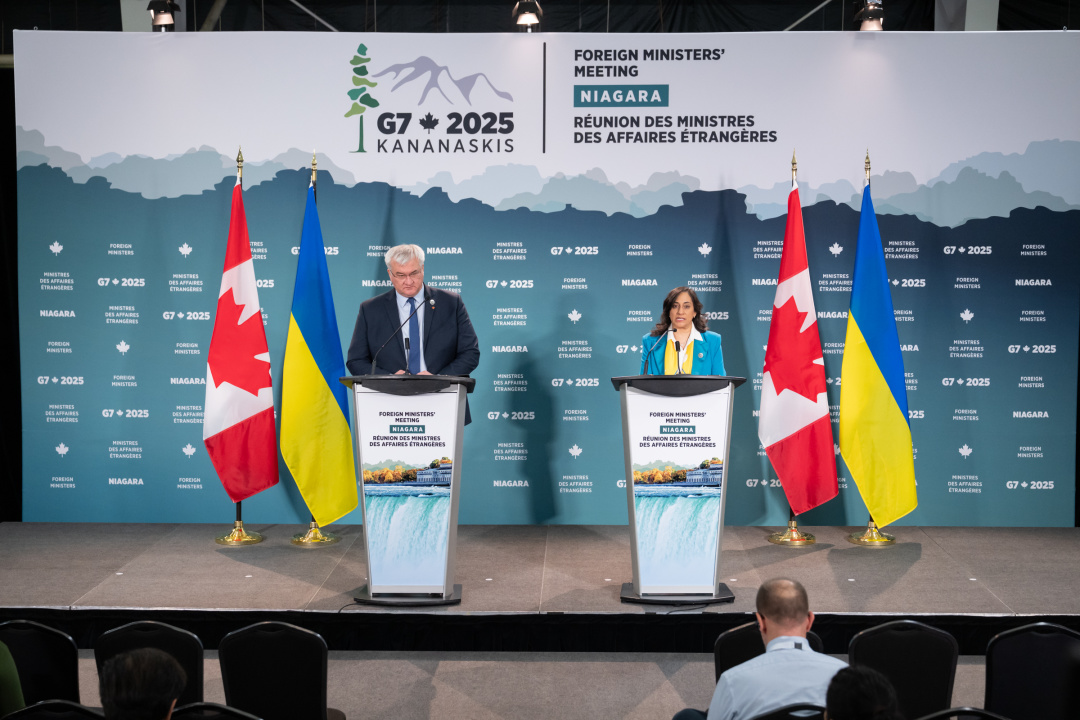
Andriy Sybiha speaks alongside Anita Anand at the G7 Foreign Minister’s meeting in Niagara, Photo via G7.Canada.ca
DIPLOMACY IN ACTION
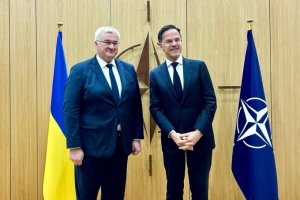
Over the course of the two days, Ukraine’s top diplomat held at least ten bilateral meetings with counterparts from Canada, the United States of America, India, Japan, Brazil, and Saudi Arabia, as well as conducted brief discussions with foreign ministers of France, Mexico, South Korea, and South Africa. A separate meeting was held in the Ukraine-EU-France-Germany-Italy format, where the fight against corruption and Kyiv's response to the high-profile investigations of recent days came under discussion.
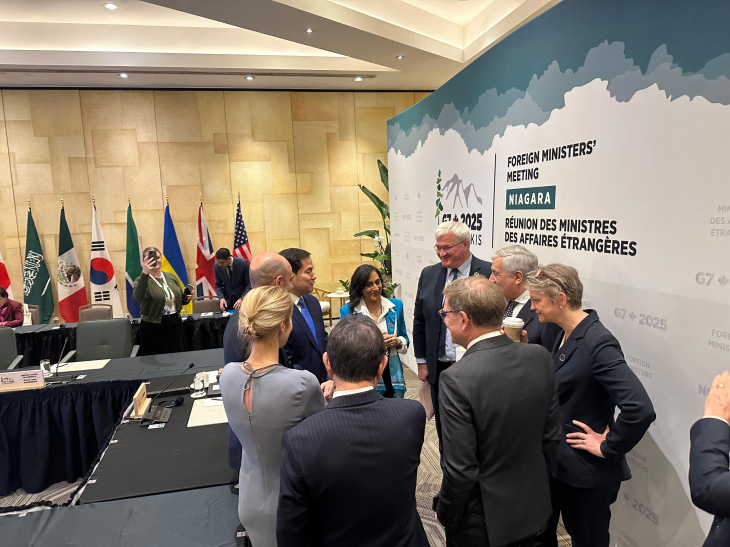
Photo via the Ministry of Foreign Affairs of Ukraine
This topic effectively became an important part of the Ukrainian message to the meeting in Canada, as, on the first day of the meeting, reports of new high-profile allegations of corruption came from Ukraine. “Those involved will be held accountable. This is the firm position of President Zelensky and the entire government,” the minister assured his EU colleagues.
JOINT STATEMENT
The Joint Statement of G7 Foreign Ministers’ Meeting in Niagara was expectedly restrained, but it included a separate section dedicated to Ukraine. The G7 reaffirmed its unwavering support for Ukraine in defending its territorial integrity and right to exist, and its freedom, sovereignty, and independence. It reiterated that an immediate ceasefire is urgently needed, and agreed that the current line of contact should be the starting point of negotiations.
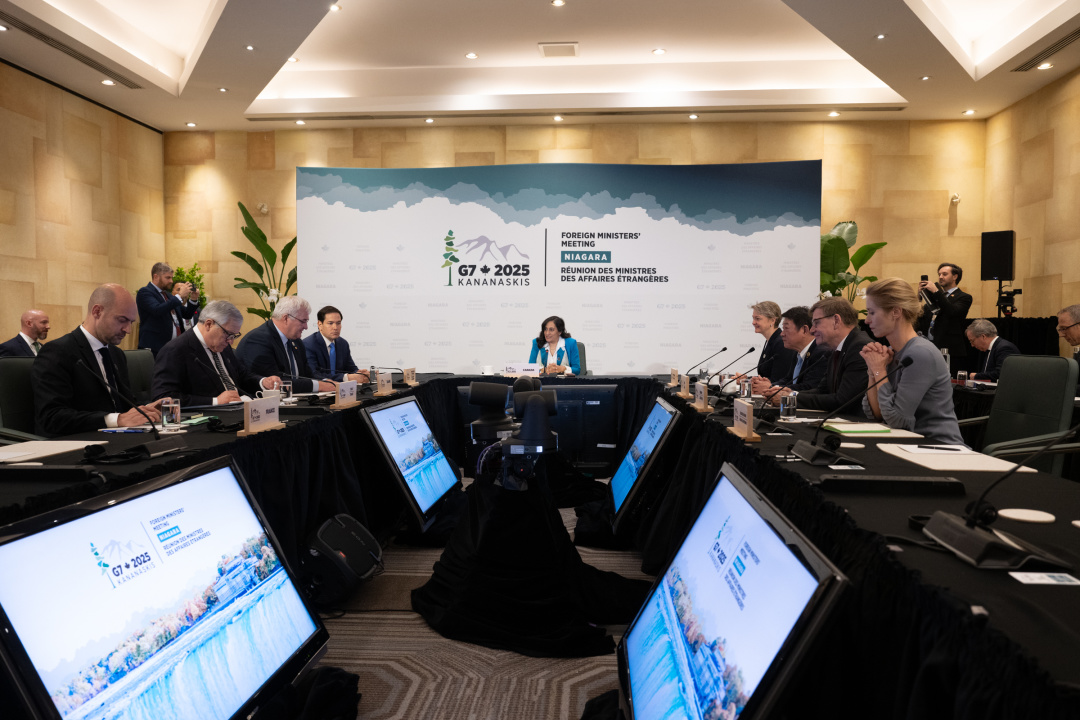
Photo via G7.Canada.ca
In addition to Ukraine, the Joint Statement highlights other pressing geopolitical “hot spots”: the Middle East, the Indo-Pacific, Haiti, Sudan, and Eastern DRC. It also addresses issues of migration and economic security, maritime security and prosperity, as well as economic resilience, energy security and critical minerals.
However, despite being relatively “soft”, the final communiqué reiterates G7’s commitment to fundamental principles: international borders must not be changed by force, and the aggressor must pay the price.
The Group of Seven also committed to increasing the economic costs to Russia, and exploring measures against countries and entities that are helping finance Russia’s war efforts. They acknowledged the ongoing discussions on a wide range of financing options, including further leveraging immobilized Russian Sovereign Assets in their jurisdictions in a coordinated way to support Ukraine.
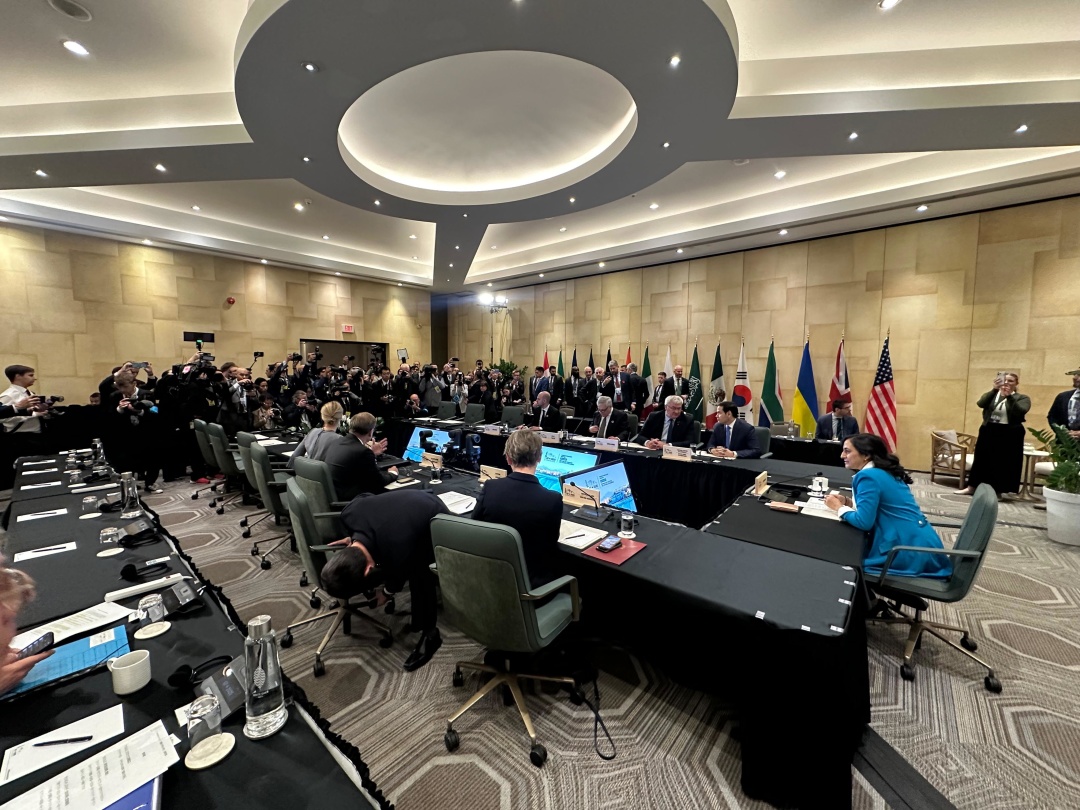
Photo via the Ministry of Foreign Affairs of Ukraine
KEY OUTCOMES
Beyond diplomatic formulations, the G7 Foreign Ministers’ meeting in Niagara also brought practical results to Ukraine. On November 12, 2025, Canada announced its latest wave of sanctions against Russia:
Shadow Fleet: An additional 100 vessels belonging to Russia's "shadow fleet" were sanctioned. These ships are used to transport Russian oil and other goods to evade existing international restrictions. Canada has now sanctioned over 500 such vessels.
Drones and Cyber Warfare: Sanctions were imposed on 13 individuals and 11 entities involved in the development and operation of Russia's drone program and the infrastructure used for its cyber and hybrid warfare operations. This is the first time Canada has sanctioned entities supporting cyber infrastructure linked to Russian hybrid operations.
Liquefied Natural Gas (LNG): Several Russian LNG entities were sanctioned, as Canada targets energy revenue that continues to fund the war.
At the G7 Foreign Ministers' meeting in Canada, the United Kingdom, for its part, announced a new £13 million (over $17 million) support package for Ukraine on November 12, 2025. The funding is intended to help Ukraine repair its energy infrastructure ahead of winter and provide humanitarian aid to those affected by Russian attacks.
Purpose of the Funding
The £13 million winter package is specifically dedicated to:
Vital Repairs: Assisting in essential repairs to Ukraine's damaged power, water, and heating networks.
Humanitarian Support: Delivering aid to citizens worst affected by the loss of these critical services.
Building Resilience: Helping Ukrainians maintain essential services ("keep the lights and heating on") as winter approaches and Russian attacks on civilian infrastructure intensify.
Other partners have promised defense and energy aid packages.
CANADIAN STABILITY
Overall, the meeting came as yet another foreign policy test for the government led by Prime Minister Mark Carney. Unlike the March meeting in Charlevoix, when the new government was just being formed, the current Canadian government has maintained sustainable policies and readiness for global leadership. It was thanks to Ottawa that points on cyber threats, critical minerals and maritime security – the topics of common interest to the North, Europe and the Indo-Pacific region – were included in the Joint Statement.
However, the overall rhetoric of the meeting remained cautious, and we did not hear any decisive statements or new “red lines”. And yet, compared to some previous G7 meetings”, where disagreements between Washington and the Europeans dominated, this time the atmosphere was constructive. The United States, having to deal with internal government affairs and policy disagreements, remained in the dialogue until the end, and France – the next G7 presiding country – is already preparing to continue this unity into 2026.
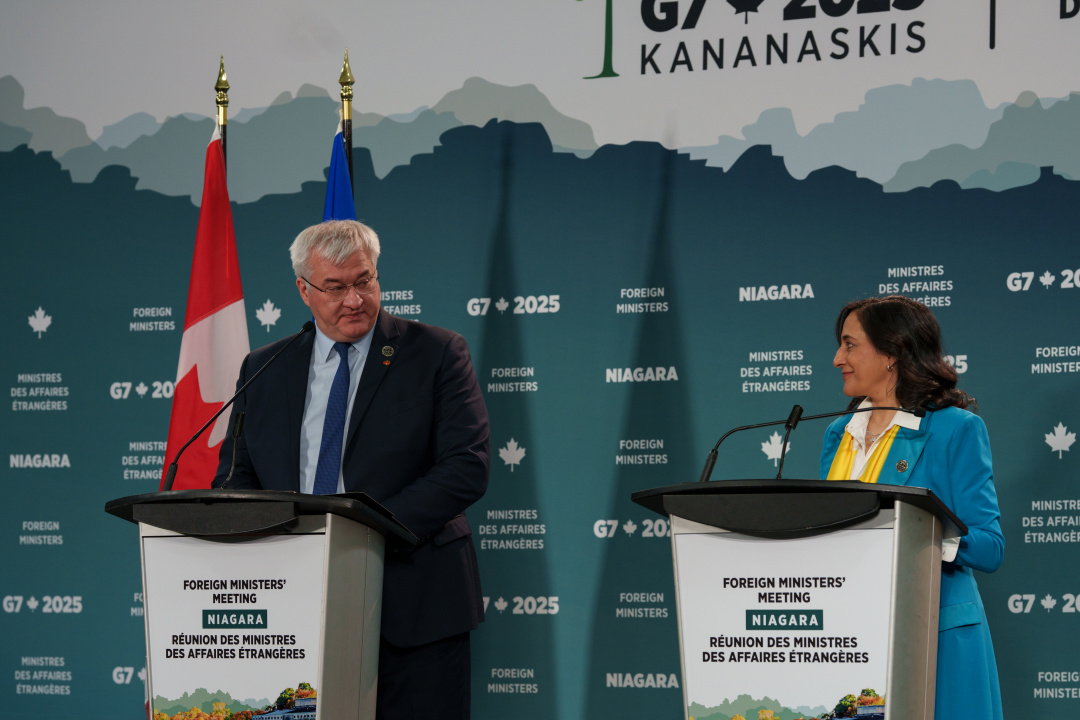
Photo via G7.Canada.ca
UKRAINIAN CONFIDENCE
Sybiha’s public statements at the meeting revealed Kyiv’s newfound confidence. Ukraine is no longer just requesting for support, but is offering partnership, technology, and shared security. “We are already a contributor to shared security today,” the Ukrainian Foreign Minister wrote after the meeting. And these are no empty words: Ukrainian experience and expertise in the fields of drone technology, cyber defense, and military logistics are becoming a matter of interest even for the G7 member countries.
It is also essential that the agenda for the Ukrainian delegation’s visit included a meeting with the President of the Ukrainian World Congress (UWC) Pavlo Grod. This is another reminder that the Ukrainian diaspora remains an influential part of civil society in Canada.
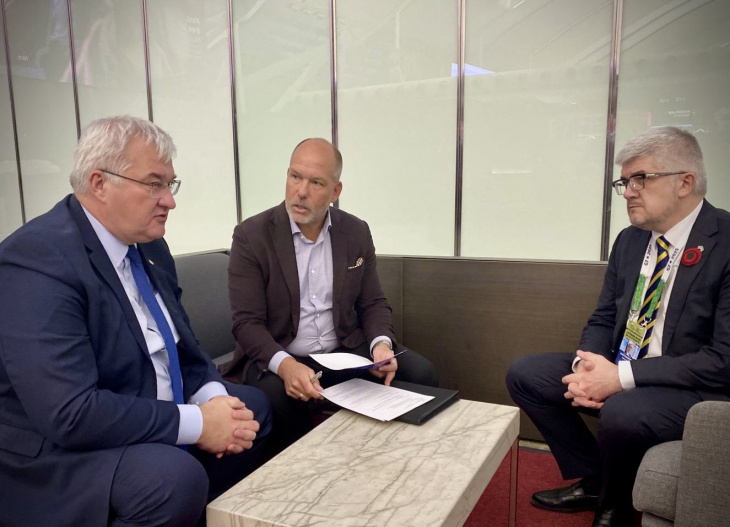
Photo via the Ministry of Foreign Affairs of Ukraine
It looks symbolic that Canada welcomed the Ukrainian delegation with a record heavy snowfall. But every meeting, as the Ukrainian minister wrote, took place “in the circle of true friends.” The Niagara gathering once again showed that Ukraine’s allies sustain unity around supporting our country, despite certain differences in approaches. After all, true partnership is measured not by the loudness of statements, but by the willingness to stand by each other during difficult or important times.
Maksym Nalyvaiko, Ottawa
Headline photo via Soeren Stache/dpa