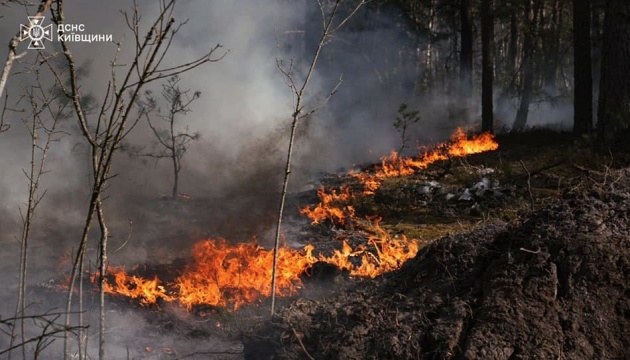
No expected exceedance of radionuclide levels due to fire in Chornobyl exclusion zone –regulator
The State Nuclear Regulatory Inspectorate reported this in its update on the radiation situation related to the fire in the natural ecosystems of the Chornobyl Exclusion Zone as of May 9, Ukrinform reports.
"In connection with the ongoing fire in the Chornobyl Radiation and Ecological Biosphere Reserve, the State Nuclear Regulatory Inspectorate continues to analyze information on the radiation situation in the Chornobyl Exclusion Zone," the statement said.
According to operational data from the State Specialized Enterprise EcoCenter, the volumetric activity (concentration) of the radionuclide Cs-137 (cesium-137) in samples of near-surface atmospheric air taken on May 8 at a distance of 30-150 meters from active fire sites reached 680 µBq/m³ (or 0.00068 Bq/m³). This is explained by the significant volume of wood and other vegetation in the burned areas.
The measured value exceeds the control levels established for these territories, but remains significantly below the maximum permissible levels set by Ukraine's Radiation Safety Standards, which for Cs-137 in air are 0.8 Bq/m³.
The equivalent gamma radiation dose rate currently remains within the range of long-term observations in the exclusion zone and within background fluctuations across the rest of Ukraine.
"According to expert forecasts from the State Scientific and Technical Center for Nuclear and Radiation Safety and modeling results, no exceedance of permissible concentrations of 137Cs in atmospheric air for the population outside the Chornobyl Exclusion Zone is expected," the agency said.
Due to prolonged burning and high temperatures, air masses containing combustion products rise into higher atmospheric layers and can migrate over long distances.
"Therefore, in places where combustion products settle on the ground with precipitation or dust, short-term increases in the volumetric activity of 137Cs may be detected. However, the transfer of technogenic radionuclides already present in ecosystems as a result of fires, storms, etc., does not create additional radioactivity but only represents their redistribution in environmental objects. This does not create additional risks that would require intervention measures for radiation protection of the population," the regulator said.
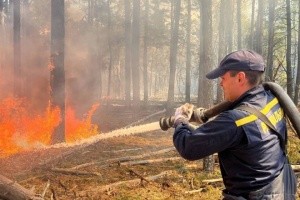
At the same time, for personnel involved in extinguishing the fire in the exclusion zone, recommendations on the use of personal respiratory protective equipment, compliance with sanitary and hygiene standards, and occupational safety remain in force.
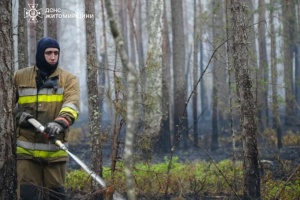
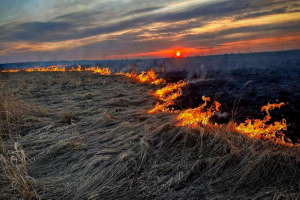
Earlier reports said that a large-scale forest fire covering 1,200 hectares was ongoing in the exclusion zone in the Kyiv region.