'Gray zone' on some parts of front stretches for up to 10 kilometers – Trehubov
According to an Ukrinform correspondent, Viktor Trehubov, spokesperson for the Joint Forces Grouping, said this during a television broadcast.
"Our 'gray zone' is now enormous and has effectively become a 'kill zone.' This means that in some places it can stretch for up to 10 kilometers — something that physically could not have happened before, because the direct strike zone is now extremely large," he said.
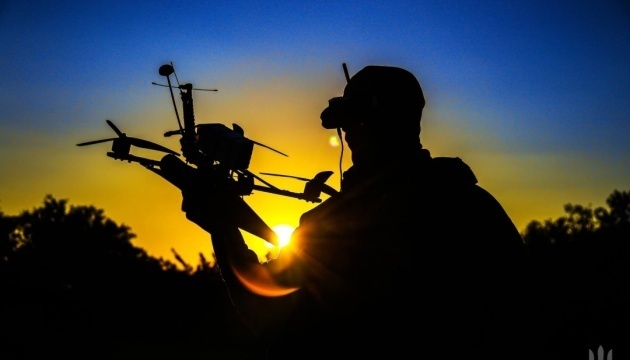
According to the spokesperson, the dramatic increase in the strike zone is primarily linked to the use of FPV drones and other medium-range unmanned aerial vehicles capable of operating at considerable distances. This situation is particularly evident in the Lyman sector, where the "gray zone" helps contain Russian assaults and maintain control over certain settlements.
"Even if we see that the same Yampil on the DeepState map is practically surrounded on all sides by the 'gray zone,' it still holds out. The same applies to a number of other settlements that the Russians cannot take control of because, formally, they may be around them, but in practice, any attempt to move in results in them being immediately struck," Trehubov explained.
He added that the operational range of drones continues to increase, although Ukrainian forces have now begun to overtake the Russians in developing this capability.
"If last year the trend was rather the opposite, now we have caught up," the spokesperson assured.
According to him, Russian troops are now actively using vegetation for camouflage, but overall detection systems are working more effectively thanks to the increased use of drones.
Trehubov noted that until April, drone operations had been hindered by strong winds and sleet, complicating the use of both quadcopters and fixed-wing UAVs for detecting enemy positions. Now, weather conditions have become more favorable for drone operations, although Russian forces have started making greater use of greenery to conceal their movements.
"The weather is clear now, but the foliage has appeared, and wherever the Russians are, they actively use vegetation. But overall, in my opinion, detection is working better now because it is still better when there are many UAVs in the sky and many areas where there simply are not enough trees," Trehubov explained.
As Ukrinform reported, since the start of the day the Russian army has launched 57 attacks on Ukrainian defensive positions, with the heaviest pressure on the Kostiantynivka and Pokrovsk directions.