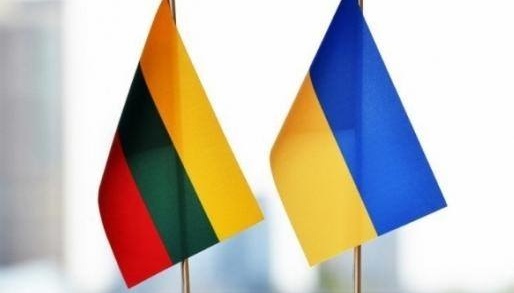
Lithuania to allocate at least 0.25% of its GDP to assistance for Ukraine - intelligence
According to Ukrinform, the Foreign Intelligence Service of Ukraine stated this on its website.
The Ministry of National Defense of Lithuania has presented a draft of the updated National Security Strategy for 2026, noting a sharp deterioration in the security environment in Europe. The document identifies Russia as an existential threat to Lithuania and the entire transatlantic community and contains a scenario in which Moscow may be ready for large-scale military action against NATO by 2030.
The strategy outlines three key directions of policy: the armed defense of the state; support for the country's defense and overall resilience; and the formation of an international security environment in line with Lithuania's interests.
Vilnius confirms its political commitment to fund defense at a level of at least 5-6 % of GDP by 2030, which significantly exceeds NATO's baseline requirements.
The priorities of national security are defined as the development of the armed forces and the strengthening of national resilience. This involves building up intelligence and counterintelligence capabilities, countering hybrid threats, improving export control and regulation of dual-use goods, diversifying foreign trade, and enhancing energy security.
Separate emphasis is placed on the need to establish an international security system based on international law and effective mechanisms for collective and European defense.
The main sources of risks are considered to be: Russia as the main military threat, Belarus as a factor of unpredictability due to its dependence on Moscow, as well as China and other states that contribute to Russia's long-term ability to resist the West, in particular through the supply of dual-use technologies and goods.
Lithuania directly links its own security to the outcome of the Russian-Ukrainian war, emphasizing that European security is impossible without an independent, sovereign, and secure Ukraine and its integration into the Euro-Atlantic space. The Strategy provides for the annual allocation of at least 0.25 % of GDP to assist Ukraine in the field of security and defense, the continuation of training for the Ukrainian military servicemen, and comprehensive support for Kyiv.
"Formalizing this support as a long-term element of national security creates a predictable level of assistance for Ukraine. At the same time, the emphasis on regional formats – the Nordic-Baltic Eight and the Northern Group – indicates Vilnius' intention to strengthen security through 'small coalitions' as an addition to NATO," the Foreign Intelligence Service noted.
As Ukrinform previously reported, in November Lithuania recorded 325 information attacks from Russia and Belarus.
Photo: General Staff of the Armed Forces of Ukraine