Zelensky in France: A Western Visit with an Eastern Focus
President Volodymyr Zelensky’s twelfth visit to Paris since the start of Russia’s full-scale invasion was conceived well before the launch of the U.S.-Israeli operation in Iran. Yet by the time he arrived at the Élysée Palace, the geopolitical context had shifted markedly. What had initially been planned as a visit focused on sustaining pressure on Russia and advancing coordination on negotiations was overtaken by developments in the Middle East.
The timing proved consequential. U.S.-Ukraine talks had stalled, while Washington simultaneously signaled a partial easing of sanctions on Russia—moves that raised concerns in Kyiv about strategic consistency among allies. Compounding the challenge was the continued blockage by Hungary and Slovakia of a proposed €90 billion EU financial package for Ukraine. Against this backdrop, Zelensky arrived in Paris facing heightened expectations to clarify Ukraine’s position across multiple fronts.
The visit highlighted an emerging dynamic: Ukraine’s war is increasingly competing for international attention with other global crises. For the first time since the full-scale invasion began, Zelensky found himself fielding sustained questions not about Russia’s war against Ukraine, but about a separate conflict in the Middle East. The shift was not merely rhetorical—it reflected a redistribution of political bandwidth among Ukraine’s key partners.
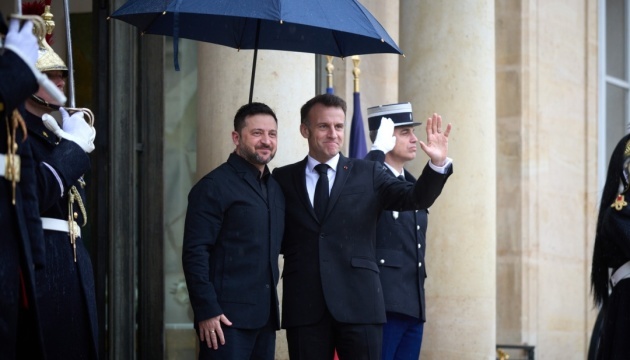
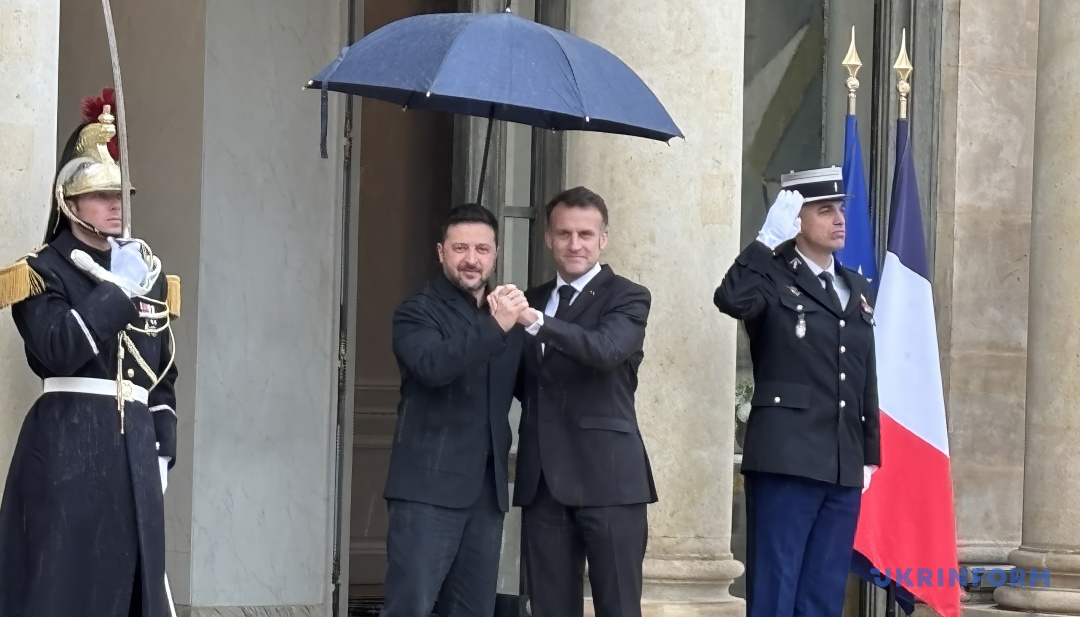
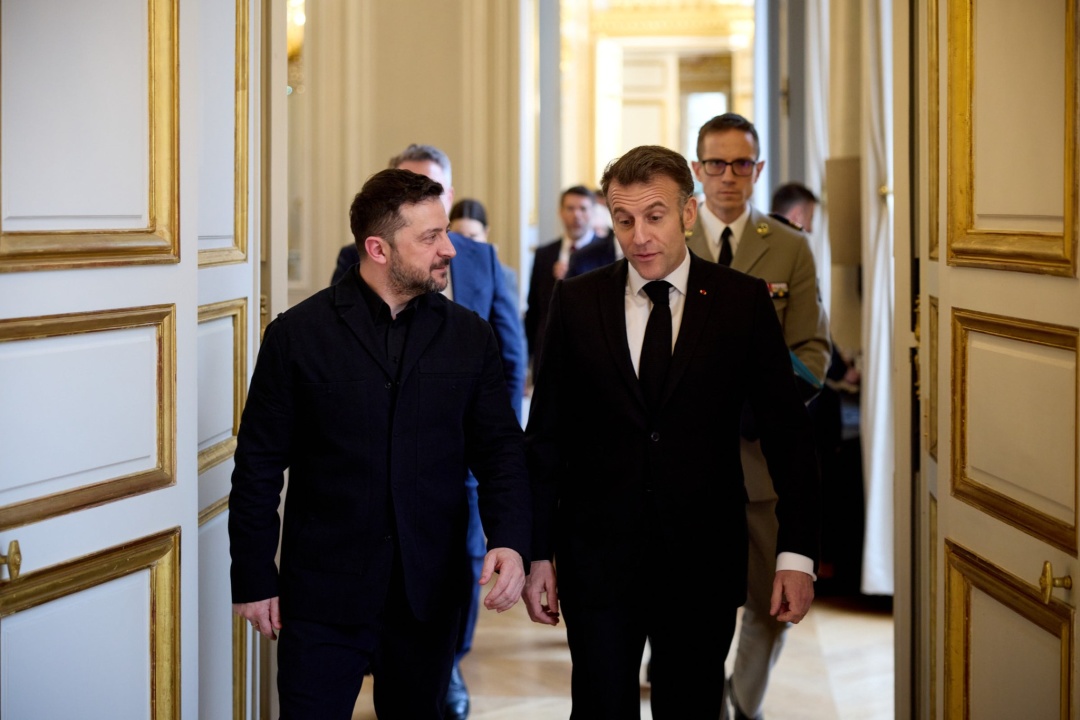
Even the carefully choreographed symbolism of Franco-Ukrainian solidarity was shaped by circumstance. Heavy rain accompanied the Ukrainian delegation’s arrival at the Élysée, where media turnout remained high, underscoring sustained European interest in Ukraine despite competing global narratives. President Emmanuel Macron’s gesture of sharing his umbrella with Zelensky—brief but visually resonant—offered a metaphor for France’s continued political backing, even as broader strategic attention appears increasingly diffused.
Behind the optics, however, the visit revealed a more complex reality: Ukraine’s diplomatic efforts are now unfolding within a crowded and volatile global agenda, where maintaining focus on the war with Russia requires constant recalibration.
Moscow Will Not Succeed in Diverting Attention from Ukraine
The delayed appearance of Presidents Emmanuel Macron and Volodymyr Zelensky before the press—nearly an hour behind schedule—pointed to the density of their discussions. Both leaders projected a composed yet visibly concerned demeanor, reflecting the convergence of multiple security crises. For Macron, this included not only Ukraine but also the reported death of the first French soldier in the Middle East, underscoring France’s growing exposure to regional instability.
Macron used the occasion to deliver a clear strategic message: the escalation in the Middle East should not—and will not—dilute Western focus on Ukraine. “Moscow is mistaken if it believes it can exploit the war in the Middle East to divert attention from Ukraine,” he stated, reaffirming that French and European support remains anchored in long-term security considerations. He emphasized that Ukraine’s defense is inseparable from that of Europe, reiterating a position that has become a cornerstone of Paris’s policy line.
The French president also confirmed that work is underway on a 20th EU sanctions package against Russia. Notably, he cautioned against allowing fluctuations in global energy markets—particularly rising oil prices—to trigger any reassessment of sanctions policy. In a pointed remark, Macron highlighted what he described as a contradiction in Russia’s positioning: calling for a ceasefire in the Middle East while continuing to reject any cessation of hostilities in Ukraine.
Zelensky, for his part, framed the bilateral agenda in operational terms. Discussions focused on expanding joint defense production, Ukraine’s participation in European SAFE initiatives, and strengthening both air defense and combat aviation capabilities. He also raised the issue of unlocking the stalled €90 billion EU financial package and advancing Ukraine’s accession negotiations with the bloc.
Sanctions Tensions and Strategic Ambiguity
Against the backdrop of Macron’s emphasis on a sustained G7 consensus to uphold sanctions on Russia, questions emerged over the coherence of Western policy following recent U.S. “exceptions” that effectively permit certain shipments of Russian oil. The issue points to a broader challenge: maintaining sanctions discipline amid shifting geopolitical and economic pressures.
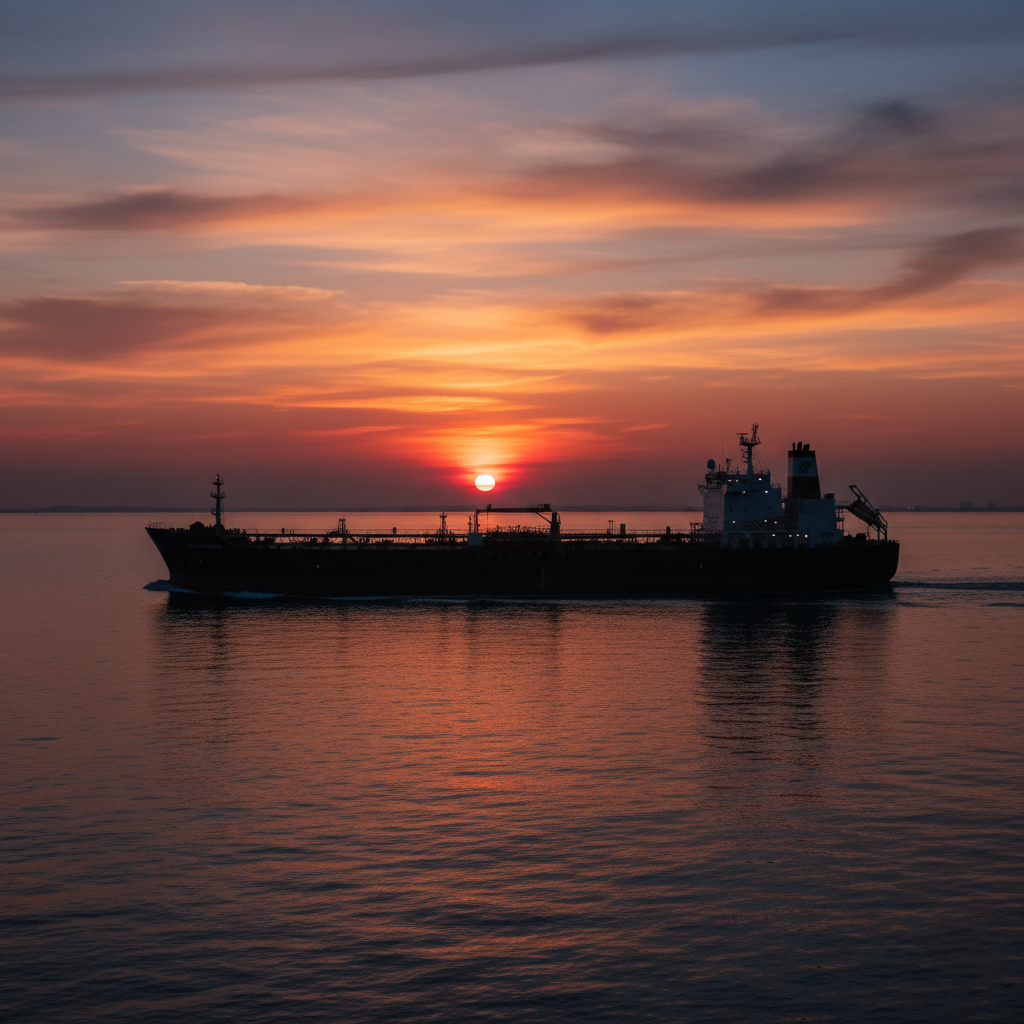
Asked whether this signaled a form of strategic inconsistency in Washington’s approach, Zelensky responded in stark terms. He argued that even limited sanctions relief could translate into substantial additional revenue for Moscow—potentially up to $10 billion—directly reinforcing its war effort. In Kyiv’s assessment, energy revenues remain a central pillar of Russia’s military financing, creating a direct link between sanctions enforcement and battlefield outcomes.
Macron adopted a more calibrated tone, framing the U.S. decision as “exceptional and limited,” and stressing that it does not indicate a structural shift in sanctions policy. He reaffirmed that, from a European perspective, the commitment to maintaining pressure on Russia remains unchanged. This divergence in rhetoric illustrates a familiar transatlantic dynamic: while strategic objectives are broadly aligned, tactical approaches and messaging may vary.
Ukraine’s Operational Relevance Beyond Europe
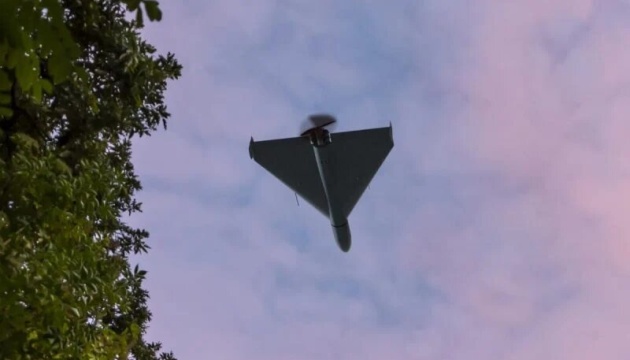
One of the more substantive elements of the discussion concerned Ukraine’s emerging role as a security provider beyond its immediate theater. In particular, Kyiv is positioning its battlefield experience—especially in countering Iranian-made drones—as a transferable capability for partners in the Middle East.
Macron explicitly linked the two conflict zones, noting that systems tested in Ukrainian airspace are now being deployed in other regions facing similar threats.
“Ukrainian skies have become a testing ground for Iranian drones, which are now falling in the Persian Gulf and on the territory of some of our allies,” Macron saidю
Zelensky confirmed that Ukraine has received six requests from Middle Eastern states and has already begun sharing technical expertise with countries such as Saudi Arabia, Qatar, and the United Arab Emirates. Further decisions on the scale of this cooperation are expected following ongoing consultations led by Defense Minister Rustem Umerov.
At the core of this cooperation is Ukraine’s layered approach to air defense and drone interception. Zelensky underscored that effective protection requires not just individual interceptors but an integrated system—an area where Ukraine’s wartime adaptation has generated unique operational knowledge.
“Ukraine is the only country to field this interception system; it is officially in service with the Armed Forces of Ukraine. Therefore, everyone understands that even having dozens or hundreds of interceptors will not stabilize the situation. This is a systemic form of protection,” Zelensky emphasized.
This positions Kyiv not only as a recipient of security assistance, but increasingly as a contributor to broader regional defense architectures.
Financing Ukraine and Managing Intra-EU Frictions
Within this context, President Emmanuel Macron confirmed that he had discussed the Druzhba oil pipeline—recently damaged in a Russian strike—with both President Zelensky and, earlier in the week, Prime Minister Yuliia Svyrydenko. However, Macron was explicit in arguing for compartmentalization. The Druzhba issue, he stressed, should not be linked to the blocked financial package, and tensions around both should be actively de-escalated.
“The €90 billion decision is a collective commitment taken in response to a war context that has not changed. We must honor that commitment,” Macron said, underscoring the need for policy consistency. At the same time, he called for “full transparency” from Ukraine and for expedited repair work on the pipeline.
While no concrete timelines were provided, Macron signaled support for the European Commission’s ongoing efforts—likely referencing a proposed technical mission to Ukraine aimed at assessing damage to the pipeline following the strike. The initiative reflects an attempt to depoliticize the issue through technical verification, thereby reducing friction among member states while preserving forward momentum on financial assistance.
Strategic Messaging Beyond the Élysée
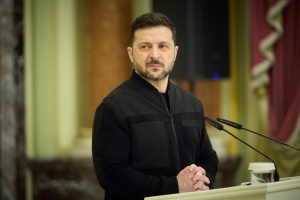
While press access at the Élysée Palace was tightly controlled, Zelensky used the broader Paris visit to engage a different—and arguably no less important—audience: future European policymakers. His appearance at Sciences Po, one of France’s most influential training grounds for political elites (Incidentally, his friend Macron also completed his master’s degree at this institution, as did six French presidents and fourteen prime ministers) underscored a deliberate effort to shape long-term perceptions of Ukraine among the next generation of decision-makers.
The strong demand for attendance—tickets were reportedly claimed within seconds—highlighted sustained interest in Ukraine among internationally oriented students. With a student body of over 13,000 from 150 countries, the setting offered Zelensky a platform not only to address French audiences, but also a wider global constituency. The presence of Ukrainian students, visibly asserting linguistic and cultural identity, added a layer of symbolic resonance to the exchange.
When Zelensky asked which language he should use, it was they who applauded the loudest, insisting that the Ukrainian leader speak Ukrainian, while everyone else relied on simultaneous interpretation.
War Without Distance: A Changing Security Paradigm
The discussion quickly moved beyond symbolic gestures to substantive strategic concerns. Students raised questions about the implications of the Middle East conflict for Ukraine, prompting Zelensky to articulate a broader view of interconnected security dynamics.
His core argument was twofold. First, the diversion of global political and military attention toward the Middle East risks weakening Ukraine’s defensive capacity, particularly in critical areas such as air and missile defense. Second, rising energy prices—driven in part by regional instability—create indirect economic benefits for Russia, reinforcing its ability to sustain the war.
“There is nothing good about war—absolutely nothing. There are casualties, and the waves of war can spread from one country to another. There is a great deal of suffering. So the war in the Middle East brings Ukrainians no sense of relief. Clearly, global attention is shifting toward the Middle East, which is not favorable for us, because Ukraine must defend itself against drones and missiles, and we need sufficient missiles for systems such as Patriot,” Zelensky explained.
More fundamentally, Zelensky framed modern warfare as increasingly borderless. Advances in drone technology, he argued, are rapidly eroding the protective value of geographic distance. With strike capabilities extending thousands of kilometers—and expanding—the traditional notion of regional containment is becoming obsolete.
In this context, he warned that the combination of long-range delivery systems and nuclear-capable states introduces qualitatively new risks, demanding a reassessment of global security assumptions.
“War no longer has distance. Drones can now fly 5,000 kilometers—and soon 10,000. There are no safe continents anymore. And this is a matter of months, not decades. We must understand that nuclear states such as Russia are extremely dangerous. A drone is merely a delivery platform—what it carries is another matter. It can carry nuclear weapons,” the Ukrainian leader said.
Questions from students also turned to the political future of Europe, particularly upcoming elections in France and Germany that could reshape internal EU dynamics and, by extension, the trajectory of support for Ukraine. Zelensky’s response was deliberately balanced: formally non-interventionist, yet strategically attuned to the importance of continuity.
Electoral Cycles and the Durability of Support
Framing the issue in terms of institutional rather than personal relationships, he emphasized that Ukraine seeks sustainable dialogue with France regardless of electoral outcomes. At the same time, he underscored the value of existing ties with President Emmanuel Macron, describing current bilateral relations as both deep and functional across military and economic domains. More broadly, Zelensky characterized the European Union as being at a relative peak of cohesion and capacity in its response to the war—an equilibrium he implicitly signaled should be preserved.
“Of course, it is your choice. We can build dialogue regardless of which president you elect. You are a major country, and we will have to find common ground. At present, we have very strong relations—military and economic—and I fully expect them to continue. Emmanuel and I have built our relationship over many years,” Zelensky said.
“I’m not sure I can ensure that Emmanuel stays,” Zelensky joked. “We live in a democratic, free world. As for Germany in 2029, that may no longer be my problem but that of the next president.”
His closing remark—urging French voters to “vote wisely”—was delivered with humor but carried a clear subtext: political shifts within core EU states have direct implications for Ukraine’s strategic environment.
The remark drew a lively reaction from the audience. It was clear that both the students and Zelensky himself were engaged in the exchange, and he was seen off with prolonged and enthusiastic applause.
Ukraine, Iran, and the Expanding Geopolitical Frame
The visit also reflected Kyiv’s growing engagement with developments beyond Europe. A last-minute meeting with Iranian Crown Prince Reza Pahlavi at the Ukrainian embassy in Paris signaled Ukraine’s interest in shaping outcomes related to Iran’s internal trajectory and regional role.
According to Zelensky, discussions focused on the internal stability of the Iranian regime, the broader regional security context, and the implications of recent U.S. military actions. The Ukrainian position, as articulated publicly, is that Iran’s current political model constitutes a destabilizing factor—not only in the Middle East but also through its military cooperation with Russia. Kyiv’s strategic interest, therefore, lies in the emergence of an Iran that is less aligned with Moscow and less capable of projecting destabilizing influence externally.
“We discussed in detail the situation in Iran and the region, as well as the U.S. operation against the terrorist regime. The Prince and his team informed me about the signals they are receiving from within the country. The governing system has indeed already sustained significant losses, and it is important that the Iranian regime gains nothing and that the people of Iran receive greater protection of life and more opportunities to determine their own future,” Zelensky wrote on Telegram.
For his part, Pahlavi reiterated opposition to Tehran’s partnership with Russia and expressed support for Ukraine’s sovereignty, with both sides agreeing to maintain communication and coordinate pressure efforts.
Фото
Negotiations in a Fragmented Diplomatic Landscape
Zelensky’s comments on the status of peace negotiations underscored the extent to which diplomatic processes have been complicated by overlapping crises. Describing the situation as a “Santa Barbara”—a reference to a complex and protracted drama—he pointed to logistical and political disagreements among key actors.
The United States has signaled readiness to host talks but is currently unwilling to engage outside its territory due to security constraints. Ukraine has expressed flexibility, indicating readiness to participate in meetings across multiple potential venues, including Washington, Miami, Switzerland, Turkey, or the UAE. Russia, however, has rejected U.S.-based talks while proposing alternative locations that Washington is reluctant to accept.
“We immediately said we are ready for a meeting next week. We are preparing for talks in the United States, in Switzerland, in Turkey, and even—if they are not afraid—in the UAE,” the President said, reiterating that whether the meeting takes place depends on the United States.
The result is a procedural deadlock in which the feasibility of negotiations is contingent less on substantive positions than on logistical alignment among the parties—highlighting the fragility of the current diplomatic track.
Defense Deliverables and Strategic Outcomes
Zelensky remained deliberately cautious in publicly detailing the outcomes of his Paris visit, confirming only that “important decisions” had been taken jointly with Macron. However, his remarks suggested that core Ukrainian priorities—particularly in air defense—had been reaffirmed.
In practical terms, this points to a likely strengthening of European contributions to Ukraine’s air defense architecture, potentially centered on the Franco-Italian SAMP/T system as a partial offset to constraints in the supply of U.S.-made Patriot systems. Discussions around the provision of French Mirage aircraft and broader defense-industrial cooperation also remain part of the evolving agenda, which had previously been discussed in Kyiv with the French Minister of Defense.
Taken together, the visit illustrates a dual-track reality for Ukraine: while immediate outcomes are measured in specific defense capabilities and financial commitments, the broader strategic challenge lies in sustaining political alignment across an increasingly fragmented and crisis-driven international environment.
Lidiia Taran, Paris
Photos via Lidiia Taran, Office of the President, Ukrinform