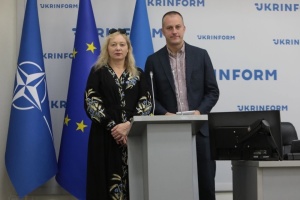
Focus of Ukrainian media on threats from Belarus overlooks its society — Belsat editor-in-chief
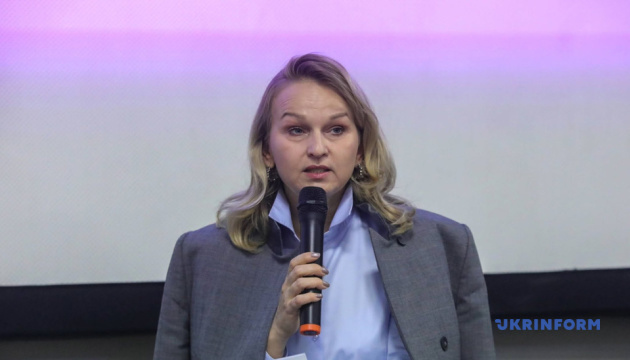
Koushyk made the remarks during a panel discussion at the 5th Belarusian-Ukrainian Ostroh Forum, according to an Ukrinform correspondent.
She cited research showing that 78% of Ukrainians have a positive attitude toward Belarusians living in Ukraine, while only 7% believe that Ukrainian media coverage of Belarus and Belarusians has a positive tone.
According to Koushyk, an analysis of Ukrainian media coverage over the past month showed that reporting on Belarus is dominated by security and threat-related topics — the use of its territory for military purposes, military exercises, the situation on the border, migration, and Lukashenko's activities and contacts with Russia.
At the same time, considerably less attention is devoted to Belarusian society, volunteers and soldiers defending Ukraine, and other topics that allow Belarus to be seen as something more than simply a source of threat.
"Of course, we understand that it is important to report on the threat from Belarusian territory. All these topics are very important and concern all of us. But the problem is that we lose a large part of the meaning when we focus only on such facts and daily news. If Belarus appears in the media only at moments of threat, it will inevitably also be perceived by Ukrainian society solely as a threat," Koushyk said.
In this context, she emphasized the importance of covering developments within Belarusian society and creating joint Belarusian-Ukrainian media formats.
According to Koushyk, Belsat is ready to share with Ukrainian newsrooms documentary materials about Belarusian volunteers and fighters who are fighting on Ukraine's side.
The Belsat editor-in-chief separately called on Ukrainian media outlets to give Belarusian speakers an opportunity to speak in the Belarusian language.
"I urge Ukrainian media to feature Belarusian speakers speaking Belarusian. This will also help reduce the barriers between us and give us a better understanding of how close our peoples are," Koushyk said.
Meanwhile, the panel moderator and Ukrinform Director General Serhii Cherevatyi noted that Ukrainian media largely reflect information about Belarus coming from official sources, particularly regarding threats originating from its territory.
"At the same time, whenever there is the slightest opportunity, we look at Belarus with affection and in an entirely positive way. This was the case, in particular, when covering Sviatlana Tsikhanouskaya's visit to Ukraine. But it is important for us to understand — and that is why we have gathered here — who should be the voice of Belarus," Cherevatyi said.
He noted that Belarus has several dimensions for Ukrainian society: on the one hand, its territory was used by Russia for its aggression against Ukraine in 2022; on the other hand, in 2020 Belarusian society rose up against Lukashenko's regime.
"Belarus is an extremely important country for us, and for many people in Ukrainian society these are different pieces of a puzzle that do not all fit together," the Ukrinform director general said.
According to him, the Belarusian diaspora, civil society organizations, and media constitute an important segment. It is therefore important to bring them together and gain a better understanding of the prospects for Ukrainian-Belarusian relations.
Mykyta Poturaiev, a member of parliament and chairman of the Verkhovna Rada Committee on Humanitarian and Information Policy, said in his remarks that he sees opportunities for information cooperation between independent Belarusian media and Ukrainian state media.
According to him, such cooperation is important, in particular, for more balanced coverage of Belarus in Ukraine's information space. He noted that Ukrainians distinguish between the Lukashenko regime and the Belarusian people, and that it is therefore important for this distinction to be reflected in media policy.
Poturaiev separately emphasized the importance of supporting the Belarusian language, culture, and national identity, which, he said, are being destroyed by the Lukashenko regime.
"As the chairman of a committee dealing with culture, national identity, and language, I personally find it incredibly painful to watch the Lukashenko regime destroy Belarusian culture and the Belarusian language within Belarus," he said.
Poturaiev added that despite its limited resources, Ukraine could work with Belarusian partners to support the preservation of the Belarusian language, culture, identity, and history.
As Ukrinform reported, Ukraine has been detecting the operation of retransmission stations in Belarus for a week. These stations strengthen the signal for Russian drones.
Alina Koushyk. Photo: Belsat