Eighty Years of the UN General Assembly: Why a World of Security and Freedom Has Not been Achieved
Eighty years ago, in mid-January 1946, the inaugural session of the United Nations General Assembly took place in London. It is also symbolic that in January 1920 the Treaty of Versailles entered into force, formally ending the First World War and establishing the League of Nations, the immediate predecessor to the United Nations. This anniversary therefore provides an opportunity to assess the work of this prominent international organization—recalling not only its well-known failures, which have been widely discussed, particularly in light of recent international events, but also its achievements, which are worthy of recognition and public awareness.
THE INAUGURAL SESSION OF THE UN GENERAL ASSEMBLY: “CREATING A WORLD OF SECURITY AND FREEDOM”
The United Nations was established in 1945, immediately after the end of the Second World War, by the countries of the anti-Hitler coalition. Like the League of Nations before it, the UN was intended to prevent future wars and to resolve interstate disputes through peaceful means.

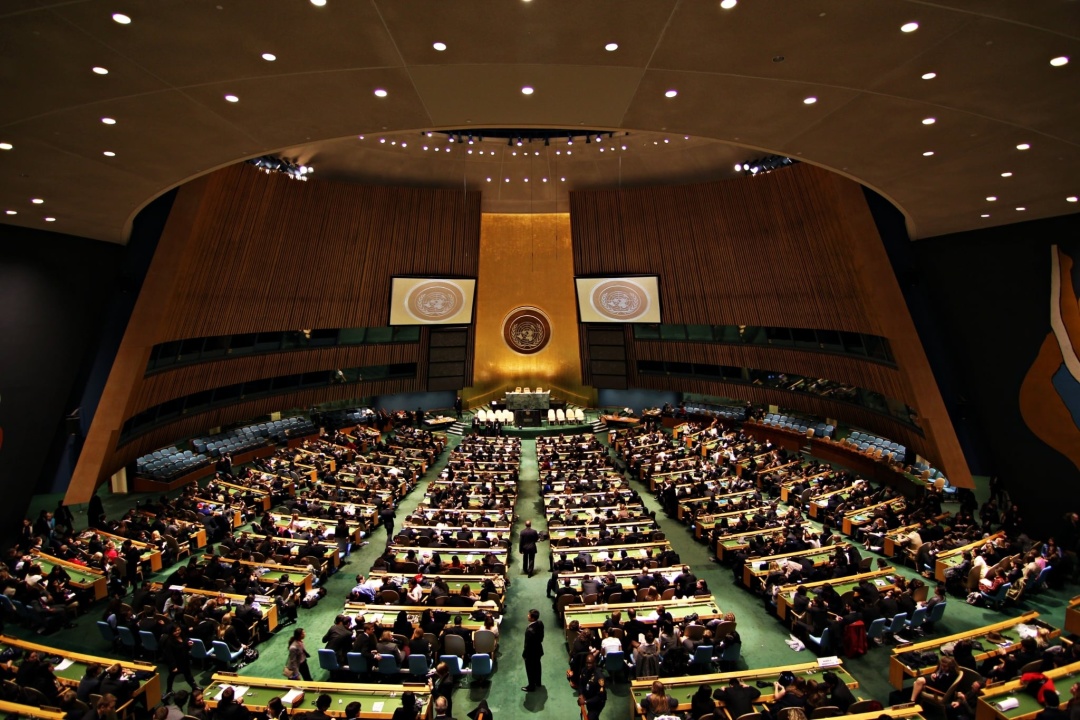
The first session of the United Nations General Assembly was held in London, in Westminster Central Hall. The event was covered by approximately 800 journalists—several times more than the number of delegates to the gathering. Notably, it was the first international conference to be broadcast on television.
In welcoming the delegates, British Prime Minister Clement Attlee first recalled the still-recent destruction of London by Nazi air raids and then expressed hope for the “creation of a world of security and freedom,” one that would be “governed by justice and moral law.” Geneva was also mentioned, as 26 years earlier the League of Nations had been established there, and many of those present at the first UN General Assembly session in Westminster had previously participated in the work of the UN’s predecessor.
THE CORE PROBLEM: WHY THE UN IS UNABLE TO DETER AGGRESSION BY MAJOR POWERS
The UN’s 80-year legacy is complex and ambiguous. Its significant achievements should not be discounted, yet it is evident that today the organization is unable to restrain aggression by major powers. Russia’s invasion of Ukraine—an independent and sovereign state, and an overt act of military aggression—and the international response to it illustrate this reality. The UN has effectively become a recorder of the breakdown of the international order that it was originally created to uphold.
Why, then, is the UN unable to adopt effective, decisive measures? First, because of the veto power exercised over resolutions of the United Nations Security Council. Second, even when decisions are formally adopted, they often remain unenforced due to a lack of cooperation among major powers or because there is insufficient genuine international interest driven by low geopolitical stakes. In other words, major states tend to remain indifferent to the troubles of smaller ones whose fate does not directly affect them. Clear examples include UN decisions related to Myanmar and Sudan.
The problem lies not so much in the bureaucratic nature of the United Nations as in the fact that powerful states increasingly place their own interests above those of allies, the international community, and even above international law itself. As recently stated quite explicitly by Stephen Miller, the Homeland Security Adviser to the U.S. President, the world is “governed by force, coercion, and power,” and that “the United States will henceforth act from a position of strength rather than from the standpoint of international law.”
PEACEKEEPING MISSIONS: SOLDIERS FOR PEACE, NOT FOR WAR
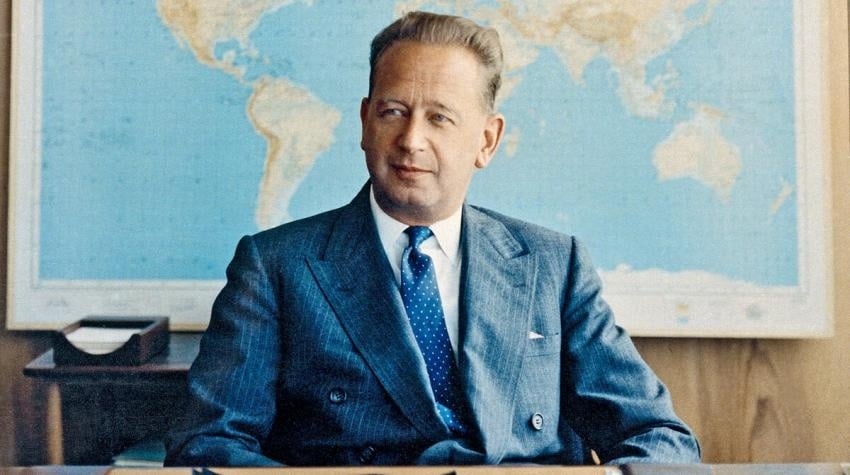
However, it is important to return to the organization’s achievements. Peacekeeping activity is one of the United Nations’ largest and most significant accomplishments. The 1965 Suez Crisis is a notable example: with the active involvement of then Secretary-General Dag Hammarskjöld (1905–1961), a special UN peacekeeping force was created and deployed to the conflict zone. This operation became the first UN peacekeeping mission and served as a model for numerous peacekeeping operations that followed.
Resisting pressure from major powers has never been easy. Nevertheless, at the early stage of its existence, the United Nations was sometimes able to do so. A telling example is a response given by Hammarskjöld to Soviet leader Nikita Khrushchev. This occurred in 1960 during the Congo Crisis. Notably, at that time the actions of the UN Secretary-General dissatisfied both the USSR and the United States. In response to Khrushchev’s angry call for his resignation, Hammarskjöld stated that he did not intend to abandon the United Nations, explaining: “It is not the Soviet Union or indeed any other big Powers who need the United Nations for their protection. It is all the others. In this sense, the Organization is first of all their Organization and I deeply believe in the wisdom with which they will be able to use it and guide it. I shall remain in my post during the term of my office as a servant of the Organization in the interests of all those other nations, as long as they wish me to do so. It is very easy to bow to the wishes of a Big Power. It is another matter to resist.”
UN peacekeeping missions involve the use of armed forces contributed by member states to stabilize situations in conflict zones. “The essence of peacekeeping is the use of soldiers as a catalyst for peace rather than as the instruments of war,” said UN Secretary-General Javier Pérez de Cuéllar (1920–2020) when these forces were awarded the Nobel Peace Prize in 1988 for missions in conflict areas in the Middle East, Africa, Asia, Central America, and Europe.
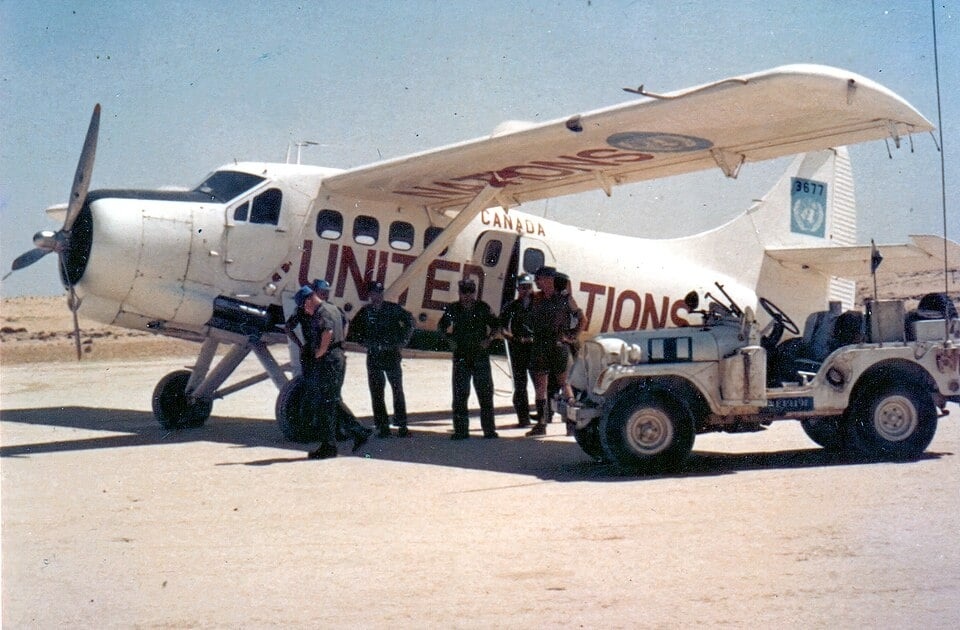
At the same time, peacekeeping activity also ranks among the United Nations’ major failures. One of the most notorious cases is the Srebrenica massacre in 1995, when Dutch peacekeepers were unable to prevent the genocide of Bosniak Muslims committed by Bosnian Serb forces. Other failed peacekeeping missions are often cited as well, including those in Lebanon, Rwanda, Somalia, and Angola.
THE LAW OF THE SEA: RESOLVING THE UKRAINIAN–ROMANIAN DISPUTE, BUT NOT THE CHINESE ONE
The United Nations Convention on the Law of the Sea, adopted in 1982, laid the foundation for modern international maritime law. It defines states’ rights and introduces concepts such as exclusive economic zones, along with dispute-settlement procedures, new mechanisms for regulating deep-sea seabed exploitation, and—importantly—provisions on the protection of marine resources and the conservation of the oceans.
One clear example of international maritime law in action is the resolution by the International Court of Justice of the long-standing dispute between Ukraine and Romania over the delimitation of the continental shelf near Snake Island in 2009. In that case, Ukraine and Romania found a dignified and lawful way out of a contentious situation.
Thus, the UN Convention on the Law of the Sea provides effective mechanisms for dispute resolution. However, powerful states sometimes ignore these mechanisms, opting instead for overt political pressure and coercion. A frequently cited example is the behavior of China, which has multiple disputes with its neighbors over claims in the East China Sea and the South China Sea.
However, while the United Nations Convention on the Law of the Sea represents a major step forward, it has failed to provide adequate protection for maritime areas and ocean spaces that lie beyond the jurisdiction of any state. Marine ecosystems have undergone radical change due to overfishing. This constitutes an environmental crisis that the Convention has been unable to address in a comprehensive manner.
DECOLONIZATION: A CIVILIZED AND PEACEFUL PROCESS THAT DID LITTLE FOR INDIGENOUS PEOPLES
One of the United Nations’ major achievements include decolonization efforts. Issues of racial equality and the right of peoples to self-determination were discussed as early as the aftermath of the First World War but were ultimately dismissed (notably, at the time, the United States repeatedly criticized Britain and France for their colonial legacies and reluctance to abandon them). After the Second World War, however, these principles were endorsed within the United Nations system, and the Trusteeship Council, which oversaw the decolonization process, became one of the UN’s earliest bodies.
Despite the fact that many peoples achieved independence through bloody armed conflicts, UN activity nonetheless contributed to the establishment of a more orderly and peaceful process of decolonization—one that ultimately reshaped both the global order and international politics. It is worth noting that in 1945, approximately one-third of the world’s population lived under colonial rule. At the time of the inaugural session of the United Nations General Assembly, the United Kingdom controlled 40 colonies. Nearly all of Africa was under Western colonial domination. At the first General Assembly session, the continent was represented by only four countries: Egypt, Liberia, Ethiopia, and South Africa. Today, fewer than two million people live in territories classified as colonies.
At the same time, when it comes to the world’s indigenous peoples, the UN has generally done little to address their problems, with the exception of the non-binding UN Declaration on the Rights of Indigenous Peoples.
HUMAN RIGHTS: FORMULATED, BUT WERE THEY ENSURED?
The Universal Declaration of Human Rights of 1948 proclaimed fundamental human rights for the first time, recognizing that “the inherent dignity and the equal and inalienable rights of all members of the human family are the foundation of freedom, justice and peace in the world.”
Since 1948, the United Nations has adopted ten major human rights instruments, including conventions on the rights of the child and of migrant workers, as well as on combating torture and discrimination on the basis of gender and race. Compliance with each of these instruments is monitored by a separate committee of independent experts.
Human rights terminology created a new framework for understanding the relationship between the individual, the state, and the international system. The concept of human rights made the individual an object of both national and international concern. It is worth recalling that human rights were the central issue raised by Soviet dissidents of the 1960s, prompting official responses from Soviet authorities even at the international level—developments that ultimately became one of the factors contributing to the collapse of the USSR.
How should the current state of human rights and the UN’s influence in this area be assessed today? This is a question that has become increasingly uncomfortable to ask. Just days ago, the United Nations Security Council held a meeting devoted to the destructive shelling of Ukraine’s energy system during severe winter cold—attacks carried out by the armed forces of one of its own permanent members, Russia, which also exercises veto power. These actions constituted a clear violation of the right to life of millions of people. At the Security Council meeting, all parties spoke—but no decisions were adopted.
THE BALANCE OF 80 YEARS: THE UN CANNOT BE BETTER THAN THE WORLD THAT SURROUNDS IT
The world in which the United Nations emerged was a world shaped by the catastrophe of the Second World War. The organization was created not out of faith in human virtue, but out of distrust of it—as a system of safeguards intended to restrain the worst instincts of states and political leaders. From the outset, the UN was therefore a compromise: between idealism and power, between law and geopolitics, between hope and the fear of a return to the disasters of the 1930s and 1940s.
Over eight decades, the UN has never become an all-powerful arbiter. It has failed to stop the war in Ukraine, failed to prevent genocides, and failed to compel major powers to abide by the rules they themselves helped to write. At the same time, it was within the UN framework that the language of human rights was articulated, peacekeeping mechanisms were developed, the foundations of maritime law were laid, and the colonial system that had shaped the world order for centuries was dismantled.
Today, the problem lies not only in outdated institutions, but in a shift in the very logic of international relations. When force is once again proclaimed a virtue and law a weakness, no organization can function effectively. The UN cannot be better than the world that surrounds it—but a world without it becomes far more dangerous.
Perhaps the central lesson of these 80 years is that international order does not exist on its own. It must be reaffirmed daily through political will, solidarity, and a readiness to act.
Svitlana Shevtsova, Kyiv
Headline photo via Wikipedia