Coalition of the Willing Summit: A Shift From Statements to Effective Mechanisms of Engagement with Ukraine
In Paris, Ukraine Received Not Just a Promise, but a Tangible Action Plan: Ukraine’s Armed Forces Recognized as Europe’s First Line of Defense
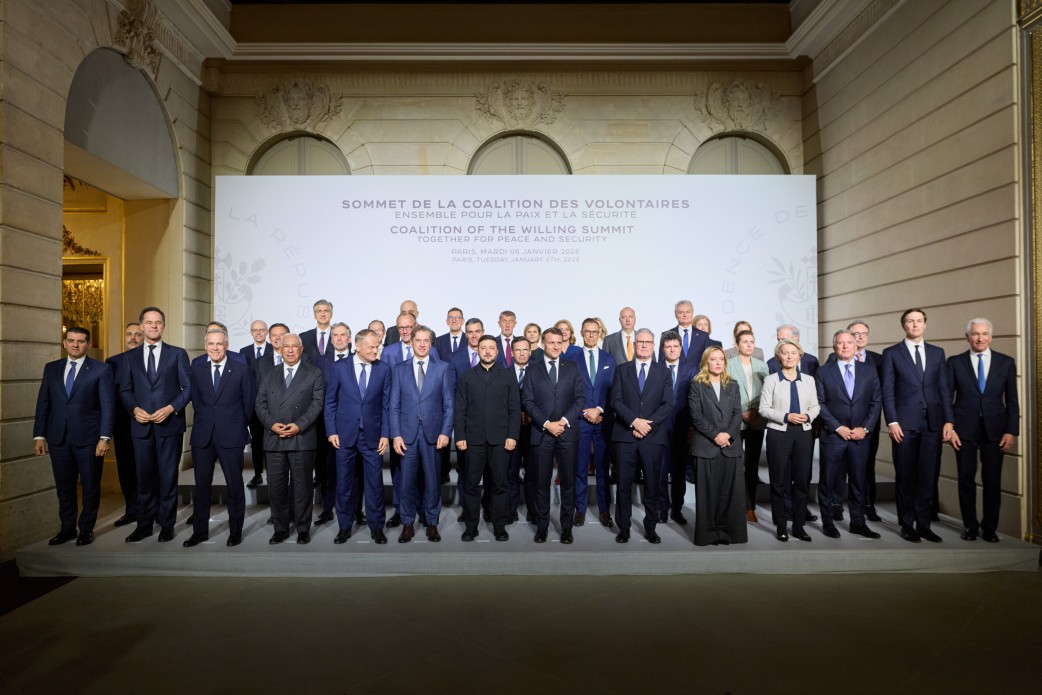
Ukraine emerged from the January 6 summit of the Coalition of the Willing in Paris not with another vague assurance, but with a concrete framework for action—one that explicitly recognizes the Armed Forces of Ukraine as Europe’s first line of defense, with partner countries positioned as a reliable strategic hinterland.
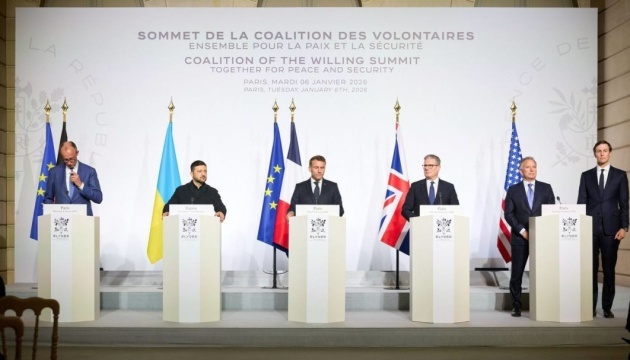
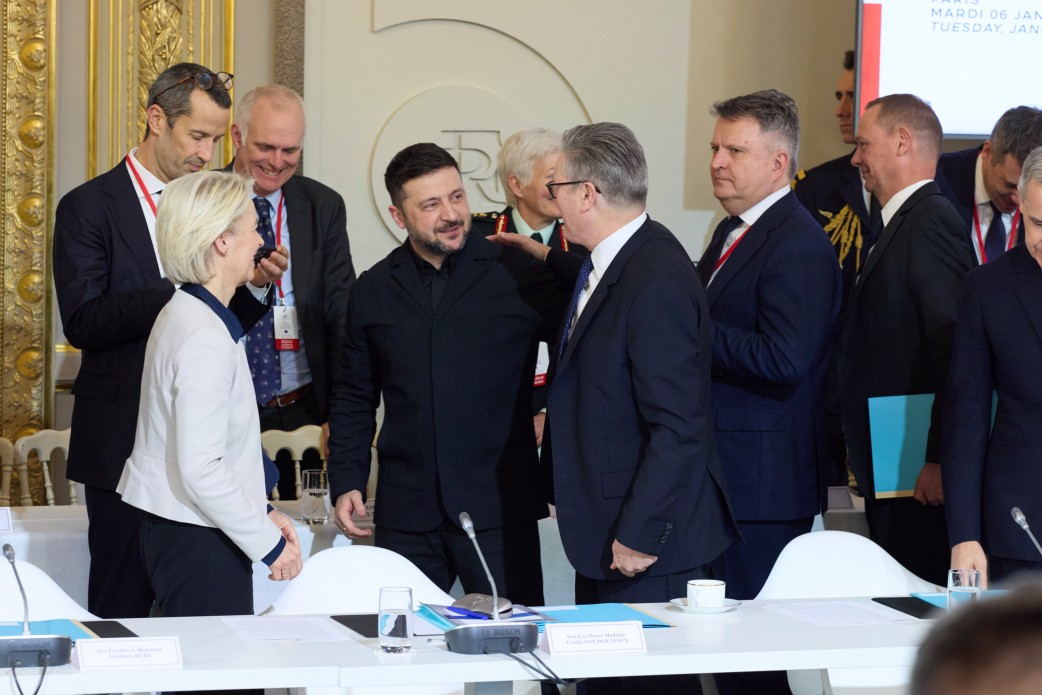
The summit was unprecedented both in terms of the level of representation and the depth of discussions. Of the 35 participating countries, 27 were represented by heads of state or government. The meeting brought together leaders of the European Union and NATO, as well as representatives from Türkiye, Japan, Australia, and New Zealand. The United States was represented by President Donald Trump’s special envoys, Steve Witkoff and Jared Kushner.
Despite skepticism from some observers, the summit concluded not with routine expressions of concern, but with the adoption of concrete documents. Even in their declarative form, these texts lay the groundwork for the future deployment of multinational forces in Ukraine after the end of the war. This marks a shift from abstract political promises to the emergence of legal frameworks—at least in the foreseeable future. As always, however, the success of the initiative will depend on the position of Washington and the reaction of Moscow.
Laying the Foundations of a New Security Architecture
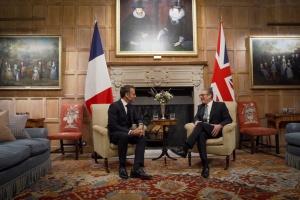
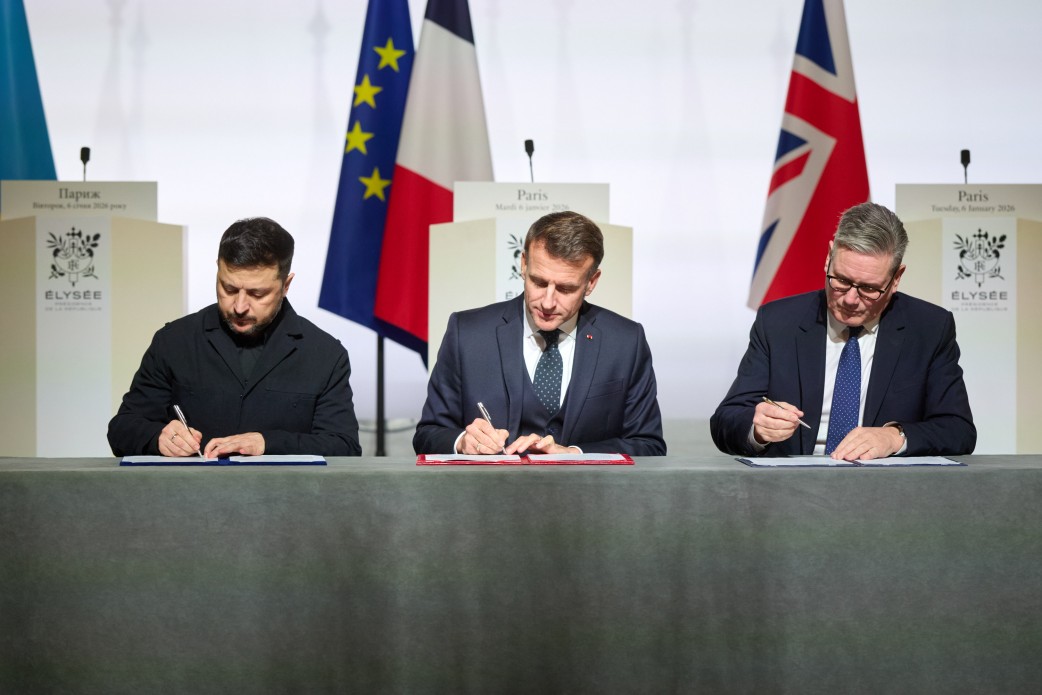
The key outcome of the Paris meeting was the transition from political rhetoric to written commitments. For the first time, partners outlined tangible mechanisms of support. Ukrainian President Volodymyr Zelensky, French President Emmanuel Macron, and UK Prime Minister Keir Starmer signed a Declaration of Intent on the Deployment of Multinational Forces.
As President Zelensky noted, the summit was “a truly global meeting with a very high level of discussion.” He stressed that the coalition had produced “substantive documents—not just words, but concrete commitments.” These documents demonstrate the seriousness of partners’ intentions, according to Zelensky.
“With these documents, we are strengthening further legal work in countries with parliamentary systems, so that when diplomacy succeeds in ending the war, we are fully prepared to deploy the forces of the Coalition of the Willing.”
President Zelensky said a "huge step forward" had been made in Paris, but added that he would only consider efforts to be "enough" if they resulted in the end of the war.
Experts Highlight the Substance of the Agreements Reached
The expert community highly commend the practical substance of the agreements reached at the Paris summit.
Political analyst Ihor Reiterovych notes that the meeting delivered what had long been missing: concrete steps rather than abstract declarations.
“We have finally seen specific actions,” Reiterovych said. “Of course, the declaration signed by Macron, Starmer, Merz, and Zelensky on the deployment of multinational forces in Ukraine after the war ends is, for now, a declaration of intent. But the key point is different: this declaration already contains concrete substance. It is neither abstract nor symbolic. It clearly envisages specific actions.”
According to Reiterovych, the summit effectively laid the groundwork for the physical presence of foreign troops in Ukraine:
“This is precisely the summit’s tangible outcome. And now this result will be formally embedded in documents related to the so-called security guarantees for Ukraine.”
Understanding the structure of these agreements is essential. They include US-led verification of a potential ceasefire, long-term support for Ukraine’s armed forces, the deployment of a multinational military contingent, and commitments to support Ukraine in the event of renewed Russian aggression. UK Prime Minister Keir Starmer confirmed that Britain and France would establish military hubs and construct defensive infrastructure.
Diplomat Vadym Tryukhan also described the emergence of a written document as an unequivocal positive:
“This is a fundamentally important moment, because it is precisely in this document—the Paris Declaration—that the outlines of security guarantees and the basic principles concerning Ukraine’s sovereignty, resilience, and future peace were, for the first time ever, fixed in writing. It clearly states that any settlement currently under discussion must be backed by robust security guarantees.”
Tryukhan further emphasized that the agreements now contain real operational detail—what he called “meat”—including specific provisions on monitoring and compliance verification mechanisms. Most notably, the Armed Forces of Ukraine have, for the first time at the official level, been defined as Europe’s first line of defense.
Political scientist Volodymyr Fesenko adds that the so-called Coalition of the Willing is becoming increasingly influential as an independent actor:
“The Coalition of the Willing is an informal formation rather than an international organization. However, it is increasingly evolving into an effective subject in the negotiation process and in coordinating a common stance among our partners on supporting Ukraine, including on security guarantees for our country.”
According to Fesenko, the decision to establish a coordinating center and a coalition operational headquarters in Paris is of fundamental importance. It signals the institutionalization of the process that had previously existed largely at the level of political statements.
Declarations of Intent: How Serious Are Europe’s Commitments?
In Paris, two key tracks were formalized: a joint statement by summit participants and a separate trilateral declaration involving Ukraine, the United Kingdom, and France. The latter document merits particular attention, as it opens the door to what until recently was considered taboo—the presence of NATO member states’ troops on Ukrainian territory, albeit under national rather than NATO flags.
UK Prime Minister Keir Starmer was notably candid in his assessment:
“It paves the way for the legal framework under which British, French, and partner forces could operate on Ukrainian soil, securing Ukraine's skies and seas, and regenerating Ukraine's armed forces for the future." Starmer described this progress as “extraordinary,” emphasizing that it now enables the early planning of logistics and command-and-control infrastructure.
Vadym Tryukhan analyzes the legal weight of these documents, urging that they be clearly distinguished from one another:
“The joint Paris Declaration is, in essence, a framework document on security guarantees. What is critically important is that it finally introduces wording on legally and politically binding guarantees.”
The diplomat stresses that this formulation automatically means future agreements will require parliamentary ratification, creating a safeguard against shifts in political sentiment in partner countries.
Regarding the trilateral declaration, however, Tryukhan expresses skepticism about the limited number of participants:
“What stands out immediately is the lack of actors willing not just to express support, but to take part in its actual implementation. As of now, only two countries—France and the United Kingdom—have formally declared their intention to participate in multinational forces. No others have.”
Even Germany, according to Chancellor Friedrich Merz, has adopted a more cautious stance. Merz stated:
“This could include, for example, the deployment of troops for Ukraine on neighboring NATO territory after a ceasefire is concluded.”
In other words, German troops could be stationed at the border—but not inside Ukraine. As Tryukhan pointedly asks:
“How Ukraine can be effectively protected without the presence of troops on its territory is, to put it mildly, a very serious question.”
However, Ihor Reiterovych views this as part of an evolutionary shift in European thinking. In his assessment, Europe is moving through the classic stages of accepting an unavoidable reality:
“It resembles the well-known psychological model: first denial, then depression, bargaining, and finally acceptance. It seems to me that Europe—and this is also a result of yesterday’s decisions—has finally grasped a fundamental truth: without a strong Ukraine, Europe will permanently live under the threat of provocations or a direct attack by Russia.”
Reiterovych explains the logic of a “division of labor” that is politically convenient for Western leaders:
“Macron did not say by accident that the first line of defense is the Armed Forces of Ukraine. Beyond that come Western partners, who may be deployed in Ukraine’s western regions. For European politicians, this is a very advantageous formula—extremely advantageous. We pay financially, in resources, and politically, but we do not fight directly.”
The expert is convinced that, over time, other countries will join the French-British format, as the so-called Overton window gradually opens:
“First, the window has to be cracked open. When, at some point in the future, these troops actually appear, others will closely observe how it works.”
Political analyst Volodymyr Fesenko adds that the formal documentation of plans to deploy non-combat missions to protect Ukraine’s airspace and maritime domain represents a qualitatively important step forward. According to him, details regarding troop composition and weapons systems have already been worked out by military planners from France, the United Kingdom, and Ukraine—shifting the discussion from theory into the realm of practical implementation.
The U.S. Factor: Shadow Players Step Into the Light
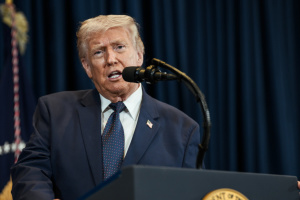
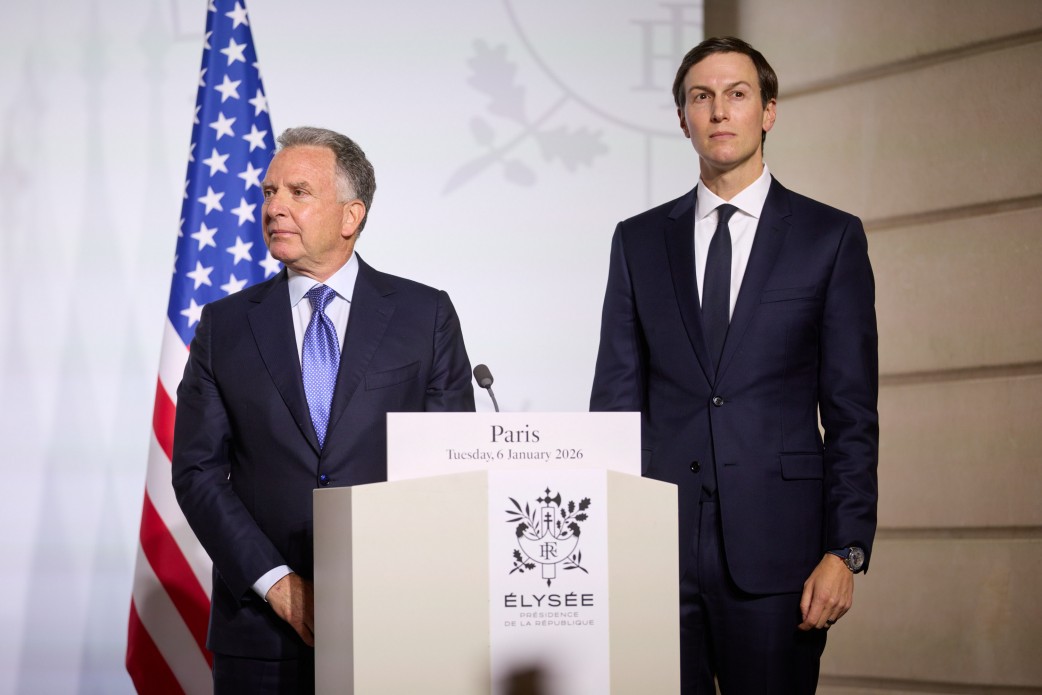
One of the key intrigues of the Paris summit was the participation of representatives linked to Donald Trump—Steve Witkoff and Jared Kushner. While the United States did not formally sign the declarations, both the presence of the U.S. envoys and their public rhetoric signaled Washington’s deep engagement in the process.
President Volodymyr Zelensky separately highlighted what he described as “very substantive” talks with the American team, noting that “we have made significant progress with the U.S. negotiating team in working on the documents.”
Steve Witkoff, in turn, struck an optimistic tone, stating:
“ We are very close to finishing up as robust a prosperity agreement as any country has ever seen coming out of a conflict like this.”
Political analyst Ihor Reiterovych emphasizes that European decisions are closely coordinated with the United States:
“It is highly unlikely that, in the presence of a U.S. delegation, European leaders would have signed a document that contradicts Washington’s vision—or at least its understanding of the situation. In effect, the United States has publicly signaled its readiness to participate in providing security guarantees for Ukraine and to support European partners in doing so.”
According to Reiterovych, this sends a clear message to the Kremlin:
“No matter what rhetoric Moscow employs or what narratives it invents, there will be no NATO troops as such—simply because NATO troops, in the literal sense, do not exist. Instead, there may be forces from individual countries. The United States, for its part, will be involved logistically and technically and will undoubtedly coordinate the entire process.”
Reiterovych also draws attention to the communication style of the current U.S. administration:
“It is no coincidence that the Russian-language page of the U.S. State Department recently published the phrase, ‘Don’t joke with President Trump.’ This is a highly revealing signal. It reflects how the logic of the American position is being built today—through a demonstration of Trump’s personal political leverage and his willingness to use it.”
Diplomat Vadym Tryukhan highlights the symbolism of Steve Witkoff’s public appearance. Previously known as a behind-the-scenes negotiator, Witkoff appeared openly for the first time:
“For the first time, he spoke at an official press conference. But what matters even more is that in his remarks he clearly outlined the key elements of the current moment. He separately and constructively acknowledged President Zelensky’s position.”
According to Tryukhan, this carries particular weight:
“This is a clear signal—especially against the backdrop of Russia’s ongoing attempts to derail the diplomatic track.”
Vadym Tryukhan also highlights the institutional presence of the United States. The Paris Declaration formally assigns Washington a leading role in the ceasefire monitoring and verification mechanism, as well as in the creation of a coordination group involving the United States.
“This means that the United States is not merely ‘somewhere nearby,’ but is being embedded as a serious, key element of the future architecture of control and deterrence,” Tryukhan noted.
Political analyst Volodymyr Fesenko believes that the U.S. negotiators’ full-fledged participation in the summit is significant in its own right—particularly given that the attention of Donald Trump and his administration is currently focused on Venezuela.
“This shows that the United States has not forgotten about the Russia–Ukraine war, and there is no question of Washington withdrawing from the negotiation process. The fact that U.S. representatives are directly involved in these talks in a trilateral format is already major progress. It is worth recalling that in February and spring of last year, the United States flatly refused to discuss security guarantees for Ukraine with either us or the Europeans,” Fesenko said.
At the same time, the political scientist cautions against dramatizing the fact that the United States did not sign the declaration.
“First, it should be taken into account that the U.S. is not a member of the ‘Coalition of the Willing.’ Second, we do not know whether Jared Kushner and Steve Witkoff had the authority to sign any joint documents. Third, the Americans do not want to rush into providing their own guarantees and binding commitments.”
According to Fesenko, Washington is using negotiations on security guarantees for Ukraine as leverage—both over Kyiv and over European partners.
“This pressure is aimed at Ukraine as well, to encourage us to eventually agree to a peace deal that would involve certain concessions, and at Europeans,” he explained.
Finally, Fesenko stresses that the broader political context must also be taken into account, particularly current tensions in U.S.–European relations over Greenland and, by extension, debates about the future of NATO.
Forecast: A Diplomatic Marathon and the Kremlin’s Response
What can be expected in the coming weeks? Experts broadly agree that the Paris summit marks only the beginning of a complex and protracted process. Each subsequent step will encounter resistance from Russia and require further rounds of coordination and consensus-building within the West.
Rather than a single breakthrough, the post-Paris phase is likely to unfold as a diplomatic marathon—testing Western unity, political endurance, and the credibility of emerging security arrangements for Ukraine.
Vadym Tryukhan outlines four key directions in which events are likely to develop:
Developing implementation mechanisms
This involves filling the existing framework documents with concrete substance—clearly defined procedures, mandates, and division of responsibilities.
A possible meeting in Washington
There is a high probability that preparations are underway for a broader high-level meeting in Washington, where the first binding agreements could potentially be signed.
“And this is a crucial point: agreements on security guarantees do not require any consent or signature from Putin. They can be signed independently, already at this stage. This could become an additional pressure leverage on the Russian side,” Tryukhan stressed.
A possible Macron–Putin contact
Tryukhan is skeptical about the effectiveness of such a meeting—especially if it takes place in Europe—but does not rule out the possibility that it could take place.
U.S.–Russia engagement
This is seen as the most anticipated and consequential development.
Political analyst Ihor Reiterovych agrees that the pivotal moment now lies in direct talks between the United States and Russia following the Paris summit.
“The idea is that Witkoff and Kushner would go to the Russians and say: ‘Look, the issue of security guarantees has been resolved. This is what they will look like. And President Donald Trump supports this.’ That, essentially, would be the central argument,” Reiterovych explained.
He also notes that the Kremlin currently appears disoriented:
“So far, I do not see any clear reaction from Russia. The impression is that they simply do not know how to respond or how to comment on what has happened.”
Reiterovych separately highlighted an interesting psychological aspect regarding Donald Trump, noting that while the U.S. president is “riding a wave” of self-confidence—particularly after perceived successes in Venezuela—this moment should be used to increase pressure on Russia:
“It is precisely at such moments that Donald Trump tends to act tough, demonstratively, and without much sentimentality. If this dynamic is properly leveraged, it can work in Ukraine’s favor.”
Political analyst Volodymyr Fesenko takes a more cautious stance and urges realism. In his view, no breakthroughs should be expected any time soon:
“In the negotiation process on ending the Russian-Ukrainian war, nothing substantial or fundamental will happen in the coming days or weeks. The Kremlin does not want the war to end, and Ukraine will not agree to territorial concessions.”
He emphasizes that the summit’s decisions are interim in nature:
“Further clarification will depend on the final conditions under which the war is brought to an end.”
Conclusion notes
The Paris summit fulfilled a critically important function: it moved the discussion of security from the realm of abstractions into the domain of legal texts. However, there is no room for euphoria. The signed declarations are merely the framework of a future structure that still needs to be filled with the concrete substance of binding agreements and parliamentary ratifications.
The Kremlin has shown no readiness for compromise, and the war continues. The key outcome of Paris is that the West has finally stopped waiting for Moscow’s permission to safeguard European security. As UK Prime Minister Keir Starmer put it, the hardest diplomatic and military “yards” lie ahead of Ukraine amid ongoing conflict with Russia. But Ukraine will now face them with a concrete action plan—one bearing the signatures of the leaders of the free world.
Myroslav Liskovych, Kyiv