A recalibration of political leadership enhances Ukraine’s institutional resilience, governance capacity, and strategic coherence
The unprecedented political, diplomatic, and military anomaly of 2026 continues. There are no Christmas holidays. The events of the first days of 2026 amount to an avalanche of sensational developments.
Perhaps this is happening because further delay was no longer possible — too much time had already been lost, both in Ukraine and globally. Expectations had accumulated: for a large-scale reconfiguration of political leadership in Kyiv; for a settlement in Venezuela — a minor yet strategically significant link in the so-called “axis of evil”; and for a powerful wave of popular protests against the ayatollahs’ regime in Iran — another close ally of Russia in Asia.
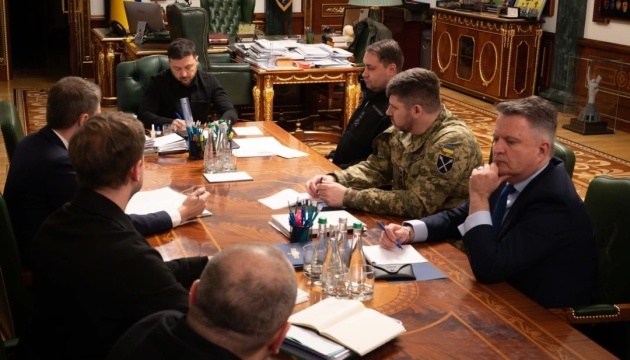
The appointment of Kyrylo Budanov as Head of the Office of the President of Ukraine was hardly unexpected. Discussions of this scenario began almost immediately after Andriy Yermak’s resignation nearly a month ago. As a result, most warnings and conspiracy-driven interpretations had already been articulated in advance. Against this backdrop, it is all the more notable how quickly they lose relevance once the decision has actually been implemented.
One common concern is that Budanov’s transfer to the Presidential Office could weaken the Defense Intelligence of Ukraine (HUR), an institution that has played a crucial role in resisting Russian aggression. However, HUR has already been entrusted to General Oleh Ivashchenko, the head of the Foreign Intelligence Service, who is no outsider to military intelligence. Prior to his appointment to the Foreign Intelligence Service, he served as Budanov’s deputy within HUR.
Moreover, HUR’s mandate extends beyond the planning and execution of high-profile special operations such as Spiderweb. It also encompasses the collection and analysis of battlefield intelligence for Ukraine’s top political and military leadership. With a new director in place, HUR therefore retains strong institutional capacity and is well positioned to sustain — and potentially enhance — its contribution to Ukraine’s war effort.
Will Budanov’s appointment as Head of the Office of the President undermine his prospects in a future presidential election? At first glance, this assumption may seem plausible. Over the past thirty years, while the Office of the President has remained at the center of political attention in Ukraine, none of its heads has leveraged the position into a successful presidential career. On the contrary, many became targets of sustained and often destructive criticism — Tabachnyk, Medvedchuk, and Baloha among them.
However, such comparisons overlook a fundamental shift in the functional role of the Office of the President. The very decision to appoint a highly effective military professional — General Budanov — as head of the presidential staff during wartime fundamentally reframes the issue. At least for the time being, these concerns lose their relevance: as long as the battlefield situation remains highly challenging and Ukraine must continue to pressure the enemy not only through the Armed Forces, but also through what may be described as its diplomatic corps.
This is the central challenge of the moment. Questions about elections and individual political trajectories can be meaningfully assessed only once conditions for them actually emerge.
The reaction to Kyrylo Budanov’s appointment further reinforces this point. The near-unanimously positive response among Ukraine’s allies, contrasted with open hysteria on the part of the adversary, serves as an indirect but telling confirmation of the logic outlined above.
The proposal to appoint Mykhailo Fedorov — a demonstrably successful minister of digital transformation — as Minister of Defense also appears to be a highly promising decision. The nature of warfare has changed fundamentally; this is no longer a matter of debate. The reality of today’s battlefield is a war of robots controlled by other robots. What remains is to align the structure and operational logic of the defense establishment with this reality. It is difficult to name a more suitable candidate than Fedorov for accomplishing this task.
At the same time, Ukraine’s “digital government” is not going to lose from such a transition. It has already been firmly institutionalized and, not without reason, evokes admiration — if not envy — both in Europe and globally. There is little doubt that a strong replacement for the post of Minister of Digital Transformation not only can be found, but is in fact already available.
In parallel, the current Minister of Defense, Denys Shmyhal, has received a proposal that aligns closely with his professional background. He entered the office of Prime Minister in 2020 from the position of director of the Burshtyn Thermal Power Plant; energy has always been his core area of expertise. Today, energy infrastructure constitutes another frontline of the Great War. The adversary is attempting to plunge Ukraine into darkness and cold, striking critical facilities almost daily. This infrastructure must be defended effectively and restored rapidly.
A line ministry left effectively leaderless as a result of a high-profile corruption controversy constitutes a major systemic risk, undermining institutional capacity, decision-making continuity, and crisis resilience at a critical moment.
In this context, Denys Shmyhal, now nominated as Minister of Energy and First Deputy Prime Minister, emerges as a credible and forward-looking candidate, one whose confirmation by parliament appears highly likely.
Let us be honest with ourselves: news of a large-scale special operation conducted by the United States against a small South American country possessing the world’s largest proven oil reserves was met with a certain sense of satisfaction — despite all the obvious “nuances.” Venezuela, under its usurper-president Nicolás Maduro, has been a loyal ally of Russia’s neo-imperial regime. More importantly, any disruption of the status quo on the global hydrocarbon market is almost guaranteed to strike at Russia’s export revenues and financial capacity.
As for the nuances. According to available information, U.S. special forces, supported by air power and naval-launched missiles, conducted a lightning operation: helicopter-borne forces were inserted, and within thirty minutes Maduro and his wife were detained and removed from Caracas. He is reportedly to stand trial in the United States on charges related to narcotics trafficking.
Clearly, such an operation constitutes a blatant violation of state sovereignty and can be interpreted as a breach of the UN Charter. Yet that is precisely the point: the Charter has long since been reduced to a largely symbolic document. Nothing will prevent Washington from acting when it has made a strategic decision to do so. In this sense, Maduro owes much of his fate to his close association with Vladimir Putin.
The system of international law, as it once existed, has effectively collapsed and been replaced by raw force — something Venezuela simply does not possess. By contrast, figures such as Kim Jong Un, who arguably deserves a fair trial far more than Maduro, remain untouchable. The reason is straightforward: nuclear weapons, ballistic missiles, and a heavily armed military capable of imposing unacceptable costs on any external intervention.
This is the emerging reality of the international order: accountability is no longer determined by legal norms, but by the balance of coercive power.
One might have expected the Kremlin to point to the White House and argue along familiar lines: we are not aggressors in Ukraine; we are merely acting as the United States did, confronting a “Nazi regime.” Naturally, such rhetoric would have achieved nothing. All responsible governments are well aware of the true value of Moscow’s statements and its alleged accusations.
Instead, the Kremlin chose a different approach. It formally condemned the “aggression against a sovereign state,” thereby placing itself in an even more absurd position. A regime that unleashed a criminal war against sovereign Ukraine — one of the founding members of the United Nations — suddenly posturing as a defender of sovereignty can only underscore the depth of its cynicism.
That said, the Kremlin is hardly unfamiliar with such self-inflicted contradictions.
What has occurred in Venezuela once again confirms a stark reality: international law no longer functions as a binding framework. Each actor now resolves its problems unilaterally — guided by its own interpretation of interests and by force. In the case of Donald Trump, for example, this may include the need to halt declining approval ratings through a “small victorious war.” In this sense, the conclusion is unavoidable: law, as a governing principle of the international system, has effectively ceased to exist. International justice has been thoroughly discredited, and restoring it will be a long process with no guarantee of success.
This reality must be acknowledged as a given. Ukraine’s priority is survival and the defeat of its enemy. From that perspective, the imprisonment of Nicolás Maduro is not only understandable — it is the correct outcome for Ukraine.
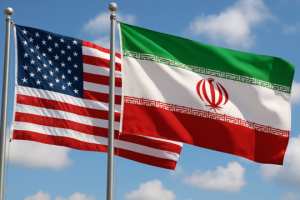
The situation with Iran is more complex. Although the U.S. president has promised to protect those protesting against the arbitrariness of the extremist ayatollah regime, the question remains: how exactly could this be done? Iran is not Venezuela. This ancient country has been turned by its rulers into an adversary of the civilized world, including Ukraine. One need only recall the Iranian-made Shahed drones handed over to Russia and used for years to terrorize Ukrainian cities.
A direct special-forces operation in Tehran would be an excessively high-risk option. Even Israel is unwilling to pursue such a scenario: after Iran’s defeat in last year’s 12-day war, could the ayatollahs still retain some elements of a nuclear arsenal? That uncertainty alone acts as a powerful deterrent.
Iran’s internal problems merit a separate discussion. The principal obstacle undermining any hypothetical victory of the protesters over the regime is the absence of an organized opposition. Over decades, the totalitarian theocratic system has systematically eradicated any meaningful form of resistance. The second problem is that the protesters lack armed backing. One may hope that the army would side with the people — a possibility mentioned by Israeli journalist Sergey Auslender — but Iran’s regular military is not the most powerful armed force in the country. The Islamic Revolutionary Guard Corps surpasses the army in all key components and possesses the capacity to suppress unrest rapidly and with extreme brutality.
To put it shortly, the ayatollahs have cemented their regime as if it were designed to last forever. Once again, everything is decided by force. Still, we shall wait and see.
Oleh Novychenko, Kyiv
Headline photo courtesy of the Office of the President of Ukraine