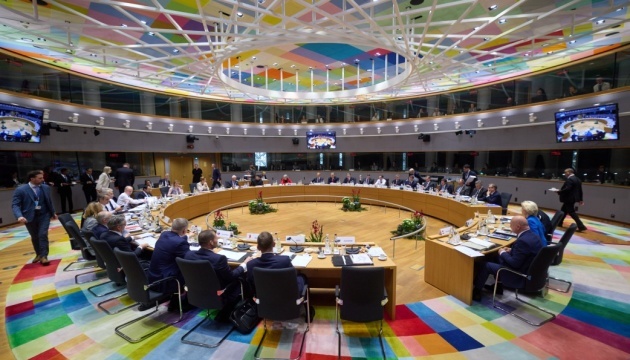
European Council conclusions on Ukraine: funding, strengthening defense, sanctions against Russia
At the EU leaders’ summit in Brussels*, after tense, hours-long discussions, a decision was finally adopted on the format of financing for Ukraine for the next two years. It provides for shared interest-free borrowing on capital markets, using a budgetary reserve of €90 billion over the next two years, which Ukraine would have to repay only if Russia pays reparations for the damage caused during the war.
PROLONGED DISCUSSIONS AND AN UNEXPECTED RESULT
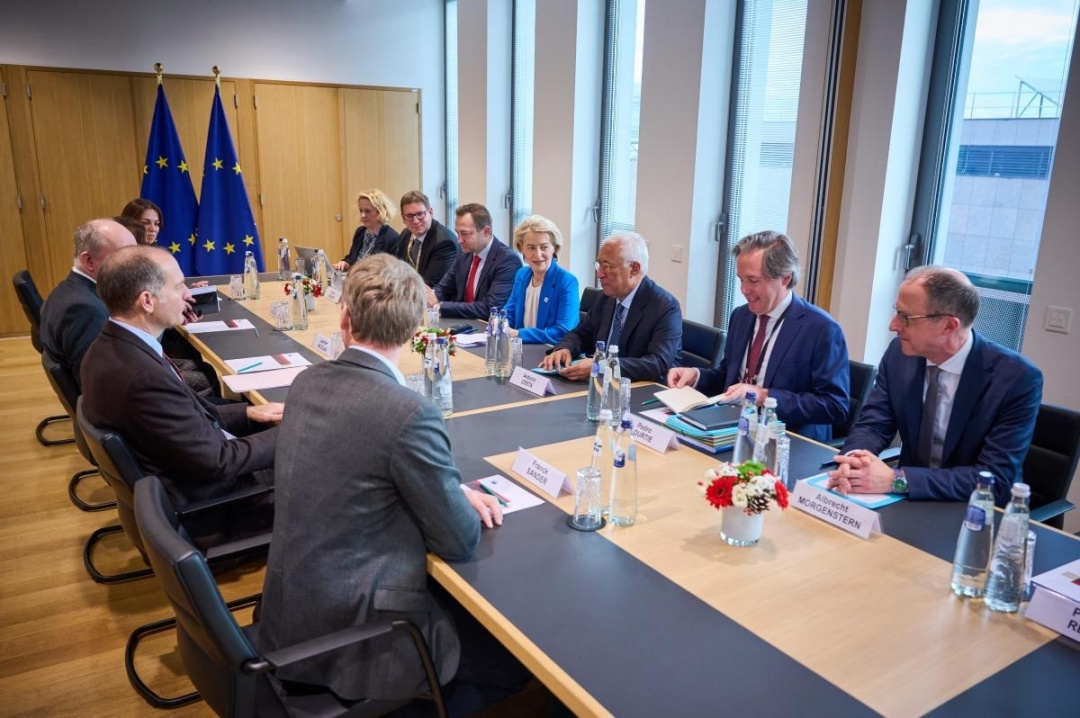
EU leaders at the European Council meeting, which began on December 18 and lasted late into the night, adopted a rather unexpected decision on the format of financing for Ukraine through joint borrowing that will have no financial impact on the budgets of the Czech Republic, Hungary, and Slovakia. The section of the meeting’s conclusions concerning Ukraine was “firmly supported” by 25 of the EU’s 27 member states.
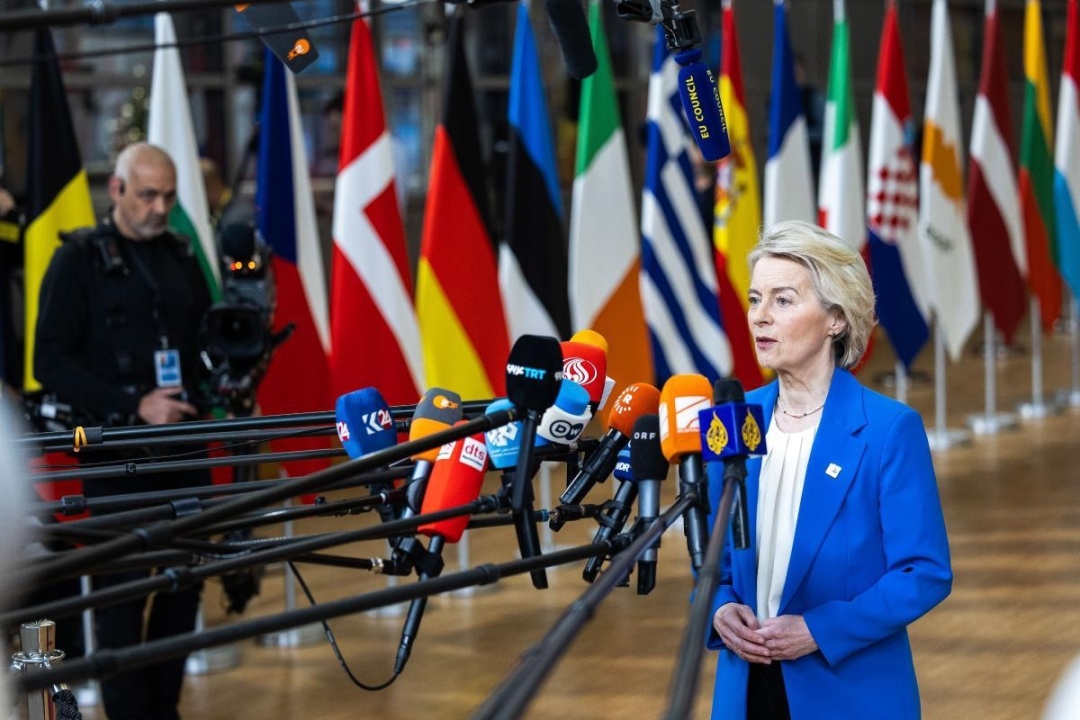
Speaking to reporters ahead of the summit on December 18, European Commission President Ursula von der Leyen said that two options are being proposed for discussion to cover Ukraine's funding shortfall for 2026-2027, namely: a shared debt of EU countries and a so-called “reparation-based” loan using Russian Central Bank assets frozen in European jurisdictions.
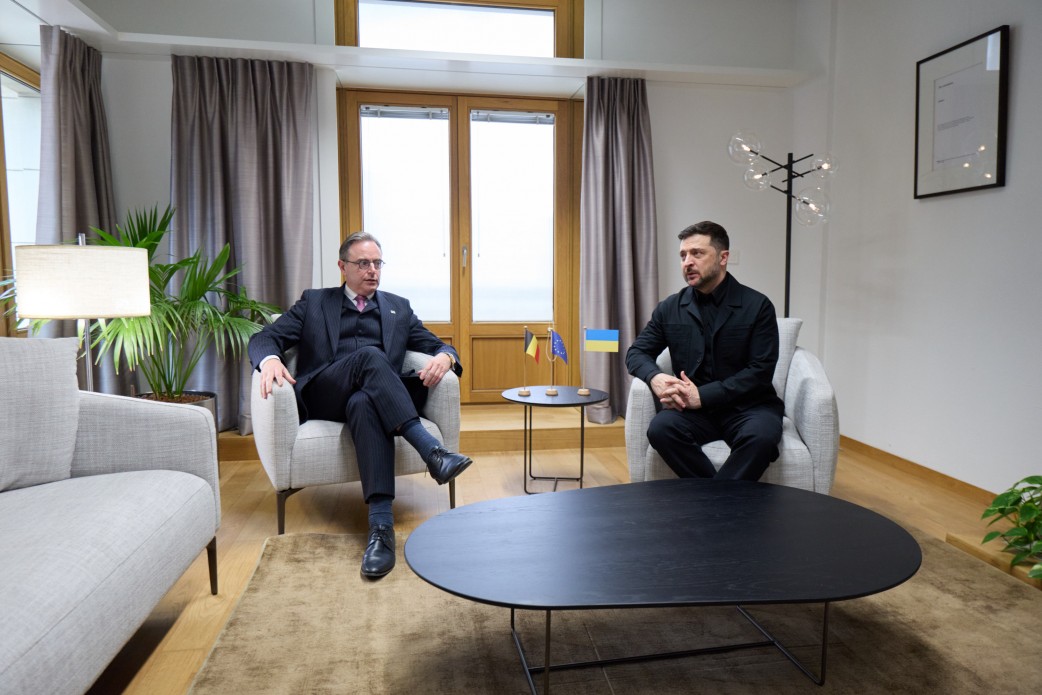
The main opponent of this latter option was Belgium, on whose territory—at the Euroclear depository—the lion’s share of Russia’s sovereign assets immobilized in the EU, amounting to €190 billion, is held. Belgian Prime Minister Bart De Wever has repeatedly insisted that this path entails legal and financial risks for his country and has demanded guarantees from the other EU member states that any potential negative consequences would be shared among all of them, and that the scheme would also involve Russian assets frozen in other jurisdictions.
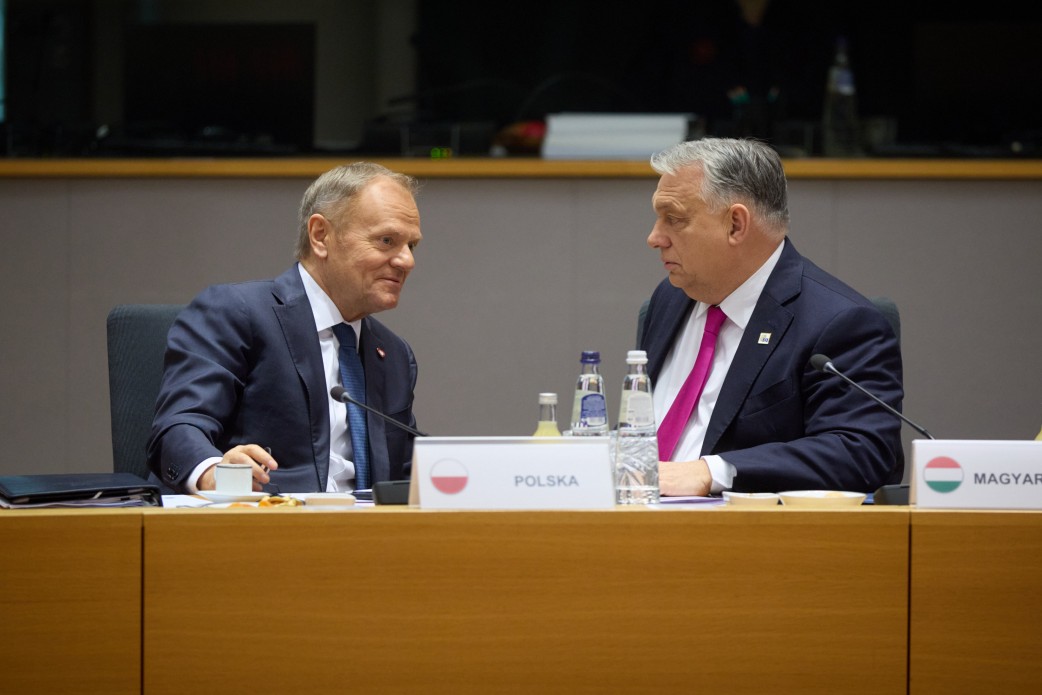
For its part, Hungary—represented by Prime Minister Viktor Orbán—opposed both financing options and, regarding Russian assets, argued that their use could lead to a real war.
The decision on a reparations-based loan required approval by a qualified majority only, whereas the issuance of joint debt had to be endorsed by all EU leaders. As of late Thursday evening, this still seemed unlikely—which is precisely why the final decision announced by European Council President António Costa at a press conference after 3 a.m. can be described as truly surprising.
The legal loophole that made it possible to “push through” the decision was the use of Article 20 of the Treaty on the Functioning of the European Union, which provides for enhanced cooperation. On this basis, the mobilization of resources from the EU budget as a guarantee for the debt “will have no impact on the financial commitments of the Czech Republic, Hungary, and Slovakia,” as stated in the European Council conclusions.
THE USE OF IMMOBILIZED RUSSIAN ASSETS REMAINS AN OPEN QUESTION
One way or another, the summit’s positive decision eases part of the pressure on Ukraine, as it takes into account the need for financial support starting from the second quarter of next year and confirms the EU’s corresponding commitment—propounded at the previous summit in October—to ensure funding for Ukraine over the next two years. However, the use of Russian assets totaling €210 billion, immobilized within the EU, remains an open question.
As the EU’s High Representative for Foreign Affairs and Security Policy, Kaja Kallas, has repeatedly stated, it is the aggressor who must pay the bill.
In this context, the leaders agreed that the loan would be repaid by Ukraine only after it receives reparations from the Russian Federation.
“Until that time, these (Russian sovereign — ed.) assets will remain immobilized, and the European Union reserves the right to use them to repay the loan, in full compliance with EU law and international law,” the conclusions state.
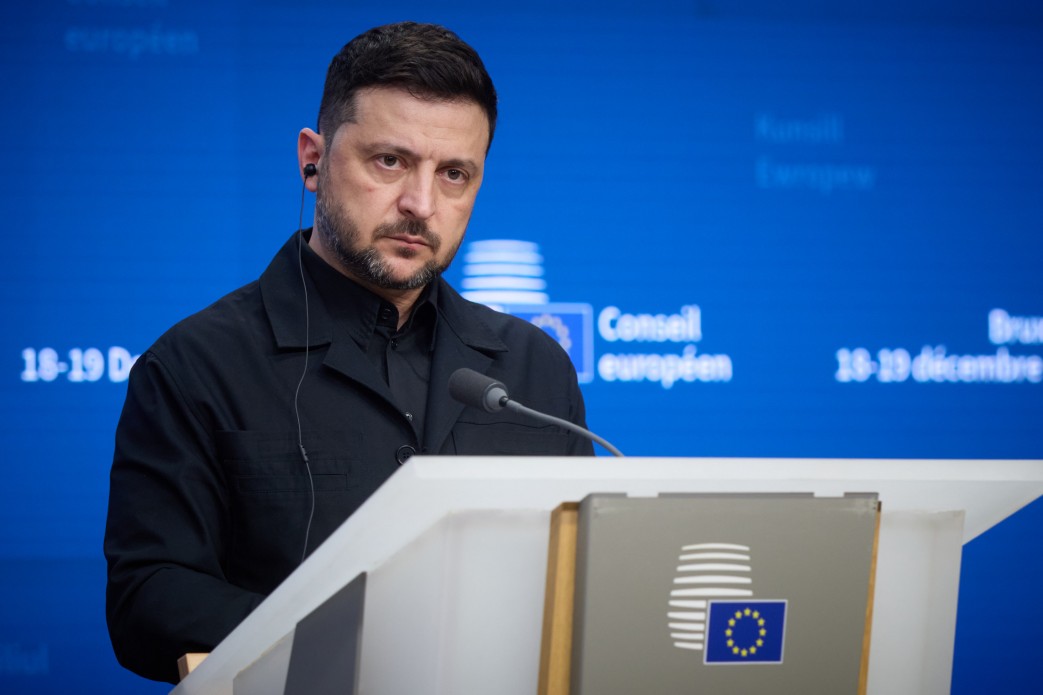
Ukrainian President Volodymyr Zelensky, commenting on the summit’s decision, highlighted the importance of the fact that Russian assets remain immobilized and that Ukraine has received a financial security guarantee for the coming years.
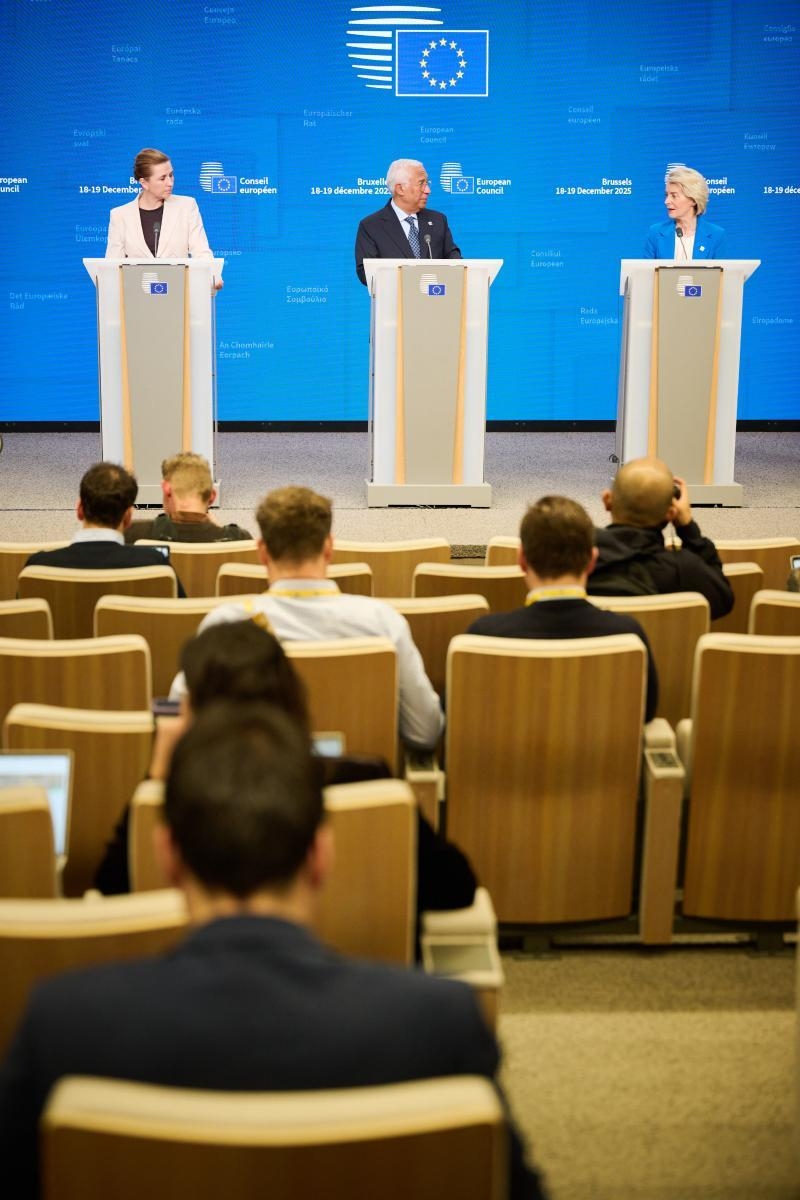
European Council President António Costa, for his part, reminded journalists during the final press conference that the EU is already using Russian assets.
“We are already using immobilized assets. We are servicing the G7 loan (which is repaid from the interest generated by such assets – ed.), and we have decided to keep these assets immobilized until the end of the war, until Russia compensates for the damage caused to Ukraine,” he noted.
At the same time, the European Council called on the co-legislators—the Council of the EU and the European Parliament—to continue work on the technical and legal aspects of the reparations-based loan, using cash balances linked to Russia’s frozen assets.
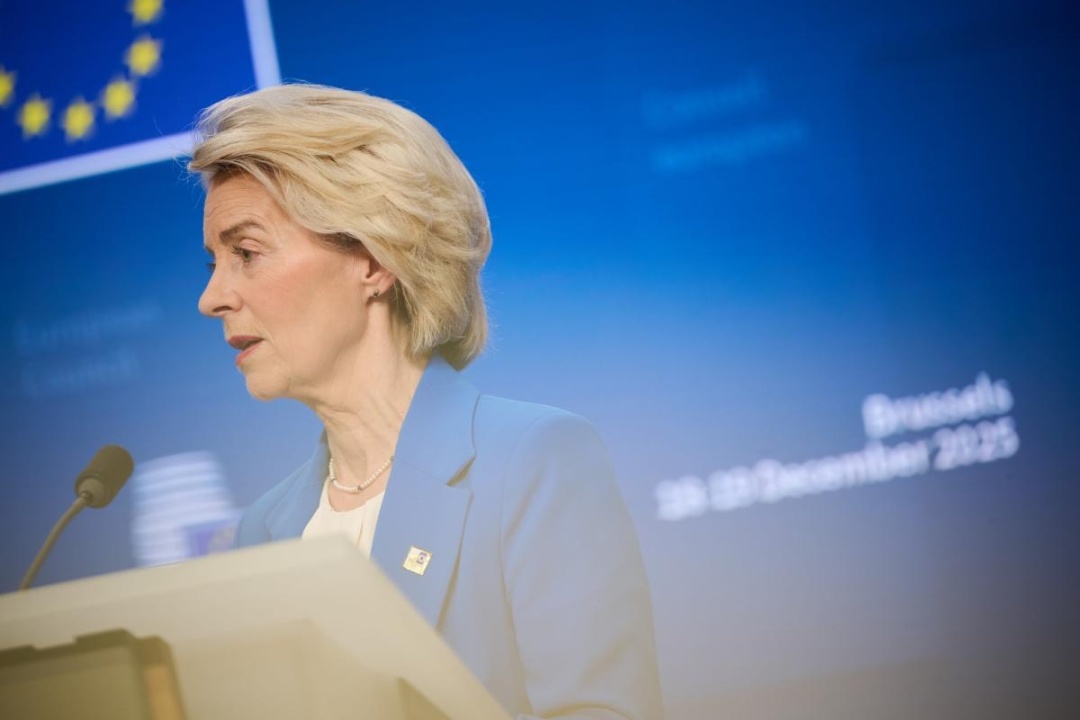
European Commission President Ursula von der Leyen emphasized that the main goal was to guarantee financing for Ukraine amounting to €90 billion over the next two years.
“The greatest victory is that Russian assets are now securely frozen. They can be used again only on the basis of a decision adopted by a qualified majority,” she stated.
Belgian Prime Minister Bart De Wever welcomed the European Council’s decision, saying that it had helped avoid “chaos and discord.”
Regarding the decision on the €90 billion loan, the European Council emphasized the importance of the following elements:
strengthening the European and Ukrainian defense industries;
Ukraine’s continued adherence to the rule of law, including the fight against corruption;
respect for the specific nature of the security and defense policies of certain Member States, as well as the security and defense interests of all Member States.
PEACE TALKS AND DEFENSE SUPPORT: PEACE MUST BE JUST AND LASTING
EU leaders emphasized the “critical need to ensure Ukraine’s resilience and the availability of budgetary and military resources to continue exercising its inherent right to self-defense, to counter, contain, and deter Russia’s aggression, including in the long term.”
The conclusions state that the European Union “supports a comprehensive, just, and lasting peace in Ukraine, based on the principles of the UN Charter and international law.” They welcome ongoing diplomatic efforts aimed at ending the war and call on Russia to agree to a full, unconditional, and immediate ceasefire—one that Ukraine is ready to accept—and to begin meaningful negotiations toward a just and lasting peace.
“For peace to be just and lasting, borders must not be changed by force, and any future agreement must respect Ukraine’s independence, sovereignty, and territorial integrity, as well as guarantee Ukraine’s long-term security and ability to defend itself,” EU leaders stated.
The European Union and its Member States insist that they will continue to be actively engaged in peace efforts, while stressing that the path to peace in Ukraine cannot be chosen without Ukraine at the table.
The EU and its Member States also confirmed their readiness to contribute to reliable and credible security guarantees for Ukraine, including through the Coalition of the Willing and in cooperation with the United States.
“This will include support for Ukraine’s ability to deter aggression and to defend itself effectively. The contribution of the European Union and its Member States will be based on their respective competences and capabilities and will be consistent with international law,” the conclusions state. “The European Council calls on EU Member States to step up the provision of Ukraine’s urgent military and defense needs, in particular air defense and counter-drone systems, as well as large-caliber ammunition.”
In this context, EU leaders believe that continued support, development, and investment in Ukraine’s defense industry remain decisive, including through the establishment of Ukrainian defense production facilities on the territory of the European Union.
The importance of further strengthening cooperation and integration between Ukraine’s defense industry and the European defense-industrial base is also emphasized, with particular note of Ukraine’s “unique experience and know-how,” which should be built upon.
“In this context, the European Council welcomes the inclusion of cooperation with Ukraine in the defense industry investment plans of the Member States under the ‘Security Action for Europe’ (SAFE) instrument,” the conclusions state.
Фото Photo: Presidential Office
ENLARGEMENT: LEADERS ACKNOWLEDGE THE NEED FOR INTERNAL EU REFORMS
Given Hungary’s continued blocking of negotiations on Ukraine’s accession to the EU, no breakthrough conclusions from the European Council on enlargement could be expected, and the discussion of this topic was framed as “strategic discussions.” In the course of these discussions, the EU merely reaffirmed its “unwavering support for Ukraine’s path toward EU membership” and welcomed the significant progress Ukraine has made to date under the most challenging circumstances.
It is stated that the European Union will continue to work closely with Ukraine and support its efforts to “fully implement all conditions in line with a merit-based approach.”
The strategic discussions also addressed aspects related to the EU’s internal reforms, as leaders recognize that not only candidate countries, but the European Union itself must be prepared for the next stage of enlargement.
Overall, enlargement continues to be viewed as a “geostrategic investment in peace, security, stability, and prosperity.”
“The European Union needs to lay the necessary internal foundations and carry out reforms. This will make the European Union stronger and enhance European sovereignty,” the summit’s general conclusions state.
Incidentally, the EU’s top diplomat, Kaja Kallas, recently hinted that the circulation of information about a possible date for Ukraine’s accession to the EU in a draft peace agreement may indicate that the United States is sending a signal to Hungary to unblock negotiations on Ukraine’s European integration.
THE EU WILL CONTINUE WORK ON A NEW PACKAGE OF SANCTIONS AGAINST THE AGGRESSOR
The European Union has confirmed that it remains determined to increase pressure on Russia in order to force the Kremlin into “meaningful negotiations on peace.”
In this context, EU leaders called on the Council of the EU to continue work on a new sanctions package, with the aim of adopting it at the earliest time possible after it is unveiled in early 2026.
Summit participants emphasized the importance of further coordination with the G7 and other like-minded partners on sanctions, as well as the continued strengthening of measures to prevent their circumvention.
The Council reviewed efforts aimed at restricting the operations of Russia’s shadow fleet, which have effectively reduced Russian energy revenues. In this context, the summit’s conclusions included a call on EU member states to continue coordinated action and cooperation with G7 partners against all actors involved in the “shadow fleet ecosystem”, in order to further reduce Russia’s energy revenues and to continue addressing the significant risks posed by the shadow fleet.
The European Council strongly condemned the support for Russia by third countries, in particular Iran, Belarus and the DPRK, which allows the Kremlin to continue its war against Ukraine, and called on “all countries to immediately cease any assistance – direct or indirect – to Russia in its military aggression against Ukraine, in particular through the supply of dual-use goods or components”.
REPATRIATION OF ABDUCTED CHILDREN, INFRASTRUCTURE RECONSTRUCTION, AND ACCOUNTABILITY FOR THE AGGRESSION
The European Council “strongly condemns” the continued Russian strikes targeting civilians and civilian infrastructure, including hospitals and energy facilities. Once again, Russia was urged to “immediately cease all military activity in the vicinity of Ukraine’s nuclear facilities, which poses a serious threat to their safety.”
The European Council also called for the mobilization of efforts to support Ukraine in the recovery and reconstruction of its energy system and in making it more resilient to attacks.
“The European Union and its Member States, in cooperation with partners, will step up the provision of humanitarian aid and civil protection assistance to Ukraine, as well as energy supplies and related equipment,” the conclusions state.
Regarding the egregious issue of Ukrainian children abducted by Russia, EU leaders reiterated their urgent call on Russia and its ally Belarus to “immediately ensure the safe and unconditional return to Ukraine of all illegally deported and forcibly transferred Ukrainian children and other civilians.”
At the same time, other humanitarian efforts and confidence-building measures, including the exchange of prisoners of war, should form part of the path to peace, EU leaders stated.
Welcoming the recent signing in The Hague of the Council of Europe Convention on the establishment of the International Claims Commission for Ukraine, the European Union continues to insist on ensuring full accountability of the aggressor, the Russian Federation, for war crimes and other grave crimes committed during the military aggression against Ukraine.
In this context, the European Council calls for sustained efforts aimed at launching the work of the Special Tribunal for the crime of aggression against Ukraine within the framework of the Council of Europe.
Yevhen Matyushenko, Brussels
Photo via the Office of the President of Ukraine; European Union
* At its latest meeting, the European Council reaffirmed long-term political, financial, and military support for Ukraine, underlining that European security is inseparable from Ukraine’s ability to resist Russian aggression.
Sustainable funding for Ukraine
EU leaders confirmed continued multi-year financial assistance, aimed at ensuring Ukraine’s macro-financial stability, budgetary resilience, and the functioning of essential state services.
The Council emphasized predictability of funding, including support for recovery and reconstruction planning.
Member states reiterated the importance of protecting and using profits from frozen Russian assets to support Ukraine, in line with EU and international law.
Strengthening Ukraine’s defense
The Council called for accelerated delivery of military assistance, particularly air defense systems, ammunition, and long-range capabilities.
Strong emphasis was placed on boosting Europe’s own defense industry, joint procurement, and closer EU-Ukraine cooperation in defense production.
Training missions and intelligence cooperation will continue to be expanded.
Sanctions and pressure on Russia
EU leaders confirmed their readiness to tighten sanctions against Russia if needed, including measures targeting:
Russia’s military-industrial complex
Sanctions circumvention via third countries
Energy revenues and dual-use technologies
The Council stressed that Russia must be held accountable for war crimes and for the damage inflicted on Ukraine.
Political message
The conclusions send a clear signal that:
The EU rejects any “peace” based on Ukrainian capitulation.
Pressure on Russia will continue as long as aggression persists.
Ukraine’s path toward EU membership remains open and politically supported.
Bottom line: The European Council confirmed a strategy of endurance—stable funding for Ukraine, stronger collective defense, and sustained sanctions—aimed at ensuring that Russia cannot outlast European unity.