Berlin Talks: Not a Breakthrough yet, but Hopefully some Progress
The key question: is American diplomacy capable of “selling” the Berlin agreements to Moscow?
On December 14–15, two rounds of intensive diplomatic talks took place in Berlin.
On the one hand, Ukraine received an unprecedented joint statement from European leaders and, effectively, the first promise of security guarantees from the United States. On the other hand, the issue of occupied territories and a genuine ceasefire remains at a dead end.
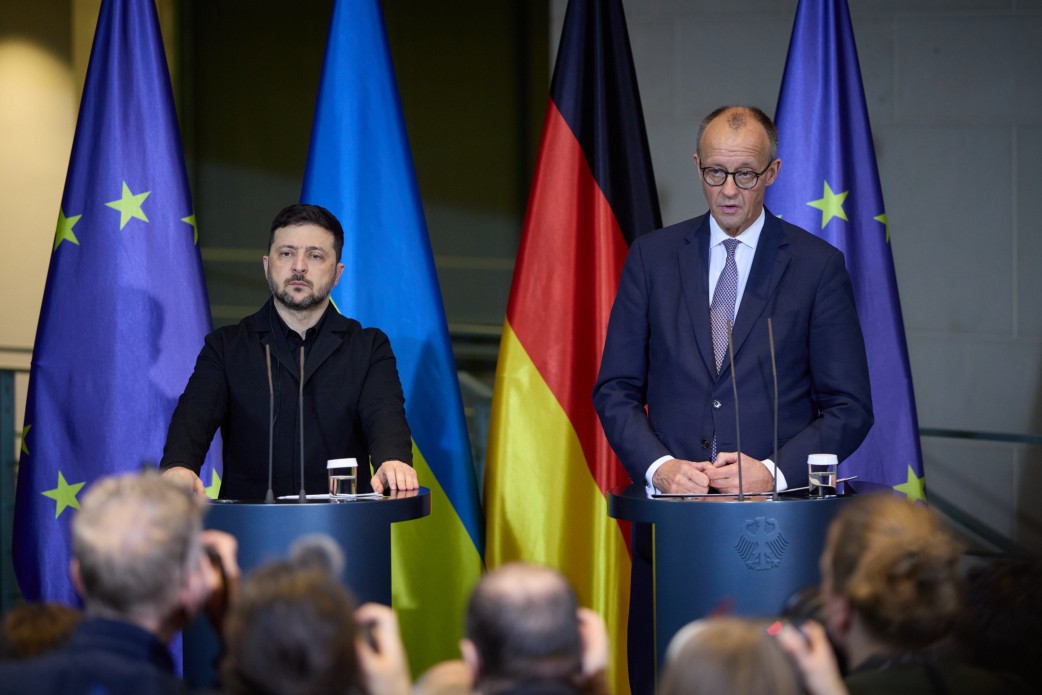
While Steve Witkoff, Trump’s special envoy, speaks of “progress,” Volodymyr Zelensky insists on “no bargaining over sovereignty,” and Friedrich Merz calls for a Christmas truce, the Kremlin is demonstratively burning bridges.
So what are the real outcomes of the Berlin meetings? Will the “negotiation window” close on December 19, and what should Ukraine prepare for in the coming weeks? Here Ukrinform is breaking this down with experts.
THE MIRAGE OF A BREAKTHROUGH: WHY “SECURITY” HAS MOVED FORWARD WHILE “TERRITORIES” REMAIN STALLED
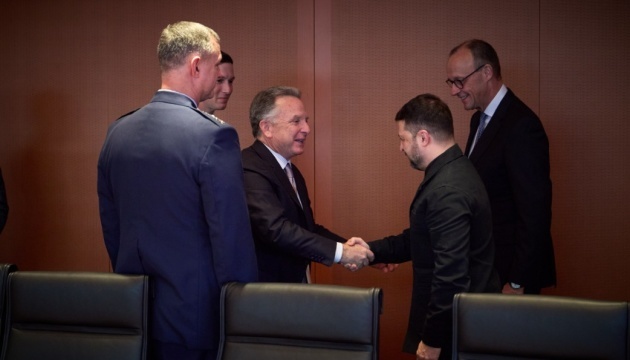
According to sources, the atmosphere of the talks was businesslike but extremely tough. The Ukrainian delegation, led by Volodymyr Zelensky, arrived in Germany with a clear directive: no bargaining over sovereignty. From the very outset, the President outlined the core principle that Kyiv considers the only realistic scenario for a ceasefire: “we stand where we stand.”
“Ukrainian and Russian troops remain in their current positions, and all issues are resolved through diplomatic means,” the head of state explained.
However, the American envoys brought their own vision, which—to put it mildly—sparked debate. It involved an attempt to “wrap” territorial concessions in an economic package. The U.S. delegation promoted the idea of turning the occupied territories into “economically free zones,” which de facto could mean freezing the occupation for an indefinite period.
However, Berlin’s main achievement was not the territorial track but the security package. European leaders released a joint statement that outlines the contours of what is being called the “European Shield.” The list of proposed guarantees looks unprecedented:
Multinational forces under a European mandate. For the first time, this includes a physical presence of European contingents to support the Armed Forces of Ukraine and protect the airspace.
Legal commitments (Article 5–like guarantee). Europe declares its readiness to fight in the event of a renewed attack. Chancellor Merz went even further, stating that the United States stands ready to provide similar guarantees.
Fixing the size of the Armed Forces of Ukraine. Support for maintaining the Ukrainian military at a level of 800,000 personnel in peacetime.
U.S.-led monitoring. The creation of a verification mechanism under American leadership.
Economic foundation. Investments and the use of frozen Russian assets.
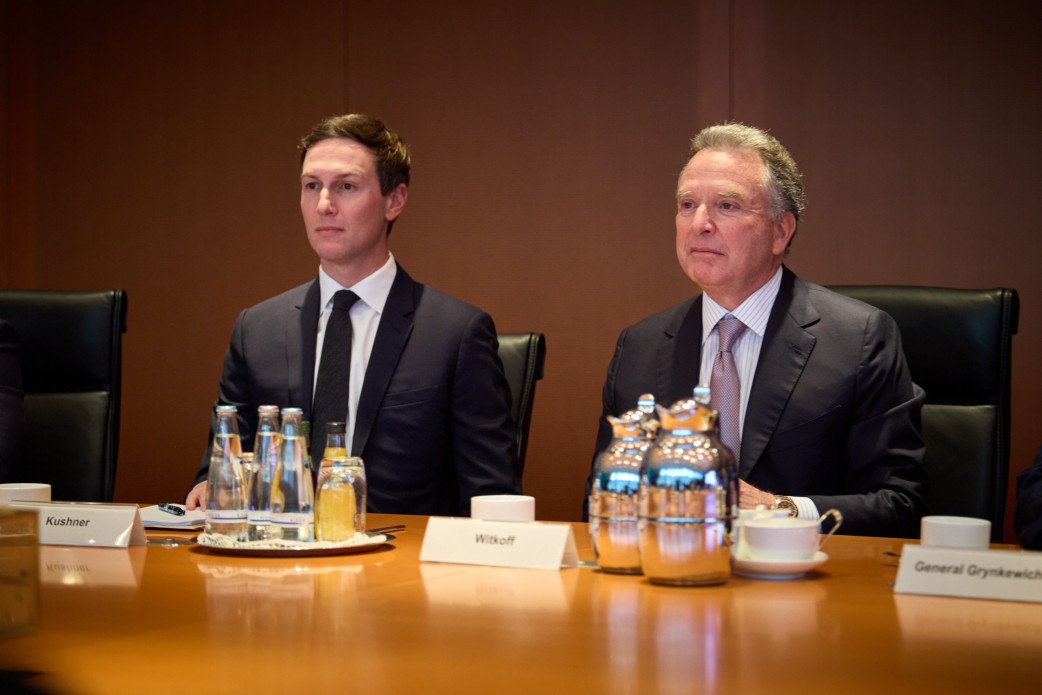
Witkoff described the talks as “significant progress.” Zelensky was more restrained, acknowledging the difficulty of the dialogue with the Americans.
But can this really be considered a breakthrough if the issue of territories remains unresolved?
The expert community tends to believe that the tracks have diverged: the security track has moved forward, while the territorial one has hit a wall.
Political scientist Ihor Reiterovych suggests looking at the situation soberly—without excessive “triumphalism,” but also without cries of “betrayal.”
“We can speak not of a breakthrough, but of certain shifts. For the sake of fairness, it is worth acknowledging that progress has been made in some areas. This was stated by both the American and the Ukrainian sides. There is also a fairly detailed position from the European Union. In essence, it is not new—the Europeans have adhered to similar logic before—but what matters is that this time it was articulated with consideration of the changes that resulted from the meeting in Berlin,” the expert notes.
Reiterovych aptly describes the current state of the negotiations using a mathematical metaphor: we have an equation that, for now, does not balance.
“I would put it this way: we have made very significant progress on issues related to security guarantees. At the same time, on territorial issues we are, for now, essentially standing still. And that, you know, is like in mathematics: a plus multiplied by a minus ultimately gives a minus. And that is probably the key problem at this point.
In his view, the positive aspect is that there is now a clearer understanding of the positions of the parties. The framework that will be taken to Moscow is no longer abstract,” the political scientist analyzes.
In his view, the positive aspect is that there is now a clearer understanding of the positions of the parties. The framework that will be taken to Moscow is no longer abstract.
“On other tracks there has been some progress: there is a better understanding of Ukraine’s position, and a clearer understanding of the United States’ position. Next, this framework will be conveyed to the Russian side. The Russians have already publicly said quite a lot today—what they don’t like, what they oppose, and so on. Let them talk. What matters more is the real feedback we receive from Moscow,” Reiterovych concludes.
Political scientist Volodymyr Fesenko takes a far more skeptical view of the situation. He is convinced that the very foundation of the American proposals contains a critical flaw: they demand concessions that Ukraine will not accept and are based on the illusion that Putin is ready to stop.
“No breakthrough has occurred, and none could have occurred. The issue of withdrawing Ukrainian troops from Donbas is one where compromise is impossible. That is precisely why there is no reason to expect any kind of peace agreement by Christmas,” Fesenko states categorically.
The expert acknowledges progress on security guarantees but considers it insufficient to offset the territorial disagreements. In his view, what we are witnessing is a classic stalemate, disguised as active diplomacy.
“Judging by the statements of President Zelensky, the American negotiators, our European partners, as well as media leaks, the talks managed to achieve significant progress on security guarantees for Ukraine, as well as some progress on assistance to Ukraine in the process of postwar reconstruction. However, as long as the United States supports the idea of withdrawing Ukrainian troops from Donbas, there will be no breakthrough in the negotiations; on the contrary, there will be a deadlock,” he warns.
Fesenko emphasizes that the problem is not how the document is written, but what is in the mind of the Kremlin dictator.
“The systemic problem that will hinder success in the negotiations is that Putin has no intention of ending the war. He still hopes to win the war against Ukraine, and therefore will not negotiate seriously now. However, the talks will continue. The Kremlin also cannot afford to categorically reject the Americans’ peace initiatives. Trump is too important for Putin, so the Kremlin will continue its negotiating game with the Americans,” the political analyst concludes.
HAS EUROPE STOPPED BEING SHY AND FINALLY STARTED... TO ACT?
Whereas the role of the United States in these talks appears ambiguous, Europe has finally demonstrated the agency that many have long expected from it. The Berlin summit showed that the Old World no longer wants to remain a passive observer that merely pays the bills. The joint statement by EU leaders became not just a declaration, but a signal that Europe is ready to take responsibility for the security of the continent, even if America chooses to distance itself.
Diplomat Vadym Tryukhan describes the events in Berlin as landmark. He points out that the meeting did not take place in the format of “Ukraine asks – partners consider,” but rather as an equal dialogue of a consolidated Europe.
“In the end, the outcome was entirely predictable on the one hand, and surprising on the other. Predictable because the war is ongoing, and by definition no final documents could have been produced there… In fact, no one seriously expected that to happen, since these were not direct negotiations between the two warring parties—Ukraine and Russia. Rather, they were coordination meetings among partners,” the diplomat says.
But the key point, in Tryukhan’s view, was the demonstration of unity. He cites a telling example that illustrates the seriousness of the Europeans’ intentions.
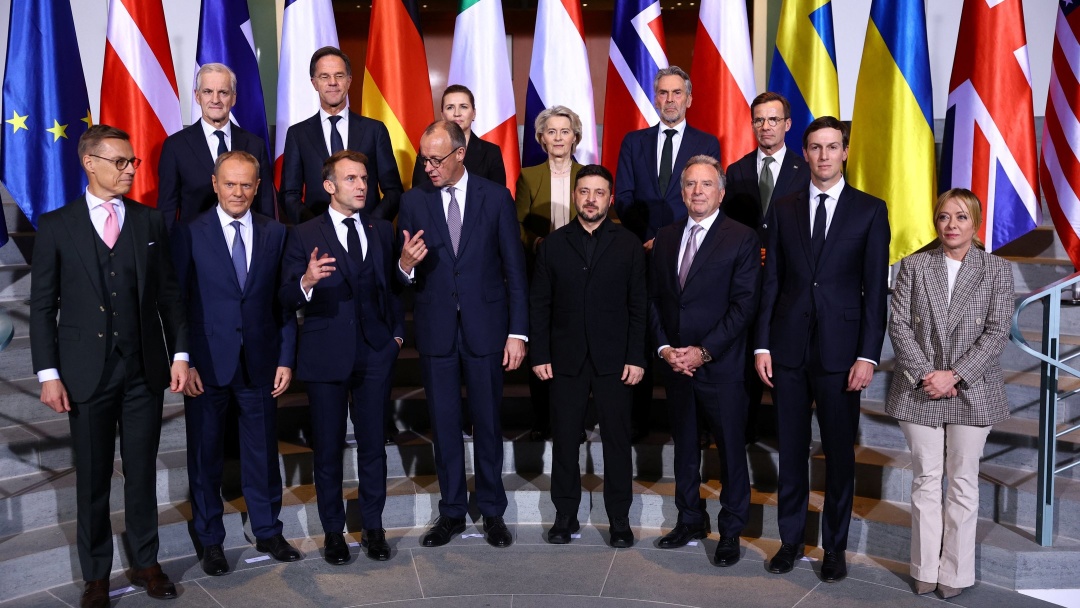
“We witnessed unprecedented unity among Europeans. This was not just a formal meeting—some came to Berlin in person, others joined online. Many deliberately canceled other important commitments and trips in order to be here, at this exact moment. A telling example: the President of Finland canceled a planned important visit to the United States and flew to Berlin specifically to be personally present on that day,” the expert emphasizes.
This consolidation resembles the emergence of a new political organism.
“Therefore, yes, there were no breakthroughs in the classical sense. But instead, a very important process clearly manifested itself in Berlin — a deep consolidation of Ukraine and European states. In fact, we witnessed the emergence of a prototype of a Union, a political and security community forming around Ukraine and together with Ukraine. To a large extent, this became possible thanks to the strong, clear, and personal leadership role of Chancellor Merz,” the diplomat believes.
Why did this transformation occur? Tryukhan is convinced that fear has transformed into an awareness of reality. Europe has realized that it is next.
“It seems to me that the key conclusion emerging from all these discussions is one thing: Ukraine will not be left alone against Russia. And this is fundamentally important. Even despite the fact that the United States has effectively washed its hands and ceased to be a reliable—and, crucially, a key—partner for Ukraine… Meanwhile, Europeans appear to have finally realized a simple but harsh reality: if Ukraine loses this war, they themselves will be next,” Tryukhan explains, recalling NATO Secretary General Mark Rutte’s words that the fall of Ukraine would amount to the fall of Europe.
The joint statement also became a tool for countering Europe’s ‘Trojan horses’—Hungary and Slovakia.
“It is worth dwelling separately on the joint statement. It serves as a marker of the processes currently unfolding in Europe. On the one hand, the statement clearly demonstrates that the former complete unity within the European Union and NATO no longer exists. There are states that are effectively acting as puppets of the Kremlin… That is precisely why they categorically refuse to sign any documents. And this must finally be clearly understood: with these countries, it will be necessary either to work around them or to systematically neutralize their destructive influence,” Tryukhan goes on to note.
Beyond its political weight, the statement brings the discussion back into the framework of international law, erecting a barrier against attempts at backroom deals at the expense of Ukrainian land.
“The Europeans have effectively brought a basic principle back into play: the settlement of the war must take place exclusively on the basis of international law. In addition, there is a clearly stated demand for the withdrawal of Russian troops from Ukrainian territory. In essence, this serves as a reminder—indeed, a ‘cold shower’—for those American representatives who sincerely believe that peace can be achieved by bending President Zelensky over the knee,” the diplomat concludes.
However, political declarations require financial fuel. Volodymyr Fesenko warns that without money, the statement will remain just a piece of paper.
“Undoubtedly, this statement is very important. It demonstrates political and negotiating support for Ukraine from European partners in a fairly firm form. However, it is highly desirable that this statement be backed by an EU decision on financial support for Ukraine for the coming year. Political declarations must rest on a solid financial foundation; otherwise, their effect will be illusory,” he warns.
“Ihor Reiterovych adds a note of optimism on the financial front, pointing to the upcoming EU summit on December 18–19 and the fate of frozen Russian assets.
“On December 18–19, a European summit will take place. And if the issue of the so-called reparations loan could be resolved there, it would be a very strong—I'd even say spectacular—development. At the same time, it’s worth noting something else: Europe has in fact moved to an open-ended freeze of Russian funds. This is a fundamental decision, and essentially the Europeans have done what they were supposed to do,” the political scientist comments.
Vadym Tryukhan adds: “There is hope that at the EU summit new decisions will be adopted on financial support for Ukraine—both in terms of supporting the state budget and covering military expenditures. In addition, another meeting in the ‘Ramstein’ format is taking place today, where concrete decisions will be announced regarding practical aspects of support for Ukraine—primarily in the field of air defense, the supply of ammunition, and other critically important areas.”
AMERICAN GUARANTEES: MONITORING INSTEAD OF ‘BOOTS ON THE GROUND’
One of the most enigmatic aspects of the talks was the U.S. position on security guarantees. Previously, Washington had avoided specifics, but in Berlin the ice seems to have broken. The discussion centers on a specific division of roles that could suit Trump: America does not fight, but it oversees and verifies.
Volodymyr Zelenskyy confirmed that since NATO membership is not on the table for now, a format analogous to Article 5 is being worked out. Vadym Tryukhan explains what this means in practice.
“As for security guarantees, this is actually where a real shift has emerged. There are still few details, but what is telling is something else: Chancellor Merz and other European leaders, just like Volodymyr Zelensky, spoke on this topic with visible satisfaction. This gives grounds to assume that Donald Trump has nevertheless made a principled decision not to confine himself to political support for the Europeans, but to take direct, effective part in the mechanism for guaranteeing Ukraine’s security,” the expert notes.
He explains that the role of the United States will not be to send soldiers into the trenches, but to create a powerful oversight mechanism.
“Judging by the public statements of European leaders, this is not about the direct presence of United States troops on Ukrainian territory. Instead, it is about a different, no less important role: the Americans are to lead the mechanism for monitoring the enforcement of agreements, first and foremost the ceasefire regime. In effect, we can speak of a certain division of roles. The mission tasked with supporting Ukrainian forces in the area of security guarantees will be led by the Europeans. And the mission responsible for monitoring, tracking, and verifying compliance with the ceasefire regime will be led by the United States,” Tryukhan explains.
In his view, this approach is critically important, because the presence of the American flag—even in the form of a monitoring mission—significantly changes the Kremlin’s calculations.
“Both are critically important for the enforcement of any agreements on ending the war… After the American colleagues in Berlin conveyed this readiness to Ukraine and our European partners, the level of optimism in the statements and assessments of Volodymyr Zelensky and European leaders noticeably increased… Now the key question is how Russia will respond to this. Until now, Moscow has strongly opposed any involvement of foreign troops or even international contingents… But it will be far more difficult for the Kremlin to reject a decision sponsored by Trump personally,” the diplomat concludes.
However, Ihor Reiterovych advises reading the fine print carefully when it comes to an “Article 5–like” arrangement.
“He [Trump] proceeds from the logic that an agreement can supposedly be reached by December 25: Donbas goes to Russia in some format, security guarantees to Ukraine, even ratified by the U.S. Congress. But if you carefully read Article 5 itself, you begin to realize that there are many nuances in how it works and what it actually means. After that, you look at this entire framework very differently. Therefore, the block of security guarantees will obviously have to be seriously and thoroughly rewritten once again,” the political scientist says.
THE MOSCOW FACTOR AND THE CLOSED WINDOW: EXPECTING THE NEXT DAYS
The key moment of truth for the Berlin initiatives will be Moscow’s response. Chancellor Merz tried to get ahead of events by proposing a “Christmas ceasefire.” The Kremlin’s response was immediate: Peskov rejected the idea, and Russia’s Foreign Ministry stated that the occupied territories are “not up for discussion.”
Ihor Reiterovych believes that this refusal could paradoxically play into Ukraine's hands in its dialogue with Trump.
“The Russians have effectively rejected Merz’s initiative today. Theoretically, Ukraine could use this as an argument in talks with Trump: look, we are proposing steps toward de-escalation, while the Russians are rejecting them. However, how Trump will react to this is a big question,” the expert reflects.
He predicts that December 20–21 will be decisive days. If Russia continues to dig in its heels, Trump may change his tone.
He predicts that December 20–21 will be decisive days. If Russia continues to insist, Trump may change his tone.
“Accordingly, December 20–21 could become a key stage of the negotiations. Essentially, the process has simply been postponed to another date—already with an understanding of what the Russians’ final position is or will be. If this whole story collapses, Trump must clearly understand one thing: it did not collapse because of Ukraine. We did not oppose it; we were ready to work; we even managed to reach agreements on certain points. But unfortunately for the United States, it was Russia that opposed it and, in effect, derailed the entire process,” Reiterovych emphasizes.
He also suggests that Ukraine could try to overtake the initiative by proposing a ceasefire for a different period.”
“Here we may have a fairly good chance to try to push through the idea of a Christmas ceasefire. The Russians, of course, may say: ‘Our Christmas isn’t on December 25…’ Fine—then another format can be proposed: from December 25 to January 7. And that’s where it gets interesting to see how Trump would react… Because, you know, to ‘end’ the war in such a way that it starts again three months later would be a serious blow to his reputation,” the political scientist says.
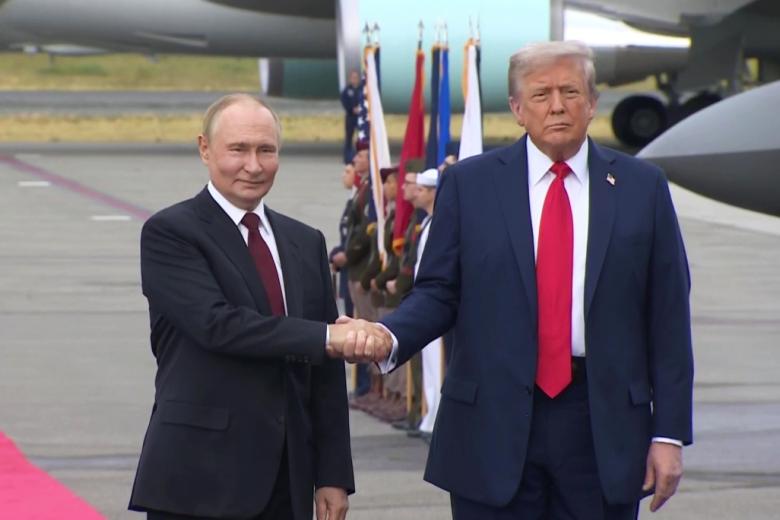
Volodymyr Fesenko is inclined to believe that a pause is inevitable, and that attempts to put pressure on Kyiv will continue.
“In the coming days, we should expect talks between U.S. special envoys and the Russians. After that, there will be tactical adjustments to the negotiation process within the Trump administration, and, if it still makes sense, talks with Ukraine — but only in order to pressure us into agreeing to withdraw Ukrainian troops from Donbas. Since we are unlikely to agree to this, a pause in the negotiation process will follow, possibly until mid-January, or perhaps even longer,” Fesenko predicts.
Vadym Tryukhan looks at the situation from a longer-term perspective. He is confident that there will be no documents signed by the end of the year, but time is beginning to work against the aggressor.
“Without a doubt, it can be said that by the end of 2025 no final documents will be signed or adopted. We will be able to return, hypothetically, to ‘Berlin-2’ no earlier than the middle of January next year,” the diplomat believes.
Strategically, however, Russia’s position is weakening, since its resources are not unlimited—unlike the consolidated (now genuinely real) support from the West.
“At the moment, in my view, time is still on Ukraine’s side. First, Ukraine has financial resources at least until April… By contrast, Putin has virtually no one to rely on. Essentially, only China, which continues to balance cautiously, and North Korea. But Pyongyang has already largely depleted its ammunition stockpiles… Therefore, the further this goes, the weaker Russia’s negotiating positions will become,” Tryukhan analyzes.
The expert warns that before negotiations resume, Russia will try to raise the stakes as high as possible.”
“Ukraine must be prepared for the possibility that Russia will once again try to raise the stakes on the battlefield: intensify missile and drone strikes on Ukrainian cities and villages, increase pressure on civilian infrastructure… and, overall, attempt to impose a force-based scenario instead of meaningful negotiations,” he warns.
CONCLUSION
The Berlin talks did not deliver a miracle, but they accomplished something more important — they teared off the masks. Europe demonstrated its readiness to become an independent security actor rather than merely a “payer of the bills.” The United States confirmed its willingness to participate in security guarantees, but its vision of compromises still diverges too much from the reality on the ground. Ukraine, for its part, emerges from this round with a clearly articulated position: peace is possible, but not at the cost of capitulation.
Next, American envoys will try to “sell” the Berlin framework to Moscow. If (and when) the Kremlin rejects it, this will become a moment of truth for Trump: whether to continue playing the role of a “peacemaker” persuading the aggressor, or to start speaking to Putin in the only language he understands — the language of force, backed by Western unity. The “negotiating window” is closing temporarily; the true diplomatic battle is only just beginning.
Myroslav Liskovych. Kyiv