European Parliament backs creation of 'military Schengen'
The resolution on military mobility was adopted on Wednesday by 493 votes in favor (127 against, 38 abstentions), Ukrinform's correspondent reports.
"To maintain Europe's strength and ability to deter aggressors, it is crucial we demonstrate our readiness to act. This includes having the capacity to deploy troops and equipment rapidly throughout the EU. Overcoming administrative burdens and developing capacity and dual-use infrastructure is not a luxury, but a necessity," co-rapporteur Petras Austrevicius said.
The text stresses that military mobility is a key factor for common European security and defense, and a decisive element for the security of the eastern flank, particularly the Baltic states and Poland.
"Highlights that given Russia's war of aggression against Ukraine, the eastern flank of the EU has been repeatedly targeted by cyberattacks, hybrid threats and acts of sabotage, including incidents against transport operators; calls for the EU, therefore, to step up efforts in support of Member States to ensure that critical transport infrastructure on the eastern flank is fully protected and resilient, including through rapid mechanisms for reinforcement and enhanced cyber defence for rail, road, ports and energy supply nodes; highlights in that regard the extreme vulnerability of the Baltic states, notably owing to the Suwalki Gap, and stresses that an accelerated response time and faster troop movements would be needed in the event of Russian aggression," the resolution states.
The resolution welcomes the Commission's proposal to increase the military mobility budget in the next long-term budget to more than EUR 17 billion. According to MEPs, modernizing infrastructure "hotspots" such as bridges and tunnels will require at least an additional EUR 100 billion.
"Welcomes the Eastern Regions Pact initiative, recently announced by the Commission, which aims to provide tailored support for Member States along the EU's eastern border to improve infrastructure and boost resilience in the border regions. calls for the provision of adequate financial resources to ensure its implementation," the text says.
Parliament acknowledges that significant administrative, financial, and infrastructure obstacles remain, meaning that moving military equipment across the EU can sometimes take more than a month.
MEPs emphasize that military mobility is a priority of EU–NATO cooperation. The resolution calls for regular joint exercises and stress tests to identify and remove obstacles. Lawmakers also want the EU to follow NATO's example and ensure that rapid reaction forces can cross internal EU borders within three days in "peacetime" and within 24 hours in a crisis.
As Ukrinform reported, the European Commission has prepared a package of proposals to improve military mobility in the EU to facilitate the rapid and unhindered movement of troops, equipment, and military assets across Europe.
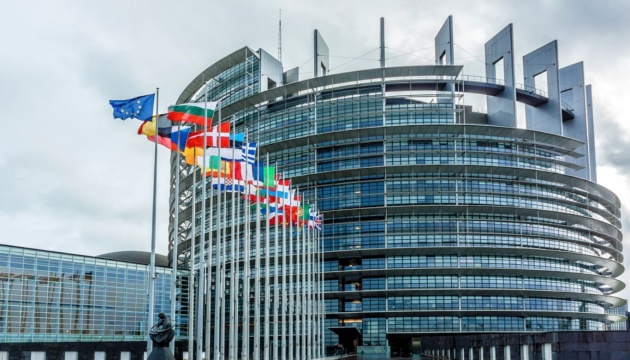
Photo: freepik.com