US updates its National Security Strategy amidst the "fog of negotiations"
The search for a just peace is ongoing, but without any obvious prospects ahead. Meanwhile, Ukraine is waiting for reboots across government institutions
We now often use the words “the fog of war”, which is a long-standing military term used to describe the uncertainty, confusion, and complexity that field commanders face during actual combat operations. Commanders rarely have reliable information about enemy positions, strengths, and intentions. Both sides employ tactics to deceive the other, adding layers of confusion. The sheer chaos, fear, and speed of battle make rational assessment and decision-making incredibly difficult for everyone involved, from the front-line soldier to the general in the command center.
Now, based on the experience of contacts within the “USA-Ukraine-Russia” triangle regarding peace, we have every reason to talk about the “fog of negotiations”.
On December 2, soon after five-hour talks between Putin and U.S. President Donald Trump's special envoys Steve Witkoff and Jared Kushner concluded at the Kremlin with no compromise plan reached, commentators rushed to allege that the result was so shockingly zero that Witkoff even had to cancel the previously planned informing meeting with President Zelensky in Brussels. Rumors have it that the meeting was canceled because there was nothing to inform about. We would not describe here the mockery the Americans were subject to in Moscow (Putin kept Witkoff and Kushner waiting for nearly three hours before their meeting began, as he attended an investment forum where he threatened Europe, saying Moscow is “ready now” if “Europe wants to start a war"). This is neither interesting any more nor funny.
On Wednesday, however, other information leaked. Having publicly accused European governments of sabotaging the peace process, and hinted at possible escalation, saying Russia was ready for war with Europe, Putin said that he did not agree with some specific provisions of the “American” plan, reduced from 28 to 20 points (the quotation marks here mean that (it has already been proven) the proposed plan was actually authored by Moscow), and that there are still some provisions that need to be discussed.
The following day, a Ukrainian delegation consisting of Rustem Umerov, the Secretary of the National Security and Defense Council, and Andriy Hnatov, the Chief of the General Staff left for Florida for talks with Witkoff and Kushner. As of midday Friday, no specific information had been available regarding what happened there. Based on the circumstances, it is hard to say now whether this is bad news or the one that gives hope. So, in terms of information, the negotiations on the “peace plan” actually remain at the point where they were during the Ukrainian-US consultations in Geneva at the beginning of last week. There is a plan reduced to 20 points, but three key points – Russian territorial claims, the ban on Ukraine’s NATO membership, and security guarantees – so far remain unagreed upon. What is this if not the “fog of negotiations”?
Many questions remain unanswered regarding the allies’ efforts to support Ukraine, to which we, unfortunately, have become accustomed. On December 3, top diplomats from NATO member states came together in Brussels for a regular meeting. It was announced in advance that US Secretary of State Marco Rubio would not participate. But questions of concern for Ukraine remained. What does this demarche mean? How committed is the US to NATO unity in obvious joint confrontation with Putin’s Russia?
NATO Secretary General Mark Rutte tried to defuse the situation by telling journalists that the US remains involved in all processes. That is, the Secretary of State does not have to participate personally. As for Putin's hints that he is ready for war with Europe if the latter is also ready, Mark Rutte gave the only response possible under such circumstances. He said that he as NATO Secretary General sees no point in responding to every such statement by the Russian president and urged not to exaggerate the significance of his rhetoric. The Alliance's obvious response to such threats would be to continue to put pressure on Russia, in particular by continuing sustainable and predictable supplies of the weapons Ukraine needs to defend itself.
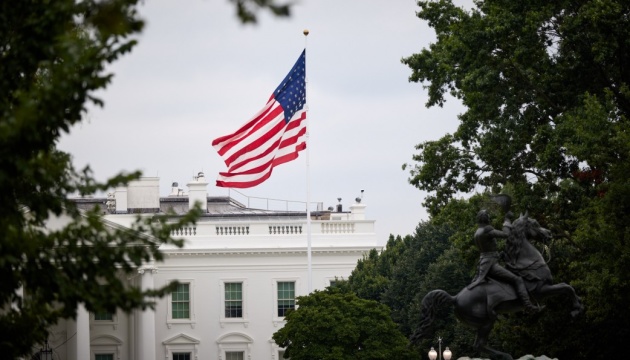
Meanwhile, the updated US National Security Strategy was published on the White House official website on Friday, December 4. This is a crucial document that would take time to analyze. So, we would offer just a few observations without going down into specific details. It represents a significant shift in U.S. foreign policy, prioritizing an "America First" agenda, non-interventionism, and a major focus on the Western Hemisphere.
The strategy is explicitly guided by what works for America, focusing solely on protecting core U.S. national interests and challenging decades of U.S.-led international security.
The document emphasizes reasserting and enforcing a "Trump Corollary" to the Monroe Doctrine to restore U.S. preeminence in the Western Hemisphere, focusing on securing borders, combating migration, and fighting organized crime. This shift suggests a potential realignment of global force posture away from other regions.
A core interest is to negotiate a cessation of hostilities in Ukraine quickly to stabilize European economies and prevent the war from expanding. The strategy calls for reestablishing "strategic stability" with Russia and ending the perception of NATO as a perpetually expanding alliance.
The strategy elevates U.S. economic interests, including reindustrialization, securing critical supply chains, and restoring "energy dominance" through oil, gas, coal, and nuclear energy. It explicitly rejects net-zero climate policies as harmful.
It advocates for the primacy of nation-states over international institutions, resisting "sovereignty-sapping" transnational bodies and emphasizing a predisposition to non-interventionism in foreign conflicts.
The strategy calls for building the world's most powerful and technologically advanced military, including a modern nuclear deterrent and next-generation missile defenses ("Golden Dome" over the U.S.).
The strategy has been described by critics as a retreat from alliances and a challenge to traditional U.S. priorities, marking a stark break from the course set by previous administrations.
So, the situation continues to be strange, to put it mildly. Washington is shifting most of the responsibility – political and financial – onto Europe, and removes the latter from the process to search for agreements with the aggressor to stop the war that would be acceptable for Europe and Ukraine. Will something change after the Strategy was released? We shall wait and see.
Putin’s advisor Ushakov added fuel to the fire by saying the following about a possible “soon” meeting between Trump and Putin: “It can take place, of course, because the discussion of all issues in Moscow took place on the basis of the key agreements reached in Anchorage.” What “agreements” in Anchorage are we talking about, I wonder? After all, it is common knowledge that there were no official statements made regarding the results of the Alaska meeting in August. It also ended early, with the cancellation of the planned events – without a press briefing and a “friendly lunch.” When someone says so, it is with the sole purpose: to connect and frame up.
As for the money for defense purchases, there has been some progress made. More than 1 billion euros was added to the PURL initiative. Norway, Germany and Poland have made contributions, and several tens of millions more were committed by non-NATO countries such as Australia and New Zealand.
According to Ukrainian Foreign Minister Andriy Sybiha, a total of 21 countries have joined the NATO-led PURL initiative, committing over $4.18 billion in total funding to purchase U.S.-made weapons for Ukraine. By the end of the week, 4.17 billion out of the 5 billion planned for the end of the year had been committed in funding for weapons purchased from the United States.
In addition, the European Commission seems to have found a legally verified way to convince Belgium not to block a "reparations loan" worth up to €165 billion for Ukraine, using frozen Russian state assets as collateral. But this is unlikely to be final. Brussels may well come up with new problems, but the hope that, from the second quarter of 2026, Ukraine will not be left without international financial support for its budget has strengthened. To prevent new problems, German Chancellor Friedrich Merz traveled to Belgium on Friday, where he was going to have dinner with the Prime Minister of the kingdom, Bart De Wever, and President of the European Commission, Ursula von der Leyen. Ukraine has wished them enjoy their dinner…
Another bad news is that Italian Foreign Minister Antonio Tajani recently announced a temporary halt to Italy's participation in NATO's PURL initiative, citing ongoing peace talks, Reuters reported, citing anonymous sources. This contrasts with earlier signals that Italy was ready to join. The reason is that they are waiting for some conclusions regarding the controversy over the Mindich corruption case.
Less than a week has passed since Andriy Yermak resigned as the head of the President's Office, but follow-up developments are expected in the world, and especially in Ukraine. So far, however, a wave of publications with testimonies from Yermak’s former employees is growing. But everyone is already waiting for decisions as to who will replace Yermak in that office, what other dismissals and reshuffles are expected in the Office, how will the management model in Ukraine’s executive branch change (and will it?), and what will finally happen to the parliamentary majority? As we can see, answers to these questions are being waited for in Italy and elsewhere.
Meanwhile, Ruslan Magamedrasulov, an employee of the National Anti-Corruption Bureau, was released from custody by a decision of the Kyiv Court of Appeals. This has obviously eased the atmosphere of expectation: the “Mindich gate” investigation is ongoing and is seemingly moving in the direction of justice.
The expectation of changes has also affected the defense sector. Here we have to return to the “fog of war”… It is hard on the front line – this is the only conclusion you make, sitting over the news feed, and this puts a lot of psychological pressure on all of Ukrainian society. The weight of hostile lies that fall on our heads from social networks is demoralizing. I would like to offer the reader an article from Ukrinform, where we tried to figure out the situation. Its conclusion is traditional, but well-reasoned: the situation is really challenging, but not hopeless. But we will not discuss the rumors about possible replacement of General Syrsky as the commander-in-chief. The issue is too sensitive to be absorbed in gossip. Meanwhile, many defense-related issues that have long gone unaddressed need urgent solutions.
Society is tired of having to consume only General Staff’s refutations of Russian fakes about the fall of Pokrovsk, Kupyansk, or Vovchansk. We are tired of waiting for other news. Ukraine’s Verkhovna Rada has recently approved the 2026 State Budget in the second reading and as a whole, with 257 “yes” votes. The budget is heavily focused on defense, security, and social resilience amid the ongoing war, with a forecast that the conflict will last throughout 2026. It provides for an increase in social standards and support for key sectors of the economy. There are probably still many complaints, but it is positive overall. Ukraine’s partners were waiting for the adoption of the 2026 budget, which is crucial for continuing support for Ukraine next year.
Revenues are projected at UAH 2.918 trillion. The government increased revenues by raising the bank profit tax rate from 25% to 50%. Expenditures amount to UAH 4.781 trillion. The maximum budget deficit is projected at UAH 1.9 trillion, or 18.5% of GDP. Ukraine needs to attract more than $45 billion in external financing in 2026 to cover this deficit.
Defense and Security is the top priority and the largest area of expenditure, accounting for nearly 60% of total spending. UAH 2.807 trillion is earmarked for the defense and security sector (27.2% of GDP).
All domestic revenues will be channeled exclusively toward defense needs, including military pay (UAH 1.27 trillion), weapons procurement (UAH 709.8 billion), and a UAH 200 billion "defense reserve".
UAH 44.4 billion is budgeted for the domestic production of weapons, missiles, ammunition, and air-defense systems.
The budget provides for stronger social components to support the population during wartime.
Meanwhile, Polish Foreign Minister Radosław Sikorski has announced that the NATO-Russia Council officially "no longer exists" following Russia's full-scale invasion of Ukraine.
Following a meeting of NATO foreign ministers in Brussels on December 3, 2025, Sikorski stated that the NATO Secretary General had confirmed the council's abolition.
Sikorski emphasized that the council was an institution created "at a time when it seemed that European security could be created together with Russia".
Sikorski confirmed that the so-called NATO-Russia Founding Act, which established the council in 2002 as a mechanism for security consultations, is also no longer in force.
He noted that the dissolution of the council and its founding act was an outcome that successive Polish governments had striven for, and it has now "become a fact".
What can I add here? Based on the current US stance, this seems to be the only possible way out of the developing situation for Europe and Ukraine.
Oleh Novichenko, Kyiv
Headline photo via the Office of the President of Ukraine