JATEC – first successes: counter-glide bomb technology, drone swarm system, tactical medicine
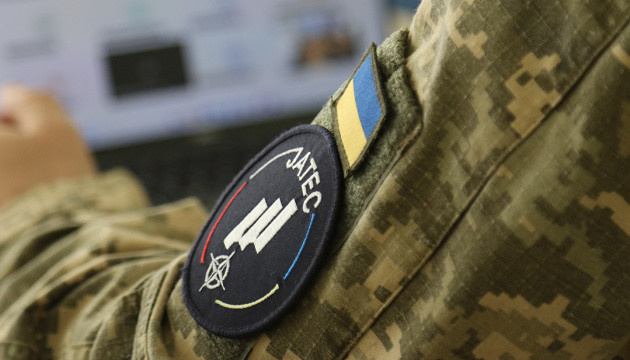
The NATO-Ukraine Joint Analysis, Training and Education Center (JATEC), located in Bydgoszcz, northern Poland, was officially inaugurated on February 17, 2025, reaching its initial operational capability. It represents the first collaborative center of its kind between NATO and Ukraine, a country that is not yet a NATO member, but is in very close cooperation with the Alliance.
Ukraine has long been on a course towards membership in the North Atlantic Alliance and the European Union, and, in 2019, this course was officially enshrined in the Constitution of Ukraine. The full-scale Russian aggression against Ukraine has given a significant boost to Ukraine’s Euro-Atlantic integration process, both in a purely military dimension (arms supplies to the Ukrainian military from NATO countries) and in an institutional one, in particular, through the creation of JATEC.
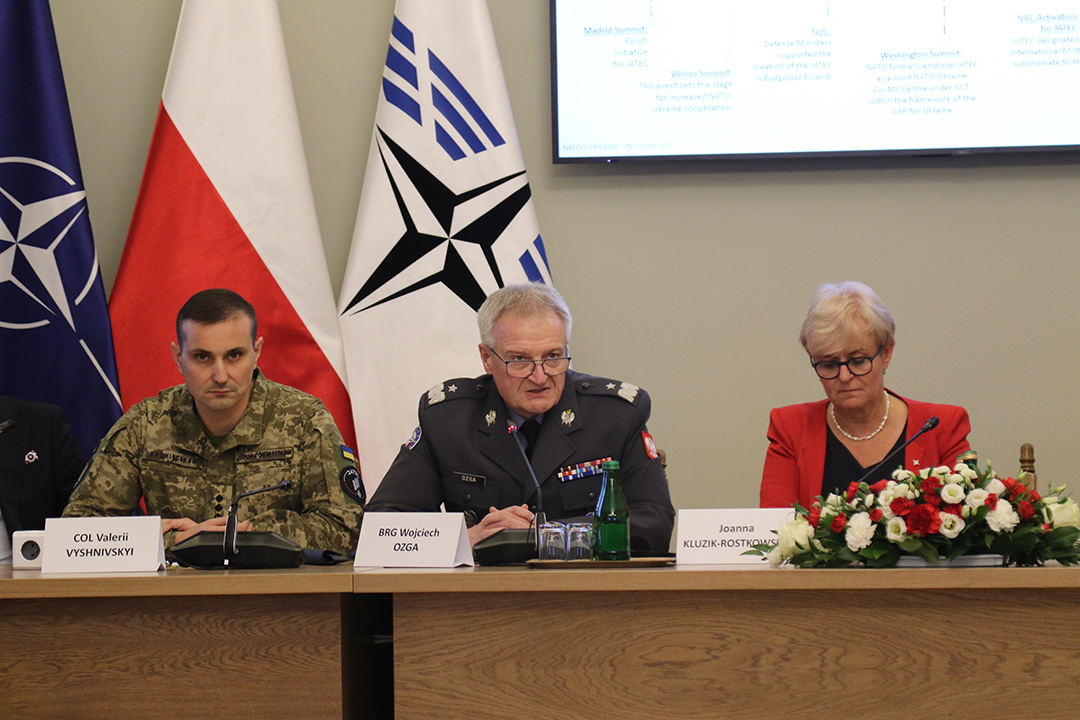
Now that the center has been operating for nine months, it is time to look behind the scenes of its activities and learn about the first results of its work. The Center's leaders - JATEC commander, Polish Brigadier General Wojciech Ozga, and his deputy, Colonel Valeriy Vyshnivskyi, Director of Program Implementation and Ukraine's Senior National Representative at the JATEC, assisted Ukrinform in this overview.
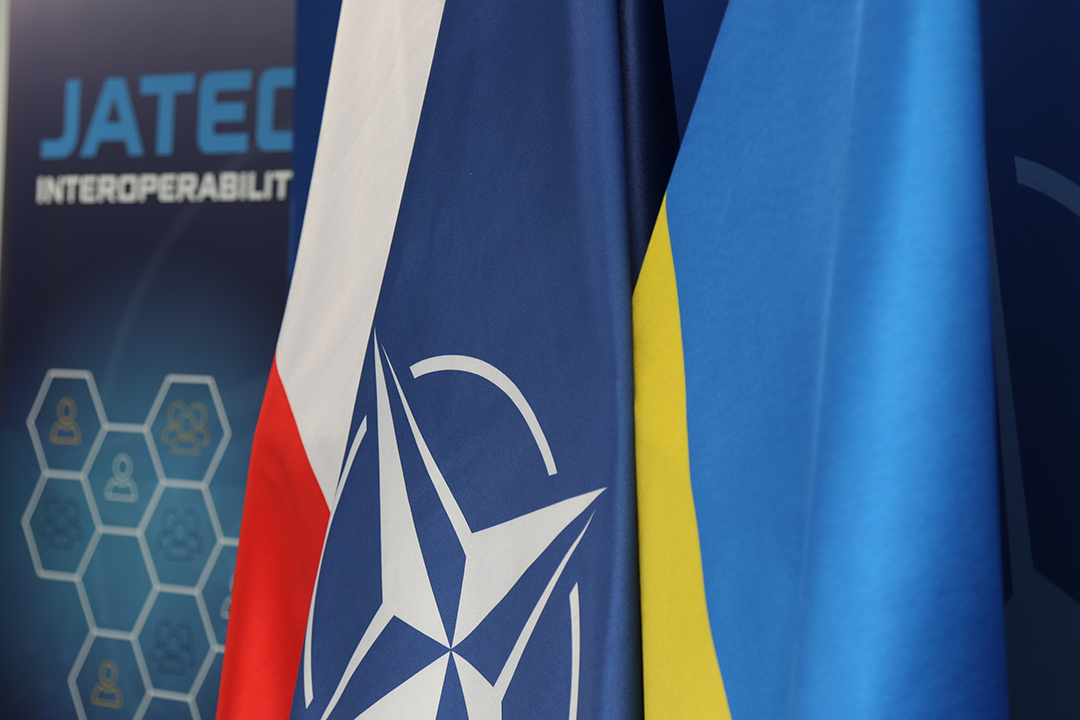
JATEC STRUCTURE: COMBINING MILITARY AND CIVIL COMPONENTS
The center in Bydgoszcz was created as a platform for experience sharing between Ukraine, who has been waging a full-scale war with the Russian aggressor for the fourth year now, and NATO countries, which are increasingly becoming targets of sabotage attacks and various hybrid actions by the Russian Federation. It is also a place for active “brainstorming” of Ukrainian and Western military and civilian experts and the search for best possible solutions in response to defense and security challenges. Designed to analyze civil-military experiences from the Russo-Ukrainian War, the Center is working to integrate the lessons learned into the strategies, policies, doctrines, training programs and operations of both NATO and Ukraine to enhance interoperability and strengthen collective security. Ukraine, in turn, is counting on partners’ technological capabilities to beef up its resilience and its military’s ability to fight off the aggressor more effectively.
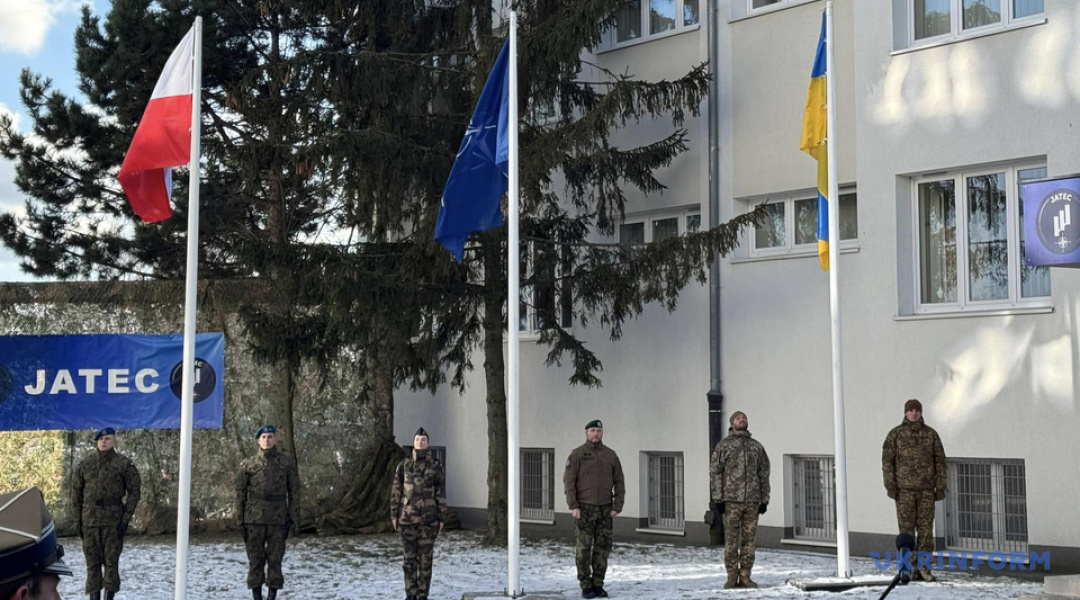
As the JATEC leadership emphasizes, although the structure of the Center is determined by NATO documents, it may still change in the process of staffing and deploying its operations. General Wojciech Ozga is of the opinion that the arrangement of the Center’s organizational and staff structure may be completed in the second half of 2026.
“The Center’s ultimate structure and full operational capability is a prospect, probably, for the second half of next year. Everything will depend on the experience that we gain in the process of our work,” the JATEC commander Wojciech Ozga has said.
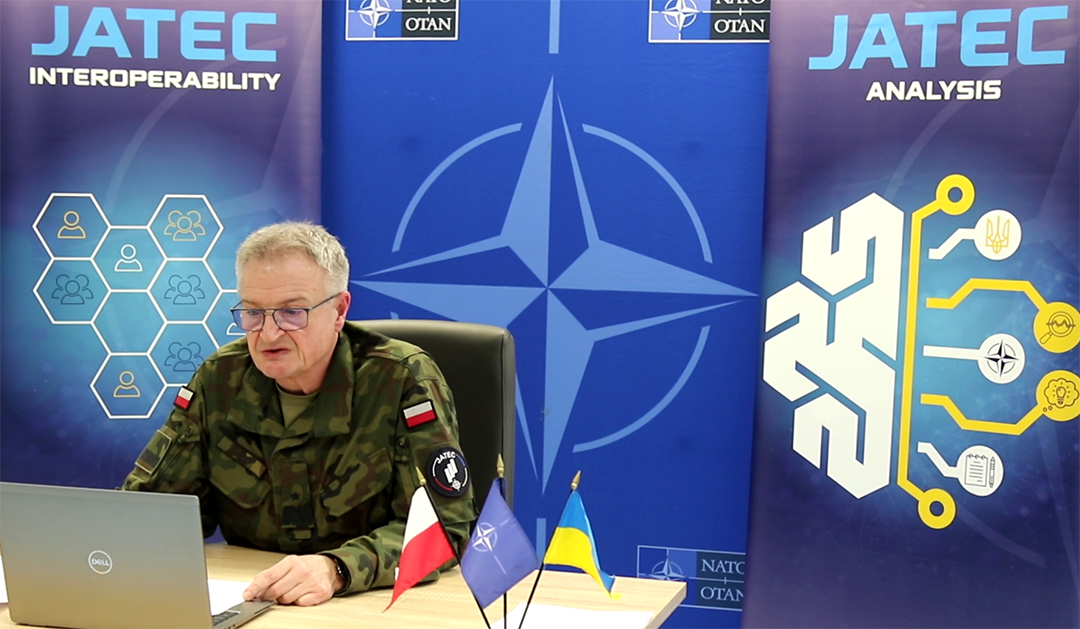
Wojciech Ozga
The Center is not yet operating at 100% of its capacity, according to Ozga.
“We are still lacking personnel. Currently, we have a little more than 70% of the planned staff. We are also expecting the remaining 30% from Ukraine, because the results of the Center’s activities largely depend on the contribution from the Ukrainian side,” the Polish general noted, emphasizing that very experienced specialists from Ukraine are currently working in Bydgoszcz.
JATEC is not a classic NATO military structure, being specific in that it its staff is a combined force of approximately 60% military and 40% civilian specialists (analysts, scientists, and experts) from NATO member countries and Ukraine.
This mixed military and civilian composition is a key feature, allowing the center to effectively analyze comprehensive, "whole-of-society" defense lessons from the war in Ukraine and integrate them into the strategies of both NATO and Ukraine.
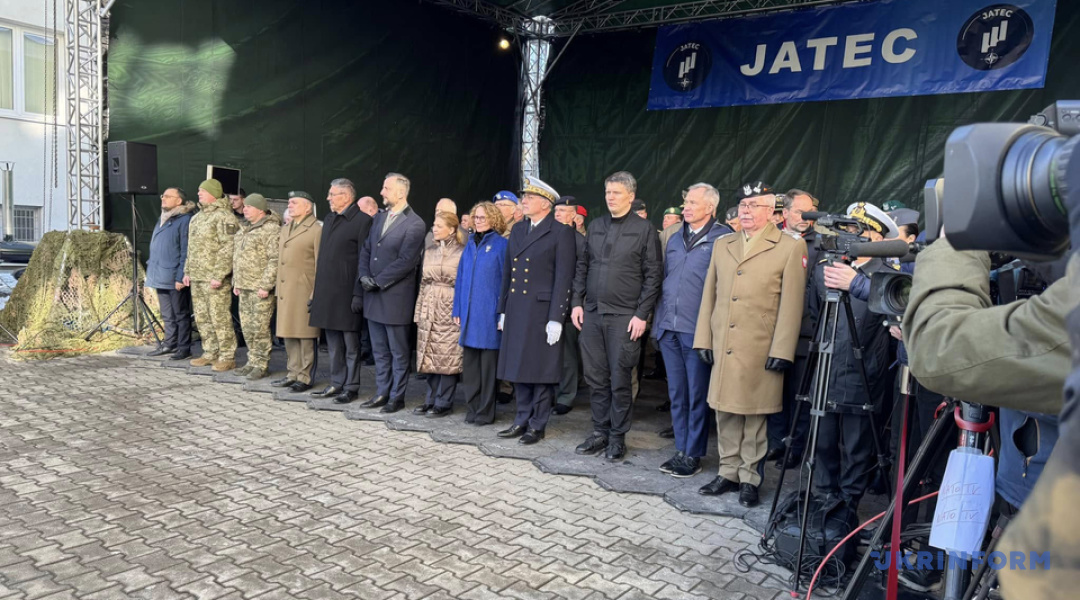
In addition to Ukraine, JATEC currently employs representatives from various Alliance countries, including France, Portugal, Sweden, Bulgaria, Hungary, the Czech Republic, Spain and, of course, Poland. At the same time, the expert representation at the Center is quite broad, including from Portugal and Spain, the countries that are quite remote from Eastern Europe. However, not every country that has committed sending its personnel has done so. Military positions at the Center are assigned to NATO countries, but this is not the case for civilian positions. In this case, candidates from NATO countries participate in an open competition to fill vacant positions, and the best one get them.
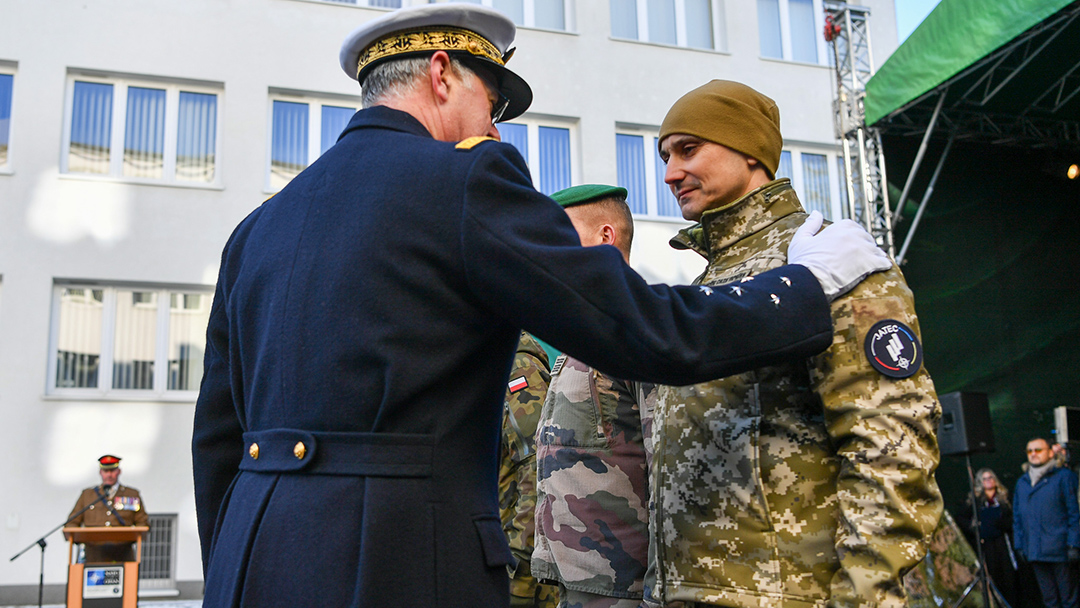
Photo via the Ministry of National Defense of Poland
NATO countries as well have the opportunity to delegate their military and civilian representatives to JATEC outside the regular structure, on a volunteer basis. In particular, Germany and Sweden have already sent their representatives to the Center as a “voluntary national contribution”. As noted by Mr. Ozga, this format is gaining strength among the NATO countries that have recently showed increased interest in experience sharing with Ukraine.
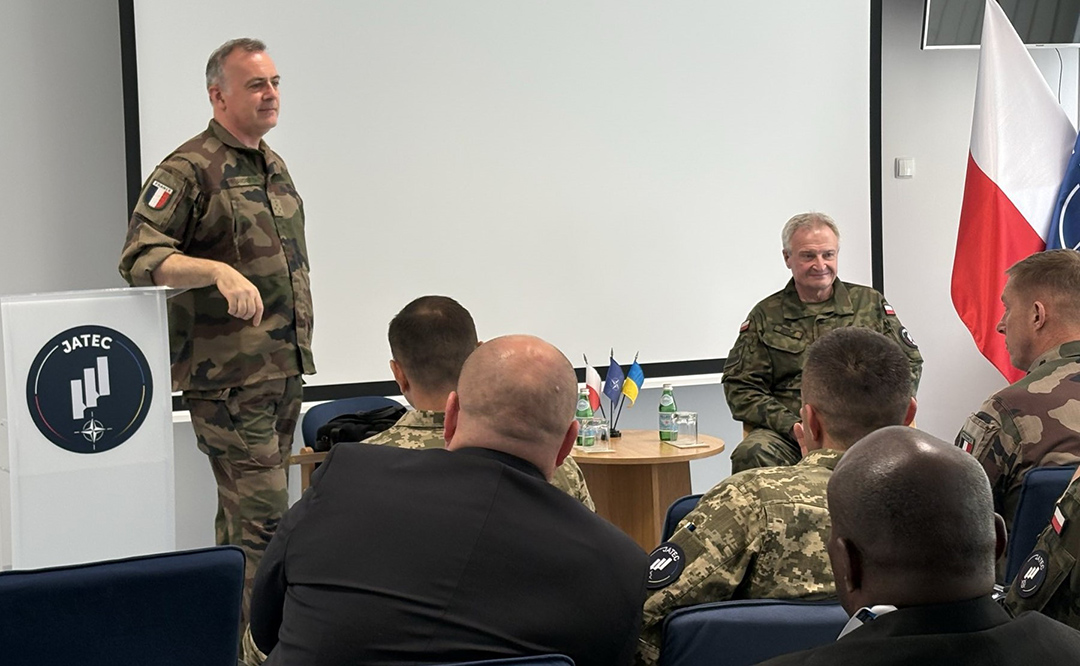
In addition to its full-time staff, JATEC actively builds a network of external experts, including civilian specialists from various fields across NATO member countries and Ukraine. These experts participate in conferences and seminars to exchange knowledge and gather experience on a broader scale.
As General Ozga emphasized, the Center gathers experiences not only in the military dimension but also in the civilian sphere of national defense through its unique civil-military structure, which includes civilian experts and focuses on areas like resilience and civil-military integration. The center applies lessons learned from Russia's full-scale war in Ukraine to enhance national defense beyond purely military applications.
By including civilian specialists, JATEC studies the lessons from Ukraine's practical implementation of total defense and societal resilience since 2022. This encompasses how civilian structures and populations contribute to the overall defense of the nation.
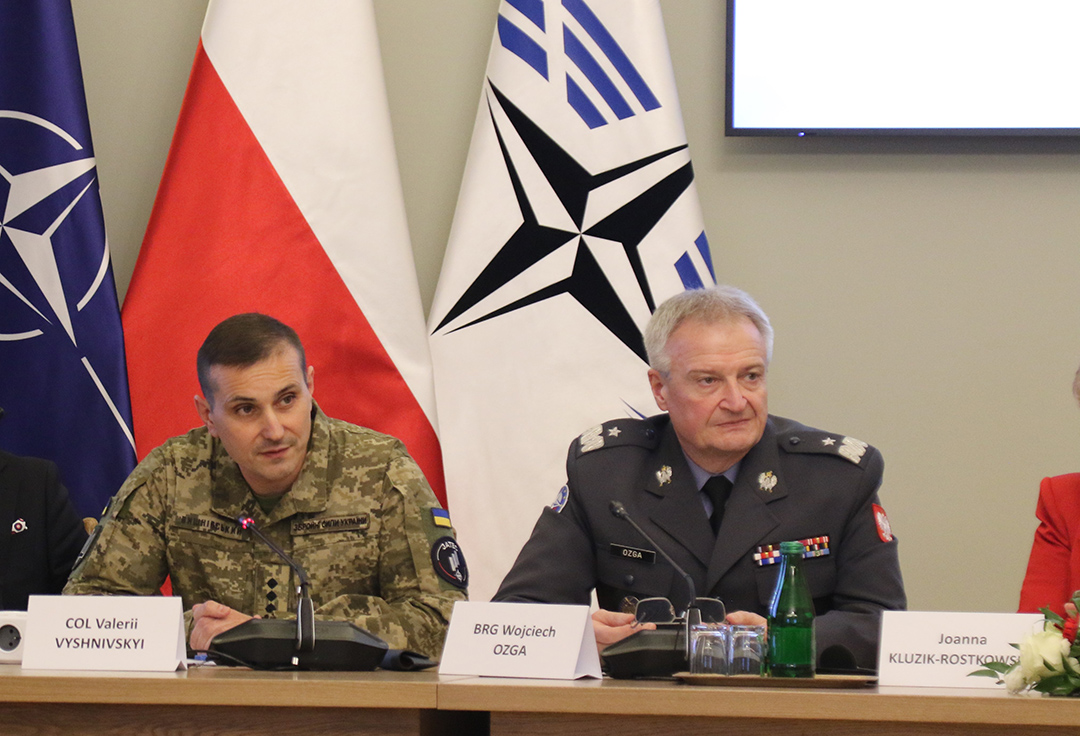
Valerii Vyshnivskyi
UKRAINE-NATO PARTNERSHIP
The JATEC has a unique civil-military management structure that is a working-level organization within the NATO Command Structure.
At the Center level, there is a Senior Advisory Board (SAB), with Colonel Valerii Vyshnivskyi, who also serves as the Director for Program Implementation, serving as Ukraine's Senior National Representative, playing a crucial role in ensuring that Ukraine's real-world combat experience is integrated into NATO analysis and training programs.
Other directors at JATEC are responsible, in particular, for the structure of projects and for the integration of civilian aspects into defense matters. One of the directors responsible for JATEC’s operations is based at the International Headquarters in Brussels.
“This Board regularly meets to discuss the implementation of ongoing projects and the planning of new ones, including those initiated by Ukraine,” the JATEC commander explains.
The SAB, chaired by Thomas Goffus, NATO Assistant Secretary General for Operations, is the primary governing body for JATEC's work priorities and includes high-ranking officials from NATO, Ukraine, and Poland. Ukrainian representatives at the Senior Supervisory Board include Serhiy Boyev, First Deputy Minister of Defense of Ukraine, and Brigadier General Oleh Apostol, Deputy Commander-in-Chief of the Armed Forces of Ukraine.
The SAB submits its recommendations to the head of Allied Command Transformation (ACT, Norfolk, USA) -- a joint operational-level command under Allied Command Operations. It focuses on multi-domain protection of the transatlantic link, the Arctic, and the North Atlantic region. The head of ACT, Admiral Pierre Vandier, has direct oversight of JATEC, making final decisions on the form, structure and programs implemented by the Center. Then, every decision made at Norfolk regarding JATEC are submitted for approval to the North Atlantic Council.
“Thus, the Ukrainian side is involved in every stage of decision-making – from planning to approval of strategic directions. This is a partner-like military-civilian mechanism of NATO and Ukraine, designed to take into account the interests of both sides,” emphasizes General Ozga.
A FOCUS ON UKRAINIAN EXPERIENCE
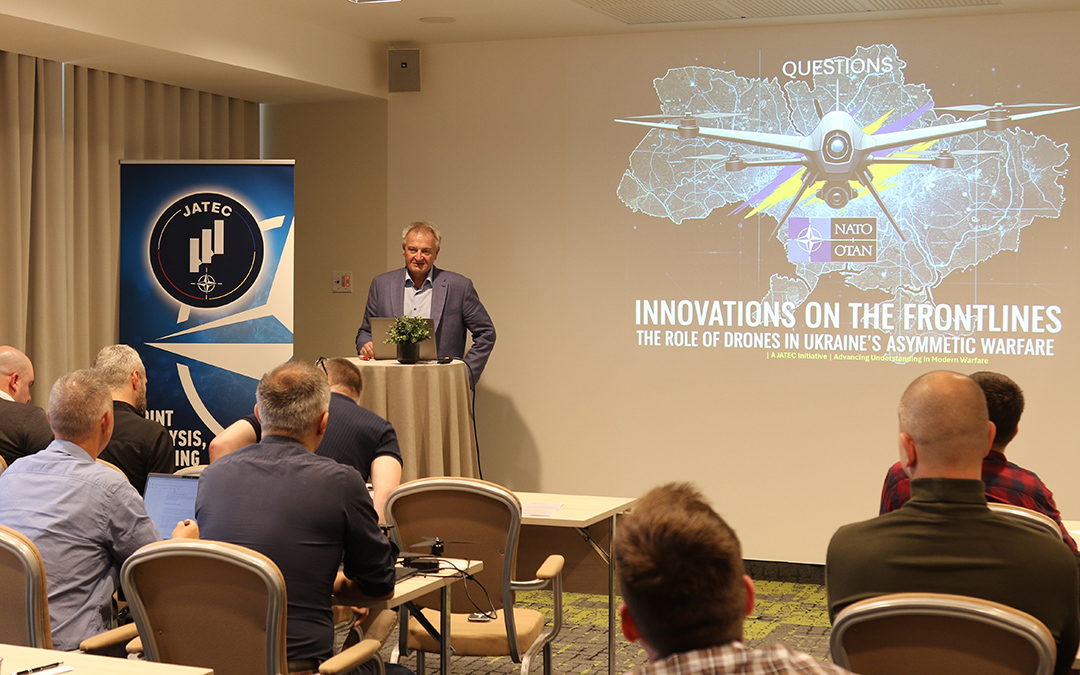
One of JATEC’s main missions is to systematize Ukrainian real-world combat experience and relay it to Allies. As General Ozga emphasizes, NATO is currently most interested in Ukraine’s experience in drones and electronic warfare, logistics, support for troops on the battlefield, as well as tactical medicine.
"Quite obviously, the focus is on drone technologies. But experiences in logistics, tactical medicine, electronic warfare and analysis of war development trends, particularly a shift towards multi-domain warfare are equally important. We also study approaches to comprehensive defense, which Ukraine practices every day," says the commander of JATEC, adding that these areas of interest make the core of JATEC’s work schedule for 2025.
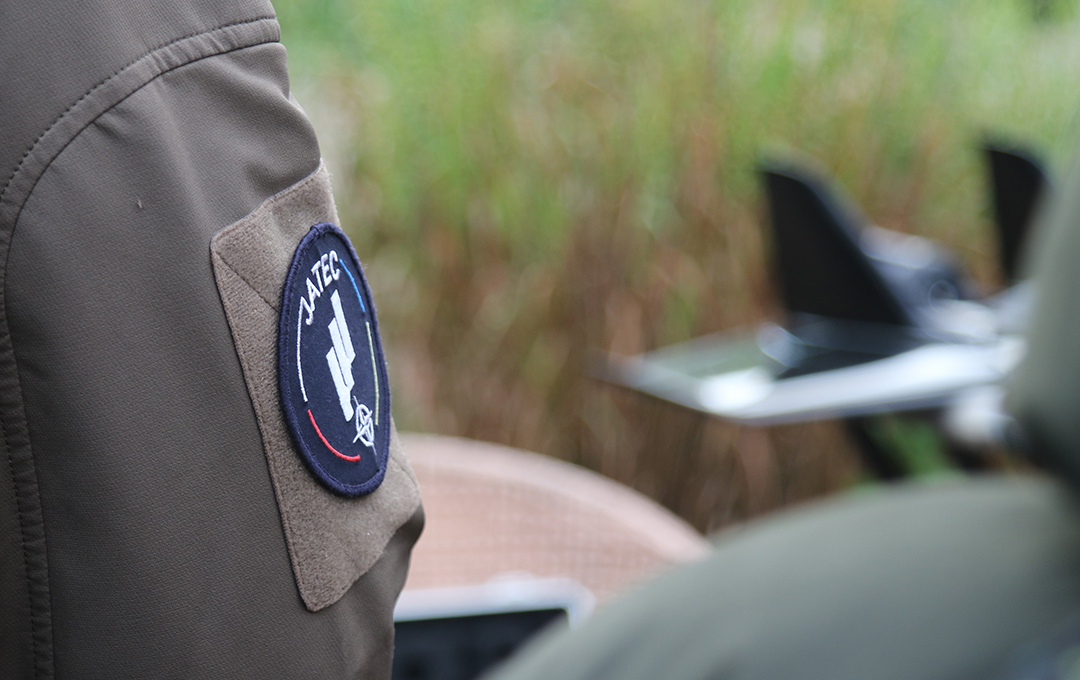
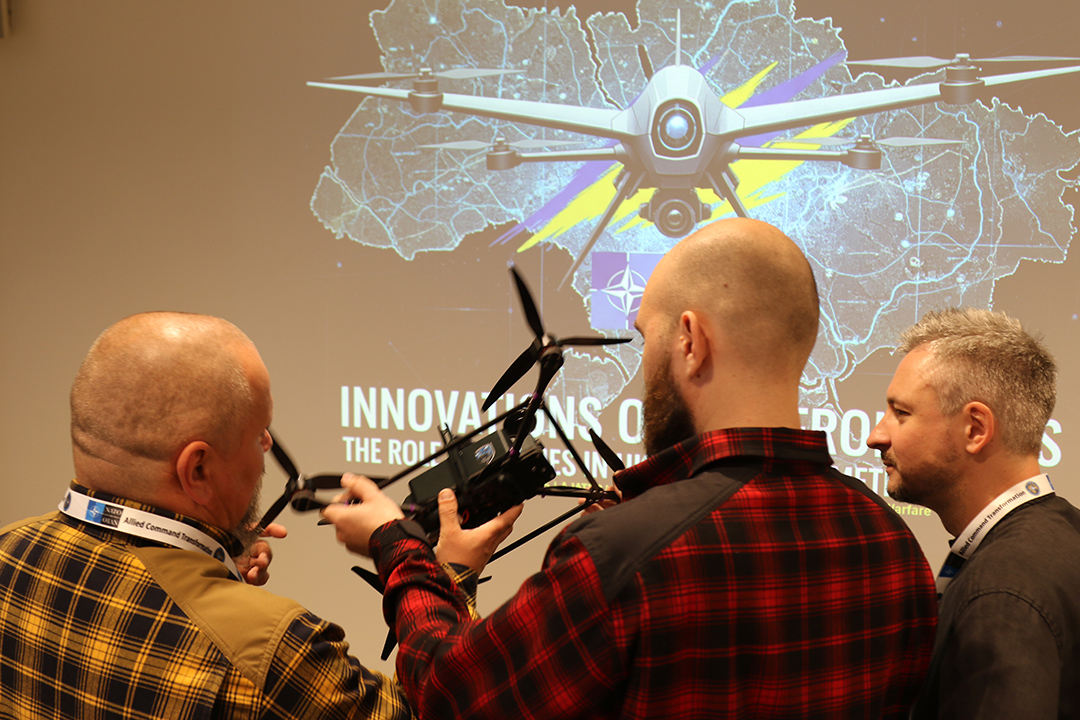
At the same time, he adds that this plan is flexible: it is supplemented by the tasks arising in response to the current challenges of the Russo-Ukrainian war. These particularly include countermeasures against precision glide bombs and fiber-optic controlled drones.
JATEC’s immediate plans also include studying innovative methods for evacuating wounded casualties from the battlefield. Ukrainian tactical-level officers with recent battlefield experience participate in project analysis and assessment to facilitate the development and implementation of new projects, particularly in defense, innovation, and technology application. This process involves a holistic evaluation of feasibility and outcomes to ensure the projects meet the needs of both NATO and Ukraine.
SUCCESSFUL TESTS AND THE SIGNIFICANCE OF NATO’s EXPERIENCE FOR AFU’s ADAPTATION
Director of Program Implementation and Senior National Representative of Ukraine at JATEC Colonel Valerii Vyshnivskyi draws attention to the initial successful results achieved by the Center, “In the spring of this year, the General Staff of the Armed Forces of Ukraine requested JATEC to help develop countermeasures against precision glide bombs and fiber-optic drones. In a few months, we managed to make a significant progress on these issues. In particular, a series of tests of interceptor drones took place in France in October, and work is also underway to devise countermeasures against fiber-optic drones.”
As Colonel Vyshnivsky emphasized, a newly developed interceptor drone has already been tested in Ukraine in real battlefield scenarios, successfully shooting down Russian-launched Shahed drones targeting Kyiv.
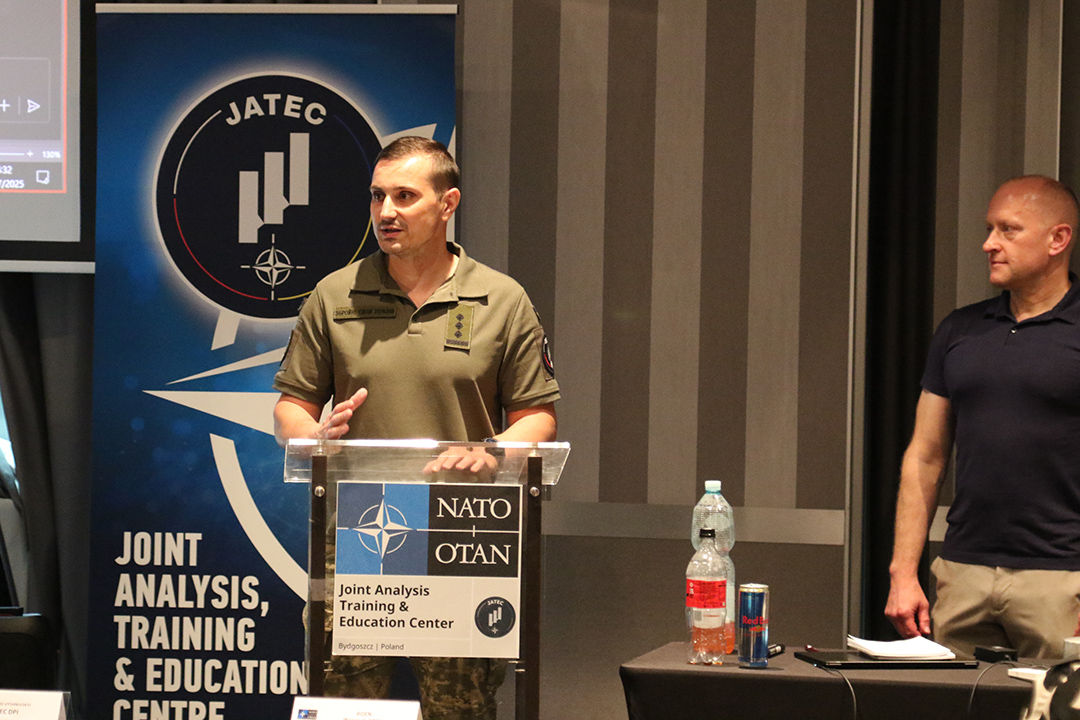
Valerii Vushnivskyi
“We focused on using this drone against precision bombs, but it is not yet capable of shooting them down. At the same time, the drone has shown being effective against Shahed UAVs,” says the deputy JATEC commander.
During test flight missions held at a training ground in France, teams of engineers from Alta Ares of France (AI-enabled threat detection algorithms) and Tytan Technologies of Germany (interception systems selected by Ukrainian and NATO military experts from among several dozen samples) successfully tested the operation of a comprehensive technical solution – AI-powered radar and software, and an interceptor drone. As part of the test, a simulated target was identified, tracked down and locked on by a radar fitted with an advanced sensor system. After that, the interceptor drone using AI algorithms successfully hit a target, flying in a pre-programmed trajectory flight mode (autonomous flight). The interceptor drone project is now awaiting an assessment from the head of Allied Command Transformation, who will provide his strategic report on whether the technology is mature enough to be introduced into the military inventories of Ukraine and NATO countries.
According to Mr. Vyshnivskyi, great promise is also held in a drone swarm technology that is being developed as part of a separate project. The French company ATREYD is working on container-based interceptor swarms as a defense solution against aerial threats like drones and precision glide bombs.
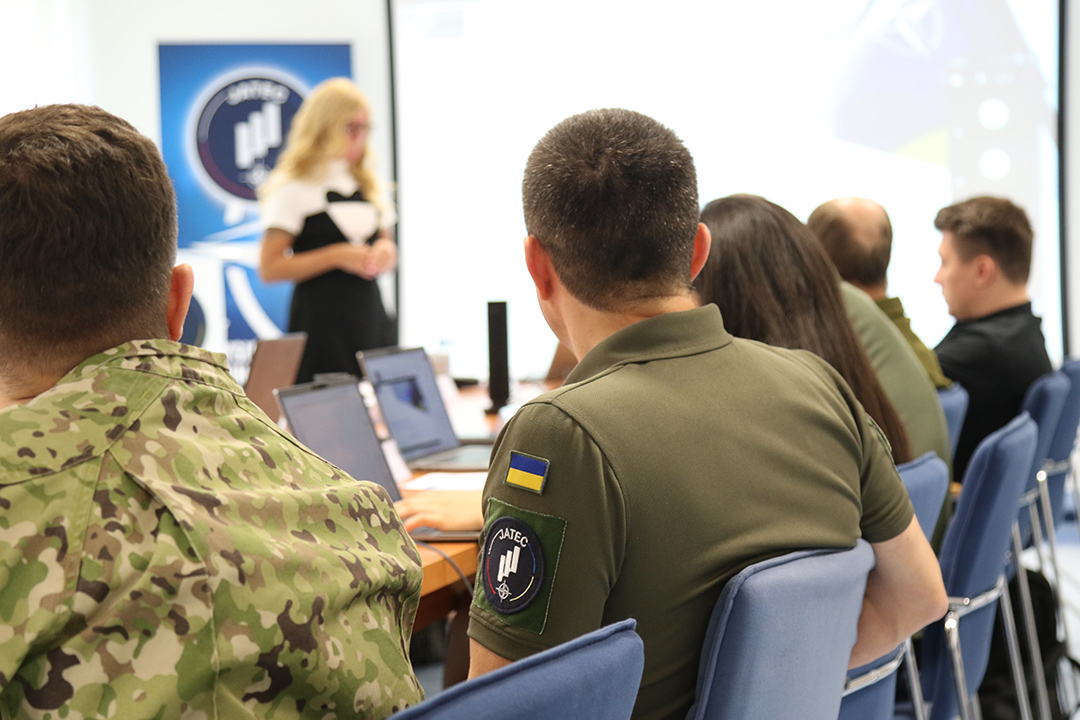
“The swarm consists of about 40 interceptor drones working together to detect and neutralize incoming Russian drones (such as Iranian Shahed drones). This technology utilizes artificial intelligence and swarm algorithms, where the 40 drones coordinate autonomously to perform search-and-destroy missions based on high-level commands, without a single operator piloting each one individually. This is a very promising technology, and I do hope it will soon pass final testing in France,” Vyshnivskyi says.
According to Colonel Vyshnivskyi, the new counter-drone system prototype involving a swarm of approximately 40 interceptor drones is designed with sophisticated capabilities. This technology utilizes artificial intelligence and networking algorithms which allow the entire swarm to be commanded to engage either one single target (e.g., a large incoming Russian drone or a command post), or several different targets simultaneously within the operational area (e.g., multiple incoming Shahed drones).
This operational flexibility is a key aspect of the innovation. The drones communicate with each other to autonomously coordinate their movements and attacks, allowing a single operator to manage a complex defensive operation efficiently. This project is a prime example of how lessons from the war in Ukraine are being developed into cutting-edge solutions for the battlefield.
“If we are restrained to the cycle of adaptation to the enemy’s actions, then we are one or two steps behind. But have to be two steps ahead,” the Ukrainian senior representative at JATEC believes.
Another area of promise for JATEC lies in tactical medicine, in particular, the evacuation of wounded casualties from the battlefield, which is an issue of extreme urgency for the Ukrainian army.
“The wounded remain unevacuated for many hours, sometimes even longer than 24 hours. This also has a very strong negative impact on the psychological climate within the entire unit. "That's why we're working on a technological solution: how to make sure that an evacuation team or platform arrives at the front line, protects itself and the wounded patients from drone attacks, and evacuates them safely," says Colonel Vyshnivsky, referring to the guiding principle of "golden hour" that emphasizes the importance of rapid intervention, particularly surgical care, within approximately 60 minutes of severe injury, greatly improving outcomes.
He added that in this context, JATEC is actively cooperating with both the Defense Innovation Accelerator for the North Atlantic (DIANA) and the NATO Science and Technology Organization (STO).
NATO countries are known to show interest in Ukraine's experience in organizing comprehensive defense during full-scale war. This involves a whole-of-society approach that integrates military and non-military measures, drawing on the full potential of the state and its citizens.
Colonel Vyshnivskyi also outlined the areas on which the Ukrainian side focuses in its cooperation with NATO.
"We would like to encourage all industries, companies, and innovators to actively participate in this collaborative framework with NATO. What is important is that not only Ukraine works in this direction with its capabilities, but also all analytical and innovative capacities of 32 NATO member states join in to solve problems on the battlefield here and now," the Ukrainian officer emphasizes.
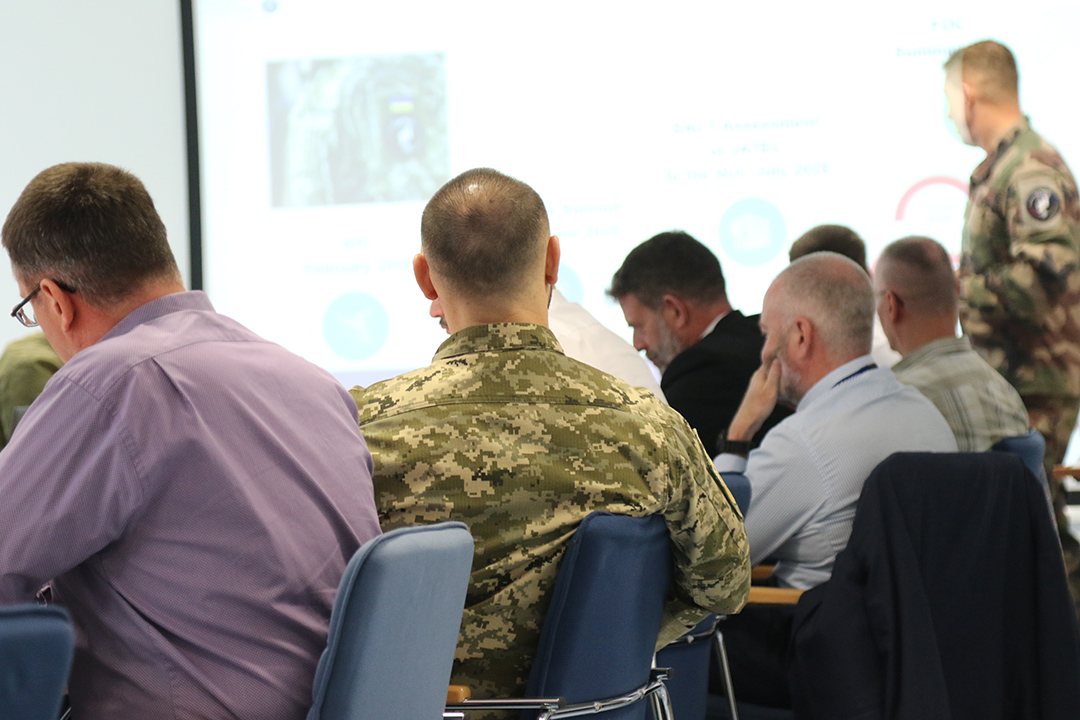
Vyshnivskyi emphasizes that Ukrainian combat officers who personally visit Center or remotely attend seminars and conferences, after returning to their brigades and corps, speak positively about the knowledge they gained and the possibilities of its practical application. According to him, Ukraine is satisfied with how the acquired experience is being studied.
“Something new has happened – it has been studied and implemented. We are studying this process, the sequence, the cycle of adaptation and implementation of experience. The spheres of activity of the armed forces of NATO member states are quite standardized and very explicitly described in doctrines and standards. We favor this approach, and we would also like to launch similar activities in the Armed Forces of Ukraine to make sure it is a continuous innovation cycle, rather than sporadic or one-off engagements, like a river that flows and does its job,” Vyshnivskyi says.
Time will tell whether JATEC is going to evolve into a successful project for years and decades to come. But for now, Ukrainian officers and their colleagues from NATO countries are unanimous: this is already a win-win story. After all, the Alliance needs and values Ukraine's experience, and Ukraine needs to develop its own capabilities by leveraging NATO's capabilities.
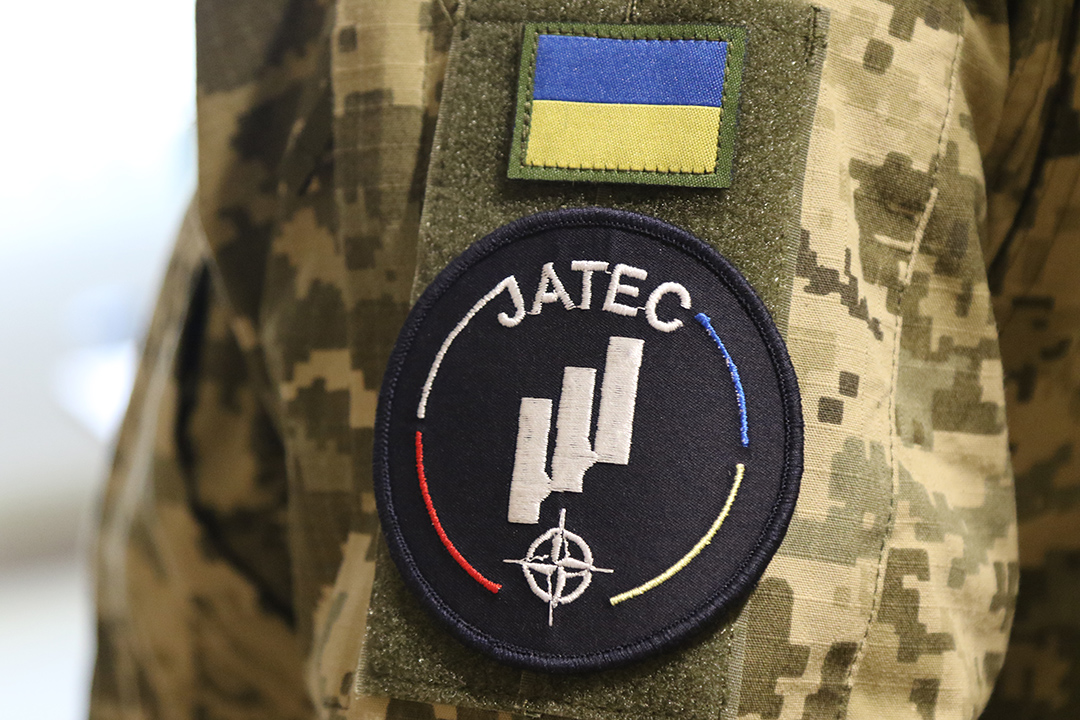
In an environment where technological changes on the battlefield occur every month, JATEC is not only a symbol of the Ukraine-NATO partnership, but also a key innovation platform where to determine what the defense of the continent will look like in the near future. It is also a process of two-sided integration, so that, on an A Day, Ukraine will officially become a member of NATO without unnecessary formalities.
Yuriy Banakhevych, Warsaw
Photo via JATEC Public Relations Service, Ministry of National Defense of Poland, and Author