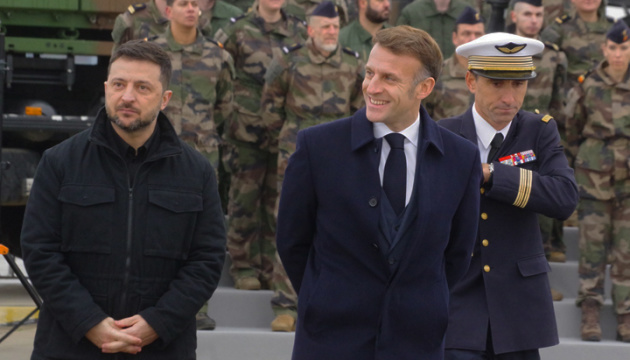
100 Rafale Jets for Ukraine
Everyone knows about the friendly relations between Presidents Macron and Zelensky. “Volodymyr, my friend”. This is how the French leader addresses Zelensky in public. The Ukrainian President, for his part, refers to his French counterpart in public as “Our friend Emmanuel”.
This was Zelensky's ninth visit to France since the full-scale Russian invasion began in February 2022. And each time the amplitude of the French determination and support was growing. Emmanuel Macron once announced the possibility of France deploying troops to Ukraine as part of a peacekeeping or "reassurance" force after a ceasefire or peace agreement is reached. He then announced the transfer of Mirage fighter jets, and it was he who suggested the idea of the Coalition of the Willing. So, this meeting too and its outcomes were expected to be special. But they have exceeded the expectations, having become historic. This is how President Zelensky described the Declaration of Intent on Cooperation in the Acquisition of Defense Equipment on November 17. Macron was more restrained in his remarks, calling the major defense deal for Ukraine “a new stage in strategic cooperation.” What was so crucial that happened, and in general, how was it this time? Ukrinform's correspondent reports from Paris.
FRIENDLY HUGS AND A SECRET PAVILION FOR ZELENSKY
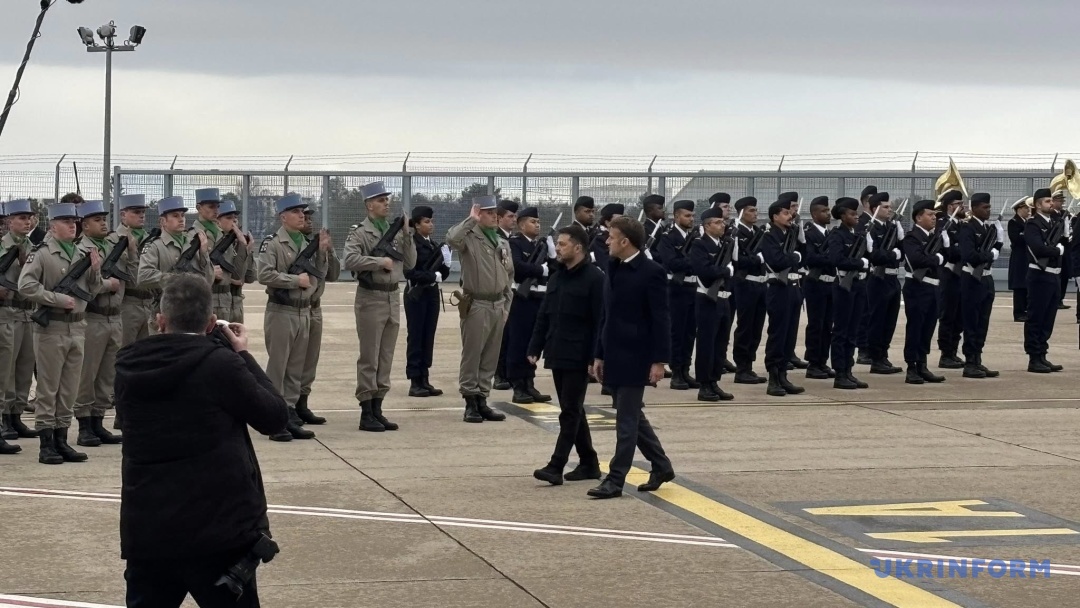
President Zelensky arrived at the Villacoublay military airbase near Paris a few minutes before 10 a.m. And immediately after the ceremonies with anthems and formation, he was embraced by his French counterpart. Macron hugged Zelensky tightly right on the runway, in the cold rain. Standing nearby were Minister of the Armed Forces, Catherine Vautrin, Minister of Foreign Affairs Jean-Noël Barrot, Chief of the General Staff Fabien Mandon, and Ukrainian Ambassador to France Vadym Omelchenko, along with a team of senior French military officials.
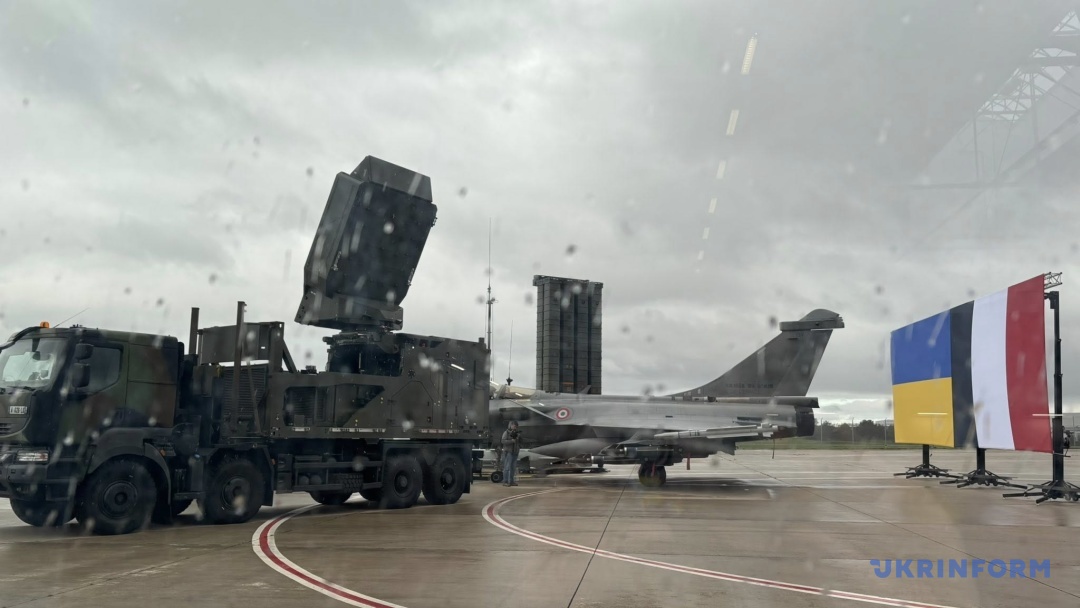
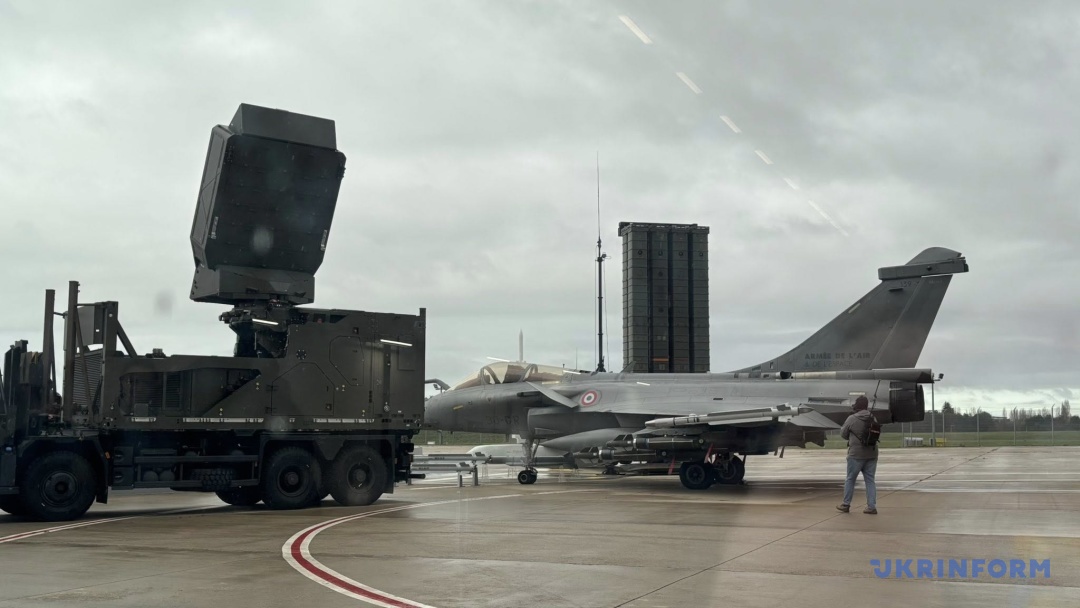
Macron’s hugs have never been so promising. After all, they took place against the backdrop of a Rafale fighter aircraft “parked” right there alongside a truck loaded with a SAMP/T launcher, which is capable of intercepting aircraft, ballistic missiles, and cruise missiles. Located a little further away was a mockup of Aster 30 missile, which is typically used with this air defense system. For a country that is in its fourth year of war and which urgently needs this particular weapon, such “decorations”, you must admit, looked like a dream come true.
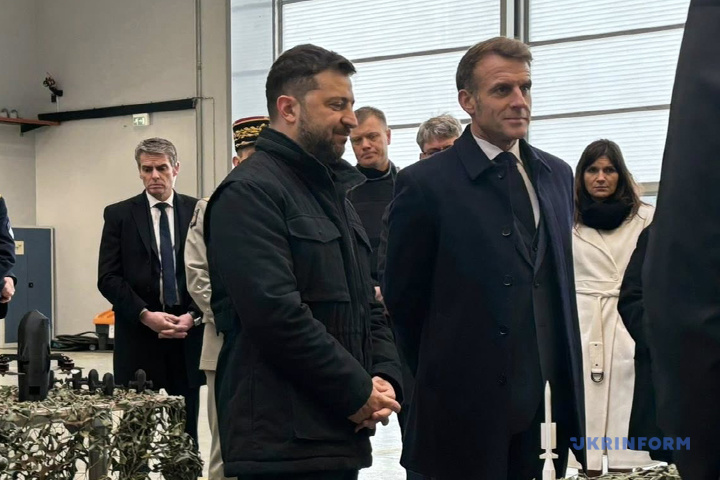
But everything that followed was even more fantastic. The presidents headed to a large hangar.
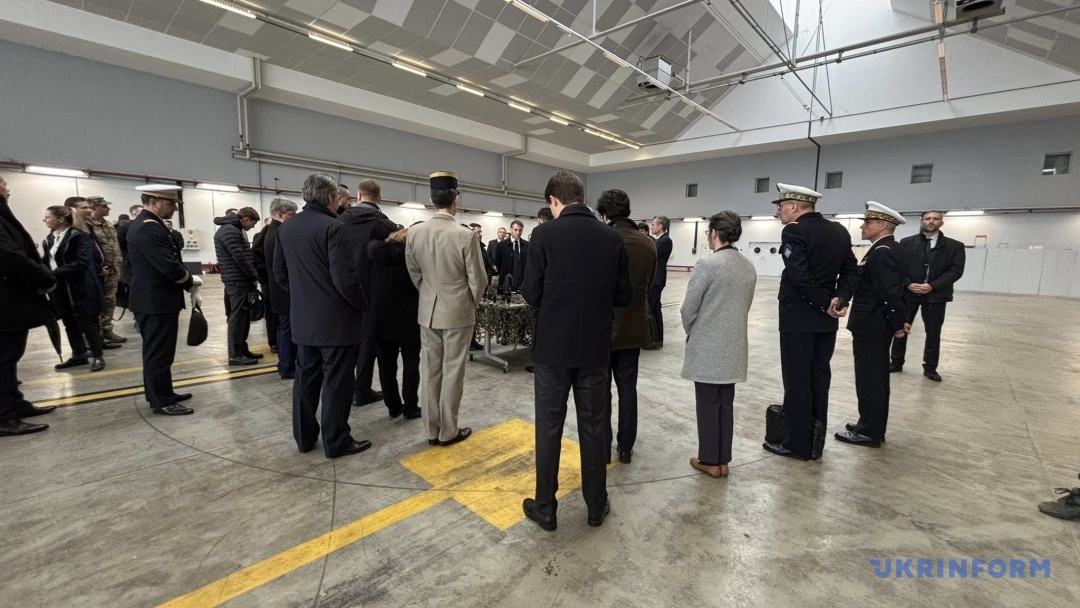
In the hangar, which we cannot show here, Zelensky and Macron were given a real exhibition of the French defense industry’s latest products in miniature. On a large table, there were displayed models of airplanes, missiles, radars, drone interceptors and other weapons that Ukraine desperately needs. Representatives of defense industry enterprises took turns describing their capabilities. It was clear that Zelensky understood well what was being discussed and how it worked. Macron looked like a “man in civilian clothes” among military men, but he also showed curiosity. The smile on his face indicated that he was proud of what the French defense-industrial base companies have achieved. This briefing on weapons lasted about an hour. Meanwhile, cameras had already lined up on the street with a table and chairs arranged in front of the stage. Reporters were whispering among themselves, calling the number 100, but the intrigue remained until the last moment.
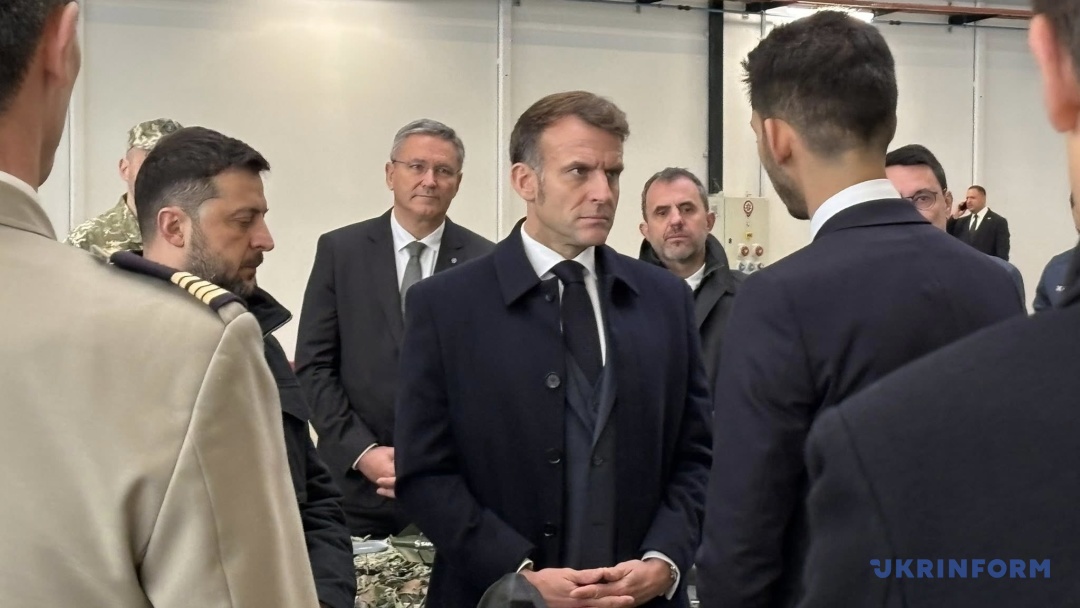
UKRAINE TO GET 100 RAFALE F4 FIGHTER JETS IN A HISTORIC DEAL
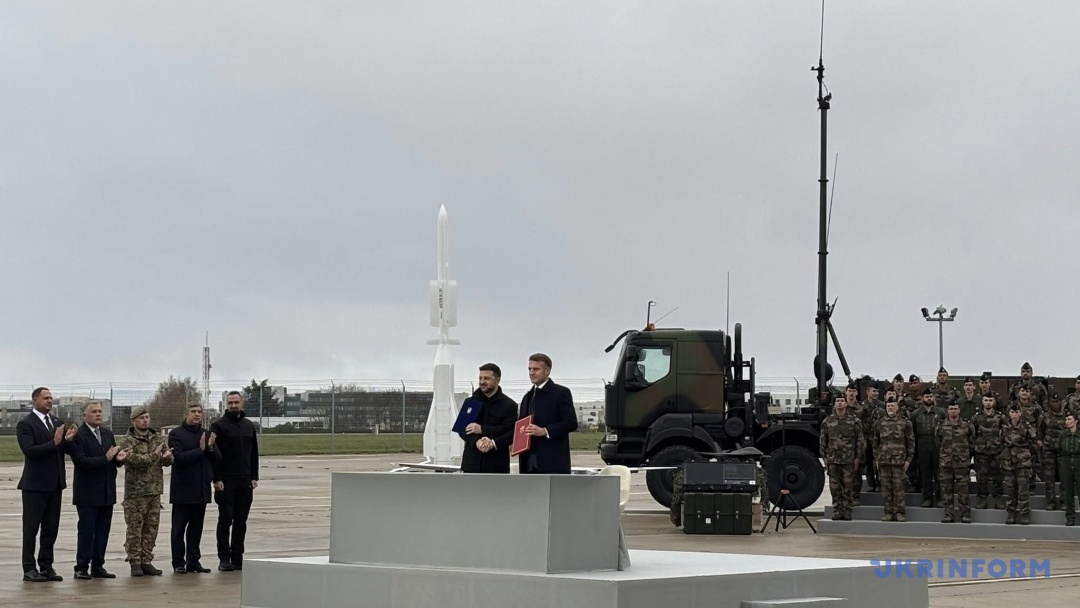
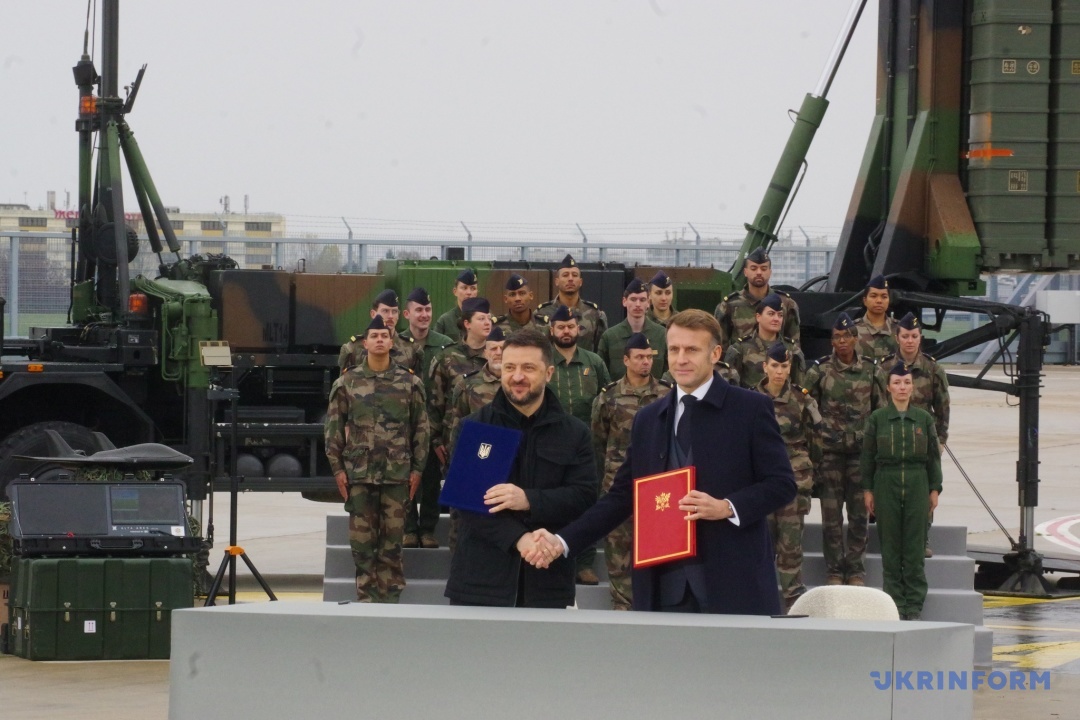
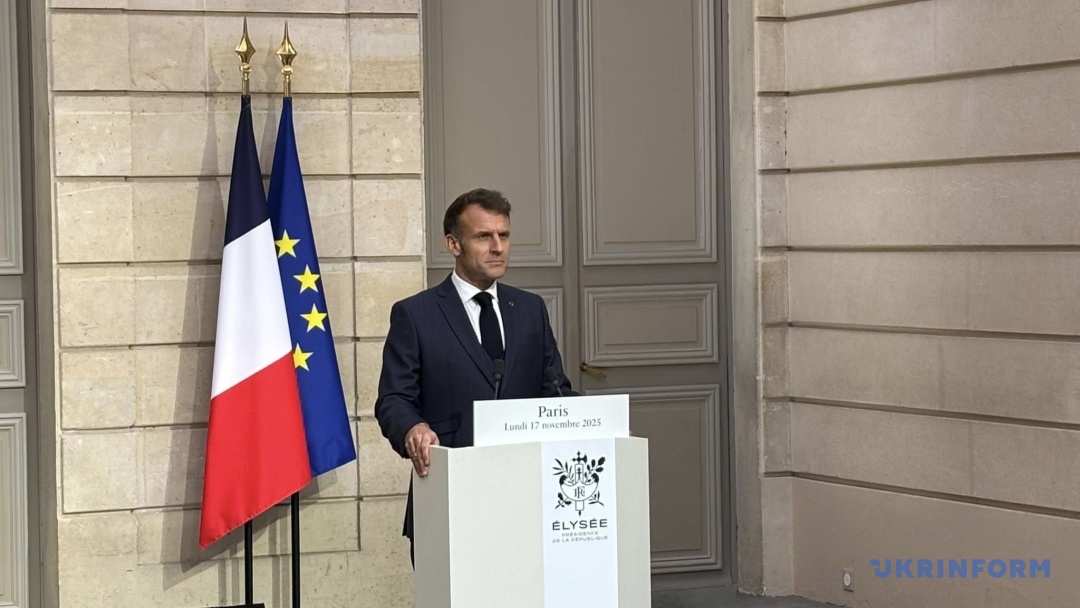
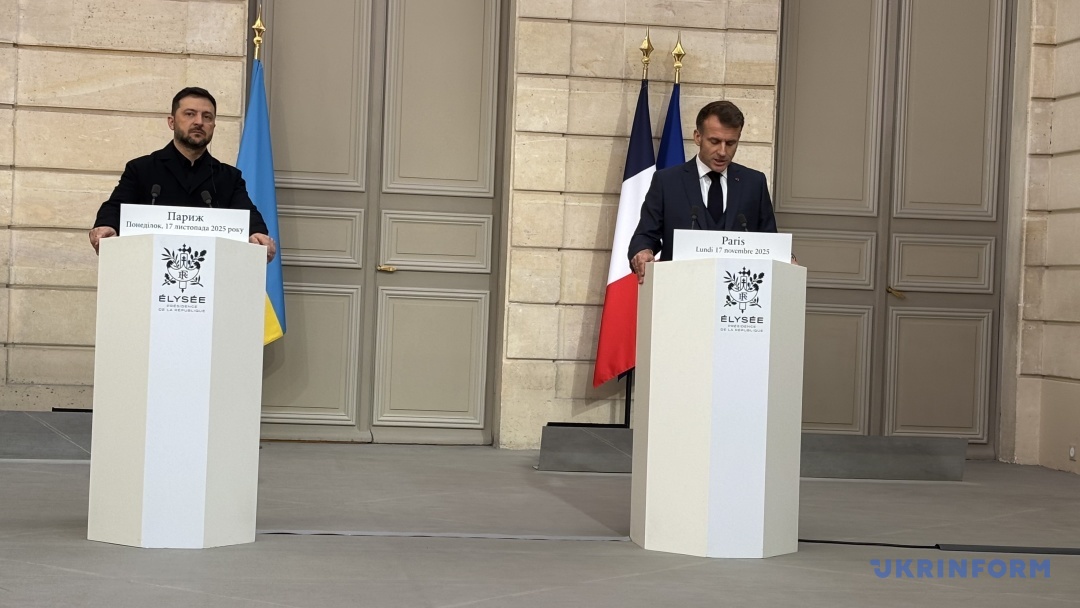
After the host announced that the agreement between France and Ukraine would now be signed by Presidents Zelensky and Macron, the main actors quickly left the pavilion and headed to the table to sign. The place looked epic. In addition to the French and Ukrainian flags installed near the key element – the Rafale aircraft – behind Zelensky, there was towering a mock-up of the Aster missile, and behind Macron, a mast with an antenna – an element of the related Arabel radar – was visible. But it was the warplanes that were “headliners” of the first press release. After Zelensky and Macron showed the signed documents with smiles on their faces, the press approached them.
Фото
“This is a grand historic moment. One hundred Rafale warplanes mark a new milestone for our industry, for our people,” the Ukrainian President said. Macron added that an agreement on long-term and short-term capabilities had been signed today. “And we also plan to deliver 100 Rafale aircraft, that’s a lot,” he specified.
It is worth adding that the document signed regarding the fighter aircraft were titled as a Declaration of Intent on Cooperation in the Acquisition of Defense Equipment.” But more on that later.
COALITION STAFF ON MOUNT VALERIAN
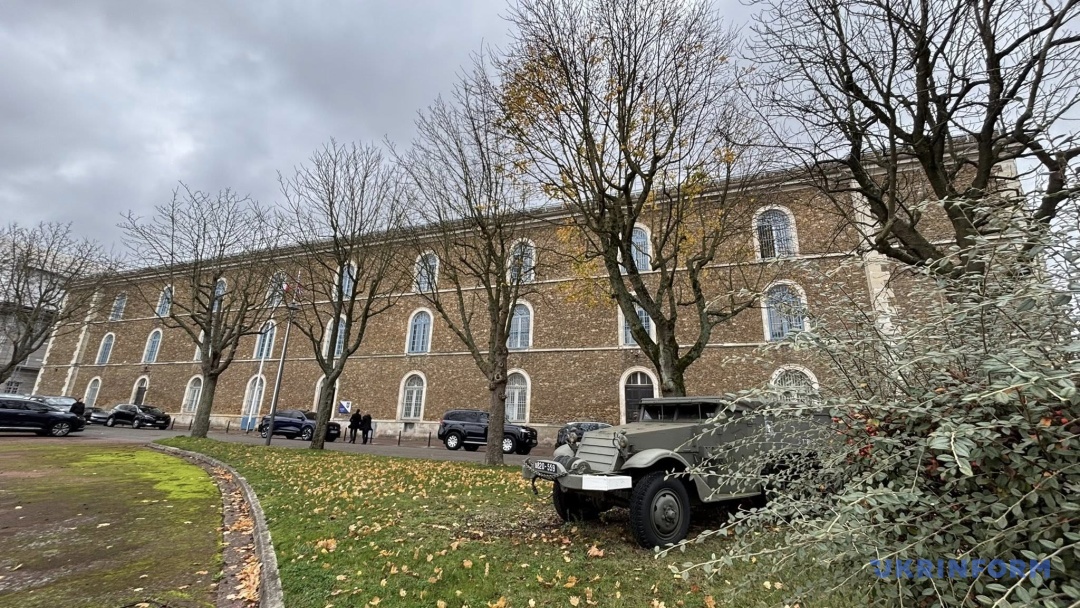
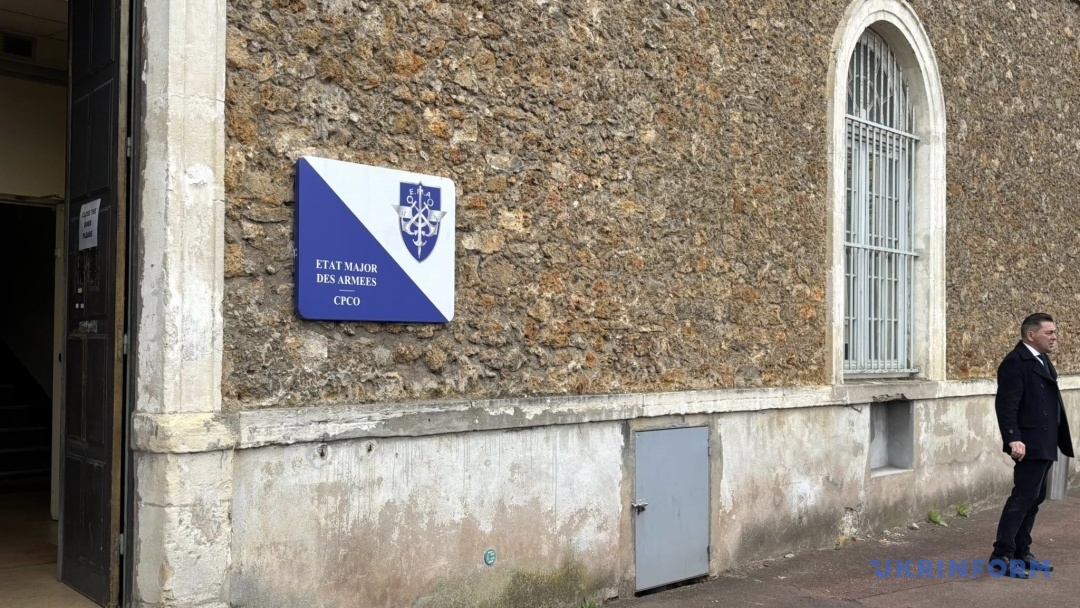
Having greatly intrigued the press, the motorcade with the presidents rushed to the building of the “multinational forces for Ukraine headquarters,” as the French call it, or, simply put, the headquarters of the Coalition of the Willing, which brings together 35 countries, along with NATO, the EU, and Ukraine. The headquarters building is located in a very symbolic place – on Mount Valerian (Mont Valerien), the location of an old fortress that guarded Paris, and the Memorial of Fighting France. The fortress was the main site in France used by the German army to execute over a thousand Resistance fighters and hostages between 1941 and 1944. In 1960, General Charles de Gaulle inaugurated the "Mémorial de la France Combattante" at the site to honor the memory of those who died for their country.
Macron has already talked about the “secret headquarters,” but now it’s time to make sure that it is real. It is known that up to 60 officers from 16 countries, led by France and Great Britain, work there, and that they have already completed a plan to deploy forces to Ukraine immediately after the ceasefire and peace agreements are achieved.
It was there where, according to information available to us, the military commanders were shown a map of Europe with Ukraine and a piece of western Russia, and briefed on the details of the plan. But, of course, the details of the plan are kept secret, so, journalists were not allowed. Most of them were already waiting for the leaders at the Elysee Palace. Another rapid movement of the motorcade through Paris - and the Ukrainian delegation signs a number of more agreements in the palace.
NOT JUST WARPLANES
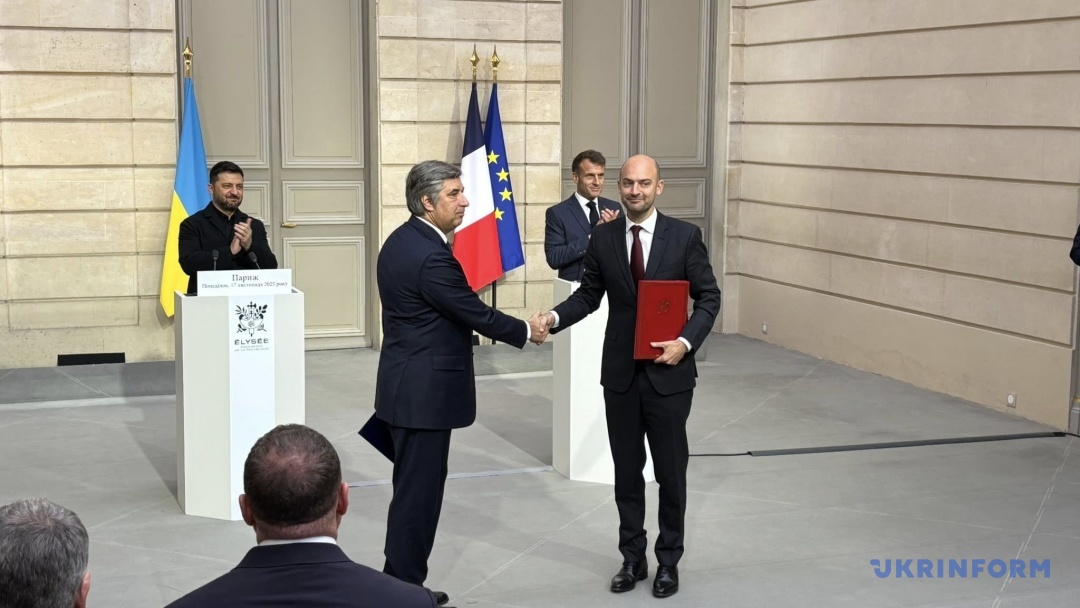
The first of the initialed agreements provides for an extension from 2026 of the fund to support critical infrastructure and priority sectors of the Ukrainian economy, increased to 200 million euros, to secure financing from 2027 of projects by French companies to increase Ukraine’s resilience against ongoing Russian attacks.
The second signed document establishes enhanced bilateral cooperation in strategic sectors – defense, energy, transport, water supply, critical metals, agriculture, healthcare and humanitarian mine action – aiming to give a push to “landmark projects.”
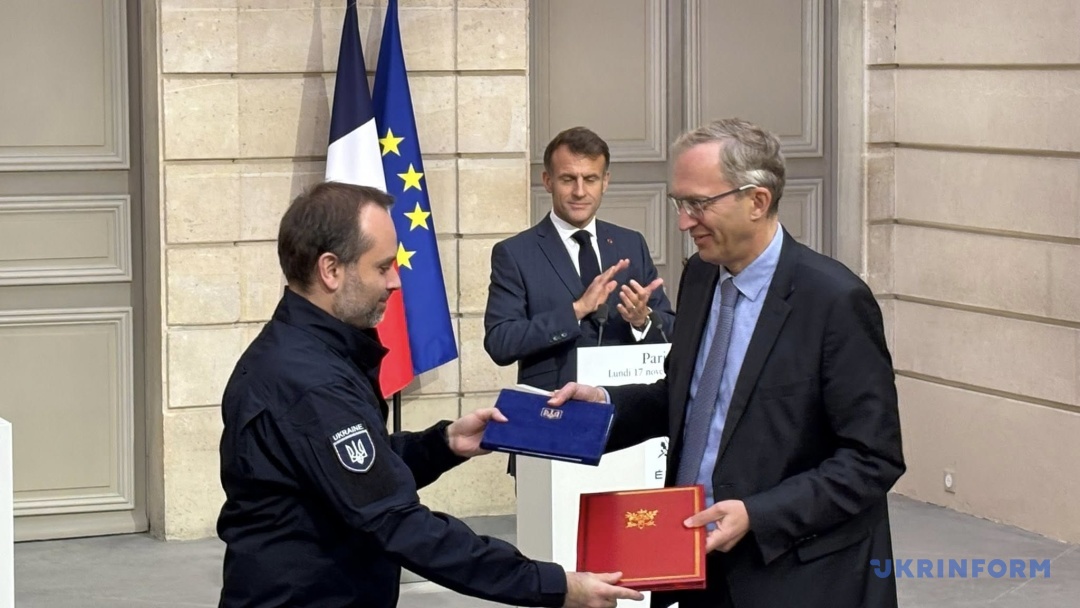
As part of the visit, French engineering company Alstom signed a deal to supply Ukrzaliznytsia, Ukraine’s railway operator, with about 55 locomotives for an estimated €470mn, mostly financed by the European Bank for Reconstruction and Development and the World Bank.
But of course, most of the attention was focused on the long-term declaration signed at the airbase. Because it too was praised as “historic”.
ZELENSKY’S POST AND MACRON’S COMMENT
“Today is a special moment, truly historic for both nations – France and Ukraine. Together with Emmanuel Macron, we signed a declaration of intent regarding cooperation in the acquisition of defense equipment by Ukraine.... the French defense industrial and technological base, including 100 Rafale F4 aircraft by 2035 for Ukraine's air force, SAMP-T air defense systems, air defense radars, air-to-air missiles, and aerial bombs,” the president wrote on social media.
Zelensky said Ukraine and France had agreed to jointly produce interceptor drones, a type of weapon Kyiv has rushed to deploy in order to fight off Russian long-range drones. Defense companies from France and Ukraine would also work together on the development of other drone components, he said in a post published on Telegram. Zelensky said during the press conference that the two countries might consider co-production of Rafales in the future.
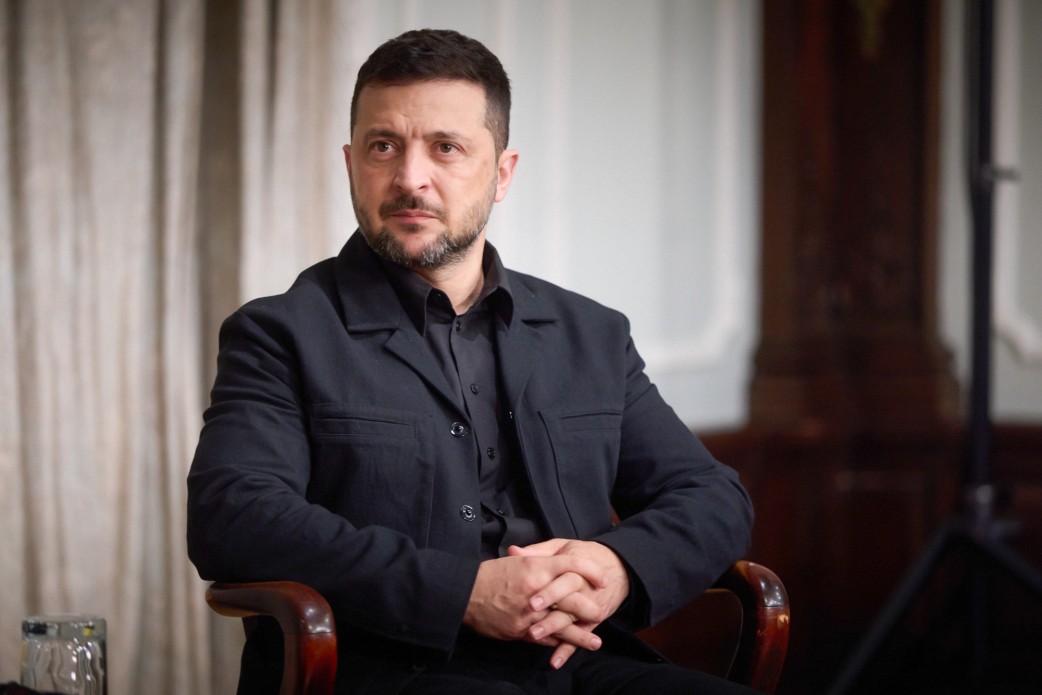
Photo courtesy of the Office of the President of Ukraine
The Ukrainian President expressed his deep gratitude to France.
At a press conference alongside his Ukrainian counterpart, President Macron, asked if the fighter jet deal was too late to help beat back Russian advances -- given that the Ukrainians had been waiting for the Mirages for almost three years, and the Rafales (and this is no secret to anyone) were requested at the beginning of the war -- said these types of deals are "always seen as too early or too late."
"We’ve already deployed Mirages jets and several countries have contributed to Ukrainian air force," Macron said.
“Today, different states have already supported the Ukrainian air force by providing their capabilities. They complement our missile defense systems, and are appropriate and necessary,” he emphasized, again mentioning the previously transferred Mirage fighters.
According to Macron, one should plan for tomorrow, and so the declaration of intent on the supply of 100 warplanes to Ukraine within ten years “fits into another time horizon – the recovery of the Ukrainian armed forces in the future.”
“In order for the signed peace, which we hope for as soon as possible, to be strong and lasting, it is necessary that the Ukrainian army has the ability to deter any new aggression. In this context, Sweden, for example, has done this by providing other capabilities, we are concluding such agreements that will provide the Ukrainian army of tomorrow with its own defense capabilities,” Macron explained diplomatically.
BALANCING AMBITIONS WITH RESOURCES
So, Ukraine has the opportunity to acquire the pride of the French Air Force - the latest Rafale models and related equipment within a ten years time frame. But this possibility looks too rosy, for several reasons. First is the order execution, and second, is its price.
According to French media, if this order is implemented, it will become the largest export contract for Dassault Aviation (aircraft manufacturer), surpassing even the contract with the United Arab Emirates for 80 fighter jets. But how much will all this cost Ukraine? According to open sources, one Rafale jet sells for about 80 million euros, plus weapons, and this figure is greatly underestimated. In fact, other countries pay up to 100 million for a “bare” aircraft. India, for example, ordered 36 Rafale jets for €7.8 billion, that is, approximately €217 million apiece, but this, true enough, comes in a package with related armaments, maintenance services, training, etc. The contract with the UAE, valued at €16 billion, included 80 Rafale F4 jets (approximately 200 million per aircraft), including armaments and maintenance services. Accordingly, a hundred such aircraft for Ukraine will cost at least €8–10 billion, and with related weapons, equipment, and services, the total contract value may exceed €20 billion.
These warplanes are currently in great demand. The manufacturer already has 240 such aircraft on its order books, mostly from the French military, as well as Qatar, the United Arab Emirates and Greece. It typically takes about three years from order to delivery. In 2025, Dassault was putting out a little more than two Rafales per month. The ambitious goal is to reach the production rate of four per month, but this is unlikely to be achieved until the end of the decade.
Currently, according to experts, the implementation of less significant arms procurement projects is limited to a few options. There are two European financing instruments. The first is the SAFE (Security Action for Europe) loan -- a new EU financial instrument, adopted in May 2025 by the European Council, designed to boost the European defense industry and readiness. It offers up to €150 billion in long-term, competitively priced loans to EU member states, Ukraine, and other associated countries. Although Ukraine cannot receive a direct loan from SAFE, it has been granted equal status with EU contractors to participate in joint procurement. This allows member states to use SAFE funds to purchase equipment from Ukrainian defense companies without the obligation to repay during the first ten years. The second option, which is actually our main hope that has yet to be implemented, is the so-called "reparation loan". These is about a loan worth 140 billion euros from frozen Russian assets.
During the press conference on Monday, Macron was pushed to provide specifics about the funding.
“We are financing our support for Ukraine partly with our own contributions. This is included in the military programming law, using the instruments we are deploying at the European level,” Macron said, and continued, “For example, the guided bombs I mentioned are financed through the European Peace Fund. Now we have the SAFE program, for which we have secured European preference. We also have the ERA program, created thanks to the proceeds from frozen Russian assets at the G7 level, which also allows us to finance military capabilities and must be involved. The funding that we are mobilizing at the European level must be directed precisely to this,” the French leader explained. He again emphasized the importance of strengthening European capabilities, “otherwise we will collectively find ourselves in a situation where European funds will be used to purchase American weapons.”
“It is also in the interest of the French people to participate in such programs.” Macron added that new EU-level programs, such as SAFE and ERA, will be providing support.
WHAT TO DO TO ACHIEVE PEACE
During a joint press conference with Volodymyr Zelensky, Macron called for an alliance of the EU, the United States, and other partners to maintain and increase pressure on Russia through sanctions on its oil and gas sector and action against the Russian "shadow fleet" of oil tankers that helps finance the war.
He stressed the need for the EU to provide Ukraine with "predictable and stable long-term financial support" and help in regenerating the Ukrainian army so it can deter any future aggression.
Macron expressed his hope that peace in Ukraine will be achieved by 2027, which is when his current presidential mandate expires, and pledged to make every effort to this end.
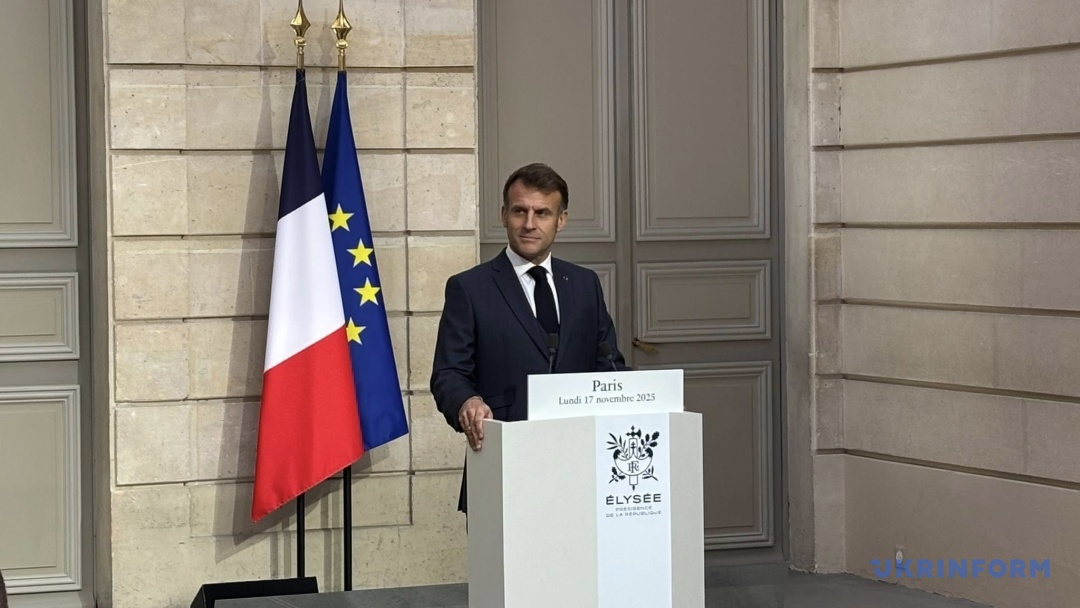
Macron also said, “Ukraine belongs to the European family, not only geographically but also through its values, history, and courage. The path towards the European Union will be demanding and requires deep reforms in transparency, governance, anti-corruption, and the rule of law. I fully trust President Zelensky and the Ukrainian people to meet these conditions.” “Together we will develop and produce weapons in Ukraine, especially in the field of drones.” “I believe we will achieve peace by 2027.”
THE NET OF SUPPORT
After the press conference, the presidents visited a forum dedicated to French projects in the field of unmanned systems. It was staged right there, at the Elysees Palace. And the visit ended at the Ukrainian embassy with a meeting with the French fishermen involved with Ukraine by providing aid in the form of used fishing nets. These durable nets, made of sturdy horsehair, were repurposed and sent to Ukraine to serve as crucial protective barriers against Russian drone attacks on the front lines and around critical infrastructure. In a project coordinated by the Breton charity Kernic Solidarités, fishermen from the Brittany region have donated their worn-out nets to Ukraine.
“As long as there is fish in Brittany, in France, you can rest assured that we will provide you with nets,” Olivier Le Nézet, president of the National Committee of Fishermen of France said.
The French fishing community have already handed over several hundred kilometers of worn-out fishing nets to Ukraine to bolster anti-drone defense of the Kherson and Zaporizhzhia regions.
At the end of the meeting, the fishermen presented President Volodymyr Zelensky with a distinctive fishing vest. The vest was presented to symbolize the solidarity and support of the Breton fishermen for Ukraine.
The presentation of the vest was a warm, personal moment highlighting the grassroots, multifaceted nature of international support for Ukraine, bridging the gap between a local trade and global geopolitical conflict. Zelensky acknowledged that the fishermen's contributions have already helped save lives.
Lydia Taran, Paris
Photo via Author