Ukraine at 80th UNGA in New York: overall outcomes and Ukraine’s new role
Experts regard the work done by the Ukrainian delegation at 80th session of the UN General Assembly as one of the most effective in recent years
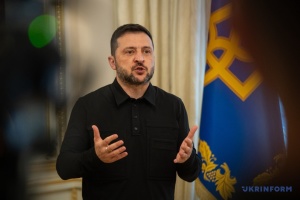
The high-level week of 80th UN General Assembly in New York became a real diplomatic marathon for the Ukrainian delegation led by President Volodymyr Zelensky. Against the backdrop of global challenges that could shift the focus of international attention, Kyiv used the main international platform not just to remind the world of the ongoing Russian aggression, but to implement an ambitious strategy - strengthening existing alliances, building new ties and establishing Ukraine as a full-fledged subject of international politics, suggesting specific solutions in the field of global security. In total, the Ukrainian team held more than 30 events, turning the visit into a full-fledged multi-vector diplomatic mission.
HIGHLIGHTS OF THE BUSY WEEK
Overall results and Ukraine's new role
The highlights of the week included not only a reminder of ongoing Russian aggression, but also a demonstration of Ukraine's new role on the international stage. Kyiv behaved not as a victim of aggression asking for help, but as a state ready to share its unique experience of resilience and suggest specific solutions to strengthen global security. This "added value" generated considerable interest among partners - from the Caribbean to New Zealand.
Overall results and Ukraine's new role
Ukrainian developments in the field of unmanned technologies, uncrewed marine vehicles, both surface and undersurface, as well as experience in protecting energy grids in the face of unprecedented attacks held a special attraction for attendees. For example, at the ministerial meeting of the Association of Caribbean States, not only peace and food security issues came under discussion, but also Ukrainian accomplishments in developing and manufacturing sea drone technologies, and this topic also featured high in discussions with delegations from Oman, New Zealand and Switzerland.
The key goals pursued by the Ukrainian delegation included increasing pressure on Russia, strengthening Ukraine's defense capabilities, and advancing towards EU membership. The delegation used every opportunity to achieve these goals.
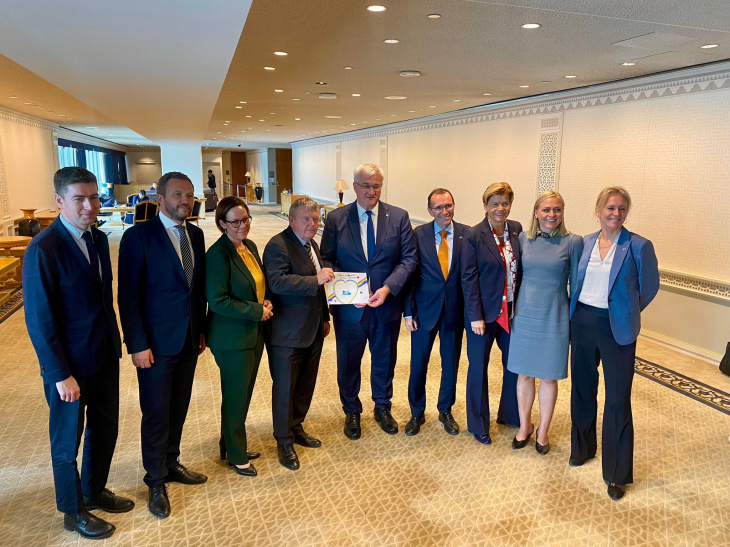
In New York, Ukrainian Foreign Minister Andriy Sybiha met and talked with counterparts from the Nordic-Baltic Eight countries
The visit was also marked by the expansion of diplomatic horizons. Diplomatic relations were restored between Ukraine and Syria, whose new government recognized the territorial integrity of Ukraine after severing relations in 2022 due to the Assad regime's recognition of the self-proclaimed Luhansk People's Republic (LPR) and the Donetsk People's Republic (DPR) in eastern Ukraine. In addition, diplomatic relations were established with Papua New Guinea, bringing the number of states with which Ukraine has diplomatic relations to 183 in 2025.
Key meetings and agreements
The Ukrainian delegation's schedule was extremely tight and included talks with leaders of dozens of countries and international organizations.
The central event of the visit was undoubtedly the talks between Volodymyr Zelensky and US President Donald Trump. According to the Ukrainian side, the meeting was "even more successful than expected", and its results are "highly promising". It is important to note that both sides emerged from the negotiations "with the shared vision, correct and positive results."
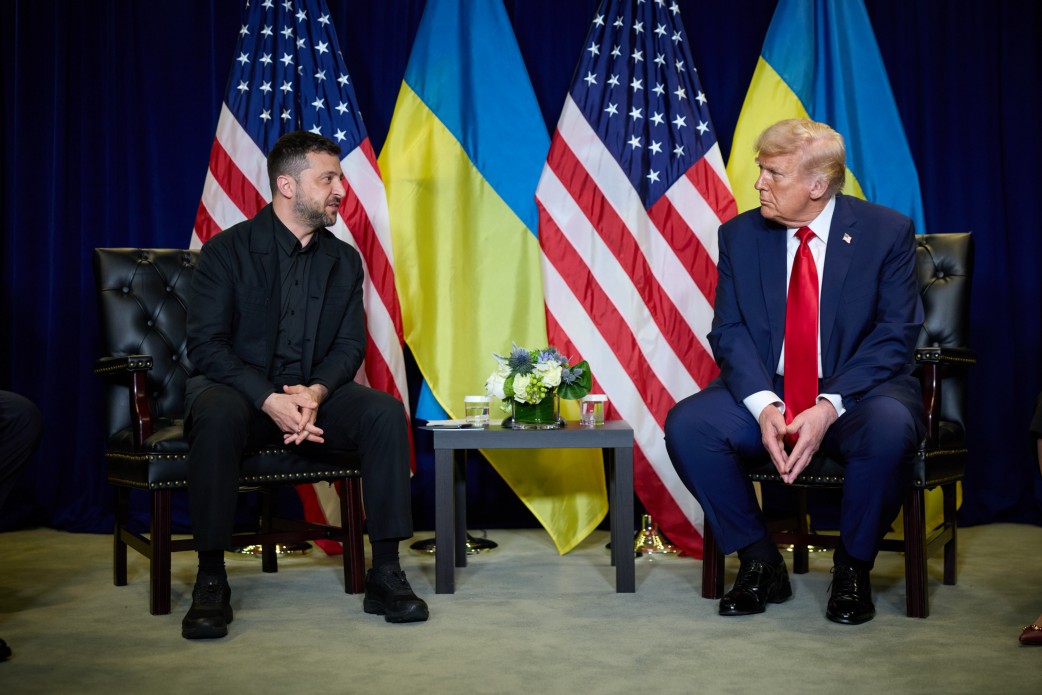
The President of Ukraine met in New York with the President of the United States
President Zelensky emphasized “a significant shift in signals regarding support for Ukraine” and returning home with a clear understanding of the tactical support Ukraine needs to persevere. In addition to political and strategic support, specific practical issues were discussed: toughening sanctions against Russia, forging cooperation in the field of minerals, drone production, and the purchase of American weapons. Particular attention was devoted to the implementation and expansion of the PURL (Priority Ukraine Requirements List) program - a new joint initiative launched by the United States and NATO in July 2025 to accelerate the delivery of weapons to Ukraine and designed to provide Ukraine with critical military equipment and ammunition on a faster, more reliable basis. No less important was a meeting between First Ladies Olena Zelenska and Melania Trump, dedicated to the return of Ukrainian children.
In addition to the meeting with Trump, the Ukrainian delegation held a number of important negotiations in the United States. A meeting was held with a bipartisan and bicameral delegation of members of the United States Congress to address financial and military assistance issues. President Zelensky emphasized that bolstering Ukraine’s air defense capacity is a priority.
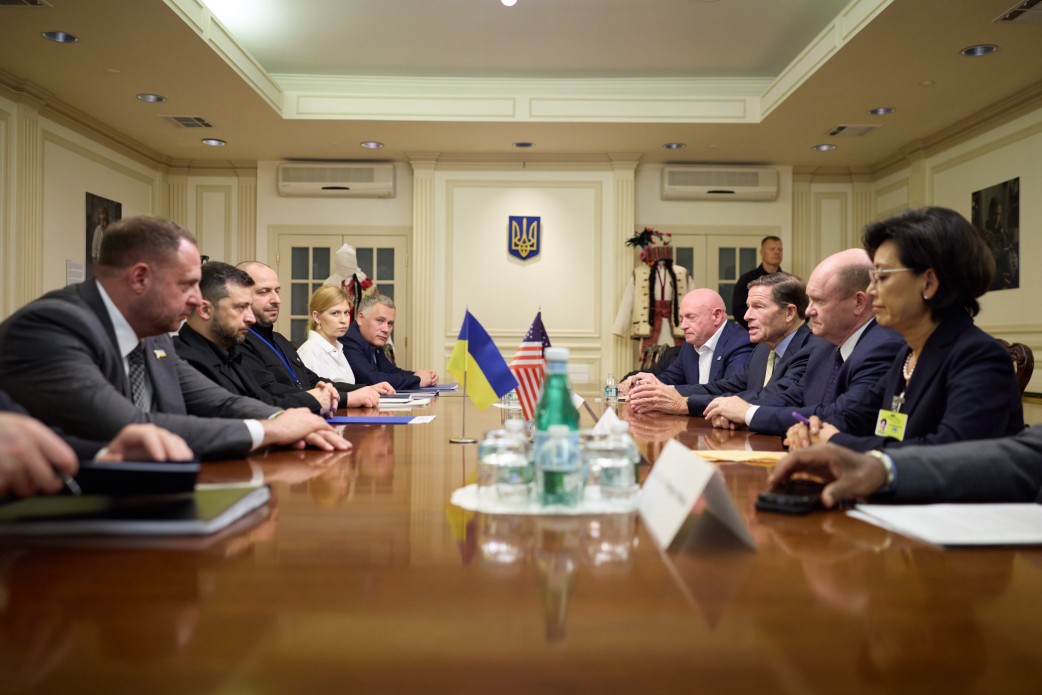
The President met with a bicameral and bipartisan delegation of members of the US Congress
Meetings were also held with representatives of major American companies, including Bank of America, Amazon, JPMorgan Chase, and Westinghouse, as well as members of the American Jewish Committee.
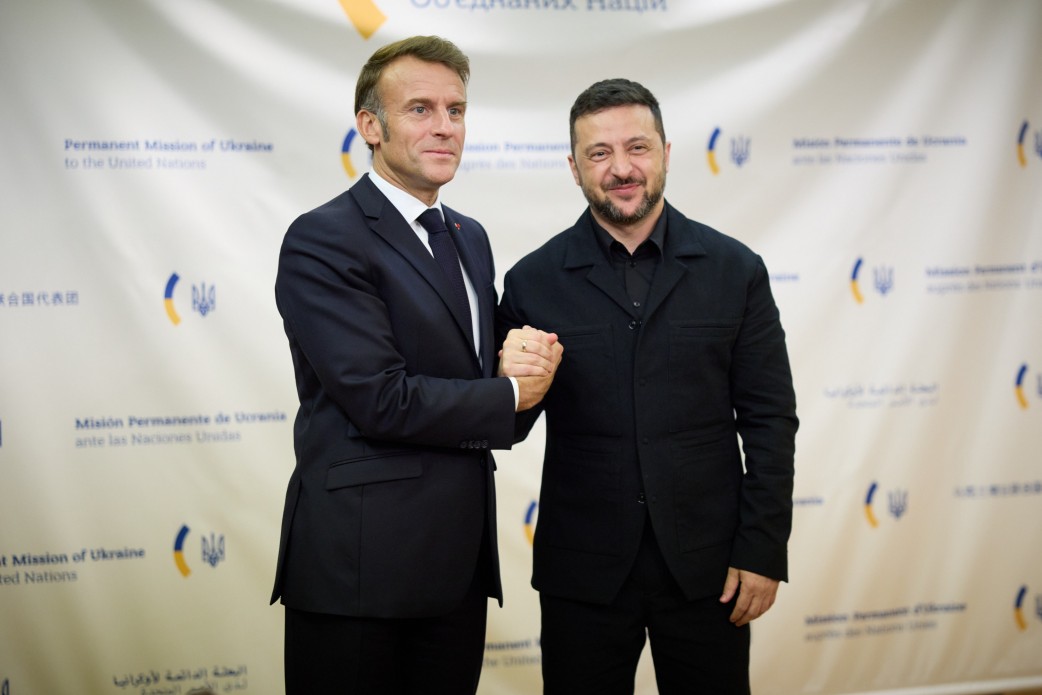
At the Permanent Mission of Ukraine to the UN, President Volodymyr Zelenskyy met with French President Emmanuel Macron
Negotiations were also held with French President Emmanuel Macron on strengthening Ukrainian air defenses ahead of winter and the use of the immobilized Russian Central Bank assets. The peace process and Ukraine's EU integration were discussed with Spanish Prime Minister Pedro Sanchez. A meeting was held with King Carl XVI Gustaf of Sweden regarding humanitarian aid and post-war reconstruction. The effectiveness and further expansion of the PURL initiative were discussed in detail with NATO Secretary General Mark Rutte.
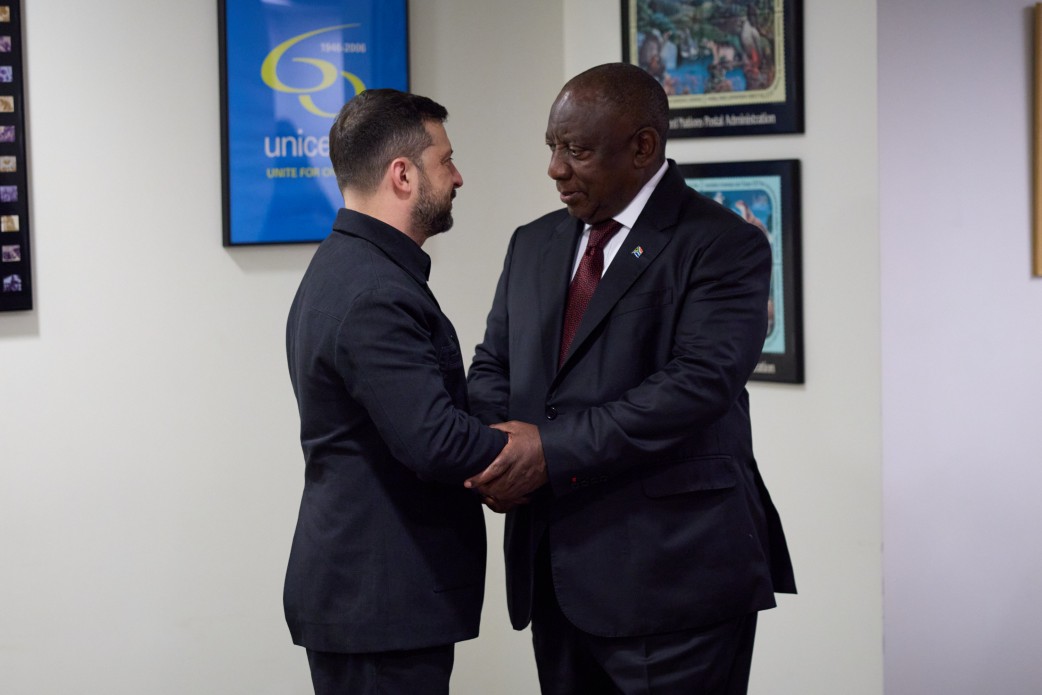
Ukrainian President Volodymyr Zelensky met in New York with President of the Republic of South Africa Cyril Ramaphosa
Finally, an important focus was given to the involvement of countries in Asia, Africa and Latin America – the so-called Global South. Meetings were held with the Presidents Lula da Silva of Brazil, Cyril Ramaphosa of South Africa, João Lourenço of Angola and Kassym-Jomart Tokayev of Kazakhstan. The talks were focused on the search for ways to a just peace and involving the Global South countries in putting pressure on Russia. It is worth noting the talks with the President of Panama José Raúl Mulino, during which sanctions against the Russian shadow fleet of oil tankers were discussed. Panama has removed over two hundred Russian oil tankers from its registry as part of efforts to enforce international sanctions.
Two summits: the return of children and the de-occupation of Crimea
Two key events for Ukraine took place on the sidelines of the General Assembly, demonstrating an unprecedented level of international support. Namely:
Summit of the International Coalition for the Return of Ukrainian Children
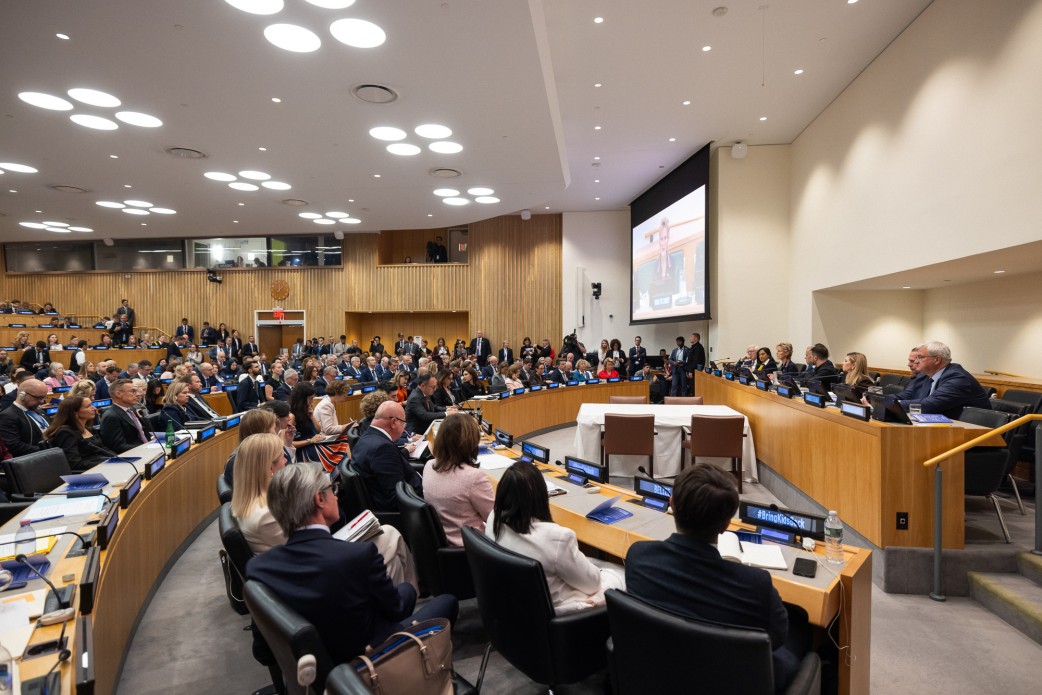
In New York, Ukraine and Canada organized a country leaders’ summit of the International Coalition for the Return of Ukrainian Children
Organized by Ukraine and Canada, it was held at the head of state and government level. It was attended by more than 40 delegations, including heads of state and government, and the queens of Belgium and Sweden. President Zelensky stressed the need for concrete results - the actual return of all abducted children. First Lady Olena Zelenska emphasized that the return of children is a "test of our humanity." Ukraine announced the launch of a pilot mechanism for collecting information on deported children and announced the submission of a resolution condemning these crimes to the UN General Assembly.
Fifth Crimea Platform Summit
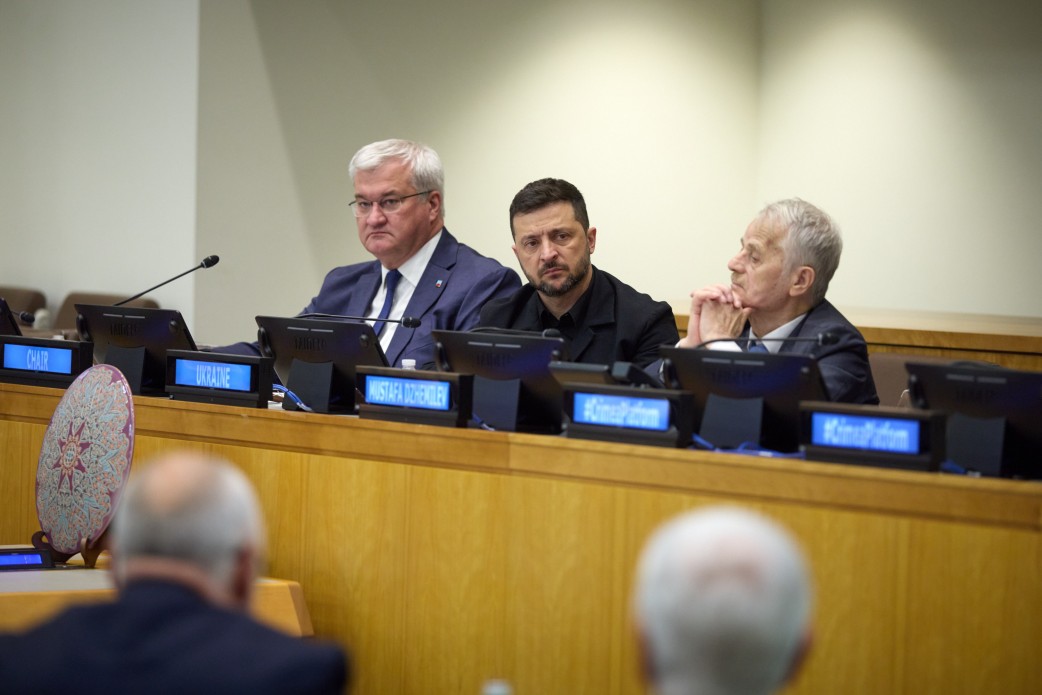
Crimea Platform Summit
For the first time, the summit was held on an internation platform – that is, on the margins of the UN General Assembly. It brought together a record high number of over 60 states and international organizations. And most importantly, it was a powerful signal that the issue of Crimea de-occupation remains high on the global agenda. Volodymyr Zelensky emphasized in his speech that the weak world reaction to Russia’s illegal annexation of the peninsula from Ukraine at one time “brought back Russia's addiction to war and raids”. The main leitmotif of the summit was the thesis that the return of Crimea is not only a matter of restoring the territorial integrity of Ukraine, but also a fundamental condition for restoring respect for the UN Charter and international law.
A VIEW FROM KYIV: EXPERT ASSESSMENTS
Ukrainian political experts agree that the delegation’s visit to New York was extremely successful and productive. Political scientist Volodymyr Fesenko calls it “one of the most successful visits of our delegation to participate in the high-level week of the UN General Assembly”.
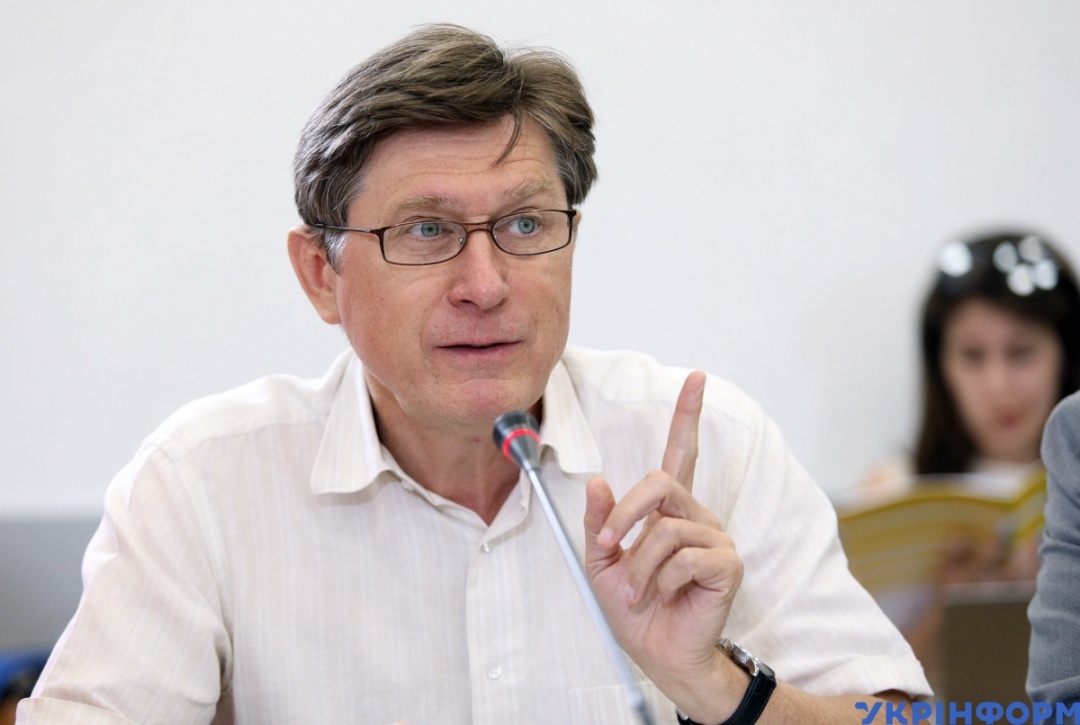
Volodymyr Fesenko
To support this conclusion, he highlights two key and simple criteria: first, “a successful meeting with President Trump,” and second, “a large informational and political resonance in the global media regarding the activity of President Zelensky during this visit.” This indicates not only the fulfillment of protocol tasks, but also the achievement of strategic communication goals.
Political analyst Yuri Bohdanov shares the assessment of the events as “extremely positive.” He highlights two key points. First, in his opinion, Donald Trump, while remaining unpredictable, at least stopped looking for the causes of the war in Ukraine and in Volodymyr Zelensky personally, which is an important signal. Second, and even more importantly, “Trump began to recognize the objective reality in which Putin constantly deceives and misinforms him.” This “meeting with reality” on the part of the American leader, according to Bohdanov, creates the prerequisites for the Kremlin “to be forced to go to negotiations sooner or later”.
Key highlights: Trump, the Global South, and realism about the UN
The central element of the visit, which is being analyzed by experts, was undoubtedly the meeting between the presidents of Ukraine and the United States. Volodymyr Fesenko emphasizes its exceptional status: “Any meeting with the president of the United States, including on the sidelines of the UN General Assembly, is a special event, and when the meeting takes place amid a full-scale war, and with a US president like Trump, it is an event of special significance.” He draws attention to the frequency of contacts – this is the fifth meeting of the two leaders during Trump’s second presidency, which indicates a high level of engagement. Analyzing the rhetoric following the talks, in particular Trump’s post in Truth Social, Fesenko concludes that “this was probably the most positive meeting and conversation between the presidents of the United States and Ukraine over the time of Trump's second and current tenure as the president of the United States.” He is convinced that such a positive outcome is not a coincidence, but is the result of "the systematic work of President Zelensky, his Office, and all of Ukraine’s diplomatic corps working on the American track."
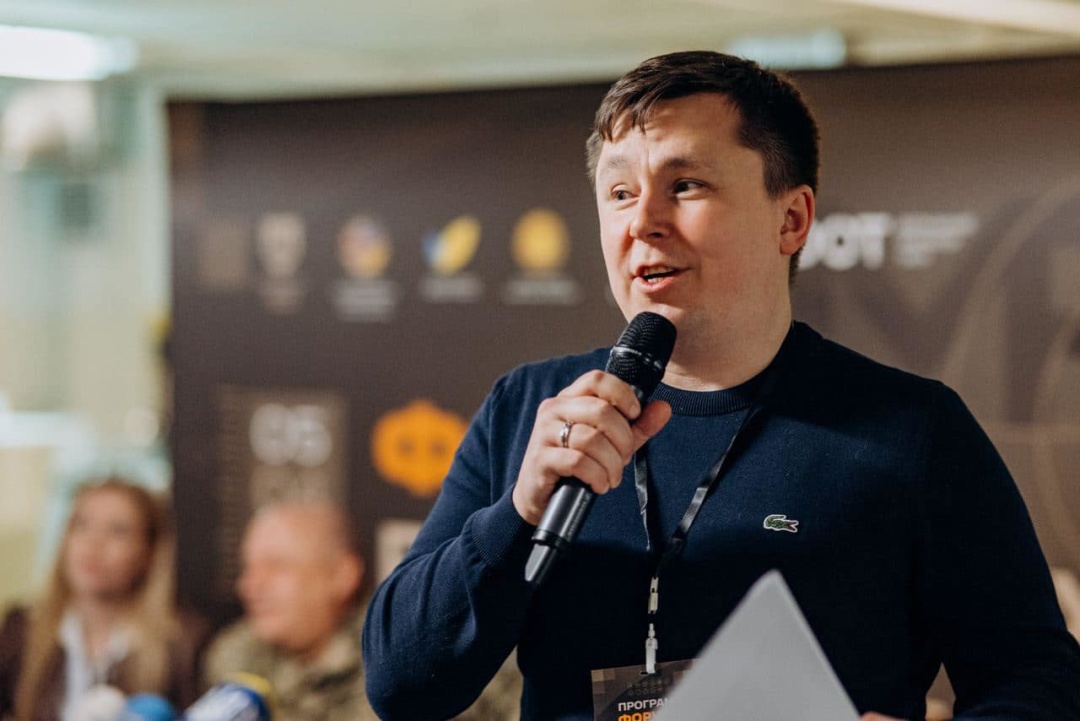
Yuri Bohdanov
Yuri Bohdanov, for his part, suggests a pragmatic view of future cooperation with the Trump administration. He calls for realistic assessments: “He will not supply weapons to Ukraine as Biden did, and will not provide funding as the previous administration did.” However, according to the expert, the positive lies in something else: “Most likely, he will be ready to sell weapons to Ukraine - both through European partners and directly.” In addition, Mr. Bohdanov sees a potential in increasing sanctions pressure: “Under favorable external circumstances, Donald Trump can put pressure on a number of countries that continue to buy Russian oil, forcing them to look for alternatives.” Even his rhetoric itself is already having a positive effect on the sanctions track.
The second important goal pursued by Ukraine at the 80th UNGA was active work with the Global South countries. Yuri Bohdanov considers this the “second key priority” for the visit. In his opinion, the talks with the leaders of Kazakhstan and South Africa “indicate that the dialogue on forcing Russia to negotiate an end to the war is ongoing.” This demonstrates that the Kremlin’s policy “is tiring every participant in the international process.”
At the same time, both experts call for realistic expectations regarding the UN itself. Yuri Bohdanov notes that this organization is “primarily a platform for dialogue,” and “one should not expect any drastic steps or radical decisions from the UN.”
The President’s Speeches: Messages for the World and the United States
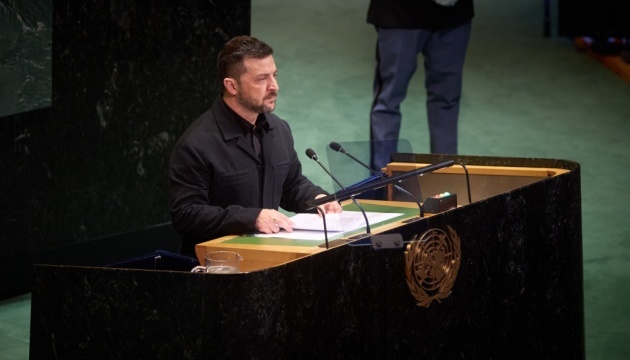
Volodymyr Zelensky’s speeches at the Security Council meeting and at the general debates of the General Assembly were followed by much reverberations throughout the world. Volodymyr Fesenko notes that the main task – “to declare our country’s position... and draw the international community’s attention to it” – was successfully accomplished.
“The main message the President of Ukraine made in his speech from the UN rostrum is that the international community must put pressure on Russia to stop the war and prevent a catastrophe.”
Fesenko’s observation about the dual audience of the speeches is interesting: “It was very noticeable that the President of Ukraine addressed from the UN rostrum not only the participants of the General Assembly, but also the American audience.” In his opinion, this was a logical follow-up to the dialogue with the Trump administration and its supporters. The most attention was attracted by the theses “on the need for military assistance to Ukraine, that in the modern world, the security of states can be guaranteed by strong alliances, strong partners and their own weapons,” as well as the warning about the risk of a nuclear disaster as a result of the global arms race.
Yuri Bohdanov, analyzing Zelensky’s criticism of the UN’s ineffectiveness, notes that the president “actually voiced what top world leaders have been talking about for a long time: the UN is ineffective in preventing conflicts and is unable to put real pressure on dictatorial regimes.” He also sees in the speech a reference to Donald Trump’s rhetoric, which in the current conditions looks like “a completely logical and pragmatic step.”
“For Ukraine, such a position, at least, does not create risks, but rather the opposite — it may prove useful: in particular, there is a possibility that Donald Trump will stop trying to impose his mediation.”
At the same time, Bohdanov emphasizes that it is worth assessing expectations realistically: “Trump will not supply weapons to Ukraine the way Biden did, and will not provide funding as the previous administration did. However, most likely, he will be ready to sell weapons to Ukraine — both through European partners and directly.”
Moreover, under favorable external circumstances, Trump can put pressure on a number of countries that continue to buy crude oil from Russia, forcing them to look for alternatives. “Even without real steps being taken, his rhetoric is already having a positive effect on the sanctions track: it forces European partners, Turkey, China, and India to think in advance about how to act in the event of a forced refusal from Russian oil. And even if we do not expect drastic actions from Trump, such a position is extremely useful for Ukraine. After the meeting with Zelensky and a series of other contacts, he switched over to this narrative, and this is a positive signal. I reiterate it again: this does not mean that “hellish” sanctions will be imposed on Russia tomorrow or unprecedented pressure will begin. No, this will not happen. Basically, however, we have received additional leverage over Russia and its partners.”
The greatest media attention, according to Volodymyr Fesenko, was given to theses on the need for military aid, that security today is guaranteed by “strong alliances, strong partners and domestically produced weapons”, as well as the threat of nuclear catastrophe due to the global arms race.
CONCLUSION
Ukrainian delegation’s visit to New York for the 80th UN General Assembly testified to the maturity and strategic flexibility of Ukrainian diplomacy. It was a week not just of statements, but of concrete actions and important agreements that laid the foundation for strengthening Ukraine’s international posture for the months ahead. A key strategic achievement was the successful restart of the dialogue with Donald Trump and his administration, which turned potential uncertainty into clear prospects for support. Equally important is the breakthrough in communication with the Global So countries, which destroys Russian narratives and expands the circle of the states that are poised to join in putting pressure on the aggressor. At the same time, Ukraine has finally established itself in a new role – not as an object of international politics, but as an active subject of it, offering the world a unique experience of resilience and innovative approaches to security. Ahead is the painstaking work of implementing the agreements reached at New York, but it can already be stated that the week-long diplomatic marathon in New York helped Ukraine take a significant step forward towards strengthening its defense capabilities and bringing about a just peace.
Myroslav Liskovych, Kyiv
Photo: Office of the President, Ministry of Foreign Affairs of Ukraine