Chernobyl confinement loses key safety functions, comprehensive restoration needed – IAEA
As reported by Ukrinform, this is announced in a statement by IAEA Director General Rafael Grossi published on the agency’s website.
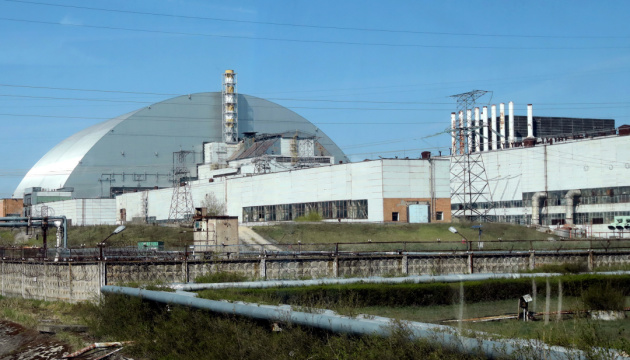
Last week, the IAEA team completed a comprehensive safety assessment of the damaged NSC at the Chornobyl NPP. The mission confirmed that the NSC had lost its primary safety functions, including its confinement capability, but also found that there was no permanent damage to its load-bearing structures or monitoring systems.
“Limited temporary repairs have been carried out on the roof, but timely and comprehensive restoration remains essential to prevent further degradation and ensure long-term nuclear safety,” Director General Grossi said.
The IAEA recommended continuing the restoration and protection work on the NSC structure, including measures to control humidity and an updated corrosion-monitoring program. The agency also called for upgrades to the integrated automatic monitoring system of the original “sarcophagus” built over the reactor immediately after the accident.
In 2026, with support from the European Bank for Reconstruction and Development (EBRD), additional temporary repair works will be carried out at the Chornobyl NPP to restore the NSC’s confinement function, paving the way for full restoration once the conflict ends.
“The IAEA – which has a team permanently at the site – will continue to do everything it can to support efforts to fully restore nuclear safety and security at the Chornobyl site,” Grossi assured.
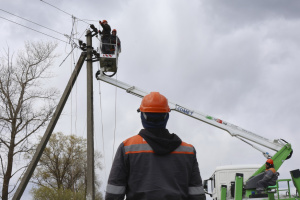
The statement also reminds that the visit of IAEA experts to Ukraine to assess the condition of more than ten electrical substations will continue until December 12.
As reported by Ukrinform, on the night of February 14, a Russian strike drone with a high-explosive warhead hit the shelter over the destroyed Unit 4 of the Chornobyl nuclear power plant.