Cognitive warfare plays crucial role in countering hybrid threats - NATO admiral
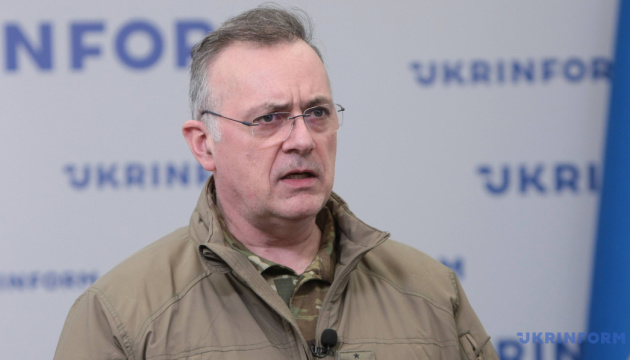
Admiral Pierre Vandier, NATO’s Supreme Allied Commander Transformation, stated this in an interview with Ukrinform.
The admiral spoke about NATO’s asymmetric responses to Russia’s use of hybrid threats, such as cyberattacks, information operations, sabotage, and pressure on critical infrastructure in Europe: “A good example with the EVA Baltic Sentry. When the cables were cut in the Baltic one year ago, SACEUR has launched eVA, which is an extended Vigilant Activity where we put together all the assets of the islands, ships, maritime patrol aircraft.”
Vandier separately emphasized that the Transformation Command, which he heads, has created a fleet of unmanned surface vessels to monitor the Baltic Sea.
“That is an example of how the alliance is reacting at the scale of the islands. That means that all the 32 nations are collaborating in dealing with this,” the admiral noted.
Vandier emphasized that he considers such operations in the “gray zone” to be a form of pressure.
“And in fact, it's where cognitive warfare is important. A part of this warfare is to make our nations more resilient. The ability to adapt, to protect in depth, and to have a population which is not passive in the fight,” emphasized the NATO Commander for Transformation.
He added that currently, in the event of threats, the Alliance resorts to launching enhanced vigilance operations (eVA).
“You [in Europe] have a secure as triggered some extended vigilance activities, one in the Baltic, one which is Eastern Flank after the drone incursions in Poland. Another one is now in the Arctic,” Vandier concluded.
As reported by Ukrinform, British Foreign Secretary Yvette Cooper emphasized that NATO must “redouble its efforts” regarding security in the Arctic to protect the region from Russian aggression.