Pokrovsk and the Zaporizhzhia Bounce-Back: How the Front Is Shifting Into Spring
February 2026 is drawing to a close after weeks of sustained, high-intensity combat that ranks among the most severe phases of the war. According to Ukraine’s General Staff, frontline engagements have consistently exceeded 200 per day in recent weeks, reaching 237 clashes on February 20 alone. Moscow’s wager on a decisive “winter breakthrough” — intended to set the conditions for a broader spring offensive — has so far failed to generate commensurate operational gains. Instead, Russian forces have incurred substantial personnel losses without achieving a breakthrough at scale.
The most intense fighting continues along the Pokrovsk, Kostiantynivka, and Huliaipole axes. Despite mounting pressure, Ukrainian forces have not only contained Russian assaults but have also conducted localized counterattacks in the south, particularly near Huliaipole and Oleksandrivka. These actions have blunted Russian attempts to expand their operational reach toward the Dnipropetrovsk region.
Against this backdrop, the key questions are whether Russia’s winter campaign has effectively culminated and what trajectory the battlefield may take in March. Drawing on assessments from leading military analysts, this report examines the emerging operational picture.
FIVEFOLD SLOWDOWN: HAS RUSSIA’S WINTER CAMPAIGN EFFECTIVELY CULMINATED?
In early January 2026, Russian state media projected narratives of imminent breakthroughs and accelerating advances. By late February, however, the operational picture appears considerably less dramatic. Reviewing the first two months of the year, Oleksandr Kovalenko, a military analyst with the Information Resistance group, assesses that Russian forces have fallen short of their intended winter objectives — though he cautions against premature or overly optimistic conclusions.
“I will start with a general assessment of the frontline situation. At this stage, Russian occupation forces have effectively failed to achieve the goals of their winter offensive. But there is an important caveat. Any honest evaluation must consider the battles for Pokrovsk and Myrnohrad separately.”
According to Kovalenko, Ukrainian defensive adjustments in that sector reflect operational logic rather than collapse. “Under conditions where we no longer control most of either Pokrovsk or Myrnohrad, a withdrawal to more advantageous defensive lines was only a matter of time. This is not a disorderly retreat. It is a deliberate regrouping designed to fix the enemy within the urban agglomeration, constrain his maneuver, and impose attritional costs. The objective is to lock Russian forces into urban combat and exhaust them.”
Partial control of Pokrovsk and incremental advances in Myrnohrad constitute the only tangible gains Russia can claim from its winter effort, the expert says. Yet even these gains, he argues, have come at disproportionate cost. The battle for the Pokrovsk agglomeration has dragged on for nearly a year, and in light of the manpower and matériel expended, the outcome remains — in his words — “far from a strategic success.”
Looking beyond this single axis, Kovalenko describes a broader pattern of unmet objectives across the theater. Russian forces, he notes, failed to consolidate positions in Kupiansk, did not achieve a breakthrough in Kostiantynivka, and were unable to secure control over Lyman. They have not fully captured Vovchansk, Chasiv Yar, or Huliaipole. Nor did they succeed in reaching and holding the western bank of the Haichur River to establish a viable bridgehead for follow-on operations during the anticipated spring–summer campaign — including a potential advance toward the Verkhnia Tersa line.
In several sectors, he adds, the operational situation has deteriorated for Russian forces. Units have lost ground on the western bank of the Haichur, been pushed back near Stepnohirsk, and expelled from the Stepnohirsk nature reserve. In effect, the winter campaign not only failed to generate conditions for renewed offensive momentum but also saw the erosion of previously secured positions.
A key metric underscoring this assessment is the tempo of territorial gains. Kovalenko points to a marked deceleration in Russian advances over the past two months. “We are observing a significant slowdown in the rate of territorial acquisition,” he notes. “At present, Russian forces are advancing roughly 40–50 square kilometers per week. In the second week of February, that figure fell to just 33 square kilometers — one of the lowest weekly totals in more than six months of combat. For comparison, in June–July 2025, weekly gains reached 130 and at times exceeded 150 square kilometers. In effect, the pace has declined nearly fivefold.”
What makes this slowdown particularly significant is that it has not been accompanied by a reduction in combat intensity. Engagement density remains high, and Russian monthly personnel losses are estimated at 30,000–32,000. The result is a widening imbalance between resources expended and terrain secured. In Kovalenko’s assessment, this divergence signals “a systemic crisis in their offensive model” and reflects the progressive degradation of Russia’s assault units after sustained attritional fighting.
TRIANGLE OF FIRE: POKROVSK, KOSTIANTYNIVKA, HULIAIPOLE
Across the most contested sectors of the front, operational dynamics vary, but a common denominator is the visible exhaustion of Russian offensive capacity.
Pokrovsk Direction: Withdrawal as Operational Design
In the Pokrovsk sector, conditions remain challenging but, according to Ukrainian analysts, operationally managed. Kovalenko describes the gradual Ukrainian pullback from dense urban areas of Pokrovsk — and potentially Myrnohrad — as a calculated adjustment rather than a collapse. The defensive potential of sustained urban fighting in these areas, he argues, has largely been exhausted.
“Our priority is not to cling to concrete,” Kovalenko explains, “but to construct a defensible perimeter on the outskirts and shape the battlefield in a way that maximally constrains the enemy’s options.”
In practical terms, this approach aims to deny Russia the ability to regenerate offensive momentum along the Dobropillia axis, prevent the opening of a new Druzhkivka-oriented line of advance, and complicate any effort to redeploy forces — particularly elements of Russia’s 8th Combined Arms Army — toward renewed operations against Kostiantynivka.
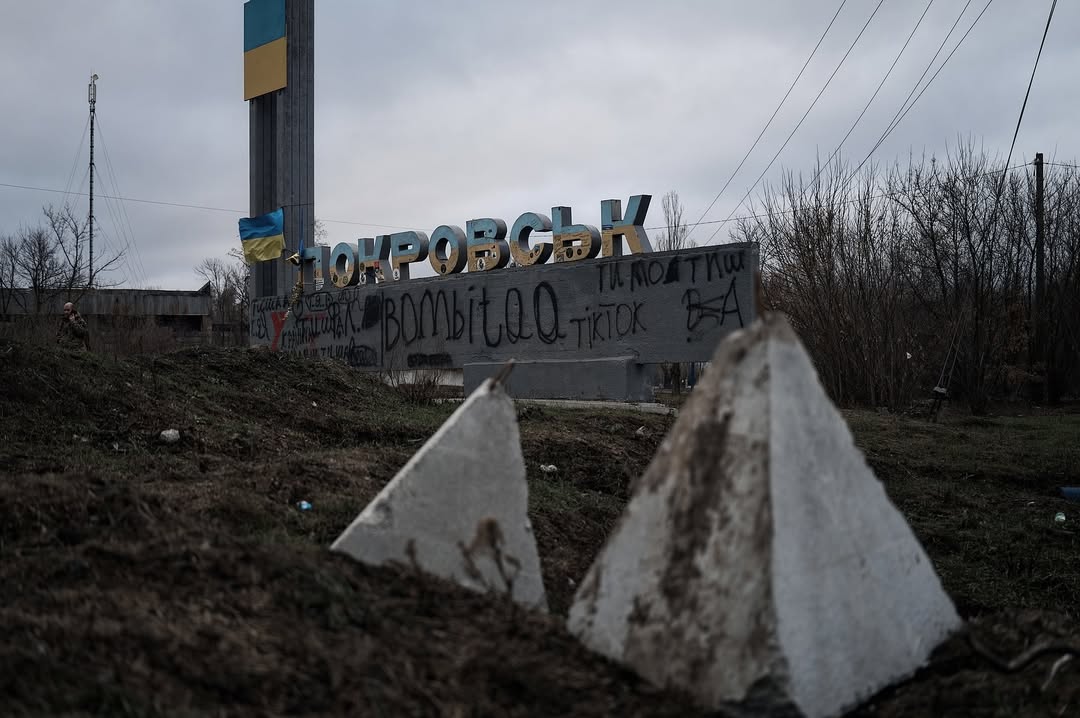
A serviceman of Ukraine’s 41st Separate Mechanized Brigade, Kyrylo Sazonov, offers a complementary assessment, arguing that Moscow’s objective was to “close out” the Pokrovsk sector ahead of spring in order to redeploy forces toward the Kramatorsk agglomeration.
“It is evident that the enemy intended to resolve the Pokrovsk issue and reach the administrative boundaries of Donetsk Oblast in this sector before launching a large-scale spring campaign,” Sazonov says. “They even officially announced the capture of Myrnohrad last week — and then quietly removed the report. The explanation given was an outdated photograph of [Russian Chief of General Staff Valery] Gerasimov. In reality, our airborne units continue to hold a limited bridgehead on the outskirts of Myrnohrad, from which they conduct drone strikes and raid operations.”
At the same time, Sazonov acknowledges that the situation remains difficult, with fighting already extending into Rodynske.
He notes with irony that Russian forces, which had pledged to take Pokrovsk by the New Year, may now find themselves compelled to initiate operations toward Sloviansk and Kramatorsk without having fully neutralized the operational challenges posed by the Pokrovsk salient — a factor that could complicate force allocation and sustainment planning in the months ahead.
Kostiantynivka Direction: An Operational Barrier Russia Cannot Breach
Kostiantynivka remains one of Russia’s top operational objectives. Kovalenko notes ongoing attempts to maneuver around the Kleban-Byk Reservoir and envelop the city from the south-eastern and south-western approaches. The primary pressure points are assessed to be along the T0516 highway and in the vicinity of Oleksandro-Shultyne — axes that would allow Russian forces to threaten the city’s logistical corridors.
Sazonov characterizes the fighting around Kostiantynivka as a “meat grinder” for some of Russia’s more capable formations. The metaphor often used by frontline personnel is that Russian units are “charging like a seal against the ice,” repeatedly committing forces against fortified defensive lines with little operational return.
“Even now, the bulk of Russian occupation forces is concentrated in Donetsk Oblast. Around Kostiantynivka alone, the 8th Combined Arms Army and the 3rd Army Corps are effectively battering themselves against a wall. The 8th Army is already fighting with its second or even third rotation — they have been here for a long time and have sustained extremely heavy losses. Reinforcements have also been pulled in from other sectors, including elements of the 3rd, 18th, 51st, 49th, and 58th Armies. The paradox of Kostiantynivka is that the enemy’s usual formula — commit more resources to achieve results — simply does not work here. The only outcome has been mounting casualties,” the serviceman explains.
According to Sazonov, Russian forces have shifted tactics in response to these losses. Large-scale frontal assaults have increasingly given way to small-group infiltration attempts. These teams reportedly try to blend into civilian environments to approach Ukrainian positions undetected. However, Ukrainian units — having adapted to this pattern — have improved their counter-infiltration capabilities, using surveillance, drones, and layered defenses to identify and neutralize such groups before they can establish footholds.
Huliaipole Direction: Ukraine Seizes the Initiative
In the southern sector, developments have unfolded in a manner that appears to have caught Russian forces off guard. Along a frontage of roughly 45 kilometers, Ukrainian Defense Forces have regained the operational initiative. According to Oleksandr Kovalenko, Ukrainian units not only halted Russian advances but also pushed them back from positions on the right bank of the Haichur River.
Kyrylo Sazonov provides additional detail on the counteractions. “After an initial Russian push, the enemy redeployed reserves to stabilize the situation. But fighting Territorial Defense brigades is not the same as facing the 225th Assault Regiment. Assault units under Oleh Shyriaiev were urgently transferred to the sector and entered combat almost immediately upon arrival. After several days of intense engagements, Russian forces were stopped, the contested ‘gray zone’ was cleared, and four settlements returned to Ukrainian control. In certain areas, Ukrainian forces advanced up to 10 kilometers.”
While Sazonov cautions that it is premature to characterize these actions as the beginning of a large-scale counteroffensive, he underscores a more important operational outcome: Russian forces in this sector are now compelled to allocate resources to defensive stabilization rather than offensive expansion. In strategic terms, forcing the adversary onto the defensive — even locally — represents a meaningful shift in battlefield dynamics.
LYMAN, KHARKIV, AND KRAMATORSK: A CONTESTED NORTHERN ARC
Further north, Russian forces continue to exert pressure but have not achieved operationally meaningful advances. In Vovchansk, Kharkiv Oblast, heavy fighting persists. However, according to Sazonov, Russian activity there appears geared toward maintaining operational tension and fixing Ukrainian forces in place rather than achieving a deep breakthrough.
On the Kupiansk axis, combat intensity is somewhat higher, yet similarly limited in effect. Russian tactics rely heavily on small-group infiltration and incremental advances, but these efforts have thus far failed to generate sustained momentum or alter the broader operational balance in the sector.
“The tactic involves infiltration by small groups of up to three personnel operating on the outskirts and near the milk-canning plant. Our forces have been defending this area for an extended period — they know every trench line, depression, and approach route. As a result, these infiltration teams rarely make it back. For them, it’s effectively a one-way ticket,” Sazonov concludes.
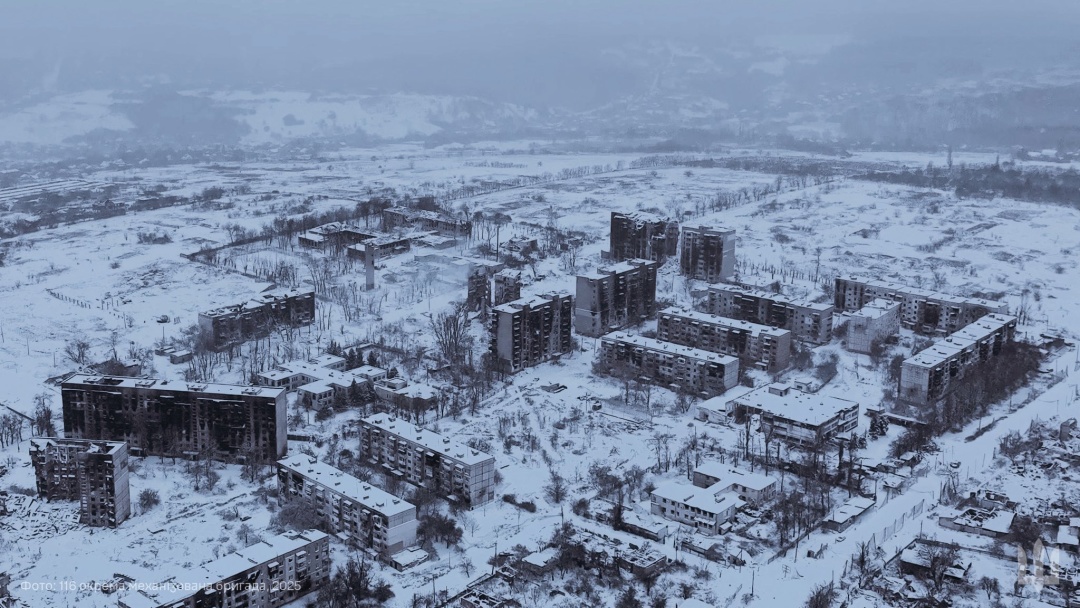
The Lyman axis remains a stated priority for the Russian General Staff, which continues to pursue the concept of severing the Kramatorsk agglomeration from its logistical links to Kharkiv.
“The plan is too compelling for them to abandon,” the serviceman observes. “But there are no tangible results. What was once a slow advance of roughly 700 meters per week has devolved into near-total stagnation. At this point, their only realistic prospect would be the fall of Pokrovsk and the subsequent redeployment of the main grouping from that sector.”
Kovalenko echoes this assessment, suggesting that Russian forces are likely to focus on securing full control over Yampil in an effort to establish a viable bridgehead for renewed advances toward the major urban centers of Donetsk Oblast. For now, however, these efforts have failed to generate operational momentum, with Russian units effectively halted along prepared Ukrainian defensive lines.
SPRING OUTLOOK: WHAT TO EXPECT IN THE WEEKS AHEAD
Expert assessments for March 2026 remain measured. While few anticipate a dramatic operational shift, analysts express cautious confidence in Ukraine’s capacity to stabilize key sectors and prevent a decisive Russian breakthrough.
Kovalenko does not foresee major changes in the immediate term, arguing that the front will remain active but unlikely to produce strategic-level effects. In his view, Russian forces will first need to restore favorable conditions for renewed offensive activity on the Zaporizhzhia axis.
“Without full control over the right bank of the Haichur River, they lack the positional depth required to expand offensive operations in that direction,” he argues. “From our side, the right bank functions as a natural defensive barrier — a containment line that will continue to constrain Russian maneuver, at least through March.”
He also highlights the possibility of intensified Russian activity along the Sloviansk–Kramatorsk axis, including renewed attempts to infiltrate Kostiantynivka. The trajectory of the Pokrovsk sector will remain a critical variable. Should Russian forces consolidate control there, they could attempt to redirect combat power toward Dobropillia and Druzhkivka. However, Kovalenko notes that such redeployments would carry opportunity costs, potentially exposing other sectors to Ukrainian counteraction given Russia’s finite reserve capacity.
Sazonov, for his part, frames the outlook primarily in terms of resource sustainability — suggesting that the coming months will test not only tactical endurance, but also the structural limits of Russia’s manpower and economic base.
“The occupiers have run into a wall and now resemble an inexperienced juggler trying to keep too many balls in the air. And an inept juggler risks turning into a ‘good dancer,’” Sazonov remarks, alluding to the mounting strain on Russia’s military and economic systems. “By late spring, we may begin to see the onset of a deeper economic crisis in Russia. From there, degradation becomes cumulative. At what exact point sustaining the war becomes economically untenable remains uncertain — but there are grounds to believe that by the end of 2026 the pressure could become critical.”
At the same time, Sazonov cautions that Russia is unlikely to disengage voluntarily. In his assessment, Moscow currently sees no viable alternative to continued military confrontation. Nevertheless, the structural exhaustion of the Russian war effort — in manpower, equipment, and fiscal sustainability — is becoming increasingly visible.
Taken together, the winter campaign of 2026 suggests operational culmination rather than breakthrough. Despite incremental territorial gains in the Pokrovsk agglomeration, Russian forces failed to generate deep penetrations or decisive operational effects. Instead, they absorbed substantial attritional losses, particularly among assault formations engaged in prolonged urban combat.
Meanwhile, Ukrainian counteractions in the Huliaipole sector and the sustained defensive coherence along the Lyman and Kostiantynivka axes indicate that battlefield initiative is no longer Russia’s uncontested domain. March is likely to be defined by intense positional contestation rather than sweeping maneuver. Ukraine’s ability to sustain maneuver-oriented defense, preserve force cohesion, and exploit logistical advantages along newly established defensive lines will be decisive.
Although Russia retains the capacity to conduct localized, momentum-driven strikes, the broader trajectory points toward a gradual erosion of its offensive potential. The winter campaign did not collapse Russian capability — but it did expose the structural limits increasingly shaping its conduct of the war.
Myroslav Liskovych. Kyiv