
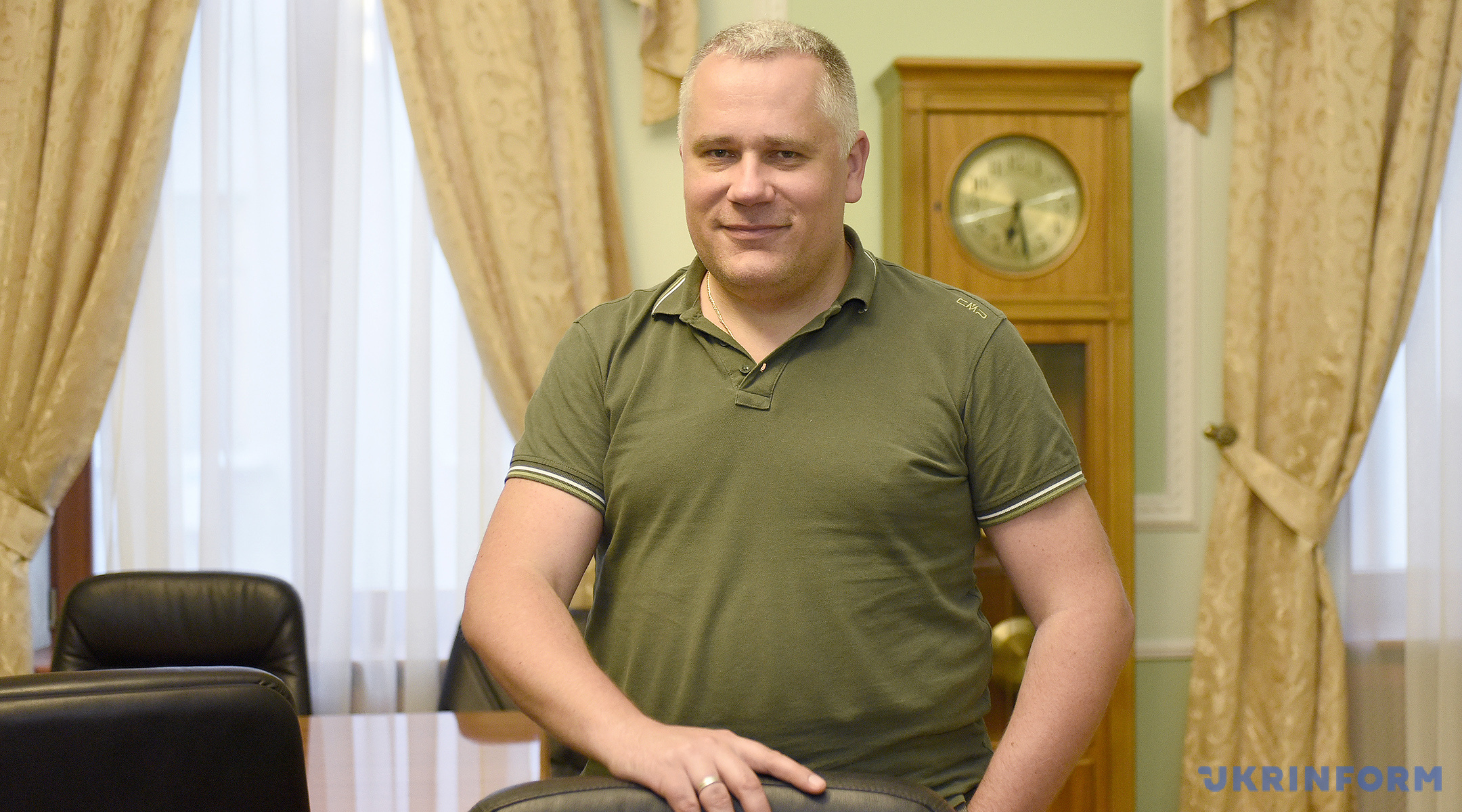
The conversation with Deputy Head of the Office of the President Ihor Zhovkva took place immediately after a series of visits by the President of Ukraine to key European partners—Romania, France, the United Kingdom, and Spain. At the time of the interview, a European Council meeting was also underway in Brussels, with the unblocking of €90 billion in support and Ukraine’s EU accession among the items on the agenda. These developments set the framework for our discussion and defined its main themes.
UKRAINE IS NO LONGER ONLY A CONSUMER OF SECURITY — IT IS ALSO A CONTRIBUTOR
Q: In recent days, the President visited Ukraine’s key partners—Romania, France, the United Kingdom, and Spain. What were the main topics and outcomes of these visits?
A: Let’s take it step by step. Romania is a neighboring country and an important partner in terms of military support. It previously provided Ukraine with part of a Patriot air defense system, which was critically important for us. Romania has consistently supported Ukraine in defense matters and has a bilateral security agreement with clearly defined military contributions. We have also elevated our relations to the level of a strategic partnership, formalized by the signing of a corresponding declaration.
Another important outcome of the visit was the signing of a document on joint production in the defense-industrial sector. A specific allocation under the SAFE program—now joined by Romania—was also agreed. At present, this amounts to €200 million, which will be directed toward joint production with Ukraine.
Q: Are we talking specifically about Romanian-Ukrainian projects within the SAFE program?
A: Yes. Romania has applied to the SAFE program and received approval for its investment plan. However, the funds have not yet been disbursed to any country, as the approval process for member states’ investment plans is still ongoing.
Let me remind you that 19 countries have applied. Once all plans are approved, the funds will be allocated to each state. What matters is that we have secured €200 million with Romania for joint production—primarily drones needed by Ukraine.
***BACKGROUND The SAFE (Security Action for Europe) program, adopted by the European Commission, provides for up to €150 billion in low-interest loans to support the procurement and production of military equipment and weapons by EU member states. These loans carry relatively low interest rates (around 3%) and long repayment periods of up to 45 years. European Commission President Ursula von der Leyen has emphasized that Ukraine’s security is inseparable from that of the EU and Europe as a whole, which is why Ukraine will be able to participate in SAFE projects. ***
Personal relations with President Nicușor Dan are also important. We recall the turbulent election process in Romania and the alternative outcomes that could have emerged—but fortunately did not. Today, we have full political support from the President.
In addition, there was a separate meeting with the Prime Minister of Romania, focusing on energy support and infrastructure. Romania has expressed its readiness to assist Ukraine in these areas as well.
France remains our traditional partner and co-chair of the Coalition of the Willing. It is taking concrete steps regarding the potential deployment of a contingent in Ukraine—one of the key elements of future security guarantees. France also plays a critical role in Ukraine’s European integration and in securing a political decision on EU membership.
France can also play a decisive role in unblocking the €90 billion loan, which is currently being held up by one EU member state. Discussions with the French President also covered the progress of peace negotiations and developments in the Middle East.
This week also included visits to the United Kingdom and Spain. The UK, like France, is a co-chair of the Coalition of the Willing, and the visit focused on deepening bilateral military cooperation.
It is worth recalling that several key documents underpin Ukraine–UK relations, all signed by President Zelenskyy. Among them is the 2020 Agreement on Political Cooperation, Free Trade and Strategic Partnership, signed during his visit to London on October 8, 2020. This agreement established a formal framework for strategic dialogue at the highest level between the President of Ukraine and the UK Prime Minister.
During the October 8, 2020 visit, this dialogue was formally launched, with the first inaugural meeting of the Ukraine–UK strategic partnership dialogue taking place at the level of the two leaders.
Reflecting the strategic nature of this partnership, the British delegation included Defence Secretary John Healey and the Chief of the General Staff. The discussions focused on key aspects of defense cooperation and were framed by a shared commitment to strengthening defense ties. At the conclusion of the talks, the two leaders signed the Declaration on Deepening Cooperation in Security and the Defense Industry.
Under the bilateral Security Cooperation Agreement signed on January 12, 2024, the United Kingdom committed to providing Ukraine with annual military assistance worth £2.5 billion. This commitment was expanded under the Centenary Partnership Agreement of January 16, 2025, which increased support to £3 billion per year—a level the UK continues to maintain.
Importantly, the security agreement envisions not only support for Ukraine, but also the development of Ukraine’s own military capabilities to the extent that it could, if necessary, contribute to the security of its partner—the United Kingdom. This principle was reaffirmed in the latest declaration.
Ukraine now brings to the table unique technologies and battlefield experience that, without exaggeration, no other country possesses—particularly in countering Russian-Iranian drone systems. Crucially, this is not about individual tools but about integrated systems. Interceptor drones alone are not sufficient; what matters is how they function within a broader architecture that includes air defense, electronic warfare, and aviation.
Ukraine has already built and operationalized such a layered system. The results are evident: interception rates have increased significantly. The President cited this figure, and it is striking.
Q: He mentioned 87%.
A: Yes. And domestically produced interceptor drones are playing an increasingly important role. Ukraine and the UK are already implementing a joint project—the Octopus interceptor drone, unveiled during the President’s previous visit to London. The current focus is on scaling up production.
In this sense, Ukraine is no longer merely a recipient of security—it is an active contributor to it.
IT IS NOT ENOUGH TO HAVE DRONES — A SYSTEM IS REQUIRED
Q: The President spoke about this during his address to the UK Parliament—that Ukraine is no longer merely a recipient of assistance, but a country ready to share its experience and technologies. Still, has the war in the Middle East overshadowed Ukraine’s challenges? Are partners as committed as before?
A: In meetings with each of the four leaders over the past two weeks, discussions consistently began with peace negotiations—how the process is evolving and how Ukraine can be supported.
The President has repeatedly emphasized that European partners must be present at the negotiating table in all formats—whether at the level of heads of state or national security advisers (NSAs). As you know, the United Kingdom and France are actively engaged in these discussions, and their NSAs remain in constant contact with our representatives.
Let me reiterate: we have security agreements with all of these countries, each specifying a concrete annual volume of assistance. For example, Spain’s Prime Minister Pedro Sánchez confirmed that €1 billion will be allocated this year for Ukraine’s security and support, as stipulated in the bilateral security agreement.
The Romanian agreement does not set a fixed amount but clearly commits to maintaining a high level of support.
These are tangible indications that attention has not shifted away. On the contrary, partners are simultaneously working on advancing the peace process in Ukraine and addressing the crisis in the Middle East.
We also understand that Russia and Iran have long been de facto allies. The origins of Russia’s “Shahed” drone capabilities are well known: Iran provided the initial deliveries, training, and operational launches. While Russia has since developed its own production and improved these systems, the foundational technology was licensed from Iran.
Today, both aggressor states act as though they can operate with impunity. It is the responsibility of the international community to respond accordingly.
Q: Was the issue of arms exports raised during these visits? Recently, there have been reports that some companies and governments are attempting to procure Ukrainian drones outside official channels. The President has said such approaches are ineffective, as real defense requires integrated systems. Has a formal export process begun?
A: I cannot add much beyond what the President has already said. Circumventing official channels is not an option. In any developed country, arms exports are strictly regulated—and Ukraine, especially in wartime, is no exception. There are established procedures, an interagency commission, and, importantly, strict controls over technology transfer.
What Ukraine is proposing is clear: we need investment in domestic production. Our capacity to absorb investment for scaling up drone manufacturing alone exceeds €35 billion.
Our priority is to produce for Ukraine, in Ukraine, through Ukrainian companies. However, where production exceeds domestic demand, we are prepared—cautiously—to discuss joint manufacturing, including in partner countries, but strictly under state coordination.
Any alternative models would be ineffective. Our partners understand this and fully support such an approach.
The starting point for such cooperation is an intergovernmental framework—either a memorandum or a formal agreement on collaborative production. To date, we have established such frameworks with Denmark, Lithuania, Romania, and Spain.
Once these frameworks are in place, further steps can follow—always in full compliance with established procedures.
EVEN WITHOUT FORMALLY OPENED CLUSTERS, WE WILL CONTINUE WORKING ON SPECIFIC NEGOTIATION CHAPTERS
Q: Another key topic during these visits was European integration. The European Council meeting taking place today (the interview with Ihor Zhovkva was conducted on March 19) once again placed Ukraine at the center of the agenda. On March 17, Ukraine received accession benchmarks for the final three clusters, though they remain formally unopened due to Hungary’s position. What is the next step: implementing the requirements regardless of, or insisting on formal opening?
A: Indeed, the March 19 European Council meeting—the first formal session of the year—was opened, as is customary, by the President of Ukraine. Ukraine was the first item on the agenda, and the President addressed all EU leaders.
He focused on several key issues: the urgent need to unblock the €90 billion assistance package, currently stalled by one member state; the importance of adopting the 20th sanctions package against Russia, which has also been delayed; and, importantly, the next steps in Ukraine’s path toward EU membership. Indeed, on March 17, Ukraine received benchmarks for the final three clusters, having already obtained them earlier for the first three. This means that Ukraine is now technically ready to open all six clusters. Were the entirely unfounded blockage by one member state to be lifted, the first cluster—and the remaining five—could be opened immediately.
We understand the political reasons behind this obstruction, just as we do in the case of the €90 billion package and the 20th sanctions package.
So how will Ukraine proceed? We will continue in a front-loading format. Even without formally opened clusters, we are moving ahead with work on specific negotiating chapters. The benchmarks serve as our roadmap.
In his address to the European Council, the President underscored that Ukraine continues to advance reforms in the rule of law, anti-corruption, and other key areas. We are not pausing for a single day and will maintain this pace despite Hungary’s politicized veto.
Our expectation is that by the time this blockage is lifted and the clusters are formally opened, Ukraine will already be close to finishing some chapters.
At the same time, we are advancing another key initiative outlined by the President: setting a specific date for Ukraine’s political accession to the European Union.
The rationale is clear. Fixing such a date would make it extremely difficult—if not impossible—for Russia to undermine Ukraine’s European trajectory. While Russia has not formally demanded a ban on Ukraine’s EU membership, its position remains unpredictable. That is precisely why anchoring a political accession date is strategically important.
This is not about external pressure or imposed decisions—it is exclusively within the competence of EU member states. However, it is equally important to prevent the aggressor state from influencing these decisions, whether directly or indirectly through certain member states.
Q: Is there support in Brussels for setting such a date?
A: Institutional mechanisms are beginning to engage, and discussions are underway to identify workable pathways. This is a notable and telling development.
Q: That’s the nature of bureaucracy…
A: Indeed. But at present, we are working constructively with the European Commission, as well as with the offices of the Presidents of the European Council and the European Commission, to operationalize this initiative.
THE FIRST TRANCHE OF THE €90 BILLION LOAN IS NEEDED BY EARLY APRIL
Q: One of the key items on today’s European Council agenda is the unblocking of €90 billion in support for Ukraine for 2026–2027. Has there been progress?
A: There were intense discussions, and EU leaders expressed clear dissatisfaction that a decision adopted in December 2025 has yet to be implemented.
While Hungary and some other countries signaled reluctance to participate, the decision itself was adopted without formal opposition at the time—not even from Hungary or Slovakia. What we are seeing now is an attempt by a single country to revise a collective decision.
Ukraine needs the first tranche as early as the beginning of April. This funding covers both budgetary support and military assistance, including financing for joint production programs between Ukraine and European partners. In other words, this is mutually beneficial: the equipment will be produced by European companies for Ukraine.
It is also important to recall last year’s memoranda regarding the aviation sector—for example, agreements with France on Rafale F4 fighter jets and with Sweden on Gripen aircraft. This loan is intended, in part, to support the implementation of those agreements.
Q: Is it still appropriate to speak of a fast-track path for Ukraine’s EU accession?
A: Ukraine has not skipped a single step in the accession process—from submitting its application to obtaining candidate status, fulfilling the seven required steps, launching negotiations, and now preparing to open clusters. The difference is that we have completed these stages much faster than others.
That is precisely what “fast” means.
Ukraine simply could not afford the extended timelines seen in previous enlargements. We are prepared to maintain this pace—and, where necessary, to find creative solutions when political factors cause delays.
For example, in 2022, when the official questionnaire for candidate status had not yet been provided, we proactively used a questionnaire from another country and began filling it out in advance. By the time we received the official version, we had already completed roughly half of it.
A similar approach was applied to the screening process: Ukraine initiated self-screening, completing a substantial share of the work before the formal procedure even began.
The same logic applies today. Even without formally opened clusters, we continue moving forward without interruption. We can guarantee our partners that Ukraine will maintain this pace—and we expect them to keep up.
Q: Would Ukraine consider transitional periods or other compromise arrangements if it cannot complete all required reforms in time?
A: Virtually no country has joined the EU without transitional periods. This is standard practice—not only for post-Cold War enlargements. For instance, Spanish representatives recently told me that Spain had a lengthy transitional period in sectors such as fisheries.
This is a standard and well-established model: a country becomes a full member of the European Union, with all corresponding rights and obligations—above all, the right to participate in political and economic decision-making—while retaining transitional periods in specific sectors of the economy.
Q: But wouldn’t such a rapid accession pose risks for the Ukrainian economy?
A: No. That is precisely the role of the negotiating delegation, which has already been formed and is headed by Deputy Prime Minister for European and Euro-Atlantic Integration Taras Kachka—a highly experienced professional. He played a key role in Ukraine’s accession to the WTO and in negotiating free trade agreements with a range of countries. There will be no compromise on national interests.
Yes, the negotiations will be challenging. But in sectors where Ukraine is strong, we will do everything necessary to preserve that strength—ensuring that neither domestic producers nor the country as a whole loses its competitive potential. Ukraine is a capable and resilient negotiator; that is already evident.
Q: To sum up the European Council discussions, how do you assess the prospects for unblocking the €90 billion package and opening the clusters?
A: There is no viable alternative to resolving the €90 billion issue. The decision has already been adopted, and any attempts to artificially block it or tie it to the operation of the Druzhba oil pipeline amount to straightforward political pressure by a single state. The loan must now be implemented.
As for the clusters, they will be opened. The key is to maintain momentum and not waste time.
AGGRESSION WOULD ALREADY BE SPREADING ACROSS THE CONTINENT
Q: Finally, setting aside the position of certain countries that effectively align with Putin, is there unity within the European Union on Ukraine?
A: Yes.
Russia made a number of strategic miscalculations in launching its full-scale invasion, just as it did in 2014. One of the most significant was its failure to anticipate the degree of unity within Europe—particularly in 2022. That unity was immediately evident, first politically through support for Ukraine’s EU application, and then in the form of concrete military assistance.
Ukraine now has security agreements with nearly every EU member state, each specifying concrete levels of support, as well as a separate agreement with the European Union as a whole.
We are now in the fifth year of full-scale war, and yet not a single country that supported Ukraine at the outset has withdrawn that support—despite changes in governments, elections, or leadership transitions.
Across the European Union—and Europe more broadly—there is a clear understanding that the continent’s security is being decided in Ukraine. It is widely recognized that had Ukraine not stopped the aggressor—with the support of its partners, but above all through the determination of the Ukrainian people—the war would already have spread across much of Europe.
That is why continued support for Ukraine remains essential. The scale and sophistication of military assistance have grown significantly, including joint defense projects and advanced technologies—developments the aggressor clearly did not anticipate when launching the war.
I am convinced that this unity, combined with the determination of European countries to be directly involved in shaping peace negotiations, is the foundation of our shared success.
MYTH OR FACT? (Common assumptions about the European Union)
Q: “Ukraine is being held back from EU membership because of fears about its agricultural sector.”
A: Myth. Ukraine’s agricultural sector already supplies a significant share of EU markets. The reason is simple: the products are competitive in both quality and price. Ukraine is also a reliable supplier—even under wartime conditions.
Q: “Hungary, Slovakia, and others fear that Ukraine’s accession will reduce their EU funding, with resources redirected to Ukraine.”
A: It is difficult to speak on behalf of those countries. Ukraine is indeed a large European economy, and its accession—when it happens—may lead Brussels to adjust certain funding policies. At the same time, Ukraine will not only benefit from EU mechanisms but will also make a substantial contribution to the Union’s economy.
Q: So, a myth?
A: Yes.
Q: “After joining the EU, Ukrainians’ incomes will immediately rise significantly.”
A: True—with a caveat. The key question is what “immediately” means. As we discussed, there will be transitional periods, but the overall cumulative effect will be positive.
Q: “As soon as the EU labor market opens to Ukrainians, everyone will emigrate.”
A: This is a familiar myth—one we heard during the visa liberalization process. At the time, many claimed that once visa-free travel was introduced, mass emigration would follow. That did not happen then, and certainly will not happen now.
Q: “EU accession will trigger price hikes.”
A: Myth. EU membership in itself does not directly determine price levels; these are shaped by broader economic factors.
Tetiana Pasova led this conversation
Photos via Ukrinform archive and the Office of the President
Photos via Ukrinform archive and the Office of the President