
In June of last year, one of Belarus’s most prominent political prisoners, Sergey Tikhanovsky, was released after more than five years behind bars.
His release followed a visit to Minsk by Keith Kellogg, U.S. Special Envoy for Ukraine and Russia in the second Trump administration. In total, 14 political prisoners were freed at that time.
Tikhanovsky, the founder of the YouTube channel A Country for Life, was detained on the eve of Belarus’s 2020 presidential election. He was later sentenced to 18 years in prison on charges of “organizing mass riots” and “inciting social hatred.” While already incarcerated, his sentence was extended by an additional 18 months, reportedly for alleged misconduct.
Following his arrest, his wife, Sviatlana Tikhanovskaya, stepped in as a presidential candidate. After protests were violently suppressed, she and her allies relocated first to Lithuania and later to Poland, where she continues her opposition work.
In an interview with Ukrinform, Tikhanovsky—now residing in the United States—spoke about the conditions of his imprisonment, his recovery after years in detention, and his current role within the Belarusian opposition.
The discussion also touched on ongoing U.S. contacts with Alexander Lukashenko’s regime regarding the release of political prisoners, Tikhanovsky’s potential involvement in such efforts, coordination between Belarusian and Russian opposition figures, and whether any protest potential remains inside Belarus.
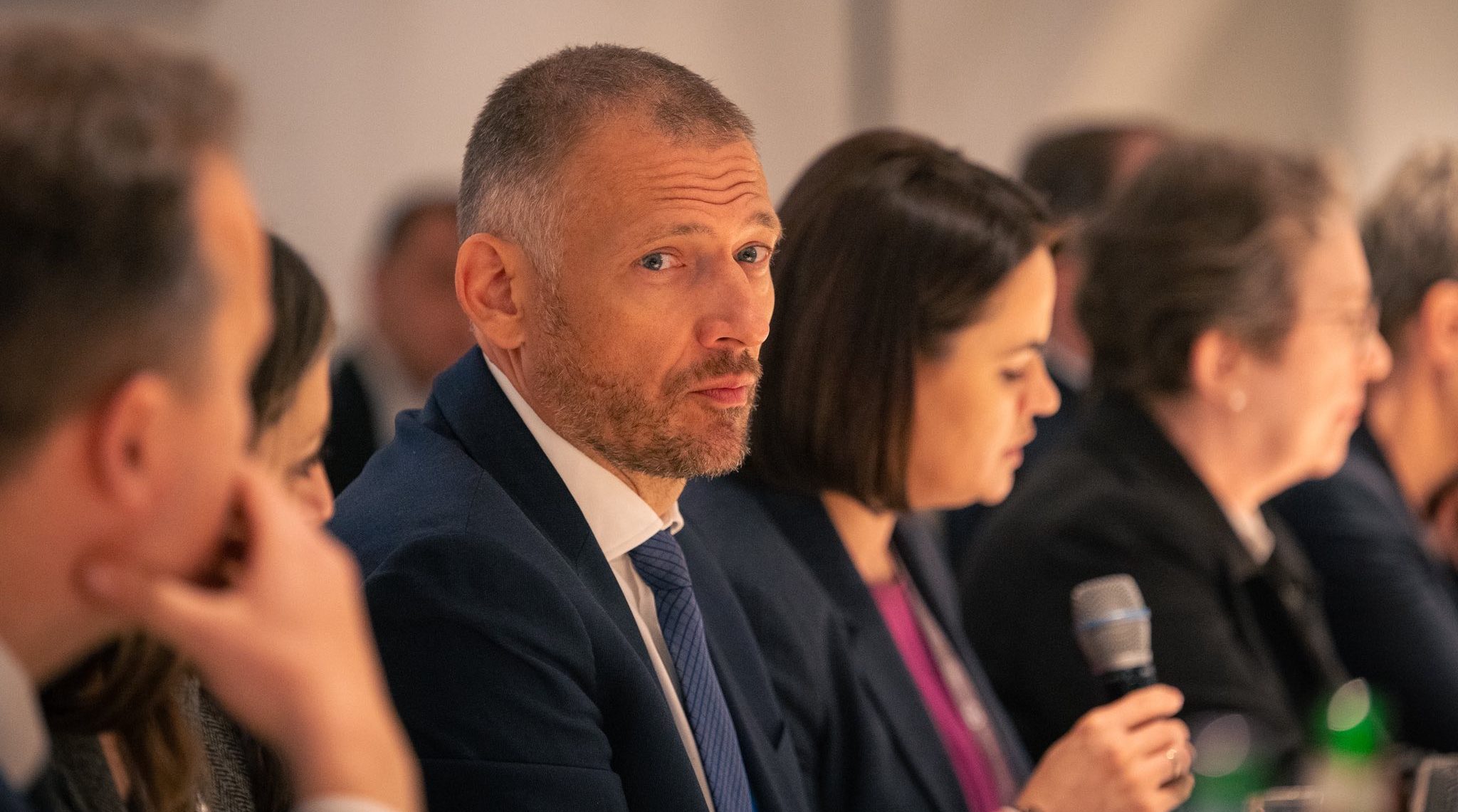
ABOUT 1,140 POLITICAL PRISONERS ARE CURRENTLY BELIEVED TO REMAIN IN BELARUS
Q: Sergey, my colleagues in Ukraine and I were very happy at your release. How is your rehabilitation in the United States going after five years in prison? And what are you doing now?
A: Thank you. I think I’m doing fairly well, although my colleagues say that prison hasn’t completely “left” me yet. There hasn’t really been time to rest. I’m now living with my children in Florida and travel frequently to Washington. I combine my recovery with English lessons, as well as political and human rights work.
I feel a responsibility toward everyone who remains behind bars.
So far, only a small fraction of prisoners have been released. I believe I can offer the U.S. administration some guidance on effective strategies for securing further releases. This is not a trivial task—the price of freedom can vary. The Americans hold strong cards, but Lukashenko is also an experienced player in this game of poker.
Q: What conditions were you held in, and what helped you endure that time?
A: The conditions were appalling. The Belarusian prison system is a natural extension of Lukashenko’s regime. I was not allowed to speak with anyone—no lawyer, no priest. In five years, I was never given the opportunity to confess or receive communion. Even a doctor could not speak with me; there was no proper medical care, only painkillers. I couldn’t buy tea or coffee—only prison food was available. I lost 56 kilograms.
I spent six months in solitary confinement, without a mattress, blanket, or pillow. I did squats and push-ups just to keep my legs from cramping in the cold. Every night there was the sound of dogs barking and guards shouting. Through the closed doors came constant threats from the authorities—that I would never be released and would die in prison.
They later added another 18 months to my original 18-year sentence, supposedly for bad behavior and failing to clean my cell on time. Despite everything, I remained optimistic. For some reason, I always believed I would be released before the end of my term. I am a religious person, and above all, it was faith that sustained me.
Q: Are political prisoners in Belarus subjected to torture?
A: I heard about torture from others. I personally was not beaten, but they used sophisticated psychological pressure.
As for physical methods—they deprived me of sleep and the ability to recover.
Q: Were you visited in prison by representatives of international human rights organizations, such as the International Committee of the Red Cross?
A: No.
Q: Perhaps they visited other political prisoners?
A: I haven’t heard of that.
Q: How many participants in the 2020 protests in Belarus are currently serving sentences? And how many political prisoners are there overall?
A: The repressive machinery has not stopped for a moment since the suppression of the 2020 revolution. I rely on data from the human rights organization Viasna. Since 2020, between 50,000 and 70,000 people have been subjected to administrative detentions and short-term arrests of 10–15 days, as well as fines and other forms of politically motivated pressure.
As of March 2026, around 1,140 political prisoners remain in Belarus, despite occasional pardons.
It is important to understand that new arrests and politically motivated sentences are still being handed down. Not everyone convicted under political charges is included on official lists of political prisoners—some families believe that public recognition could worsen their situation.
Another important point: under conditions of legal arbitrariness, accusations on political grounds often become a convenient tool to settle scores, take revenge, or even seize profitable businesses.
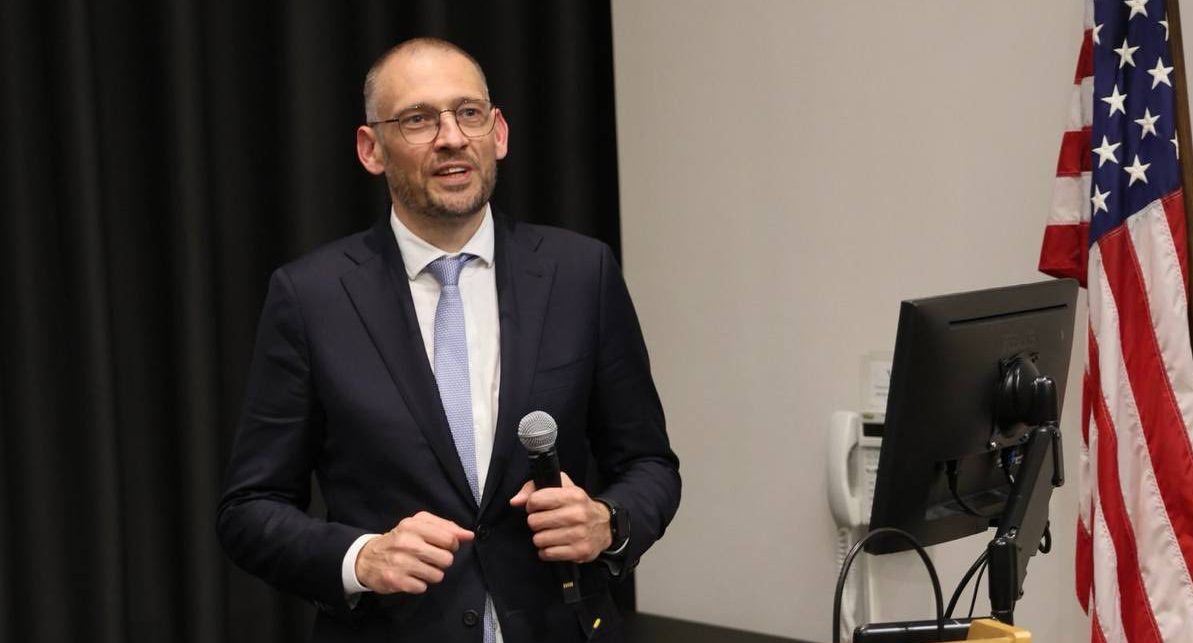
Q: Do you have information about the U.S. government negotiating with Lukashenko’s regime on the further release of political prisoners? What might such agreements be based on, and what does Lukashenko want from the United States?
A: Such negotiations are indeed taking place. Another group of political prisoners is expected to be released following the visit of an American delegation to Minsk on March 18.
However, it is important to understand that the core of the dialogue between Washington and Minsk is not the release of political prisoners. The United States is interested in maintaining an informal channel of information about developments and sentiment in Russia, as well as in reducing Belarus’s dependence on Moscow. Lukashenko, for his part, is also interested in lowering that dependence to a manageable level.
In this context, he is seeking further sanctions relief from the United States—and, crucially, expects Washington to persuade the European Union to ease its own sanctions. The release of political prisoners, in this sense, is more of a byproduct—a gesture or price paid to sustain the dialogue.
Q: Have you personally appealed to U.S. authorities to help secure the release of any specific individuals?
A: No, I don’t single out any one person. However, during hearings in the U.S. Congress on March 3, I highlighted a particularly vulnerable group—those involved in active resistance and members of the security services whom Lukashenko considers traitors. They are held in the harshest conditions, and they are precisely the ones the authorities will be most reluctant to release.
Q: Former Nexta editor and Belarusian activist Roman Protasevich admitted that he began cooperating with the Belarusian authorities, effectively trading his reputation for 25 years of his life—and his girlfriend’s life—after they were removed from a plane by Belarusian security services.
Last year, Lukashenko claimed that Protasevich was an intelligence asset, and Protasevich later confirmed this. In your view, was he broken, or was he working with the authorities from the outset?
A: This appears to be a rather calculated move by the Belarusian authorities, entirely understandable in the context of negotiations over sanctions relief.
The point is that Belavia is a source of particular pride for Lukashenko. The airline is among the entities Minsk is most eager to have removed from sanctions lists.
It is therefore no surprise that the United States took this step. However, lifting U.S. sanctions offers Belavia limited practical benefits beyond access to certified Boeing spare parts. What truly matters is the position of the European Union—which, for now, is not even considering easing its restrictions.
Declaring Protasevich a KGB agent appears to be a rather naïve attempt to rewrite the narrative and weaken the sanctions pressure against Belavia. The logic is simple: if Protasevich was “our agent,” then how can the authorities be accused of unlawfully detaining him? And if there was no need to detain him, why force the Ryanair flight to land in the first place?
As for Protasevich himself, he was indeed broken and has effectively become a hostage to the regime, carrying out its instructions. I know this firsthand: he visited me in prison on January 13, 2025, and told me that he travels to prominent political prisoners, urging them to file pardon requests or agree to leave the country. He visited me, Maria Kolesnikova, and Viktor Babariko, and showed me photos and videos.
My conclusion is clear: Roman Protasevich is a victim—the result of the calculated work of coercive psychological pressure.
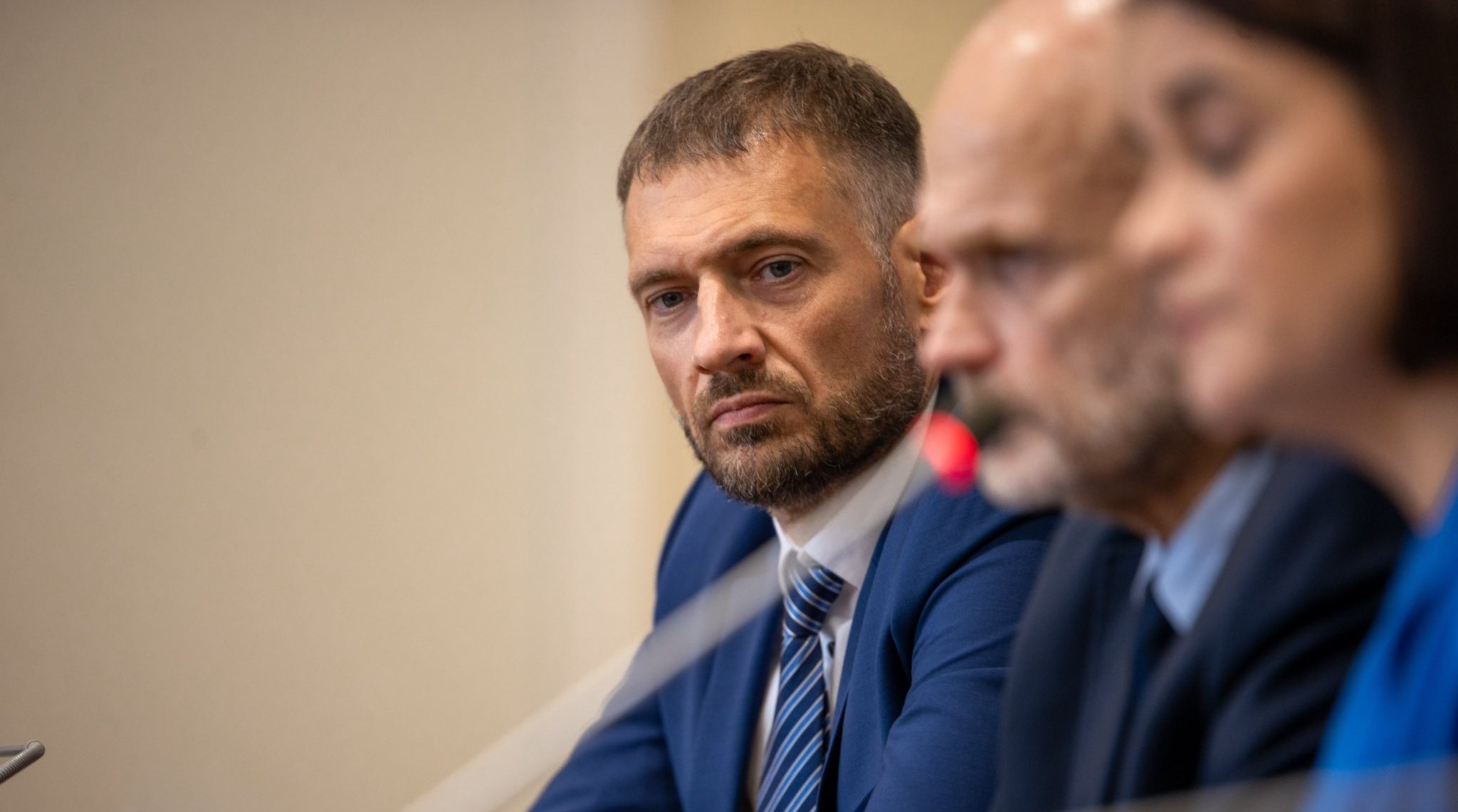
THERE IS CURRENTLY NO PROTEST POTENTIAL IN BELARUS
Q: Given your limited access to information while in prison, when did you learn about Russia’s full-scale invasion of Ukraine? What were other prisoners saying?
A: At that time, my appeal was still underway, so I could receive some information through newspapers and my lawyers. Political prisoners were on Ukraine’s side—as they still are today. Those convicted of criminal offenses were divided.
When I learned about the invasion, my first thought was that the West had made a grave mistake by failing to support the Belarusian revolution in 2020.
Let me explain. Even after reports of mass torture of protesters in Minsk, the West largely confined itself to expressions of concern. Sanctions were introduced slowly and without urgency, and there was no meaningful external pressure. The elites surrounding Lukashenko were on the verge of switching sides. They were watching closely—toward Moscow and toward the West. Ultimately, Moscow’s gravitational pull proved stronger.
Through its inaction, the West seemed to signal to Moscow: “We are not contesting Belarus. We do not want another Ukraine. Belarus is yours.” Putin interpreted that signal accordingly. From that point on, little stood in the way of planning a blitzkrieg against Ukraine. Biden’s notorious withdrawal from Afghanistan further reinforced his confidence.
Yet Putin ultimately miscalculated. He underestimated the Ukrainian people’s capacity for resistance. It was precisely that resistance that forced the West to become fully engaged.
Q: After your detention, your wife entered politics. Now that you have been released, are you involved in the work of Sviatlana Tikhanovskaya’s Office? More broadly, what is your current role in the Belarusian opposition? What are your priorities?
A: Sviatlana has her own team and objectives. They focus on advocating for Belarus in the West and working with human rights initiatives that shape sanctions policy—and they are doing this effectively.
As for me, I am a practical person. My team and I are focused on solutions that can have a tangible impact in the near term—protecting Belarus’s sovereignty and preventing its involvement in the war against Ukraine. We are focused on the “here and now,” not on distant, abstract futures.
A key part of our work is developing a practical concept that could achieve these goals and resonate with people inside Belarus, including within Lukashenko’s inner circle. For now, we refer to this concept as the “Finlandization of Belarus.”
The concept envisions that within a few years, Russia and the European Union will face a choice between war, a destructive arms race, and de-escalation. In the event of war, Belarus would inevitably be drawn in. De-escalation, by contrast, offers Belarus a way out.
Through self-restraint—neutrality, non-alignment, and moderation in rhetoric—Belarus could position itself within a broader European security framework, potentially replicating elements of Finland’s experience during the Cold War. Securing support for such a model from all stakeholders will be difficult. There will be many objections. Nevertheless, I believe this represents Belarus’s best chance.
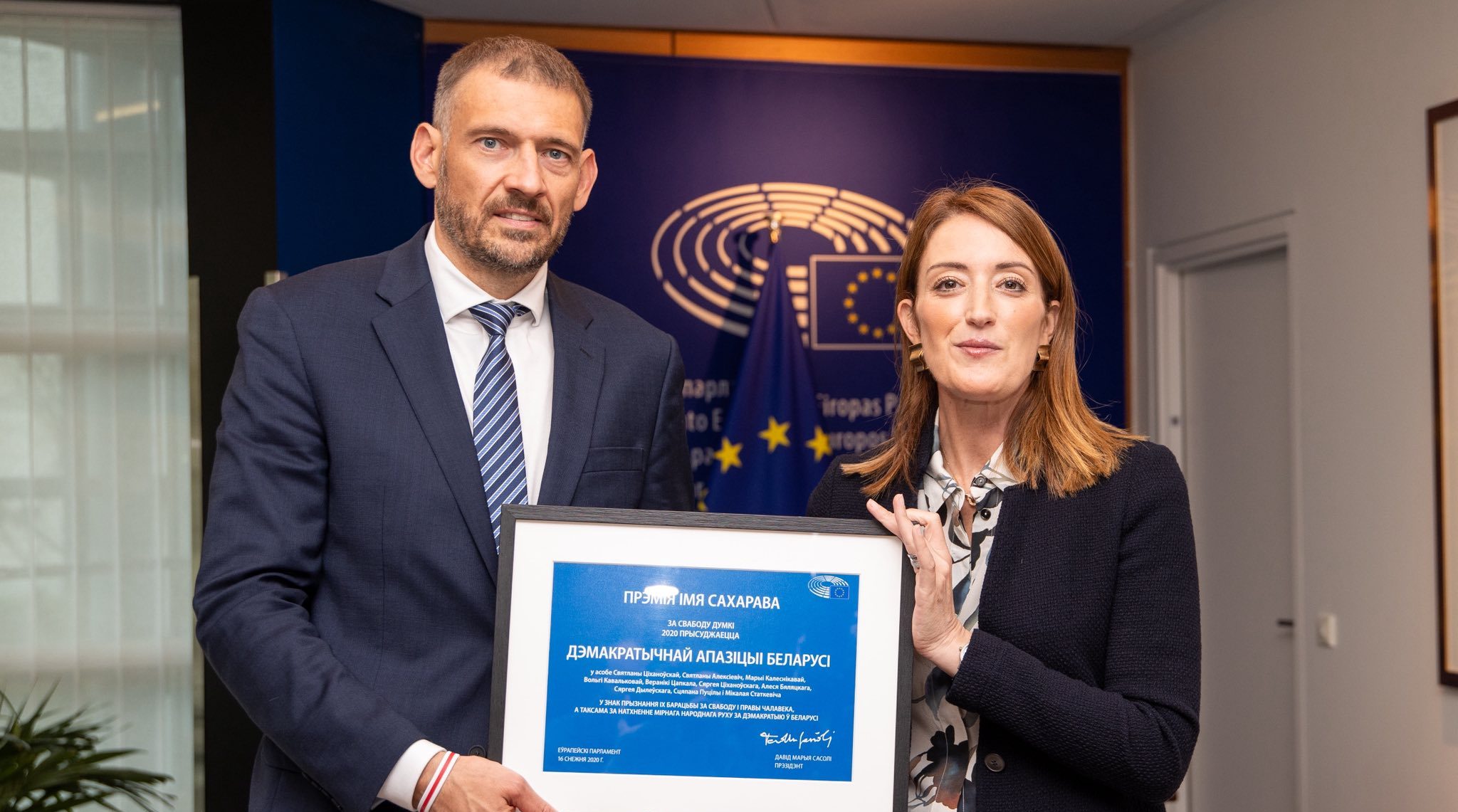
Q: How do view the suggestion from President of Ukraine to appoint a special envoy for Belarus and the Belarusian community in Europe? What role should this envoy play in engaging with democratic forces?
A: I fully support this initiative. Moreover, I really appreciate the wording—“for Belarus and the Belarusian community in Europe.”
It is time for Ukraine to appoint a special representative who understands not only the multiple challenges facing the Belarusian Opposition, but also the internal dynamics of Belarus itself—particularly within its political elites—and who can help shape a coherent Ukrainian strategy toward Belarus.
I would welcome the opportunity to cooperate with such a representative; we would have plenty to discuss.
Q: Recently, Maria Kolesnikova—released from Belarusian prison in December—called on the EU to engage in dialogue with Lukashenko and to ease sanctions in exchange for humanitarian steps, including the release of political prisoners. What is your view?
A: I, too, am doing everything I can to ensure that Belarusian political prisoners are released as soon as possible. In that sense, our priorities fully align, and I understand Maria very well. However, her approach seems insufficiently thought through.
Exchanging EU sanctions for political prisoners is unlikely to work, for at least two reasons.
First, the most severe EU sanctions were imposed not for human rights violations, but for Minsk’s involvement in the aggression against Ukraine.
Second, the EU is currently preparing for a potential confrontation with Russia and is therefore focused primarily on security and threats from the East.
At present, Belarus is not demonstrating a consistent willingness to de-escalate—if anything, the confrontation is intensifying. This does not mean the EU cannot pursue the release of political prisoners, but Minsk’s expectations are unrealistic and need to be recalibrated. For now, the U.S. track appears more promising, as both sides retain some room for maneuver.
Q: The Belarusian opposition shares the overarching goal of countering Lukashenko’s authoritarian regime, yet there are organizational and tactical divisions. Do you plan steps to strengthen coordination and consolidate democratic forces?
A: I believe the Belarusian opposition is facing two key challenges. The first is an unwillingness to critically reassess past mistakes and adapt to a new, harsher political reality—one in which it is not enough to speak convincingly; one must also act effectively. I cannot do that work for my colleagues.
Second is a lack of ideas—a deficit of a realistic vision for Belarus’s future. In this respect, the opposition differs little from the regime. And this is precisely where I believe I can contribute. As I mentioned, my team and I are working on a pragmatic plan aimed at genuinely improving conditions in Belarus. I remain open to collaboration, and anyone interested is welcome to join this effort.
Q: Do Belarusian opposition figures maintain contacts with the Russian opposition?
A: At this stage, I am still trying to understand how the Belarusian opposition itself is structured. The Russian opposition is even more complex. I am not aware of any joint initiatives. I can only say that I have had the opportunity to meet Vladimir Kara-Murza. He is an intelligent and empathetic person who was very supportive during my time in Washington.
Q: In your view, does any protest potential remain in Belarus?
A: No, there is currently no protest potential in Belarus.
All attempts by Belarusians to protest have been brutally suppressed, and there has been no meaningful external support. People have drawn their conclusions.
At the same time, it is clear that the authorities have failed to restore public trust or renegotiate a social contract with society.
That is why Minsk’s propagandists continue to invent new narratives and themes aimed at promoting the “unity of the Belarusian people.” In reality, however, the public is united in its rejection of the regime and its desire for change.
Alla Shershen led this conversation. Kyiv
Photos courtesy of Sergey Tikhanovsky