
On February 3, 1992, Ukraine and Turkey signed a protocol establishing diplomatic relations, formally restoring official ties that in fact date back centuries.
One of the earliest documented international agreements between the two polities was concluded in 1649 between Cossack Ukraine and the Ottoman Empire, the predecessor of modern Turkey. The accord granted Ukrainian vessels freedom of navigation in the Black Seaalong with the right to pass through the Turkish Straits free of customs duties and taxation.
The Ottoman Empire was among the first states to recognize the Ukrainian People's Republic in 1918, when the two sides exchanged diplomatic missions, further institutionalizing bilateral engagement.
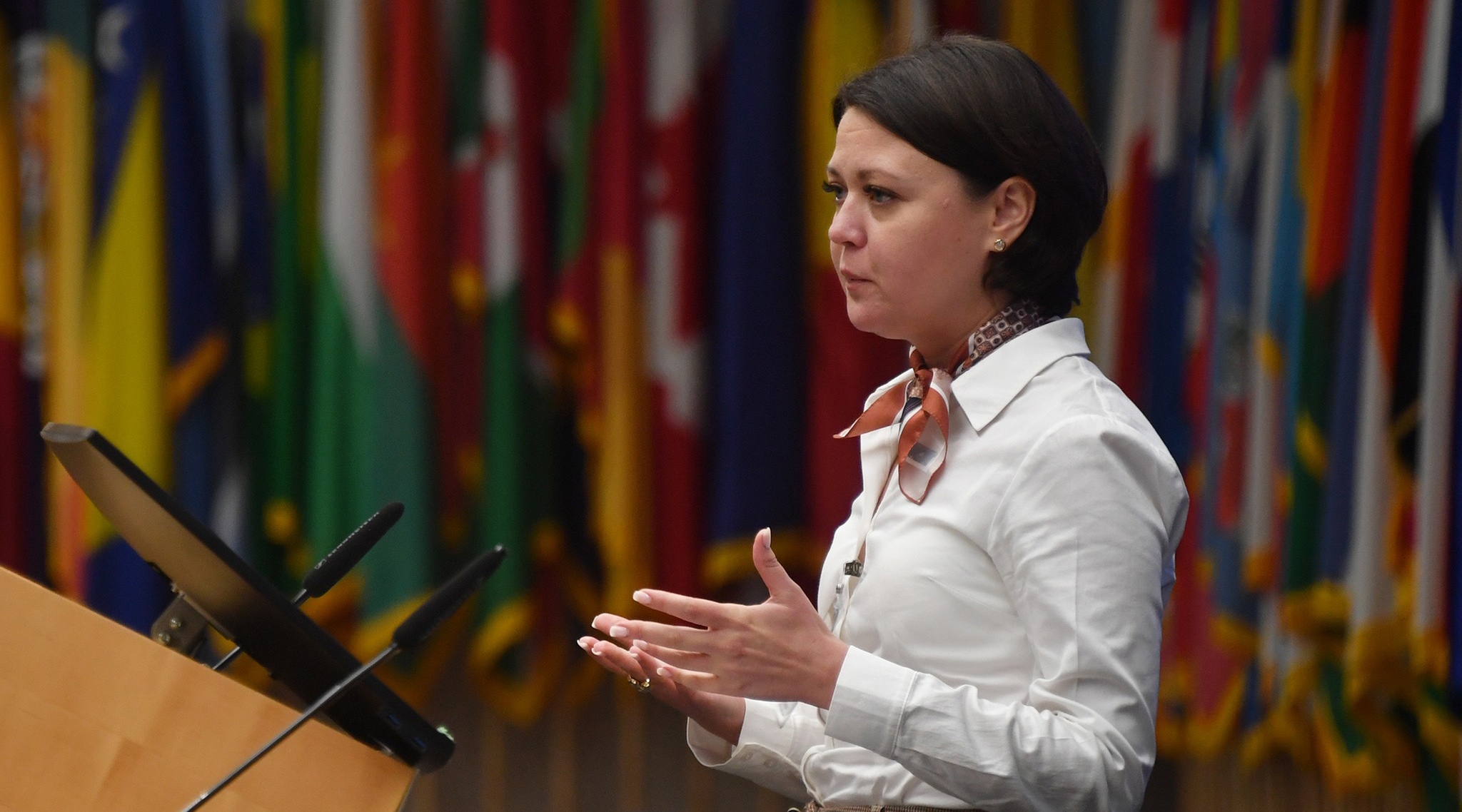
In an interview exclusive for Ukrinform, Yevgeniya Gaber—a professor of national security, senior fellow at the Atlantic Council (United States), and researcher at the Carleton University Centre for Contemporary Turkish Studies—outlined the current status of Ukrainian-Turkish strategic cooperation. She assessed avenues for deepening bilateral ties, Ankara’s mediation and facilitation role in Russia’s war against Ukraine, and Turkey’s priorities in safeguarding Black Sea and broader European security.
TURKEY FIRMLY SUPPORTS UKRAINE’S TERRITORIAL INTEGRITY
Q: Professor Gaber, last year of Ukrainian-Turkish relations was marked above all by renewed rounds of negotiations in Istanbul. What key lessons, in your view, can Kyiv and Ankara draw from this process? Which steps taken by Turkey in 2025 were most consequential for Ukraine—politically, militarily, or economically?
A: In my view, the key lesson not only of 2025 but of all previous negotiation rounds with Russia—from the Minsk agreements onward and including attempts at dialogue after the start of the full-scale invasion—is straightforward: Russia has never treated negotiations as a path to peace. For Moscow, talks are another instrument of warfare—conducted through diplomatic, informational, and political means.
Against the backdrop of shifting rhetoric in the United States—from references to Ukraine’s 1991 borders to suggestions of territorial concessions in Donbas—Turkey’s stance has been particularly significant. Ankara has consistently and unequivocally underscored its commitment to Ukraine’s sovereignty and territorial integrity. Turkish officials have repeatedly stressed that any peace settlement must be acceptable to the Ukrainian people and grounded in the restoration of Ukraine’s territorial integrity, including Crimea. In the broader international context, that is a clear and consequential signal.
It is also important that Kyiv and Ankara maintain an intensive political dialogue at the highest levels.
It is also important to note Turkey’s statements expressing readiness to play a more active role in ensuring security in the Black Sea, including within relevant coalition frameworks. Ankara has not ruled out the possibility of deploying a military contingent to Ukraine under specific conditions. Given that Turkey possesses one of NATO’s most capable armed forces and maintains substantial naval power in the Black Sea, such signals carry weight both politically and in terms of regional security architecture.
TURKEY COULD EMERGE AS A LEADER IN BUILDING AN “AIR SHIELD” OVER THE BLACK SEA
Q: Turkey is an active participant in the meetings of the so-called “Coalition of the Willing” and, as you noted, has declared being willing to assume a role as a guarantor of security and stability in the Black Sea. It has not ruled out the deployment of a military contingent to Ukraine under certain conditions. How realistic is such a role for Turkey, given its relations with Russia and its NATO allies? And to what extent would such a role be acceptable and desirable for Ukraine from the standpoint of its long-term security interests?
A: Ankara’s statements about sending troops to Ukraine—conditional on a ceasefire and a clearly defined mandate—reflect a long-term positioning rather than an imminent plan.
First, such involvement would only be possible after a ceasefire is established. At present, we are far from clarity on when, under what conditions, and along which line such a ceasefire could take effect. Second, any peacekeeping or stabilization mission would require robust multilateral backing: political endorsement, military coordination, air cover, intelligence-sharing, logistics, and sustained financing. Turkey has a track record of contributing to multilateral operations, but these require concrete decisions by partners—not merely declarations of intent. At present, none of these prerequisites are fully in place.
Where Ankara’s role appears far more immediate and consequential is in the security architecture of the Black Sea. A central element is maintaining the closure regime of the Turkish Straits to Russian warships until the full de-occupation of Ukrainian territory. Even in the event of a temporary ceasefire, preventing the regeneration of Russia’s maritime capabilities must remain a priority. This also extends to vessels that Russia employs for military purposes under the guise of civilian shipping.
A second important track is Turkey’s participation in the trilateral mine countermeasures initiative together with Romania and Bulgaria. At present, the mandate of this framework is limited to the territorial waters of NATO member states. However, discussions are actively underway about expanding it to include patrols in the western Black Sea, with a focus on protecting critical infrastructure and offshore gas platforms located in the three countries’ exclusive economic zones (EEZs).
This matters because EEZs are not covered by Article 5 of the North Atlantic Treaty. As a result, they remain vulnerable to sabotage, covert operations, or destabilizing provocations by Russia. Such vulnerabilities create not only security risks but also significant economic uncertainty, discouraging long-term investment in offshore gas development projects across the region.
At the same time, strengthening the protection of this infrastructure would significantly enhance not only the energy security of Romania and Bulgaria, but of Southeast Europe as a whole. Turkey itself has already made substantial progress in developing its own offshore gas fields.
A distinct avenue where Ankara could assume a leadership role is air patrols over the Black Sea to protect port facilities, critical infrastructure, and commercial shipping, which has repeatedly come under Russian attacks.
Turkey has traditionally argued that Black Sea security arrangements should be based on cooperation among the region’s NATO littoral states—Turkey, Romania, and Bulgaria—without a permanent naval presence from non–Black Sea allies. However, this logic does not automatically extend to air policing and air defense missions.
With sufficient political will, Turkey could therefore play a pivotal role in establishing and coordinating a so-called “air shield” over the Black Sea. Ankara’s accession in 2024 to the European Sky Shield Initiative (ESSI) further expands its potential contribution.
Turkey is already an active contributor to NATO’s enhanced Forward Presence in Romania and regularly participates in the Alliance’s naval and air missions in the Black Sea region. According to plans announced by Turkey’s Ministry of Defense, Turkey will once again deploy its F-16 fighter jets to Romania for air policing duties from December 2026 through March 2027.
For now, however, Ankara’s engagement remains largely within established NATO frameworks rather than expanding into new, more ambitious regional security formats.
A notable signal of deepening regional defense cooperation has been Romania’s acquisition of a Turkish-built corvette. This marks the first time a Turkish corvette has been sold to a NATO member state.
At the same time, Black Sea NATO members remain reluctant to pursue a significantly tougher response to Russia.
There are also institutional limitations. Because Turkey is not a member of the European Union, its participation in emerging EU-led initiatives aimed at countering hybrid threats in the Black Sea is structurally complicated.
Yet an effective Black Sea security architecture is inconceivable without Turkey. Ankara provides roughly two-thirds of the region’s maritime situational awareness and possesses one of the most capable naval forces among NATO members in the area.
In my view, structured cooperation among the three Black Sea NATO littoral states — Turkey, Romania, and Bulgaria — in close coordination with Ukraine and supported by other allies, could form the backbone of a credible regional security and deterrence framework in the Black Sea.
Within such a configuration, Turkey would play a pivotal role as the region’s most capable naval power and as the state controlling the Turkish Straits under the Montreux Convention framework. Its maritime domain awareness, fleet capabilities, and geographic leverage give it structural influence over the balance of power in the basin.
Romania, for its part, would serve as a forward defense hub on NATO’s eastern flank in the western Black Sea.
Ukraine brings a distinct and increasingly indispensable component: real-world combat experience and a proven capacity for asymmetric maritime operations. Kyiv has demonstrated the effectiveness of autonomous surface and subsurface systems, naval drones, and other innovative technologies for surveillance, strike missions, and sea denial.
The integration of these complementary strengths — Turkish naval power and straits control, Romanian NATO-based deterrence infrastructure, and Ukrainian asymmetric innovation — could generate a qualitatively new deterrence architecture. Such a framework would not merely react to Russian activity but proactively constrain Moscow’s operational freedom, complicate force projection, and raise the cost of escalation in the Black Sea theater.

TENSIONS BETWEEN ANKARA’S BLACK SEA STABILITY DOCTRINE AND RUSSIAN OIL IMPORTS
Q: Toward the end of this year, following Ukrainian strikes on vessels linked to Russia’s so-called shadow fleet, Ankara publicly voiced its concern. The positions of both sides are understandable. Ukraine is targeting the maritime infrastructure that enables Russian oil exports and, by extension, finances Moscow’s war effort. Turkey, for its part, maintains that the Black Sea should not become an arena of uncontrolled escalation. At the same time, Russia has attacked Turkish-linked commercial vessels in Ukrainian ports. Where, then, does the boundary lie between Turkey’s pursuit of regional stability and Ukraine’s right to self-defense?
A: This issue is highly sensitive for Turkey, which has consistently emphasized the inadmissibility of “escalation” in the Black Sea and remains wary of hostilities spilling beyond Ukraine’s territorial waters. For Ankara, the principal risk lies in the transformation of the Black Sea into a broader theater of military confrontation — one that could directly threaten Turkey’s own security and disrupt critical export corridors.
Turkey has a strong interest in preserving uninterrupted maritime trade flows, ranging from grain and fertilizers to energy commodities. The Black Sea is not only a security space but also a vital commercial artery for the Turkish economy. Consequently, de-escalation in the Black Sea is not merely a diplomatic talking point; it is a strategic priority grounded in economic and national security considerations.
In its official statements, the Turkish side typically adopts a carefully calibrated tone, framing “de-escalation” as the primary organizing principle. The difficulty with this approach is that it can unintentionally create a false equivalence between the actions of Russia and Ukraine — despite the fact that, legally and substantively, these are fundamentally different categories of conduct.
From both a legal and substantive perspective, these are fundamentally different categories of action. Ukrainian strikes against Russia’s so-called “shadow fleet” should be understood within the framework of the right to self-defense under international law and as measures targeting instruments that directly sustain Russia’s war economy.
Kyiv’s actions are targeted at unflagged, often uninsured tankers operating under opaque ownership structures and subject to sanctions. These vessels not only help finance Russia’s war machine but also pose tangible risks to maritime safety and the marine environment.
By contrast, Russia’s actions involve the systematic targeting of civilian shipping engaged in lawful commercial activity, including vessels transporting food exports from Ukrainian ports in accordance with international maritime law. Moscow has also conducted repeated missile and drone strikes against civilian port infrastructure and urban areas, deliberately generating insecurity for commercial navigation not only in the Black Sea but also along the Danube corridor.
Another dimension of Ankara’s “sensitivity” is economic. Despite its consistent political support for Ukraine’s territorial integrity, Turkey has remained among the top three importers of Russian crude oil, second only to China and India.
This underscores a structural tension between Ankara’s stated interest in Black Sea stability and the economic reality in which energy trade with Russia continues to generate substantial revenues for the Russian state — revenues that, directly or indirectly, sustain the financial base of Moscow’s war effort.
ANKARA HAS CLEARLY DEMONSTRATED TO MOSCOW THAT ITS AIRSPACE IS NOT A GREY ZONE
Q: Last year, Russia violated Turkish airspace several times with unmanned aerial vehicles. In one instance, Ankara had to scramble F-16 fighter jets to intercept a drone. What do you believe are the objectives behind these actions, and what signal is Moscow attempting to send to Turkey? Could such provocations significantly affect Turkish-Russian relations in the future?
A: Russian violations of Turkish airspace are unmistakably provocations. First and foremost, they constitute a test of Ankara’s reaction and its red lines. The use of unmanned aerial vehicles is a relatively low-cost and controlled instrument that allows Moscow to assess whether Turkey is prepared to move beyond diplomatic signaling to a tangible military response.
The decision to scramble F-16 Fighting Falcon jets to intercept Russian drones sent an important message: Turkey has clearly demonstrated that its airspace is not a grey zone. Moscow should remember this well from 2015, when Turkish air defenses shot down a Sukhoi Su-24 that had violated Turkish airspace along the Syrian border.
Second, Moscow uses such incidents to remind Ankara of its capacity to generate risks along Turkey’s periphery: in the Black Sea, on NATO’s southern flank, and in the broader Middle Eastern theater. It is a demonstration that Russia can complicate Turkey’s security environment simultaneously on several vectors.
As for the broader impact on bilateral relations, these incidents are unlikely to produce a dramatic rupture — but they will not be forgotten. Turkish-Russian relations remain transactional and asymmetrical. Turkey continues to operate within a framework of de-escalation. This is evident, for instance, in the absence of a harsh response to Russian attacks on Turkish-linked vessels in the Black Sea.
Ankara has long demonstrated an ability to distinguish between symbolic “muscle-flexing” and direct threats to its core national security interests. At the same time, substantial areas of overlap persist between Ankara and Moscow — from trade and energy interdependence to broader regional arrangements in Syria and beyond.
However, Turkey does not easily disregard provocations. When circumstances permit, it is likely to remind Russia that such actions carry consequences.
More broadly, the issue is structural. Within Turkey, one increasingly hears serious doubts about the practical reliability of NATO’s Article 5 guarantees in the event of a direct military confrontation with Russia. While Ankara remains formally committed to the Alliance, there is persistent uncertainty in Turkish strategic circles about whether collective defense mechanisms would translate into rapid and unequivocal support if Turkey itself became the target of escalation.
This ambiguity shapes Ankara’s risk calculus. It incentivizes a highly calibrated and restrained response to Russian provocations, particularly in the Black Sea and along NATO’s southern flank. Turkish decision-makers seek to avoid steps that could trigger uncontrolled escalation without firm confidence in allied backing.
TURKEY’S PARTICIPATION IN EU DEFENSE PROJECTS COULD MAKE EUROPE MORE RESILIENT TO RUSSIAN THREATS
Q: Current geopolitical shifts, including a growing transatlantic gap between the United States and Europe on security matters, have revived the question of Turkey’s role as a major NATO military power and regional actor in European defense initiatives. In your view, how effective could such cooperation be, and in what format?
A: There is indeed significant potential for Turkey to assume a far more visible role within NATO’s European pillar. This is primarily linked to Ankara’s increasingly capable defense-industrial base and substantial military assets—particularly at a time when the United States appears to be gradually reducing its footprint in Europe.
One of the structural weaknesses of European defense today lies not only in insufficient funding, but in the slow conversion of financial commitments into deployable military capabilities. In this respect, Turkey offers a distinct comparative advantage. Over the past decade, Ankara has demonstrated an ability to translate investment into tangible systems at speed—from unmanned aerial platforms and armored vehicles to naval assets and missile technologies.
However, this potential is constrained by several structural and political factors.
First, the defense sector operates under a strict commercial logic. Competition among firms, national industrial protectionism, and governments’ determination to preserve sovereign control over domestic defense markets often outweigh considerations of collective efficiency or shared security optimization. In practice, European states remain reluctant to cede market share or technological leadership—even when cooperation would generate strategic benefits.
Second, Turkey’s non-membership in the European Union significantly limits its institutional access. Unlike EU member states, Ankara cannot fully participate in certain European defense mechanisms or funding instruments, including key industrial cooperation frameworks.
Political constraints further complicate this landscape. Tensions between Turkey and Greece, as well as the unresolved Cyprus issue continue to cast a shadow over deeper institutional cooperation. In parallel, competition with key European actors—most notably France—in the defense-industrial domain and for strategic influence in the Eastern Mediterranean and North Africa narrows the political space for Turkey’s fuller integration into European defense initiatives.
Importantly, this debate is not about Turkey’s political accession to the European Union. It is far more pragmatic and commercially driven. Current discussions increasingly focus on the creation of joint ventures, industrial collaborations, or project-based cooperation frameworks in which Turkey participates as a “third country” outside formal EU institutional structures. Yet in practice, numerous institutional barriers persist. National protectionism, regulatory asymmetries, export control regimes, and unresolved political disputes collectively prevent the full realization of Turkey’s defense-industrial potential within a European framework.
From Ukraine’s perspective, Turkey’s involvement in European defense initiatives carries strategic significance beyond the symbolic notion of Ankara “returning to the West.” It directly relates to strengthening Europe’s strategic autonomy in defense.
Such cooperation would make Turkey, Europe, and Ukraine collectively more resilient to Russian threat in the context of a protracted war and sustained Russian pressure.
THE S-400 SAGA IS STRATEGICALLY DETRIMENTAL TO EURO-ATLANTIC SECURITY
Q: Turkey’s potential reintegration into the F-35 Lightning II program, after being removed over its purchase of Russia’s S-400, would carry implications that extend well beyond bilateral U.S.–Turkish relations. How would this affect the military balance in the Black Sea? Does a potential compromise between Washington and Ankara regarding the S-400 carry any additional risks or opportunities for Ukraine?
A: Turkey’s acquisition of the Russian-made S-400 air defense system was, from the outset, a political decision rather than a military one. It functioned primarily as a geopolitical lever for Moscow—designed to drive a wedge between Turkey and its NATO allies.
From a technical and operational standpoint, the S-400 has limited practical utility for Turkey. The system is incompatible with NATO’s integrated air and missile defense architecture, cannot be networked into allied command-and-control structures, and remains effectively sidelined from operational use. Its presence, however, triggered severe political consequences: sanctions under the U.S. CAATSA framework and Turkey’s removal from the US-led F-35 Lightning II program.
The result has been a prolonged deterioration in relations between Ankara and its Western partners since 2016, including particularly sanctions and removal from the F-35 program—costs that Turkey continues to bear.
Resolving the S-400 issue—whether through transferring the systems to a third party or returning them to Russia—and restoring Turkey’s full participation in the F-35 program would help rebuild trust and practical defense cooperation with NATO allies.
This would not be solely about upgrading Turkey’s military capabilities. It would also carry significant political weight. Such a move would signal a gradual but unmistakable shift in Ankara’s delicate strategic balancing—one step further away from Moscow and toward deeper, more institutionalized engagement with NATO.
For Ukraine, this trajectory would be clearly advantageous.
Under current geopolitical conditions, a return to full-fledged defense cooperation with NATO would be a rational and long overdue step to strengthen Turkey’s own security posture. The S-400 episode has proved toxic and strategically damaging—not only for Turkey, but for Euro-Atlantic security more broadly. The only clear beneficiary of this arrangement has been Moscow.
One may hope that the continued escalation of threats from Russia will encourage Ankara to take the only strategically sound course of action—one aligned with its long-term national security interests as well as those of its allies.
Q: The head of Turkey’s National Intelligence Organization (MİT), İbrahim Kalın, outlined in a recent article for Anadolu Agency the strategic priorities for the agency’s further development, emphasizing its role as an active actor in “intelligence diplomacy” — expanding MİT’s involvement in the resolution of regional and international conflicts as a complement to traditional diplomatic channels. How effective can Turkey’s “intelligence diplomacy” be in addressing contemporary conflicts, including Russia’s war against Ukraine?
A: Turkey’s so-called “intelligence diplomacy” is not a fundamentally new phenomenon. The National Intelligence Organization (MİT) has traditionally played a far more active role in foreign policy than is typical in many Western countries, functioning not only as an intelligence-gathering body but also as a channel for informal dialogue, mediation, and crisis management.
The effectiveness of this approach lies primarily in its flexibility. It allows Ankara to maintain communication with actors where official diplomatic channels are either blocked or politically too sensitive to use. This has been particularly visible in regional conflicts, where Turkey has sought to position itself as a mediator or facilitator of shuttle diplomacy. In this sense, MİT often complements traditional diplomacy by operating where formal mechanisms fail, or where engaging certain actors in official negotiations would be politically or legally problematic. We have seen this in cases involving Syria, Iran, Hamas, and the Taliban.
That said, however, the potential of Turkey’s “intelligence diplomacy” has clear limits—particularly in the context of Russia’s war against Ukraine. Moscow has consistently treated negotiations and informal channels not as pathways to compromise, but as instruments of pressure, manipulation, and the legitimization of its aggression. Under such conditions, even the most effective backchannel mechanisms cannot substitute for genuine political will to end the war—something that is demonstrably absent on the Russian side.
For Ukraine, Turkey’s intelligence diplomacy can be useful in narrowly defined, practical areas—especially humanitarian issues, prisoner exchanges, and other technical arrangements that require discreet communication. However, its role in achieving a comprehensive and sustainable peace remains auxiliary and inherently limited. Ultimately, the decisive factors continue to be the military balance on the battlefield, the gradual erosion of Russia’s economic capacity to sustain the war, and the ability of Ukraine’s partners to provide consistent, long-term support.
TURKISH–UKRAINIAN RELATIONS ARE NO LONGER SEEN AS A DERIVATIVE OF RELATIONS WITH RUSSIA
Q: In early February, we will mark the 34th anniversary of the establishment of diplomatic relations between Ukraine and Turkey. What factors today most strongly shape the level of relations between Kyiv and Ankara? What constitutes a shared strategic asset, and which reference points, in your view, will define Ukrainian–Turkish partnership in the short and medium term?
A: It would be more accurate to speak of 34 years since the restoration, rather than the establishment, of diplomatic relations. In recent years, a substantial body of archival material has emerged that convincingly demonstrates the continuity of Ukrainian–Turkish diplomatic ties dating back to the Ottoman Empire, the Cossack state, and the period of the Ukrainian People’s Republic. In this sense, we are not dealing with the construction of relations from scratch, but with their historical evolution at a new level.
At the current stage, a great deal has been achieved—especially given the geopolitical context. Perhaps the most significant accomplishment is that Ukraine, through sustained diplomatic efforts and at the extraordinarily high cost of full-scale war, has managed to step out of Russia’s shadow in Turkey’s public and political perception.
I remember traveling to Turkey some twenty years ago and having to explain where Ukraine was located, and that it was a separate state: not Russia, not “a city in Poland,” but a large European country of 50 million, just an hour’s flight from Istanbul. Today, Ukraine no longer requires such explanations.
At the same time, the changes have not been limited to public perception; they have unfolded at a much deeper political level. Despite Russia’s sustained propaganda efforts aimed at discrediting Ukraine and its military-political leadership, Kyiv has demonstrated both its agency and its capacity to build a distinct and autonomous track of relations with Ankara—grounded in its own national interests and specific bilateral projects.
Crucially, Turkish–Ukrainian relations are no longer viewed as a derivative or by-product of Turkish–Russian ties. They are increasingly understood as a standalone strategic relationship with its own logic, priorities, and institutional depth. In my view, this represents one of the most significant strategic achievements of recent years.
What we are witnessing is a long process of mutual rediscovery between the two countries—at the level of political elites, expert communities, and people-to-people contacts.
Despite Rossotrudnichestvo’s continued presence in Turkey and the tangible impact of Russian disinformation—aimed at diminishing Ukraine and promoting Russia as the “sole heir” to the Soviet cultural, scientific, and historical legacy—Ukraine has, overall, been relatively successful in countering these narratives through its own public and cultural diplomacy.
A second important dimension has been the transformation of Ukrainian–Turkish relations from the era of “shuttle trade” in the early-1990s and mixed marriages into a framework of strategic partnership and defense-industrial collaborations.
This shift did not occur merely as a result of signing a formal declaration on strategic partnership. In practical terms, it accelerated after Russia’s occupation of Crimea in 2014. That moment marked Ukraine’s emergence on Turkey’s strategic radar as a security factor in the Black Sea region.
The annexation of Crimea clearly demonstrated how critical Ukraine’s territorial integrity and sovereignty are for Turkey in preventing Russian dominance over the Black Sea. With NATO naval presence in the region structurally limited, Ukraine effectively became a key element of regional deterrence against Russia.
UKRAINE’S SHIFT IN THE BLACK SEA BALANCE OF POWER SERVES TURKEY’S INTERESTS
Q: How has Russia’s full-scale invasion in 2022 affected this trajectory?
A: After 2022, this status was not only preserved but consolidated. Ukraine has firmly established itself as an independent security actor in the Black Sea region, demonstrating that even without a traditional blue-water navy it can fundamentally reshape the regional balance of power.
Through asymmetric tactics and the large-scale deployment of unmanned maritime systems, Ukraine has managed to take out roughly a third of Russia’s operational capabilities in the Black Sea. This is not limited to the destruction or disabling of surface vessels. It also includes strikes against air defense systems, logistics hubs, command-and-control nodes, and broader military infrastructure, which have exposed structural vulnerabilities in Moscow’s force posture that extend beyond the Black Sea theater, including particularly to Russia’s ability to project and sustain power in the South Caucasus, in Syria, and even across parts of Africa.
In this sense, it is critically important that Ukraine and Turkey today share converging security interests.
The way Ukraine has altered the balance of power in the Black Sea objectively serves Turkey’s interests as well — and not only within the maritime domain itself.
Moreover, Ukraine is itself a Black Sea state and therefore naturally fits into Turkey’s longstanding concept of regional security, which prioritizes cooperation among the littoral countries rather than reliance on external naval powers.
Within this framework, there is considerable potential for deeper engagement between Kyiv and Ankara. This extends both to shaping a new regional security architecture in the Black Sea and to expanding practical cooperation in the defense-industrial domain.
Economic cooperation is a third critical dimension of Ukrainian–Turkish relations.
After years of negotiations, the two countries signed a Free Trade Agreement in 2022. The agreement has been signed by both sides and ratified by Turkey — an important political and economic signal of Ankara’s long-term commitment. Bilateral trade has been gradually increasing, even under wartime conditions, underscoring the resilience and structural depth of economic ties.
Looking ahead, Turkey’s role in Ukraine’s post-war recovery and reconstruction will be a key pillar of the partnership. Turkish companies are traditionally strong players in the global contracting market and possess extensive experience in large-scale infrastructure projects — from bridges and transport interchanges to airports and critical infrastructure facilities.
Importantly, Turkish businesses had already been active in Ukraine prior to the full-scale invasion and built a solid reputation for quality, efficiency, and operational flexibility. Their ability to work in high-risk environments — including conflict-affected regions — makes them particularly well-positioned to participate in reconstruction projects that will require not only capital and expertise, but also risk tolerance and rapid deployment capabilities.
There are numerous concepts under discussion regarding Turkey’s potential role in Ukraine’s recovery — both in bilateral formats and through multilateral projects leveraging European, Japanese, and other international financial instruments. Interest in such cooperation exists on both sides. In this context, the economic dimension could evolve into one of the most practical and sustainable pillars of the Ukrainian–Turkish strategic partnership.
At the same time, it would be inaccurate to suggest that the interests of Kyiv and Ankara fully align across all domains. A number of sensitive issues persist from Ukraine’s perspective. These include Turkey’s continued economic and energy cooperation with Russia, as well as certain frictions in Ankara’s relations with other NATO allies. Such factors objectively constrain the full realization of bilateral potential and reinforce Turkey’s preference for maintaining a calibrated, autonomous foreign policy posture.
Over more than three decades of diplomatic engagement, Ukraine and Turkey have demonstrated an ability to function as constructive partners. Both countries have shown that they can work pragmatically, focus on deliverables, and manage sensitive issues with mutual respect. That capacity for practical cooperation — even amid a volatile regional environment — remains the most valuable strategic asset of Ukrainian–Turkish relations today and going forward.
Against the backdrop of profound shifts in the international security order, Kyiv and Ankara also face a broader opportunity: to contribute to the strengthening of Europe and to position themselves as integral components of a new European security architecture that is currently taking shape — one that extends beyond the institutional boundaries of the European Union.
In this emerging framework, European states in the wider sense — including the United Kingdom, Ukraine, Turkey, and other partners — are likely to assume a more prominent role in shaping collective defense and deterrence mechanisms. For both Ukraine and Turkey, this creates substantial room not only to deepen bilateral cooperation, but also to reassess and reinforce their respective roles within a redefined European security system.
Olha Budnyk, Ankara
Photos via Yevgeniya Gaber’s personal archive