
This month, in response to Russian terror in the midst of the cold, Ukraine convened the “Energy Ramstein.” Its goal was to coordinate assistance to bring warmth back to Ukrainian homes. As a result of the first meeting, the partners announced the provision of more than 6,000 units of energy equipment. The co-chairman of the meeting was France.
Paris supports Ukraine in many areas. And if two weeks ago the Minister Delegate to the Minister of the Armed Forces of France visited Kyiv to discuss a program to support veterans, now the Minister Delegate for Foreign Trade and Economic Attractiveness, Nicolas Faurissier, is heading to Kyiv.
Ukrinform asked the French diplomat on the eve of his visit about how Paris supports Ukraine's energy and recovery, as well as what role Ukraine can play in the EU, one of the largest and most complex economies in the world.
FRANCE NEEDS TO MAKE SURE UKRAINE HAS ALL NECESSARY RESOURCES TO FIGHT
- Minister Delegate, could you describe the program and purpose of your visit to Kyiv this week?
- I wanted to come to Kyiv in this difficult time to tell Ukraine and its citizens that they can count on our support to overcome this harsh winter season and, more broadly, to reach a just and lasting peace.
We are fully aware of the very urgent needs the country is facing, especially on the energy sector. That’s why we took ambitious commitments two weeks ago in the framework of the G7+ energy ministerial meeting, on which we are already delivering. On Wednesday, indeed, we will attend the first delivery of 13 generators financed by France in the framework of a broader batch of now 150.
In the medium run, we need to make sure that Ukraine will have all the necessary resources to fight in the coming months, in particular financial resources. As Presidency of the G7 and a key contributor to EU budget, France will play a key role to ensure that a new IMF program and EU common borrowing are launched. I wanted to reassure authorities that we are actively pushing for this to happen.
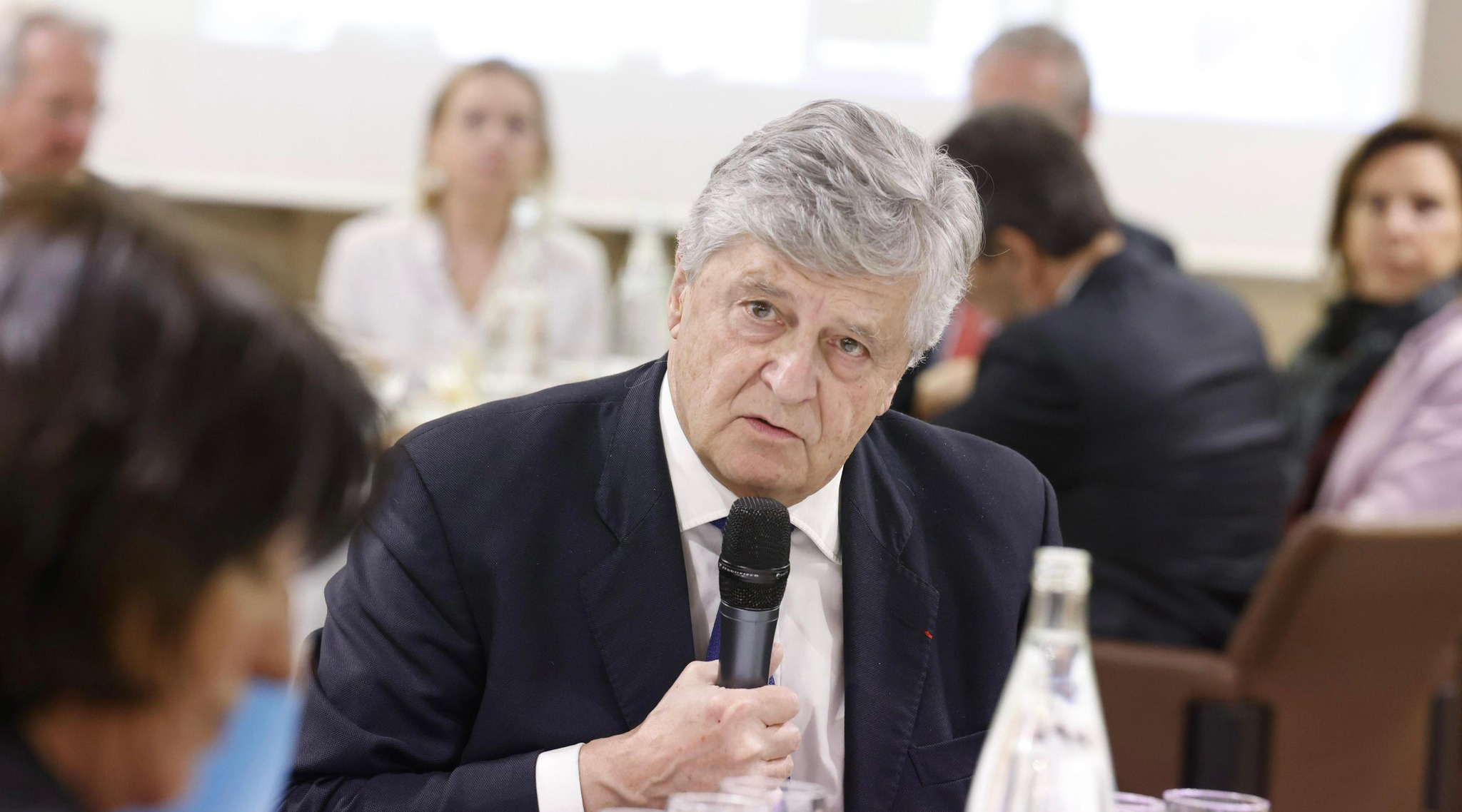
My visit in Kyiv is also the continuation of President Zelensky’s visit to France last November. France and Ukraine signed, at this occasion, an important G2G agreement to foster cooperation on strategic issues. This week, I came to Kyiv to move ahead on the implementation of those orientations. We are going to sign, on Tuesday, important cooperation agreements to reinforce our respective defense industry bases, put in common our expertise on critical raw materials, launch new projects on telecommunications and foster ties between our agricultures. We will also create a France-Ukraine business council and announce the call for application of the new French “Ukraine grant fund”. All those orientations are looking at the post-war time, where Ukraine will be joining the EU. They aim at ensuring that Ukraine reaches not only peace, but also prosperity.
FRANCE CONTRIBUTION TO PROSPERITY PLAN TO BE KEY
- Which areas do you see as most promising for bilateral cooperation? What role will France take in Ukraine’s Economic Prosperity Plan?
- France and Ukraine’s economies are greatly similar. We share the same strengths: defense, agriculture, nuclear, new technologies. On all those issues, our cooperation will contribute to ensuring EU’s strategic autonomy, a concept that both our countries understand and support. On water, health and demining, our cooperation can also bring quick wins for the daily life of the citizens of our two countries. We want to explore those areas, strengthen ties and accompany, on those subjects Ukraine’s recovery and Ukraine’s EU accession.
Indeed, France has not waited for the ongoing discussions on the prosperity plan to prepare Ukraine’s post-war recovery and prosperity. First because France is a key EU Member State and the second largest contributor to the European budget. This means that the last financial packages received from the EU, which is now, by far, the biggest external donor of Ukraine, could not have happened without our support and contribution. This will be the same with the prosperity plan: it cannot happen without the EU, as it relies mostly on EU financing and EU accession, issues that cannot be fixed without the Member States.
France contribution to the prosperity plan will also be key as an individual country: recovery of Ukraine will require public but, above all, private money and investments. Public contributions will be catalysts. It means that we will need to structure a bankable investment pipeline and showcase success stories. In this respect, I would like to recall that the EU flagship fund created during Rome’s URC to trigger private investments in Ukraine is a French initiative. I would like also to recall that the most important foreign direct investment in Ukraine over the past 10 years is a French investment: the purchase of Lifecell and Datavolia-Group by NJJ holding of French businessman Xavier Niel.
WE DESIRE TO SUPPORT UKRAINIAN ARMY IN LONG TERM
- Last year, our governments agreed to provide 200 million euros for reconstruction projects. Ukrainian and French companies hold regular meetings. Please share with us successful cases of cooperation and implemented projects.
- This fund was successful as more than 70 companies applied for more than EUR 700 M while we had only EUR 200 M available. Other countries followed this example, for instance Switzerland or Italy. We have had very successful cooperation, in particular in the energy sector: DTEK and GE Vernova works closely together and the work done by Schneider Electrics to support energy reliance in the East is amazing. In the health sector, many hospitals, for instance in Kyiv, now benefit from the latest state of the art technologies for veterans’ rehabilitation. On demining, I would like to spotlight the work done by Shark Robotics who entered the Ukrainian market thanks to the French “Ukraine Fund” and is about to open a joint-venture in Ukraine. This is how “making with Ukraine” can turn into “making in Ukraine”.
I am also pleased to announce that the Ukraine II fund has been adopted and will be disbursed as early as 2027.
- In February last year, Ukraine and France signed an agreement to strengthen cooperation. It provided for the provision of French weapons and the purchase of 100 Rafale aircraft. What French weapons has Ukraine already been able to purchase? How has bilateral cooperation changed since the signing of the memorandum?
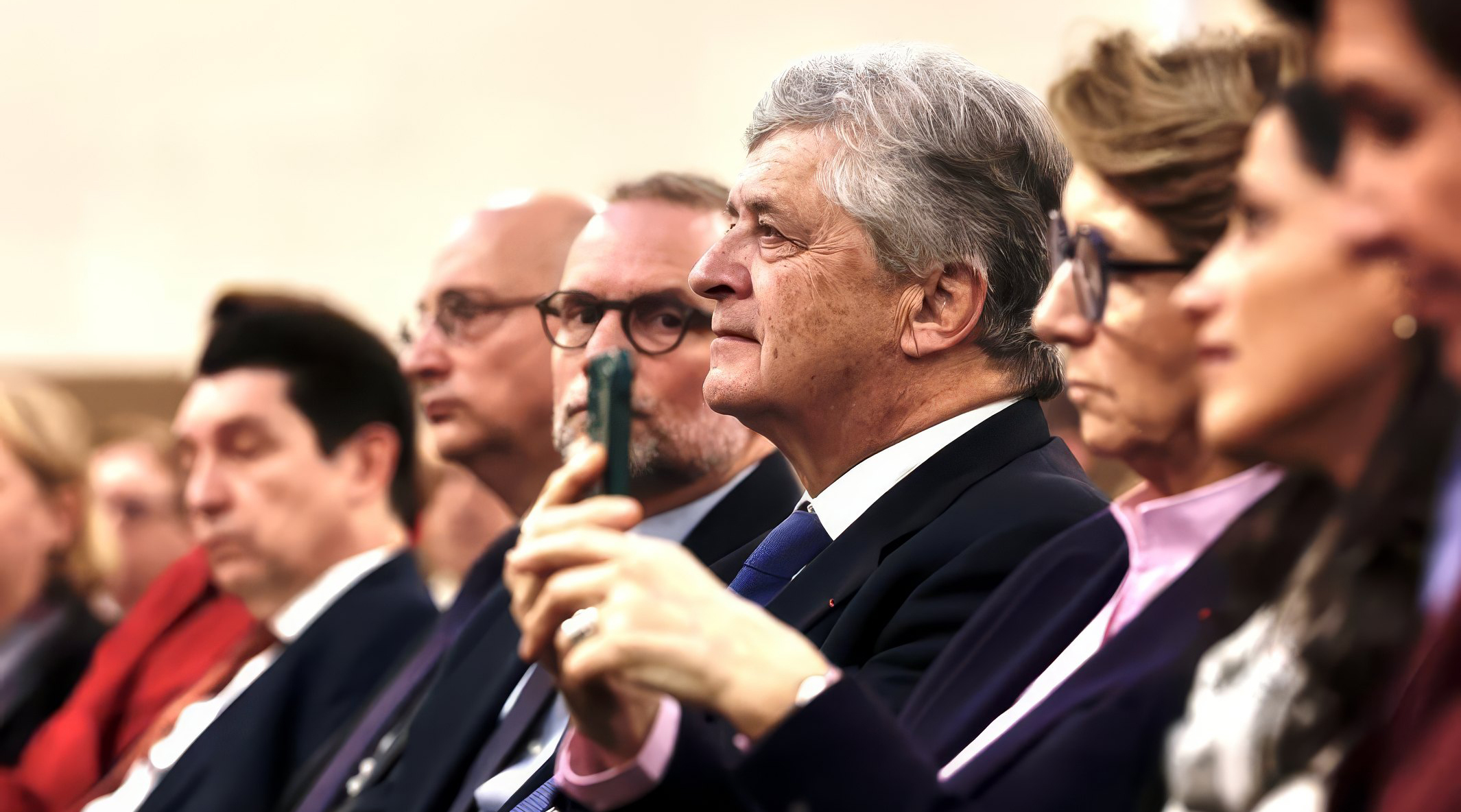
- With the agreements signed on November 17th, France and Ukraine have taken a new step in their bilateral cooperation in the field of defense, as part of a reciprocal and strong political commitment that marks our desire to support the Ukrainian army in the long term.
These agreements stem from Ukraine’s intention to acquire up to 100 Rafale aircraft, SAMP/T defense systems and other equipment that will allow Ukraine to sustainably protect its sky, defend itself and deter potential further aggression for the next decades to come. If we support Ukraine, it is because it is a matter of principle, but it is also because it is our interests that are at stake, including our national security. And when we decide to start a cooperation on Rafale with Ukraine as well as with other countries, we both want to embark on a journey that will link our both countries over the long run.
I cannot provide specific figures, as those numbers are not public. Releasing them would make the information available to everyone, including Russia, so we keep them confidential. Intense work is ongoing.
URGENT MATTERS SHOULD NOT PREVENT US THINKING LONG TERM
- Your visit came in the dead of winter, when Russia is attacking our energy infrastructure. France has already responded to the aid and co-chaired the meeting of the “Energy Ramstein” and has also allocated a package of generators. Is France contemplating a new meeting of the Coordination Group and new aid packages? When will we know about them?
- France announced last Sunday an extra batch of 50 generators to be delivered in the very next days, which will complete the batch of 100 generators announced earlier last week for a total amount of 22 MW. On top of this, our local authorities, but also our industries are working on emergency package, which demonstrates the extent of the mobilization to meet the needs in the very short run.
France stands ready, upon request from Ukrainian authorities, to convene any extraordinary emergency meeting as it did on January 23rd, on top of the regular quarterly meetings. Ms. Muriel Lacoue-Labarthe, France's upcoming Special Envoy for Aid and Reconstruction of Ukraine, is already keeping a close eye on this issue. She is being appointed and her first visit to Kyiv should happen in the very next weeks.
- With the shelling in Kyiv, it may seem that now is not the time to rebuild Ukraine, and while people are freezing in their homes, we need to maintain our energy sector first. How would you respond to this?
- The energy crisis is clearly the most urgent situation that we need to manage, hand in hand with Ukraine. This is the purpose of the very quick and reactive mobilization of the G7+ ministerial, with equipment’s already underway to Ukraine.
At the same time, fighting’s on the front line are still ongoing, with high intensity. This requires quickly prioritizing money for the armed forces, to purchase more weapons and pay the soldiers. This is the purpose of the upcoming EUR 90 Bn European new loan and the IMF program.
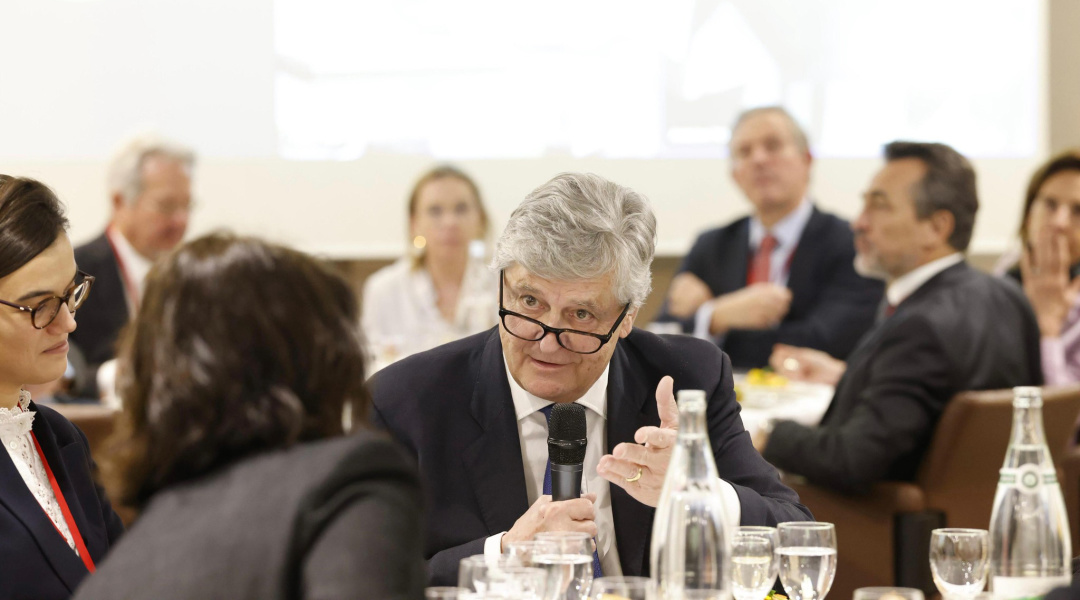
But those urgent matters should not prevent us thinking also long term and preparing Ukraine’s recovery and EU accession. This will be challenging for both Ukraine and its partners. We will need to define a clear vision, tailor instruments, adapt legislations, work on pilot projects. This is not something that we can improvise later.
UKRAINE MUST COPE WITH CORRUPTION AND SHADOW ECONOMY BEFORE ITS INTEGRATION
- In your opinion, what is the greatest added value of Ukraine when it comes to joining the European Union? Which areas of our economy can compete with French business, and which ones will strengthen Europe?
- We strongly believe in Ukraine accession to the EU. We must make it a success both for Ukraine and for the EU. Accession is about reforms, adoption and implementation, and modernisation of the Ukrainian economy. After 4 years of full-scale invasion, the Ukrainian economy has been weakened because of repeated Russian strikes on infrastructures, but has also been strengthened, notably for its digitalisation but also for its industrial capacity. Ukraine is today a powerful industrial European country.
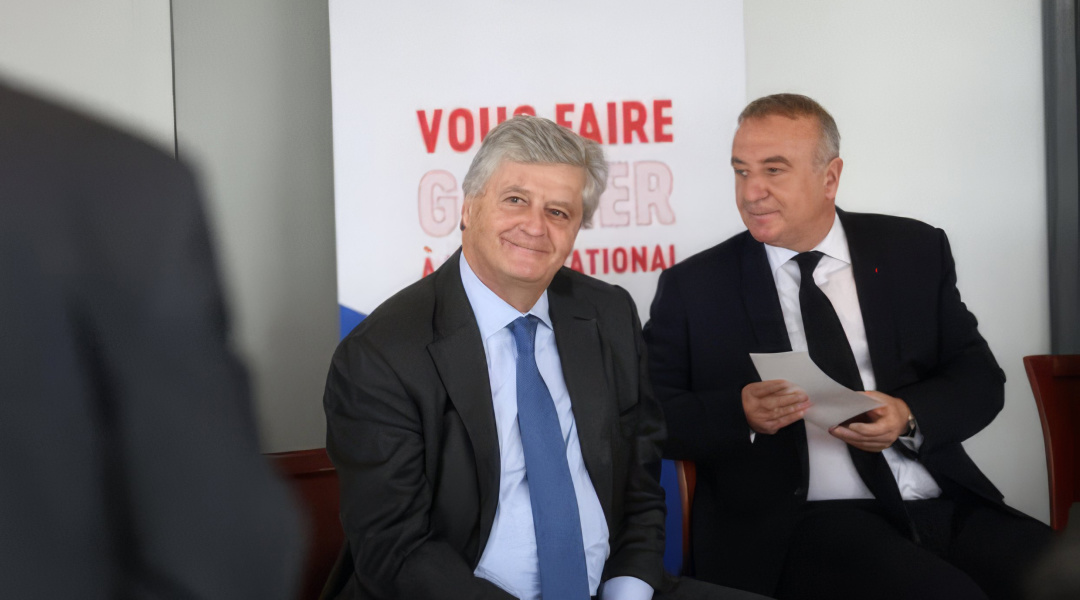
- Integrating the Ukrainian economy within the single market raises opportunities and challenges for both sides – Ukrainian companies and European ones. From a French perspective, we immediately think about agriculture. It will be a challenge but I believe we can overcome it through sustained discussions on a technical level. Challenges of Ukraine’s accession certainly does not come down to agriculture. The fight against corruption and the shadow economy are big challenges for Ukraine’s side to cope with before – let me insist on this – its integration. Corruption and shadow economy bring unfair competition between European and Ukrainian companies, whereas the single market is all about creating a level playing field for all companies operating within it.
Ukraine’s economy will offer great opportunities for the EU in the field of industry, energy, including in the nuclear sector, agriculture, defence, cutting-hedge technologies, among others. Ukraine, like France, believes in nuclear energy and has a strong know-how on this matter. Nuclear will be crucial for EU energetic autonomy and also its decarbonation. In that perspective, I think the most valuable asset of Ukraine remains its vision of the strategic autonomy that France has been promoting for years. Ukraine is experiencing it in a very concrete manner and this vision will definitely strengthen the EU. France and Ukraine can push forward together this vision for the future of the EU.
Ivan Kosiakin, Kyiv