
Talk of additional off-the-book payments to members of parliament dates back to the presidency of Leonid Kuchma. It was an open secret of Ukraine’s legislature—a secret de Polichinelle. From year to year, only the amounts of payments changed. Sooner or later, the abscess was bound to burst.
In late 2021, then director of the National Anti-Corruption Bureau of Ukraine (NABU), Artem Sytnyk, told journalists that the bureau had received more than a dozen complaints alleging that lawmakers were being paid cash “in envelopes.” Four years later, on December 27, 2025, five MPs from the Servant of the People faction—Yurii Kysil, Yevhen Pyvovarov, Ihor Nehulevskyi, Olha Savchenko, and Mykhailo Laba—were formally notified of suspicion on charges of receiving unlawful benefits in exchange for their votes for specific bills.
Three weeks later, a notice of suspicion for offering unlawful benefits in exchange for parliamentary votes was served on Yuliia Tymoshenko, leader of the Batkivshchyna (‘Motherland’) parliamentary group. As it emerged, the investigation against her had been officially launched on November 27—her birthday—an apparent coincidence that nevertheless looked like a form of satirical payback by anti-corruption investigators for her widely publicized speech in July of the previous year. In her address, Tymoshenko described as “a bright day in parliament” the vote on a bill significantly curtailing NABU’s and SAPO’s powers.
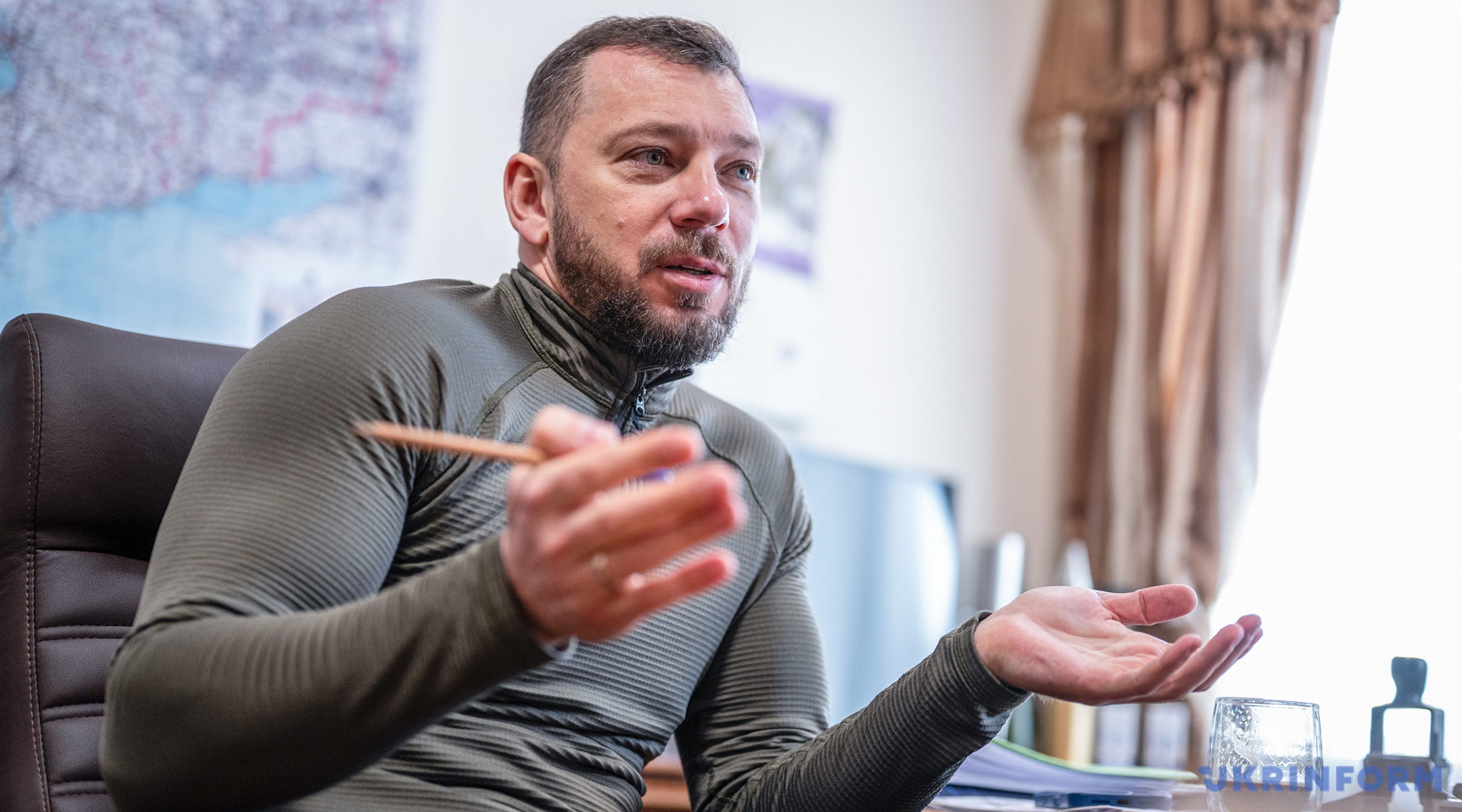
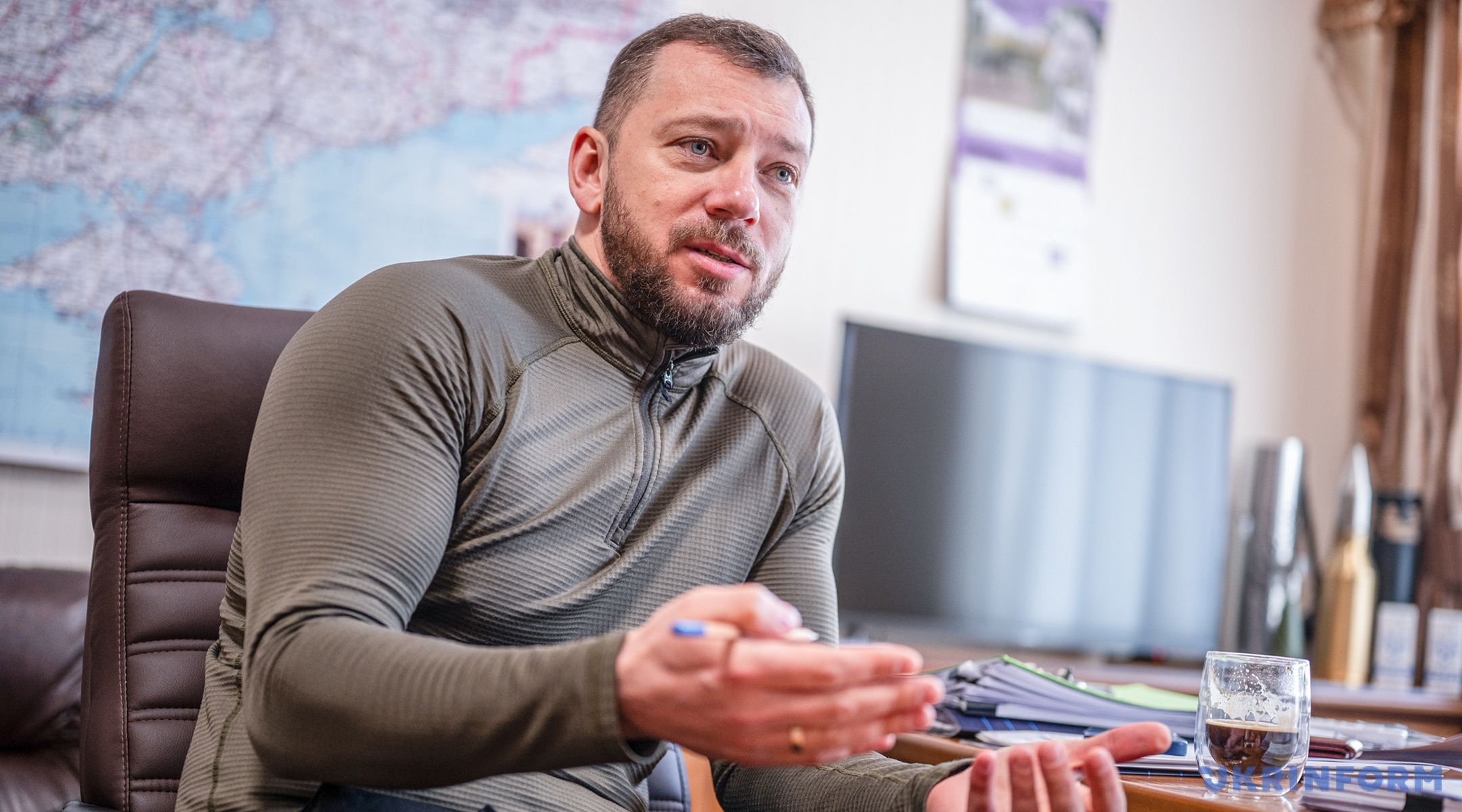
Ukrinform spoke with Oleksandr Klymenko, who has headed SAPO for the past three and a half years, to discuss the progress of investigations involving members of parliament, when Yuliia Tymoshenko came under scrutiny, and how long the investigation and court proceedings in her case might take. Among the other topics addressed were the high-profile Operation Midas exposing corruption in the energy sector and the anticipated next developments in that investigation; an internal inquiry into alleged leaks of investigative information; the pursuit of suspects through Interpol and their extradition; and the repatriation of seized assets from foreign jurisdictions.
THERE WERE PERIODS WHEN “OFF-THE-BOOK PAYMENTS” REACHED AS MUCH AS $20,000 PER MONTH
Q: Mr. Klymenko, allegations that lawmakers were paid bribes to secure votes have circulated for years. When was the first criminal case opened on these grounds?
A: The first criminal proceeding against a sitting member of parliament was registered by then Prosecutor General Iryna Venediktova toward the end of her tenure, based on complaints submitted in late 2021. That was the initial episode that investigators began to pursue.
Based on available evidence, after the start of Russia’s full-scale invasion in 2022, lawmakers stopped receiving unofficial payments” for a period of time. Once we learned that these payments had resumed, we continued our work in this area. From time to time, entries concerning members of parliament were added to the Unified Register of Pre-Trial Investigations by Prosecutor General Andrii Kostin and by the current Prosecutor General, Ruslan Kravchenko. Ultimately in December 2025, we formally notified five MPs that they were suspected of wrongdoing.
Q: From the moment the first criminal case was registered to the announcement of formal suspicions, three and a half years have passed. What made this investigation—conducted by NABU detectives working undercover—so challenging?
A: The head of the Specialized Anti-Corruption Prosecutor’s Office (SAPO) does not have the authority to independently initiate investigations or authorize covert investigative (search) measures against members of parliament. The SAPO head’s powers are limited to serving a notice of suspicion to an MP once sufficient evidence has been collected. The initiation of an investigation and the entry of information into the Unified Register of Pre-Trial Investigations with regard to an MP fall exclusively within the remit of the Prosecutor General.
Q: Based on your information, what amounts were MPs paid unofficially, and how regularly were they paid?
A: Not all prosecutors general are willing to immediately approve motions or grant us authorization for the measures we request. Moreover, it is not always possible to carry out such measures at a given moment: doing so requires a clear understanding of the operational environment.
We are referring to specific members of parliament who have been formally notified of suspicion. According to the information available to us, during the first half of 2022, at the outset of the full-scale invasion, such payments were not made. They were later resumed, with MPs receiving between $1,000 and $2,000 per month in exchange for voting in parliament on designated bills. Subsequently, the payments increased to $5,000. There were also instances where so-called penalty deductions were applied, in which case the “salary” was reduced to $3,000.
Before the full-scale invasion, there were periods when these “envelope payments” reached as much as $20,000 per month.
Q: When did the leader of the Batkivshchyna parliamentary faction, Yuliia Tymoshenko, come under your scrutiny?
A: In November 2025. At that time, information emerged about attempts within the Verkhovna Rada to buy off MPs so that they would either leave the Servant of the People faction or vote contrary to the wishes of the mono-majority. This information was not limited to our sources alone. Media reports also indicated that the Security Service of Ukraine had held so-called preventive conversations with MPs who were attempting to persuade others to leave the faction or take similar steps—actions that would, in effect, paralyze parliament and prevent it from fulfilling its core function.
In addition, within the framework of other proceedings we were working on, we were receiving information indicating that attempts were being made to bribe members of parliament. We already had records of covert investigative and operational measures confirming that this was indeed taking place. Therefore, we approached the Prosecutor General, and on 27 November he entered the relevant information into the Unified Register of Pre-Trial Investigations (URPTI).
Q: So, a criminal case has been opened against Tymoshenko?
A: Yes.
Q: Why exactly 27 November—Tymoshenko’s birthday? It appears almost like a form of retribution for her high-profile speech in parliament in July 2025, when legislation was passed that significantly curtailed the powers of NABU and SAPO…
A: It was a sheer coincidence. We do not track birthdays, wedding anniversaries, or professional milestones of the individuals involved in our investigations. That is irrelevant to us.
Q: Did the Prosecutor General face any challenges when entering the information into the URPTI, given the strained relations between NABU and SAPO and the Prosecutor General’s Office after the detention of detective Ruslan Mahamedrasulov?
A: We hold our positions and must perform the duties prescribed by law. If there is a properly substantiated evidence indicating the elements of a crime, it must be entered into the register and investigated.
Q: When did MP Ihor Kopytin of Servant of the People appear in this case—the person whom Tymoshenko pointed to during the hearing on the pre-trial restriction measure against her at the High Anti-Corruption Court (HACC), alleging that he had “taped the incriminating conversations”?
A: Due to the specifics of our work, I cannot confirm or deny whether anyone cooperated with us. If we were to disclose details of our work or of interactions with anyone, people would stop coming to us and we would no longer be able to perform our functions. And what would be the point? So that this information occasion lives for two hours, and then we lose our reputation? That would be absurd.
Q: But NABU and SAPO themselves released the audio recording, maintaining that it was precisely that member of parliament who communicated with the leader of the parliamentary faction. From a legal standpoint, how should one view what the MP did in relation to Tymoshenko? Was it confidential cooperation with your agencies, the execution of a special assignment?
A: The pretrial investigation is ongoing. In order not to harm it, we will not disclose any details.
Q: Tymoshenko has said that during investigative actions the detectives showed her, on a phone screen, the entry of information into the Unified Register of Pretrial Investigations (URPI), whereas no such entry was shown during the search of her party colleague Serhii Vlasenko’s office. Would you explain the grounds on which the search of his office was conducted? Did the Prosecutor General also enter information into the URPI with respect to Vlasenko?
A: We carried out urgent investigative actions at the party’s office. After completing them, we applied to the court, which granted our motion to conduct a search. Everything was therefore carried out in accordance with the law, and we see no violations on the part of either the detectives or the prosecutors.
Q: How much time can it take to investigate this case? Is it realistic to complete the pretrial investigation within, say, five months?
A: I estimate it will take less time. This case is fairly straightforward. We have referred to court a large number of similar episodes involving the offering or receipt of bribes, so both the investigators and prosecutors have a substantial amount of experience with this category of cases, and there will be no delays on our part.
Everything will depend on how quickly we are able to conduct the expert examinations we have planned. We consistently emphasize that, for certain categories of cases under NABU’s jurisdiction, an independent expert institution needs to be established. We have documented numerous instances where third parties interfered with the expert examination process. There have been cases of delays, sabotage, information leaks, and pressure on experts.
Q: Based on your experience, how long could the Tymoshenko case be considered by the court?
A: A similar case involving MP Odarchenko was heard for a year in a first instance court, and three months later we had already gone through the second instance and obtained a ruling from the Appeals Chamber of the High Anti-Corruption Court (HACC). Everything depends on the conduct of the defense and how frequently the court schedules hearings. If there are no delays, the proceedings may move much faster, because, as I have said, this is not a complex category of cases.
Q: Overall, how many MPs are currently under suspicion for corruption-related crimes?
A: In total, 41 members of the Verkhovna Rada of the IX convocation have received notices of suspicion from the Specialized Anti-Corruption Prosecutor’s Office. Over the ten years since the anti-corruption bodies began operating, 79 current and former members of parliament have been notified of suspicion.
THE NEXT RESULT IN THE “MIDAS” INVESTIGATION WILL NOT BE LONG IN COMING
Q: How is the further investigation related to the “Midas” special operation progressing?
A: We are actively investigating this case. There are challenges related to executing a large number of requests for international legal assistance across various jurisdictions, some of which are quite complex and unlikely to yield quick results. Nevertheless, overall progress is evident, and the next outcome in the “Midas” case will not be long in coming.
Q: Do you mean the announcement of new suspicions?
A: NABU and SAPO never announce suspicions in advance.
Q: How many detectives and prosecutors are working on this case?
A: There are two prosecutors assigned to this case: myself and another prosecutor who is actively involved in the investigation. At the initial stage, a large number of NABU detectives were engaged to carry out mass searches and other investigative actions. At present, the case is being handled by approximately ten detectives from the Bureau’s First Main Division. This helps maintain the confidentiality of the investigation.
Q: After his release from pre-trial detention, the head of the NABU office in Dnipro, Ruslan Mahamedrasulov, said in an interview that businessman Timur Mindich, a suspect in the “Midas” case, is not the key person in the corruption schemes uncovered by the Bureau. Who, then, could be the key figure?
A: That is something you would have to ask Mahamedrasulov. I myself asked him the same question – so, who is behind Mindich there? (smiles)
As I said above, we are investigating quite actively, we see progress and we see forthcoming results. We understand that this is one of NABU’s most high-profile exposures, and society expects further outcomes. We will present everything once it becomes possible.
Q: Are the Head of the Presidential Office and its employees subject to NABU’s and SAPO’s jurisdiction?
A: Our jurisdiction is determined by three criteria: the official position of the individual involved, the amount of unlawful benefit earned, and the extent of the damage caused.
By position alone, they do not fall under our jurisdiction. However, they may fall under our jurisdiction based on the amount of the unlawful benefit.
For example, if the Head of the Presidential Office or his or her deputies were to receive a bribe exceeding USD 40,000, they would fall under NABU’s jurisdiction regardless of the position they hold.
Q: Is the State Financial Monitoring Service providing adequate assistance in the investigation of this case?
A: Most of the interaction with the State Financial Monitoring Service is handled by NABU, but in my view, the assistance provided is insufficient. We need to see concrete results, not merely generalized evidence that prove nothing beyond stating that funds have moved from point A to point B.
When I previously worked as a NABU detective and we cooperated with the Financial Monitoring Service, we received a vast amount of information from them related to financial transactions among other things. They provided data on whether case subjects held passports of other countries, on individuals and companies linked to them. They even froze assets in foreign jurisdictions. At present, none of this is happening in the actions of the Financial Monitoring Service. I believe it all depends on whether there is a willingness – of lack thereof – to help.
Q: Have documents been submitted to Interpol to place the suspects in the “Midas” case, Timur Mindich and Oleksandr Tsukerman, on the wanted list?
A: Yes, they have been submitted.
Q: Have Red Notices already been issued for them?
A: This information has not yet been received. A “red notice” does not necessarily have to be published on Interpol’s website. There is a confidential period during which it is issued —that is, it is effectively in force— but no information is made public.
Q: How is cooperation with the Security Service of Ukraine (SBU) progressing in the investigation into the transfer of the so-called “two-room apartment in Moscow”?
A: There is no such cooperation conducted by SAPO. Most likely, National Anti-Corruption Bureau of Ukraine has forwarded the information it had to the Security Service of Ukraine for investigation.
If additional information is required, they will reach out, but we are not exercising procedural oversight over this criminal proceeding. That falls within the remit of the Office of the Prosecutor General.
Q: How would you describe cooperation with the Security Service of Ukraine, particularly its Department “K,” which investigates corruption-related crimes?
A: Our interaction is targeted and case-specific, relating to proceedings that were initiated earlier and are still ongoing. There is no broader cooperation whereby they deliver large volumes of materials and we launch joint investigations. This usually depends on the political will of the Service’s leadership. If senior officials give the go-ahead to their operational staff, materials are forwarded quite actively to NABU and SAPO to register suspected corruption-related offenses. At present, no such submissions are being made.
Q: Are there already any results from the internal investigation conducted by SAPO’s Internal Control Department regarding a possible information leak during Operation “Midas”?
A: We initiated an internal investigation based on several facts, including those disclosed by journalist Mykhailo Tkach in his reporting. The internal investigation has been completed. A violation was established—namely, off-the-record communication between an employee and individuals involved in criminal proceedings. At the same time, the internal investigation did not find out sufficient evidence to confirm that this communication involved suspects in the “Midas” case.
Such a violation could have resulted in disciplinary action up to and including dismissal. However, the employee in question resigned from the prosecution service of his own accord.
Q: Are you referring to your deputy, Andrii Syniuk?
A: Yes, I am. In addition, there are two more criminal proceedings related to information leaks. Both investigations are still in progress.
Q: When will the competition be announced to fill the deputy head position that became vacant after Andrii Synyuk’s resignation?
A: That does not depend on us. A standing selection commission must be formed and the appropriate competition procedure organized. I hope there will be no delays or abuses. We already have negative experience in this regard. This scenario must not reoccur.
WE HAVE MANAGED TO IMPROVE STATISTICS OF EXTRADITIONS FROM EUROPEAN UNION COUNTRIES
Q: Recently, reports emerged that NABU has opened a criminal proceeding into the alleged receipt of bribes by former SBU head Ivan Bakanov and former head of the Security Service’s Internal Security Directorate Andrii Naumov, from businessman Serhii Vaganyan, as the latter himself claimed in an interview. Do you intend to summon Bakanov for questioning?
A: The criminal proceeding has been registered, and the prosecutor together with the detective will independently determine which investigative actions to take. Had Mr. Vaganyan wished to provide law enforcement with evidence indicating that the officials had committed a crime, it would have been more appropriate for him to contact NABU directly rather than to go to the media. That would have given detectives a broader set of tools to properly document the allegations. By choosing a media platform instead, he made the investigation less effective. Everything depends on the goal an individual sets for himself.
Q: NABU has completed its investigation into Operation “Clean City.” Based on information available to you, was former Kyiv City Council deputy Denys Komarnytsky granted political asylum in Austria, which he had been seeking?
A: We have no information indicating that he has been granted political asylum anywhere.
Q: Has he managed to be placed on Interpol’s wanted list?
A: We have submitted information regarding him to Interpol’s Commission for the Control of Files. As for now, it is not yet known whether a Red Notice has been issued.
Q: Let’s talk about extradition. It is known that Ukraine is often denied the extradition of suspects because of the war and concerns about inadequate conditions in pretrial detention centers and prisons. To address this, Ukraine has furnished five special pretrial detention facilities and penal colonies for holding extradited persons. These are located far from the combat zone—in Chernivtsi, Lviv, and Zakarpattia regions—and have renovated premises. In light of these improved conditions and enhanced security, how are negotiations progressing regarding the extradition to Ukraine of the NBU suspects currently hiding in foreign jurisdictions?
A: I must acknowledge that our state authorities—and former Prosecutor General Andriy Kostin in particular—have done a tremendous amount of work in this area, and the process has finally moved forward. Now we have managed to improve statistics of extraditions from European Union countries. From January 2022 to January 2026, seven suspects were extradited to Ukraine to face criminal prosecution.
We have created proper and secure detention conditions in pre-trial facilities during wartime and have made them available for inspection by representatives of foreign states so that they can subsequently inform their ministries of justice in official reports. Very often, it is precisely the ongoing war that foreign courts cite when refusing extradition to Ukraine.
That said, however, challenges persist with certain jurisdictions—Austria foremost among them. Once we manage to make progress on extraditing specific suspects, in particular from the United Kingdom, they often relocate to Austria. The majority of suspects currently wanted by Ukraine are located in that country. Austrian courts typically do not proceed to examine extradition requests on the merits. At the very first hearing, they refuse, citing the inadvisability of considering extradition requests because Ukraine is at war. That is the primary argument. Another is a rather outdated report by the European Committee for the Prevention of Torture and Inhuman or Degrading Treatment or Punishment.
Ukraine invited the Committee to visit and inspect pre-trial detention facilities in western Ukraine. We are now awaiting its new report, which will hopefully note the safe and adequate conditions in our facilities and which will be taken into account by the courts of the countries where suspects in our cases are hiding.
There is also the issue of creating extradition precedents with certain countries that have never extradited anyone before. As we can see, the Security Service of Ukraine could assist in this regard. It was the SBU that, for the first time in Ukraine’s history, managed to bring back a sitting member of parliament from the United Arab Emirates in a case involving alleged Russian influence on NABU and the SAPO—albeit not through a formal extradition procedure.
Q: Are you referring to Fedir Khrystenko, an MP from the Opposition Platform–For Life (OPZZh)?
A: Yes, I am. If they have such a successful track record, they could help us in corruption-related investigations as well. We have a comprehensive list of NABU and SAPO wanted fugitives hiding in foreign jurisdictions.
Q: Finally, I’d like to ask about the well-known assets frozen abroad. What is the current status of the 130 million Swiss francs belonging to Yuriy Ivanyushchenko? The Swiss Federal Council launched confiscation proceedings three years ago. What is happening with this case in Switzerland now, what procedures are underway, and when can Ukraine realistically expect these CHF 130 million to be returned?
A: To confiscate funds held abroad within the framework of criminal proceedings, it is necessary to obtain a court verdict that has entered into legal force. Once such a verdict is secured, it is forwarded to the country where the assets are frozen so that they can be confiscated.
There is also an alternative route—confiscation through an administrative process. This is precisely the mechanism Switzerland initiated in order to accelerate the recovery of the assets. Their legislation allows for such a procedure. From Ukraine’s side, we are providing everything required from us.
THE CIVIL FORFEITURE PROCEDURE FOR LAZARENKO’S SEIZED ASSETS IS NEARING COMPLETION
Q: Do you currently have the case of former Prime Minister Pavlo Lazarenko under investigation? When the Specialized Anti-Corruption Prosecutor’s Office was first established, its former head, Nazar Kholodnytskyi, publicly objected to the idea of having this case transferred to SAPO for further investigation. What is the current status of efforts to recover Lazarenko’s money for Ukraine?
A: The case is being handled by detectives of the National Anti-Corruption Bureau of Ukraine, albeit the investigation proper has been put on hold. The suspect is located in the United States, and Ukraine does not have an intergovernmental extradition treaty with the U.S., despite having formally requested Lazarenko’s extradition.
In total, about USD 280 million has been frozen across various jurisdictions, including within the framework of our investigation. In the United States, a civil asset forfeiture procedure is underway, which does not provide for the automatic transfer of these funds to Ukraine.
Q: Could this ultimately be a voluntary decision on their part?
A: Yes. It would have to be an administrative decision by the U.S. authorities to transfer the funds confiscated under this civil procedure to Ukraine for use for specific purposes.
At the same time, Ukraine has a legal instrument to ensure that these funds do not simply disappear from the accounts—we have imposed our own seizure on them.
Q: Are you in contact with the U.S. Department of Justice regarding this case?
A: Yes, indeed. Overall, the process has reached the final stretch, and a definitive decision could be taken as early as this year.
Alla Shershen led this conversation
Photos via Danylo Antoniuk