
Despite having left the presidential office 20 years ago, Aleksander Kwasniewski still remains the most esteemed of all heads of state in the history of democratic Poland. His voice is heeded to, he is a highly influential figure in Central and Eastern European politics and remains actively involved in international diplomacy and analysis, particularly regarding Ukraine. At one time, the politician also played a significant role in the history of Ukraine. In particular, he played a significant mediation role during Ukraine's 2004 Orange Revolution and served as an observer in a high-level European Parliament monitoring mission to Ukraine (the Kwasniewski-Kox mission) in 2012–2013. Rumor has it that it was his pro-Ukrainian activism that prevented Kwasniewski from making a brilliant international career after presidency.
Kwasniewski is not indifferent to the fate of Ukraine even now: he travels to Ukraine quite regularly, participates in seminars and conferences, and chairs the Board of the Yalta European Strategy (YES) – a prominent forum for discussing Ukraine's European future and global context. Ahead of his most recent trip to Ukraine, Mr. Kwasniewski agreed to talk to an Ukrinform correspondent about the “peace plan”, the war in Ukraine, Putin’s policy and the situation in Russia, as well as Ukrainian-Polish relations.
PUTIN IS DOING EVERYTHING IN HIS POWER TO REINTEGRATE UKRAINE INTO A RUSSIAN SPHERE OF INFLUENCE
- Mr. President, how do you assess the U.S. 28-point peace plan? Why has it emerged now?
- This is because of Donald Trump’s impatience, his desire to declare success to all of the world. However, the plan was apparently closer to Russian thinking.
This was obvious, because these 28 points contained many demands that the Russians consistently repeat. For example, the issue of Ukraine ceding part of its territory, very early elections, a ban on or blocking NATO accession, etc. It surprises me that the American negotiators approached this plan quite uncritically, in my opinion. President Zelensky rightly noted that this plan deprives Ukrainians of their dignity as a sovereign state in several respects. Understandably enough, after the martial law is lifted, elections must be held, but no country from the outside can dictate that this should happen in 80, 100 or 120 days, because there is the Constitution of Ukraine, the relevant national laws.
The demand or prohibition for Ukraine to join NATO is also a humiliation of dignity. Ukraine must choose its own alliances, and whether it is allowed to join or not it is a completely different story. This cannot be the subject of any such agreement. Frankly speaking, I am surprised and do not understand how the Americans are conducting these negotiations. I remember how, after the election of Donald Trump as President, the US Secretary of Defense (now the Secretary of War) Hegseth immediately gave Russia very important negotiating elements, namely Ukraine's NATO membership, the issue of occupied territories. These issues should be the subject of negotiations, not instant concessions. If these issues are immediately given to the other side, then what can we talk about at all? I really can’t understand this.
I am not yet familiar with the plan that was agreed upon in Geneva, so it is difficult for me to comment on it. But since I have heard positive feedback from the Ukrainian side, I believe that it is more favorable to Ukraine.
But I will tell you philosophically: achieving a lasting and just peace is impossible.
- Could you elaborate, please.
- Russian policy, Putin's policy is clearly aimed at rebuilding the so-called Great Russia, and it cannot be rebuilt without reintegrating Ukraine. To put it shortly, Putin is doing everything possible to reintegrate Ukraine into Russia's sphere of influence. So what kind of peace agreement between Russia and sovereign Ukraine are we talking about? These will always be tactical maneuvers aimed at making the most of a more favorable situation at a certain moment and achieving exactly what I am talking about. That is, to make sure Ukraine in its entirety, I emphasize it, is reintegrated into Russia's sphere of influence. This does not necessarily mean being part of a single state entity, but definitely in its sphere of influence.
EUROPE HAS SHOWN THAT IT DOES NOT AGREE TO SURRENDER UKRAINE
- We will return to Russia in more detail later. I would like to know your assessment of Europe's response to the "peace plan" and support for Ukraine in general, particularly as regards the so-called reparation loan for Ukraine? Aren't they too slow?
- This is the most common criticism of the European Union, and it is fair in a sense that many things happen too slowly.
That being said, we must understand that we are talking about a Europe that consists of a multiplicity of European countries, where procedures have their own pace and where decisions cannot be made instantly. And this must be understood. Democracy means procedures, and procedures mean time. In this sense, I understand the disappointment of Ukrainians over many things that should be decided faster. Basically, however, I assess Europe's position positively, because Putin really expected that he would succeed in dividing and driving a wedge among European countries, both on the issue of sanctions and support for Ukraine in general.
In fact, it did not work out, because, apart from Hungary...
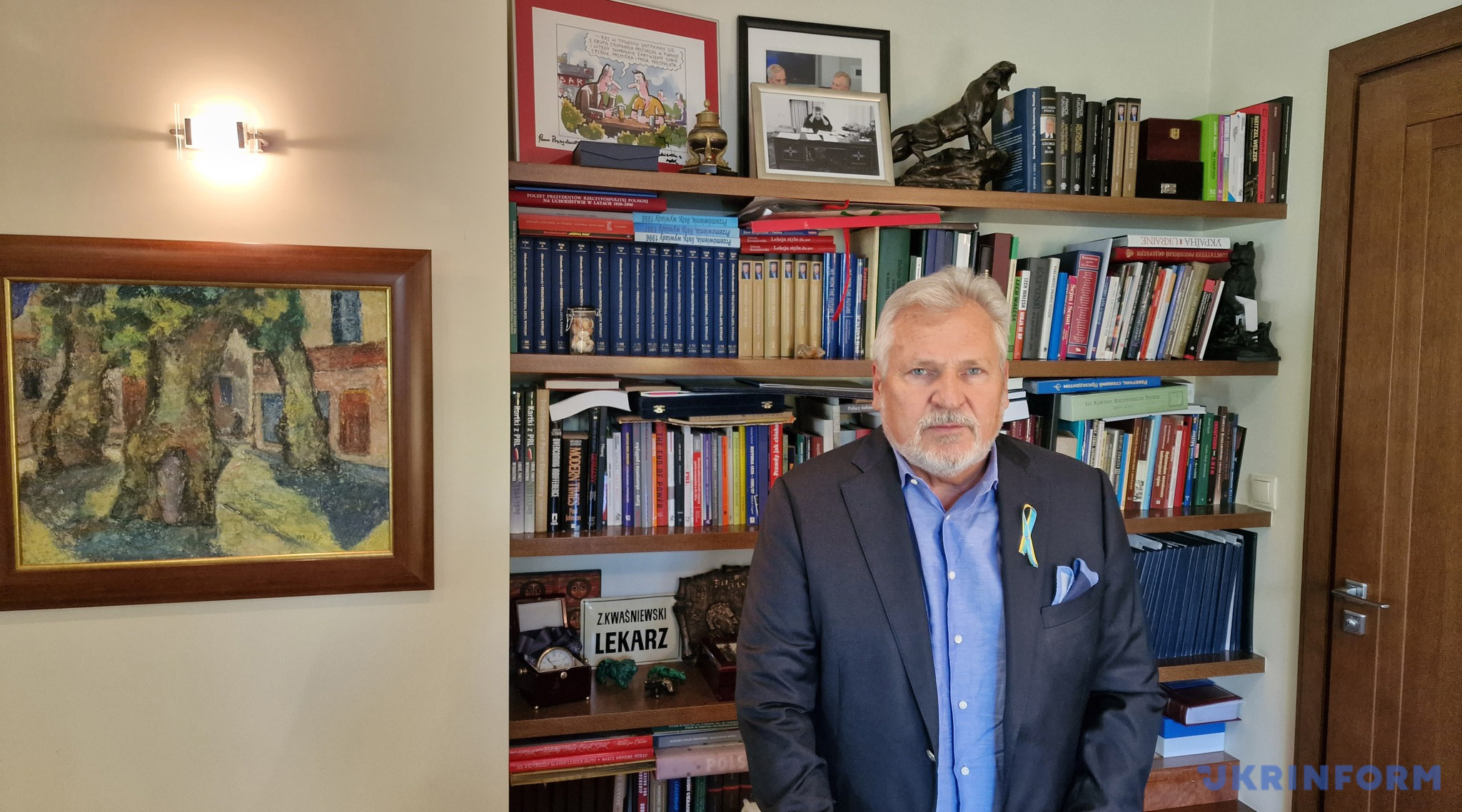
- The Russians are actively using the Hungarian veto…
- But that’s how the European Union was built, and no one expected such a situation to arise. The EU was formed for positive development. Back then, no one even thought about these issues, because things seemed to be going well, and NATO was a sufficient security guarantee for Western democracies. Everything has changed in recent years, and Europe was not prepared for this.
But when you ask about the attitude towards Ukraine, I think that there is definitely far-reaching unity here, a willingness to support, even if this American support had to be replaced with European support. In my opinion, the fact that Europe responded quickly to this “peace plan” is very important, because one could say: the Americans are negotiating on this issue, what else can be added here? But no, Europe has shown that it does not agree to Ukraine’s surrender.
The same can be said about the issue of frozen Russian assets.
From a legal point of view, this is a complex issue. But there is no doubt that these frozen assets should be used to rebuild Ukraine and that this should be one of the most severe sanctions ever imposed on the Russian aggressor. This is one of the reasons why I do not really imagine that Putin will agree even to this “Geneva Plan”, because this is influenced by internal factors. He may be fearful of internal resistance in Russia over the loss of $300 billion and will not agree to it.
A PEACE AGREEMENT WILL GUARANTEE A SIMPLE TRUCE ONLY
- Under the current conditions, can Ukraine rely on further sustained support from the West, including military support, without which it will be difficult for Kyiv?
- Without help Ukraine would, indeed, be unable to persevere. The problem is also that I do not see any chance for a lasting and just peace. Of course, Donald Trump will announce “the greatest peace agreement ever reached in the world history”, counting on the Nobel Peace Prize. But this, in my opinion, will be a truce. A truce is, indeed, a certain respite, because if it is observed, people will not die. It means that cities and villages, as well as strategic infrastructure in Ukraine will not be bombarded. But the danger is that, if this agreement does not contain very clear security guarantees for Ukraine, then there is a significant risk that the ceasefire will be perceived as a full-fledged peace agreement, which, in fact, will free the democratic world from its commitments of financial, military, humanitarian aid and political support for Ukraine. And this will amount to a disaster. Ukraine needs this support, otherwise it will not survive the next stage of the unfrozen war. This risk does exist, and I am really hopeful that the Western partners will not deviate from this path. I am talking about Germany, France, the United Kingdom, and Poland.
- These are all democratic countries. But in the next elections, forces that are skeptical about helping Ukraine may come to power in some countries...
- That may be the case. But the most worrying thing is the upcoming elections in Ukraine, which may take place at some point after a peace agreement is signed. Why is Russia so vigorous in pushing the issue of elections in Ukraine, insisting on these 100 days? Because it sees this as a chance to escalate conflicts within Ukrainian society.
- Do you think that Russia-friendly forces have any chances in Ukraine now?
- Probably not, but Ukraine has democratic elections. I always tell people: if you want to understand what differs Russia from Ukraine, I will give you just one simple example. In Russia, we always know who will win the presidential elections, but in Ukraine – you never know. This is a significant difference. The upcoming elections in Ukraine will be about exactly that: we are unaware who will win. It will be a competition between several candidates, and elections inevitably carry an element of confrontation. After all, they polarize society rather than uniting it, which is an unsignificant problem in stable democracies. Someone wins, someone loses – people return home, go to work and so on until the next elections. Ukraine, on the other hand, is in a different situation. Let us also keep in mind that after a ceasefire is reached in Ukraine, democratic normality will have to be renewed, which cannot be done in 100 days. This should mean a return to political pluralism, to the normal functioning of the legislature, etc. This is a very difficult task. And this is the type of democratic chaos and destabilization the Russians are pinning their hopes on.
- Does Russia see any significant chance for itself in this?
- Definitely yes. True, it will not be a “gamechanger” (something that significantly changes an existing situation or way of doing something, often making it easier or more effective than previous methods, – ed.), but one of such elements.
RUSSIA DOES NOT VALUE HUMAN LIFE, VALUING INSTEAD THE IDEOLOGY OF “GREAT RUSSIA”
- Let’s go back to Russia. In one of our previous conversations, you emphasized that Putin wants to be like Peter I or Catherine II and go down in history as the “collector of Russian lands.” Almost four years have passed since the great war began. What could make Putin abandon his aggressive plans for Ukraine?
- From Putin's perspective, a ceasefire holds certain advantages. It gives him time to reorganize, rebuild his forces, produce the requisite weapons and ammunition, and train the North Korean soldiers he uses.
That is, a ceasefire is an acceptable solution for him, provided that it is not associated with a high price of losing the frozen assets. As I mentioned above, this, I suppose, may be one of the elements that he finds difficult for himself and internally unacceptable. At the same time, it turned out that the casualty toll of the war does not matter to him, as does the stagnation of the Russian economy, which has already been reorganized around the need to prioritize the war effort. It is becoming increasingly difficult for it to function and over time, it is perhaps inevitable that it will exhaust its capabilities.
But we must admit one very important thing. This is not just Putin's war, but one supported by the majority of Russian society. And this is where his strength lies. A year ago, Putin made a speech to the Russian parliament, in which, in addition to a large amount of lie that he reiterates all the time, he said two, in my opinion, true things that are important for us to realize. The first is the fact that the Russians have learned the lesson of 2022 and now understand and wage this war better, have better-trained commanders. In addition, he said that Russia's advantage over the West lies in the fact that its society has been living in a state of wars and renunciation for many years: first Afghanistan, then Chechnya, now Ukraine. That is, the country lives in a permanent state of war and sacrifices, and is ready to continue that way.
In other words, for the average Russians, the choice between personal comfort and the power of the state will be obvious: they will choose the greatness of Russia.
If we ask the same question in Western Europe, then in almost every EU country the answer will also be definite: people take care of themselves, their families, the quality of their lives. In Europe, human life is respected, which is not the case in Russia.
As long as the Russians demonstrate this approach, Putin or his successors will continue this war and will make efforts to rebuild a “great Russia”. Today, there is not a single influential political force on the Russian political map that could oppose this “great Russia” policy, would show concern for ordinary human beings, for their well-being and individual security.
Few people in Russia care about this. If you look at life expectancy in Russia compared to Western countries, it is an abyss. In Poland today, the average life expectancy is 83 years for women and around 80 years for men. In Russia, it is 20 years lower. This reveals how little the life of an individual is worth in Russian politics. And as long as this continues, “great Russia”, unfortunately, will remain a highly resonant ideology that integrates Russian society.
- War has now changed a lot, it has become high-tech. Whereas in 2022, it was still a war of mostly tanks and artillery, today it is a war of drones with the increasing involvement of artificial intelligence. Who do you think has the most significant superiority in this technological war?
- This is the first major war of the 21st century, and it shows us how far we have moved away from the classic model of warfare that we remember from movies. This is a completely new era. The fact that this war is becoming technological, with less direct human involvement and more involvement of unmanned aerial vehicles and all the latest technologies, I consider good news for Ukraine. Because if this were a classic war, where human resources and the amount of metal on the battlefield matter, then, comparing the potentials, Ukraine would have no chance in a war with Russia. The fact that, today, a modern tank can be incapacitated by a couple of drones gives a certain advantage. Moreover, we also need to pay tribute to Ukrainian talent. Ukrainians have proven their exceptional ability to make inventions in the field of new technologies, drone production, etc. So I believe that from this point of view, Ukraine benefits from new technologies in its war with Russia.
But from the point of view of the whole world, however, this new stage of the 21st century war is very dangerous. Because it creates the feeling that wars can be fought with fewer casualties, that is, with greater impunity for the initiators of wars. This may encourage some aggressive countries or politicians to incite armed conflicts, because drones are capable of destroying infrastructure with relatively few human casualties. In this sense, new technologies pose an enormous danger, because they eliminate to a degree the drama of the loss of thousands of lives that accompanied the classic wars of the past.
THANKS TO UKRAINE, WE HAVE TIME TO PREPARE FOR RUSSIA'S ACTIONS
- Do you think the Western countries are realizing that Ukraine's sacrifice is giving them time to arm themselves and beef up their security? I ask this because of the growing skepticism in Europe. Even in Poland, there are increasingly frequent opinions that Ukraine is fighting for itself and is in no way defending Poland as well.
- Such views arise where political cynicism reigns, because smart people understand everything. If we accept the thesis that Russian policy is truly aggressive and its goal is to restore Russian influence, then the conclusions can be the following. First is that Ukraine has taken this blow all on itself, to a large extent, for all of us. Second is that we must provide it with assistance, and third is that we must use this time to prepare for possible further aggressive actions by Russia. General Alexus G. Grynkewich, the current Supreme Allied Commander Europe (SACEUR) for NATO forces, as well as the Commander of U.S. European Command (EUCOM) warns about the risk of Russia attacking one of the Baltic countries as early as 2027. He says this for a reason, not because he has evidence to support it. I think that sensible politicians realize that we have this time thanks to Ukraine.
It is also essential that Ukraine, a country at war, shares its experience from the new battlefield with the West, and this is a wonderful lesson. At the same time, there will always be forces that will cynically exploit the issues of refugees and war fatigue. Trump has recently again stated that Ukrainians are not grateful enough for the help. It is already unclear what kind of gratitude this should be.
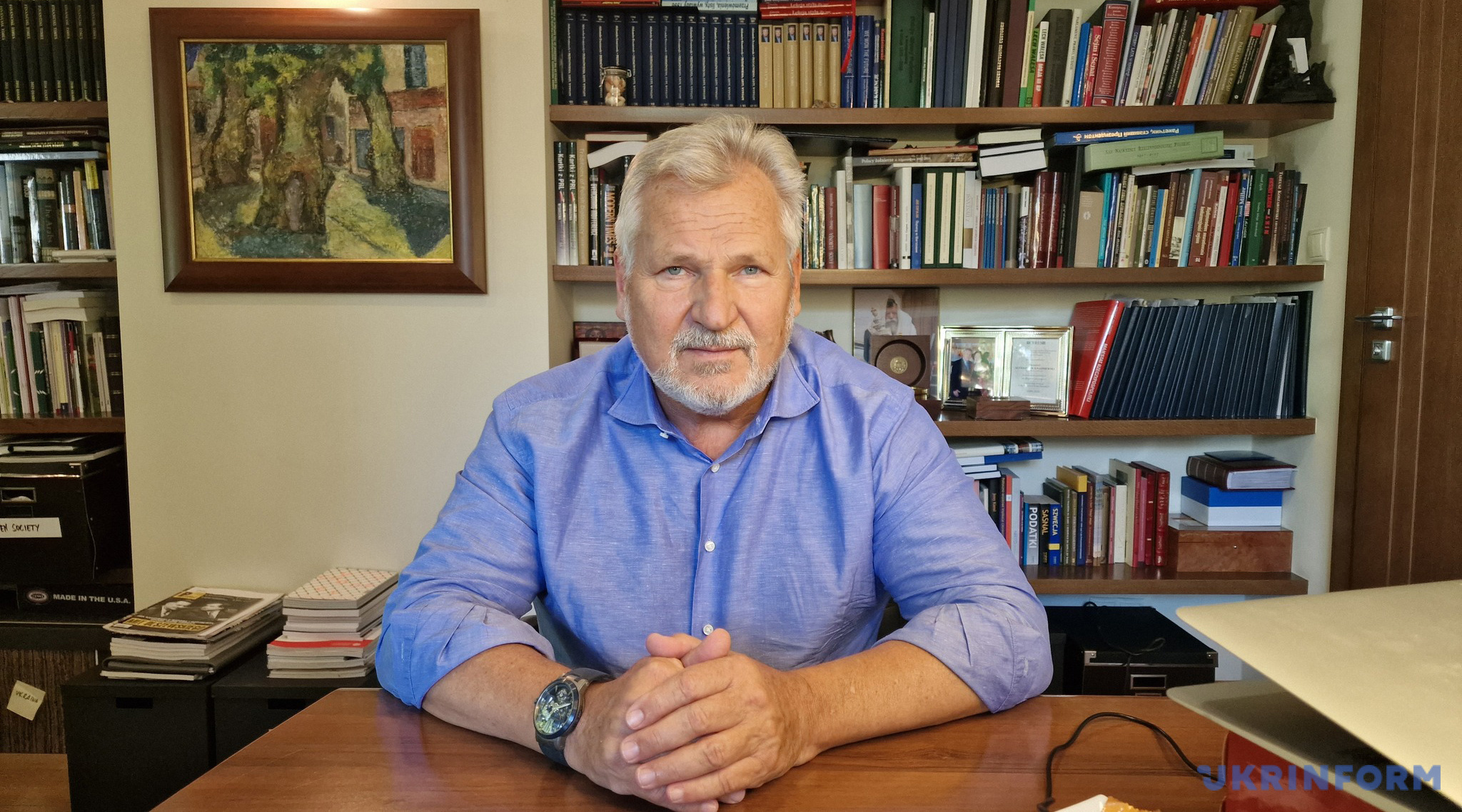
- There are such politicians in Europe, too.
- There are political forces that play this card. But this is a very dangerous political cynicism. There is another thing that also needs to be understood. It has no political connotation, but is a fact: it is the so-called “fatigue from Ukraine”. People have a certain mental resilience. The avalanche of bad news drives many into a stupor, they no longer want to hear about the bombings, the victims. Added to this is the presence of a million Ukrainians living in Poland. I believe that we do not talk enough about how much Ukrainians in Poland are needed for the country's economy, and what will happen if they leave, because 80% of them are economically active, that is, they work legally, pay taxes, have Social Security.
Certainly, there are also adverse aspects, but these are marginal.
- Do you mean the cases of Ukrainian citizens being recruited by Russian special services for acts of sabotage in Poland and other European countries?
- Yes, I do. Such situations have a psychological impact of their own. Well, there are smart people for this, those who can talk about it, explain it for preventing a general state of fatigue. Because, as I have already said, such fatigue, stupor, even callousness is a completely natural phenomenon. I do not blame anyone for the fact that, as soon as the talk is about Ukraine, the reaction is sometimes like this: "Oh, so much has already been said about this."
In Ukraine, everything is certainly perceived differently. There are anxieties, people are commenting specifically on war issues. But from afar, everything looks different. And such fatigue exists in Poland, let alone Portugal or Spain, for whom the war is something distant. But it exists there too. Therefore, reasonable forces should be very active in supporting Ukraine. But there is a phenomenon of political cynicism, where the anti-Ukrainian card is played out, and there is a phenomenon such as fatigue from Ukraine, which is a quite natural and understandable one.
IF I WERE NAWROCKI, I WOULD VISIT KYIV
- Mr. President, what’s your assessment of the policy towards Ukraine being pursued by the new Polish President, Karol Nawrocki? Volodymyr Zelensky has invited him to visit Kyiv, but Nawrocki replied he was waiting for the Ukrainian leader in Warsaw. Who should go to whom first?
- If I were Nawrocki, I would go to Kyiv. Meanwhile, Zelensky's international trips all pass through Poland, and nothing bad will happen if he visits Warsaw as well. The arguing about this issue makes no sense.
- President Nawrocki said he was not going to endorse an extension of social support for Ukrainian refugees from the Russian war of aggression into next year.
- This position of the President of Poland regarding Ukraine will hopefully evolve. It is not going to be a very fast process, but this will happen. In particular, some progress has been made on the issue of the exhumation [of Polish victims of the Volyn tragedy].
We must resolve this issue, because this can always be an axis of unnecessary dispute in the future. The year 2026 will be special year in that there will be no elections in Poland, there is no need to conduct election campaigns. On the other hand, there will probably be some kind of truce in this war, and then we will have to use a lot of political tools to move from a truce to some kind of truly lasting peace for many years to come. Nawrocki and members of his entourage maintain close contacts with the Americans, and there is a certain room for action here - to influence Trump and people who surround him, to explain who we are dealing with, who Putin is and how much we need to support a sovereign Ukraine.
I have always told every Ukrainian president: the biggest mistake resulting from these historical disputes would be to leave Polish-Ukrainian relations at the mercy of extremists or nationalists on both sides.
This would be the worst decision. This policy should be led by intelligent people who understand history, do not forget it, but who can look into the future and build the best possible relations between Poland and Ukraine.
A good foundation for this is the enormous spontaneous assistance that ordinary Poles, Polish society, provided to Ukrainians at the beginning of the all-out war. This is a capital, and it should be in the foundation of our relations for the future.
POLES SHOULD BE THE LAST ONES TO SAY "NO" TO UKRAINE IN NATO
- Recent opinion polls have revealed a worrying trend showing that the majority of Poles are beginning to be critical about Ukraine's future membership in NATO and the EU.
- This cannot be ignored. Even if all NATO members were opposing Ukraine's NATO membership, Poland and the Baltic countries should be the last four countries to firmly declare that Ukraine should be there. Even if this were completely unrealistic - and now the Americans are opposing it - it is in our best interests. Firstly, Ukraine distances us from Russia. Secondly, it has a battle-tested, experienced army. And thirdly, Kyiv already has access to NATO information and secrets, and the Ukrainian military are training alongside NATO allies. The Poles should be the last to say "no" to Ukraine in NATO.
When it comes to the EU, the problem is more complicated, because Ukraine is a competitor for Poland in many aspects, particularly in agriculture, transport services, etc. And I understand the concerns of those groups who are saying: "We get money from the EU, and now Ukraine will get it, and we don't." It is difficult.
Ukraine’s agricultural sector has advantages over European agriculture, in particular due to its black soil. But this does not mean that Ukrainians should grow less of something. In a world where many people are starving and the population is slowly approaching 10 billion, there are regions where Ukrainian grain, oil, vegetables, fruits are required. So we must do everything in our power to ensure that Ukrainian produce can be distributed to markets that need it. For this to be the case, we need a safe Black Sea, appropriate transport infrastructure, refrigeration equipment, etc. The EU can help with this.
Will it be necessary to impose quotas on Ukrainian exports to European markets? This will be necessary, indeed, because no European country will agree to cheaper Ukrainian products dominating its market. But Poland has the relevant experience, because it was also once feared as an agricultural power in Europe. But both Europeans and Poles survived this period normally. In the case of Ukraine, it is a matter of right expert choices based on the EU’s significant financial capabilities. We need to talk about this and eliminate the fears that people have.
Yuriy Banakhevych, Warsaw
Photo via Author