
The events of 2014 and Russia’s full-scale invasion of Ukraine in 2022 became a major test for the international security system created after the Second World War. Deterrence mechanisms did not work, and the UN Security Council’s activity was blocked due to the veto power held by a member of the Council and, at the same time, the aggressor state - Russia.
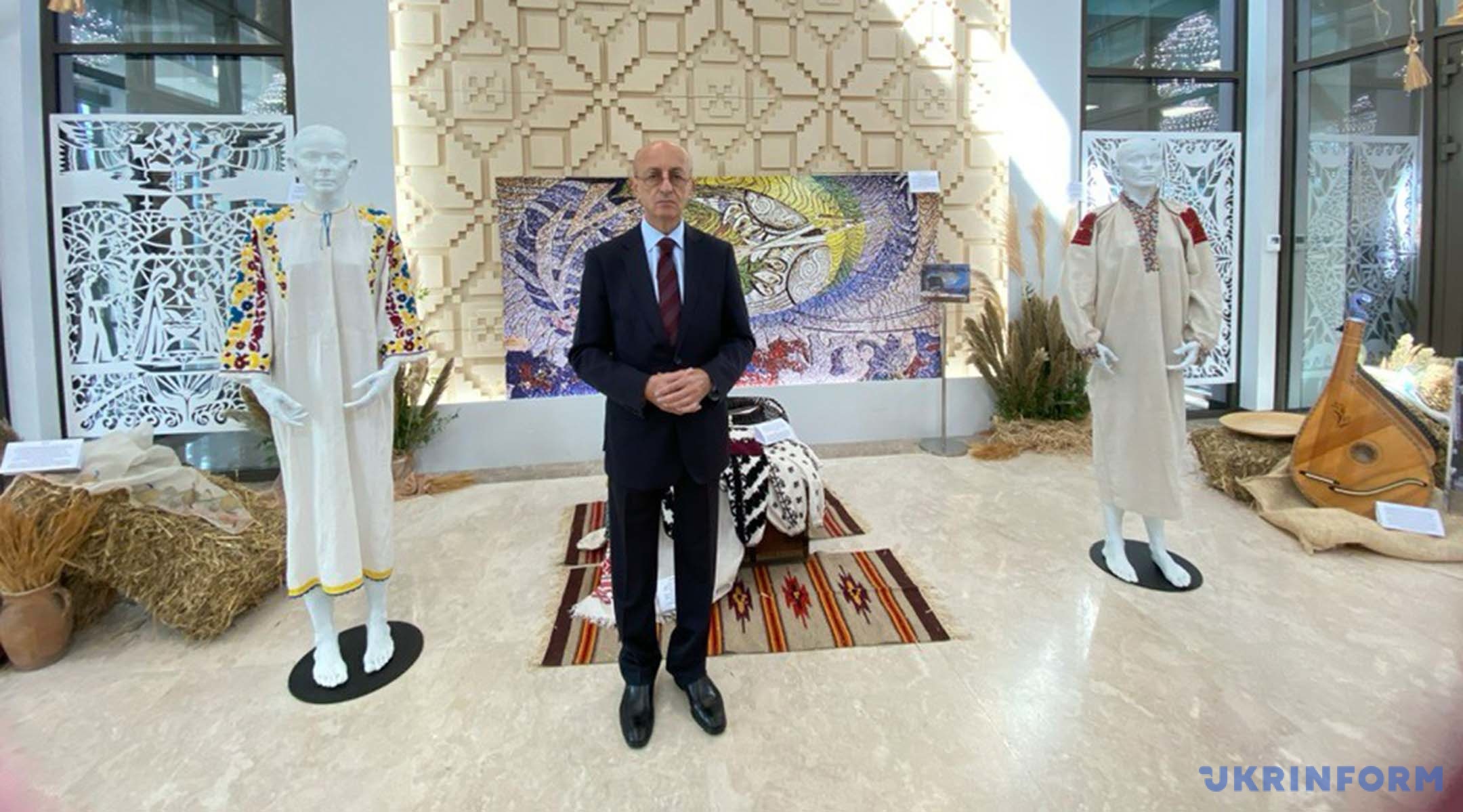
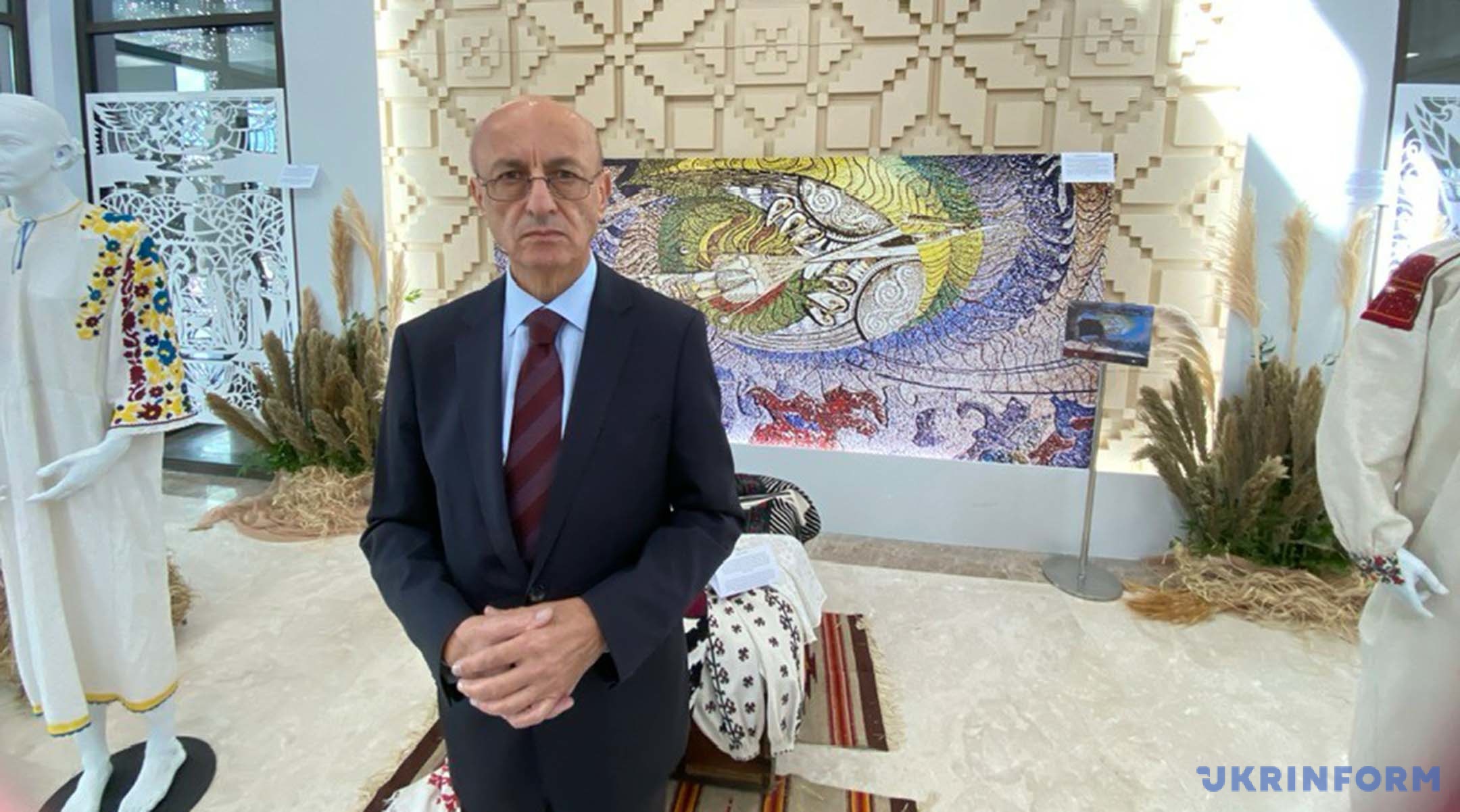
Former Ambassador Extraordinary and Plenipotentiary of Turkey to Ukraine (2005–2009) and current Vice-Chair of the UN Committee Against Torture, Erdoğan İşcan, spoke in an interview with Ukrinform about how the international system has changed since the start of Russia's aggression, trends in the formation of a new balance of power, prospects for reforming the UN Security Council, and practical UN mechanisms for countering and documenting Russia's war crimes in Ukraine.
RELATIONS BETWEEN UKRAINE AND TÜRKİYE HAVE ALWAYS BEEN BASED ON RESPECT FOR MUTUAL INTERESTS
- Mr Ambassador, you served as Türkiye’s Ambassador to Ukraine from 2005 to 2009. That was a period of significant change for Ukraine following the Orange Revolution. Which events or meetings from that time left the strongest impression on you? And what, in your opinion, best characterized Ukrainians during those years?
- Upon assuming my position in Kyiv, I came to realise that moving forward towards the common values and norms developed by the United Nations and the Council of Europe was a shared ideal for the majority of the Ukrainian people. That was very promising.
Certainly, there were difficulties to overcome. It was less than two decades since Ukraine had become independent. Domestic political stability had yet to be enhanced. Lack of consensus on all fundamental political aspirations between western and eastern regions of the country was a dividing issue. Policy, legislation and practice in compliance with democratic security standards enshrined in international documents could help scale down tensions and provide avenues for dialogue and compromise. Corruption was a main obstacle that was undermining reforms. Progress was needed to ensure the rule of law as well as effective functioning of the independent judiciary.
But I observed that the political will was there to address all those concerns. It would be a matter of time to attain a satisfactory level of democratic security.
What impressed me most was the remarkable dynamism and commitment of civil society. I was also impressed by the outstanding quality of academic life in Ukraine. I enjoyed every visit to many universities throughout the country. The enthusiasm of the students was encouraging. I regarded them as the assurances of democracy and prosperity of Ukraine.
- During your tenure as Ambassador of Türkiye to Ukraine, what do you consider your greatest achievement?
- We have quite a long history of interacting. Throughout history, despite temporary ups and downs, relations between the two countries have always been based on respect for mutual interests. As neighbours sharing a fragile region, their cooperation was destined to be of strategic nature. Against this background, I gave priority to reinforcing and enlarging the dialogue channels to enhance the ground for improved partnership. Bilateral consultations were upgraded both at political and technical levels, involving civilian and military components of both governments. It was crucial to provide the required support to ensure Ukraine’s active involvement in projects related to security and cooperation in the Black Sea region.
Let me also mention a memorable occasion. I was honoured to have been involved in the organization of the historic visit by His All Holiness Patriarch Bartholomew to Kyiv in July 2008. The luncheon I had the privilege to host was attended the then Minister of Foreign Affairs of Ukraine, Head of the President’s Office and other senior representatives.
WE WITNESS THE RISE OF NEW GLOBAL ACTORS
- Back in April 2021, in your article for T24, you wrote that the confrontation between Russia and Ukraine was a “stress test” for the international system, which was undergoing a new restructuring of the balance of power — and that it could evolve into a global security crisis. That your prediction unfortunately came true. At the time, did you consider the possibility of a full-scale war? Could it have been prevented, and if so, how?
- The international security architecture that was devised in the aftermath of the Second World War was based on a delicate balance between the two super powers. The Charter of the United Nations enshrined the fundamental principle of the rule of international law. The system has endured several “stress tests”, including the end of the Cold War, the horrific terrorist attack on 11 September 2011 and the following military operations. At present, the system is also coping with the newly emerging challenges, including, among others, climate crisis, food security, question of migrants and refugees, and rising terrorism.
In my opinion, the global security architecture is undergoing a process of comprehensive transformation. The balance of power is evolving. The notion of the rule of international law is eroding. We witness the rise of new global actors. The multipolar system and the new balance of power seem to be in the making.
Under such circumstances, strategic objectives must take into account the requirements of “realpolitik” and tactical moves must be launched accordingly.
In the wake of the annexation of Crimea, I was optimistic that steps would be taken to pre-empt a full-scale war. I did not rule out that option as the worst-case scenario. In my articles prior to February 2022, I tried to voice such concern, hoping that it would never be the case.
I think the war could have been prevented by pursuing alternative postures at two layers. Ukraine as well as its Western allies should have foreseen the potential act of aggression and adopted policies to eliminate such probability. They should have adopted a realistic course of action and employed creative diplomacy tools to deter the aggressor. A number of questions with respect to positions that were pursued during that period continue to remain unanswered.
It is unquestionable that the aggression against Ukraine is a flagrant violation of international law. It constitutes a brutal attack on the fundamental principle that is explicitly enshrined in article 2(4) of the United Nations Charter. Refraining from the threat or use of force against territorial integrity or political independence has been a core obligation for global peace and security.
As I underlined earlier, “realpolitik” needs to be given due consideration in strategic thinking and diplomacy should be given the opportunity to design creative tools to resolve conflicts.
- Even before the full-scale war, you actively challenged stereotypes about the “similarity” of Ukrainian and Russian languages and wrote about the historical and social roots of their conflict. Such stereotypes remain relatively widespread in Turkish society, although awareness has grown considerably since 2022. In your opinion, what tools or approaches would be most effective in promoting truthful information about Ukraine — its history, language, and culture — among Turkish audiences?
- Regretfully, stereotypes are quite common in many societies. I am confident that the competent Ukrainian diplomacy finds effective methods to rectify the existing prejudices. In this context, I am happy to note that an overwhelming majority of the Turkish population has friendly sentiments towards Ukraine and its people. But, it is a fact that similar sentiments are also displayed towards other neighbouring peoples. The only general observation I would share is that, while positive public diplomacy is given priority, negative public diplomacy should be avoided to the extent possible.
- You continue to closely follow developments in Ukraine and have published numerous articles analyzing the war’s impact on the international legal order. What changes do you see in Ukraine and among Ukrainians overall, and particularly since 2022?
- Ukraine and its amazing people are going through tough times. Millions have been forcibly displaced or left homeless. Many continue to suffer devastating effects of the cruel war. I wish we could reverse the time and go back to status quo ante. At this stage, it is my sincere belief that priority should be to end the military confrontation at once and resume diplomacy aimed at reaching a resolution that will be to the satisfaction of the Ukrainian people. I am aware that it will be a long and tough process. Also, possible trends in the evolution of the new balance of power in the context of transformation of the global security architecture will have a guiding impact on the future of these negotiations.
– Given your extensive diplomatic experience, how did you envision Ukraine ten or twenty years into the future back then? How accurate do you think your predictions turned out to be today?
- A decade ago, I do recall that many analysts had considered the possible scenario for aggression. I had been aware of such eventuality. But, I had not predicted that a full-scale war would be launched. I had hoped that the Minsk Agreements would be a way out. Obviously, my wishful predictions have not proven accurate.
THE STRONGER SOLIDARITY AMONG GLOBAL SOUTH STATES - THE HIGHER THE CHANCE TO REALIZE THE SECURITY COUNCIL REFORM
- Your Exellency, you have written extensively about the profoundly negative impact of Russia’s war against Ukraine on the global security order. In your article “Global Outlook Through the UN Prism: The Cases of Afghanistan and Syria”, you emphasized the need to reform the global security architecture and the international order. It is difficult to imagine such reform taking place voluntarily, with the consent of all states. In practical terms, how could this reform process be initiated and successfully implemented?
- I regret to observe that the United Nations is not treated objectively and fairly. It is the indispensable universal platform where all States have a voice. It was created to execute the decisions to be made by Member States. The efficiency of the United Nations relies on the decisions as well as the resources to be provided by Member States. Usually, the public is inclined to talk about the so-called failures. The United Nations fails to execute if there is no decision made by Member States, or if the requisite funding is not made available.
In fact, the achievements of the United Nation are huge. Its wide-ranging contributions cover many areas, including human rights, humanitarian assistance, refugees, development, health, labour rights, climate crisis, counter-terrorism in addition to preventing and resolving conflicts.
On the other hand, bearing in mind that the United Nations was created in the 1940s, I agree that it needs a comprehensive reform action in order to align its structure and functions with the current circumstances. There is an ongoing reform process for the last three decades. But, unsurprisingly, substantive progress has not been achieved. Nonetheless, certain groups of States formed alliances based on agreed road maps on how to proceed and conclude the reform process. That gives us certain degree of optimism. If the majority of Member States keep consolidating their solidarity based on common approaches, the resilience of the five permanent members of the Security Council may be overcome.
- The President of Türkiye often reiterates that “The world is bigger than five.” Are there any existing UN mechanisms or possible pathways to expand the number of temporary and permanent members of the UN Security Council?
- Amending the structure as well as the rules of procedure of the Security Council is the crux of reforming the United Nations to make it more representative and balanced. A number of alternative proposals have been developed by various groups of States. Nevertheless, this necessitates amending the United Nations Charter which requires approval of all the five permanent members of the Security Council. But, there is no ground for pessimism. The stronger the solidarity develops among the States of the so-called Global South, the higher the chance to realize the reform of the Security Council.
In my opinion, expanding the permanent membership is neither realistic, nor does it serve the longer term efficiency and fairness. The relatively more realistic proposal in this regard might be to expand the temporary members of the Security Council while restricting the veto powers of the permanent members. In order to render the functioning effective, expansion should be limited. Also, to ensure continuity, temporary members should be given the chance for re-election.
- The aggressor state, Russia, is a permanent member of the Security Council and continues to block all resolutions, ignoring the UN’s decisions. Do you believe this “paralysis” of the Security Council can be overcome?
- At this stage, unless a meaningful United Nations reform is realized, I see no way out, at least procedurally. Again, if diplomacy is given chance, and if progress is achieved towards a peaceful resolution of the conflict, then all five permanent members of the Security Council may be convinced to be on board for consensus.
FREEDOM FROM TORTURE AND ILL-TREATMENT IS A NON-DEROGABLE RIGHT THAT MUST BE RESPECTED UNDER ALL CIRCUMSTANCES
- Mr. İşcan, you currently serve as the Vice-Chair of the UN Committee Against Torture (UNCAT). Unfortunately, since Russia’s aggression in 2014 - and even more so after the full-scale invasion in 2022 - Ukraine has faced numerous cases of torture, inhumane treatment, and abuse. What actions has the Committee taken, or can it take, to document and legally assess the systematic acts of torture committed by Russian forces against Ukrainian prisoners of war and civilians?
- Human rights is one of the three pillars of the United Nations system, together with peace and security as well as sustainable development. International human rights law is regarded as the foundation of freedom, justice and peace in the world, providing the ground for achieving sustainable development goals.
Pursuant to this understanding, States have created the international human rights instruments. The Convention Against Torture is one of the ten core human rights conventions. All core conventions have treaty bodies to monitor implementation by States Parties of obligations under the respective conventions.
At this jıncture, I think it is worth noting that the prohibition of torture is a jus cogens norm of international law. Freedom from torture and ill-treatment is a non-derogable right that must be respected under all circumstances, including in times of international and non-international armed conflict.
The Committee Against Torture is the monitoring body of the Convention Against Torture. It is composed of ten independent and impartial experts. Its mandate is defined in the Convention. It performs three main functions.
First, the Committee periodically reviews compliance with obligations under the Convention (article 19 of the Convention). During its dialogue with State in question, while noting the progress, it raises recommendations with a view to effective implementation of the Convention obligations. The review procedure is public and documents are available on the Committee’s web page. The last review of Ukraine was held recently in April 2025.
Second, it considers individual complaints (article 22 of the Convention). If violations of Convention obligations are found in respect of those individual complaints, the respondent State is urged to take individual and general measures to remedy those violations and the State’s compliance is followed up. The individual complaints procedure is confidential until the publication of the Committee’s decision.
Third, the Convention authorizes the Committee to initiate confidential inquiry if it receives reliable information that there is systematic practice of torture in the territory of a State (article 20 of the Convention). The inquiry procedure is confidential until its conclusion.
- What mechanisms can UNCAT apply to investigate cases of torture of Ukrainian prisoners of war held in Russian prison, civilians in the territories occupied by Russias? Can the Committee initiate an independent international inspection of the detention conditions of Ukrainians who have been forcibly taken to Russia?
- This issue may be investigated when the Committee reviews the Russian Federation. As I explained earlier, the mandate as described in the Convention does not allow the Committee to initiate investigations unless it receives application to this effect. But the Convention also requires that the respondent State recognizes the competence of the Committee under article 20 by making a declaration while ratifying the Convention. Article 20 provides that if the Committee receives reliable reports that a State may be practising torture systematically, it can ask that State for information and cooperation. After reviewing the facts, the Committee can carry out a confidential investigation, even visit the country, and then share its findings and recommendations with that government.
The Union of Soviet Socialist Republics had not recognized the competence of the Committee against Torture as defined by article 20 of the Convention. On 12 September 2003, Ukraine decided to withdraw the reservation under article 20. Thus Ukraine recognizes the competence of the Committee under article 20 if it is made against Ukraine. The Russian Federation has not withdrawn the reservation, thus the Committee cannot launch inquiry as defined in article 20 in respect of Russia.
- Did Ukraine apply to the committee, providing any data on torture? Or did Ukraine not apply, understanding that it would be fruitless, as Russia refuses recognising of competence of the Committee under article 20?
- Even if there is application against a State which does not recognize its competence under article 20, the Committee cannot start the procedure and cannot disclose any information. The inquiry procedure as defined by article 20 is confidential until the procedure is completed and the conclusions are made public.
- That is, until Russia recognizes the competence of the Committee, there will be no real investigation of crimes against it. And have there been historical precedents in the history of the Committee's work when a party accused of torture and which did not recognize the provisions of article 20 later recognized and allowed an open investigation? What can contribute to this?
- First, becoming party to international conventions, and placing reservations insofar as they are allowed by the convention, is a sovereign right of every State. Others may employ certain leverages via diplomatic or political channels aimed at persuading the State in question, but ultimate decision belongs to that State. Of course, the higher the cost of non-ratifying, the more likely it is to persuade the State to be forthcoming. Russia was reviewed in the past and will appear before the Committee under the periodic review system in due time in accordance with article 19 of the Convention. All aspects of its obligations under the Convention will be reflected in the concluding observations.
Meanwhile, there are various international and regional mechanisms through which States are held to account in respect of compliance with obligations under international law. For example, the inter-governmental Human Rights Council of the United Nations as well as the independent special procedures created by the Human Rights Council may undertake certain initiatives. Besides, the reports of the United Nations Human Rights Monitoring Mission in Ukraine provide substantial input on the human rights situation in the field. There exist other United Nations human rights bodies that can launch independent investigations, provided that respondent States extend cooperation.
The Council of Europe, in addition to the United Nations, is an effective tool in this regard. But, it lost its leverage over the Russian Federation since the decision to end membership of the Russian Federation in March 2022. It could have been an effective tool through its various bodies, including the Committee of Ministers, the Parliamentary Assembly as well as the European Court of Human Rights.
Olga Budnyk, Ankara
Photos provided by the author