
Andrej Babiš's ANO party, a populist political movement, emerged as the clear winner of the Czech parliamentary elections held on October 3–4, 2025. Andrej Babiš, a billionaire businessman, previously served as Prime Minister from 2017 to 2021. The party has been criticized for being "anti-Ukraine". Babiš has expressed skepticism about military aid to Ukraine and has been critical of the EU's role in the conflict. The statements by the former and likely future prime minister give reason to worry about whether the Czech Republic, one of Ukraine's most loyal partners since February 2022, will continue to support us.
Ukrinform talked about this and more with Vasyl Zvarych, the Ambassador Extraordinary and Plenipotentiary of Ukraine to the Czech Republic.
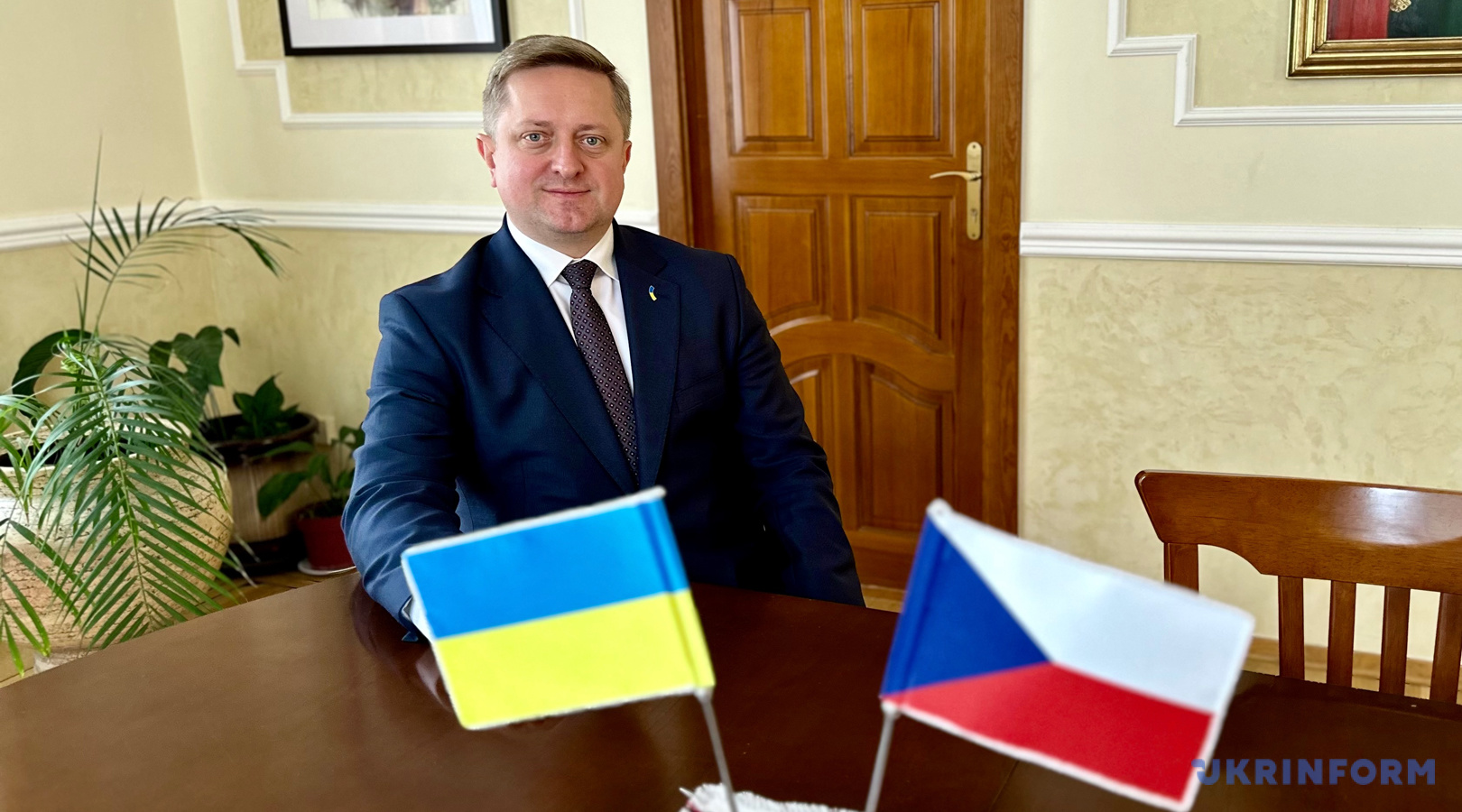
WE ARE INTERESTED IN MUTUALLY BENEFICIAL RELATIONS AND SEE THAT SIMILAR ATTITIDE IS MAINTAINED BY PRAGUE
- Mr. Ambassador, in an interview with Ukrinform a few months ago, you and I touched on the issue of the upcoming, at that time, parliamentary elections in the republic. Then you said that Ukraine is willing and ready for cooperation and partnership with the future government, no matter what it is. The elections have passed, and their results did not come as a big surprise. Although it is still too early to say 100% for sure, the new government will most likely be headed by former Prime Minister Andrej Babis. Some Ukrainian media immediately began to sound "panic" notes. How do you, in Prague, see the situation?
- First of all, I am not a fan of "panic" notes in any situation. You always need to look for opportunities, even in seemingly hopeless situations. And I am sure that common ground will be found. We will maintain a constructive dialogue. After all, this is where the art of diplomacy plays a great role. We need to work, and we are ready to work with the new government that will come following the free democratic elections.
Therefore, I would not dramatize the situation. The Czech Republic remains a democratic state with established European institutions, clear foreign policy priorities, and deep integration into the EU and NATO. Regardless of who exactly will lead the new government, I see no reason to talk about any dramatic changes in policy and much less about the “end of support for Ukraine.”
Czech President Petr Pavel publicly stated that the winner of the elections, the ANO party, is not pro-Russian. And I can confirm this. The party leader, Andrej Babis, is not a pro-Russian politician. Moreover, as the Prime Minister of the Czech Republic, he visited Ukraine in 2019, met three times with the President of Ukraine Volodymyr Zelensky, and a trusting dialogue was established between them. At one time as the head of government, Andrej Babis condemned the Russian occupation of Crimea, and it was he who ultimately expelled a significant number of Russian diplomats from Prague after the 2014 explosions at an ammunition depot in Vrbětice had been found to be a Russian state-sponsored act of sabotage.
The Ukrainian diplomatic corps has already taken the first steps that have shown our openness to cooperation with the winners of the elections in the Czech Republic. The President of Ukraine Volodymyr Zelensky made a phone call to Andrej Babis on October 9, congratulated him on his election victory and invited him to visit Ukraine. In return, the leader of the ANO party reaffirmed his support for Ukraine, expressed his wish that the war would end as soon as possible, and even agreed to pay a visit to Ukraine next year.
This gives me the reason to believe that we will work constructively. We are interested in pragmatic, mutually beneficial relations and we see that a similar understanding is maintained by Prague, including among the politicians who won the parliamentary elections. It’s not without reason that our relations have reached the level of strategic partnership. And I am convinced that we will maintain this strategic choice, and this is not about specific names in the cabinets of ministers in both the Czech Republic and Ukraine. This is the national interest of both countries.
SUPPORT FOR UKRAINE HAS BECOME AN ISSUE OF POLITICS, SECURITY AND ECONOMY
- What gives you grounds to object to those who say “everything is lost”?
- First and foremost, it is the very nature of the Czech statehood and political system. The Czech Republic is a mature democracy with developed institutions, independent media, parliamentary control and a strong civic position of society. Here, foreign policy decisions are not made unilaterally, and even a change of government does not automatically mean a change in the strategic course.
The Czech Republic has already proven that it is capable of being a leader in consolidating international support for Ukraine, which is also an investment in the security of the Czech Republic itself. The Czech Republic is an important subject of European security, for which it is respected in the world. Maintaining this respect and trust will obviously be of interest to the new Czech government.
Secondly, support for Ukraine has in recent years become not only a political issue for the Czech Republic, but also a security and economic issue. The supply of weapons, the production of ammunition, humanitarian aid and educational programs are already part of a systemic interaction that benefits both countries. These projects are supported not only by the government, but also by businesses, regions, and the public. That is, we are currently connected by a multiplicity of strategic projects that were launched on a mutually beneficial basis, and it is unlikely to be in the interests of the next government, which will be largely business-oriented, to terminate them.
And finally, the Ukrainian issue has broad public support. It may have become more pragmatic, but it has not disappeared. Therefore, to say that “everything is lost” is, at the very least, to underestimate the Czech political culture and the ties that we have built between our peoples over the years.
Alongside this, there is the factor of over a million Ukrainians in the Czech Republic, who add more to its budget by paying taxes than they receive from social benefits. And this is an important component of the country’s economic development. For example, last year, Ukrainians paid almost $450 million more to the Czech budget than they received in social benefits. And by this time this year, this difference in favor of the Czech budget has already amounted to more than $350 million. By the end of the year, this figure will clearly exceed last year’s.
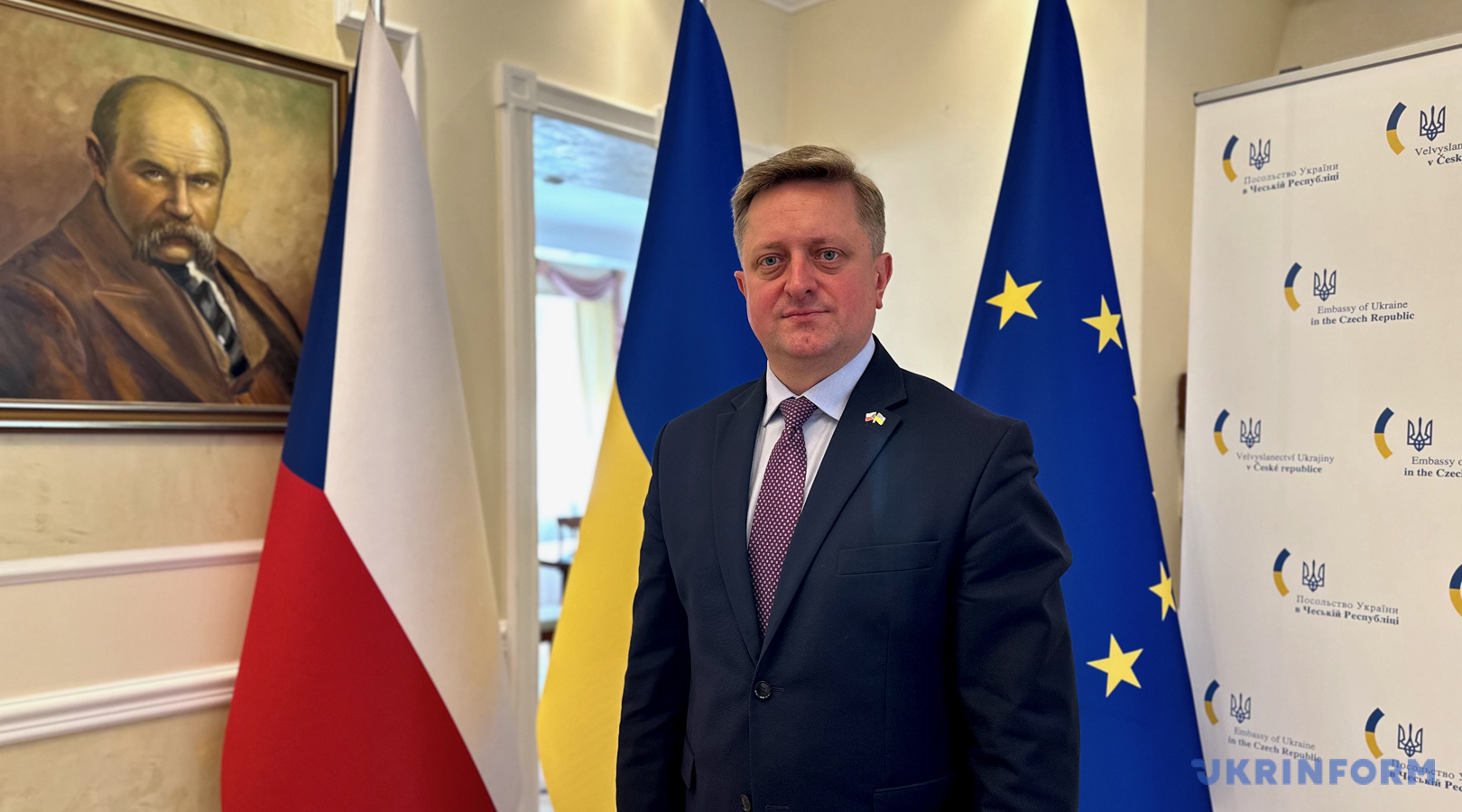
THE CZECH AMMUNITION INITIATIVE IS NOT CHARITY, BUT A CONTRIBUTION TO COMMON SECURITY
- Concerns are frequently expressed that the Czech Republic will abandon its ammunition initiative, which is very helpful to Ukraine. Is there any understanding of whether it will be continued?
- This is indeed one of the most frequent questions we hear, but at the moment there is no reason to talk about this initiative being wrapped up.
Firstly, it has already gone beyond the scope of a purely Czech project as almost twenty countries have now joined it, and the ammunition supply mechanism has actually become an international consortium in which the Czech Republic plays a coordinating role.
Secondly, President Petr Pavel, who is one of the program proponents, has clearly stated that its continuation is in the interests of both the Czech Republic and European security. His position carries weight, and we see that even those political formations that previously criticized some aspects of the initiative are now talking more about “revising the mechanisms” than about refusing assistance as such.
We are working calmly and consistently with all partners, explaining that this initiative is not charity, but a contribution to common security. It creates jobs, provides a workload for Czech factories, strengthens the defense industry. So, here the logic of continuation is quite pragmatic, and we are expecting that this project will live on, even in new political conditions.
- What role can President Petr Pavel, who is actually the main “author” of the initiative, play in this?
- President Pavel’s role is extremely important, and not only because he is the originator and public face of the Czech Ammunition Initiative*. Petr Pavel is a former high-ranking NATO officer, a man with great international reputation, and his position carries weight not only within the Czech Republic, but also in European capitals.
He consistently emphasizes that assistance to Ukraine is a matter of security for all of Europe, including the Czech Republic. The President has the opportunity to influence the formulation of the state's foreign policy, conduct a dialogue with partners, and shape public opinion. And judging by his latest statements, he is determined to continue to support the preservation of this initiative. Of course, the new government wants to have more information about it, about transparency, and so on. This is normal. And no one denies this here, in the Czech Republic. It matters most that that the ammunition deliveries to Ukraine maintain their pace, because the lives of our people and the security of Europe depend on it.
- The production of and co-production of weapons for Ukraine is definitely not charity, it is business. Babis is a businessman. How can this affect his decisions in this regard?
- Undoubtedly, weapons production and collaborative defense projects are primarily about economic contracts, jobs and industrial cooperation, not charity. Andrej Babis is a man with business experience, and he understands this perfectly. He has also repeatedly stated that he is against anyone profiteering from the war in Ukraine. Therefore, we will continue to develop a pragmatic approach and mutually beneficial cooperation with various entities of the defense industry, which is very well developed in the Czech Republic and holds enormous potential. Economic benefit is important for the Czech Republic: loading factories with orders, new jobs, export contracts, technological development. Cooperation with Ukraine can provide this. And it is also important for us: mutually beneficial cooperation, investment solicitation in the Ukrainian defense industry and the national economy, collaborative production and an entry to third markets. Here, I believe, we have shared interests.
What is important is to stay away from politicizing these issues. We must also be aware that Russia will make every effort it can to prevent such close cooperation. We must be vigilant and do whatever it takes to deny Russia and its influence agents a field for activity, including various provocations that could be aimed at aggravating the political atmosphere in relations between our states and peoples.
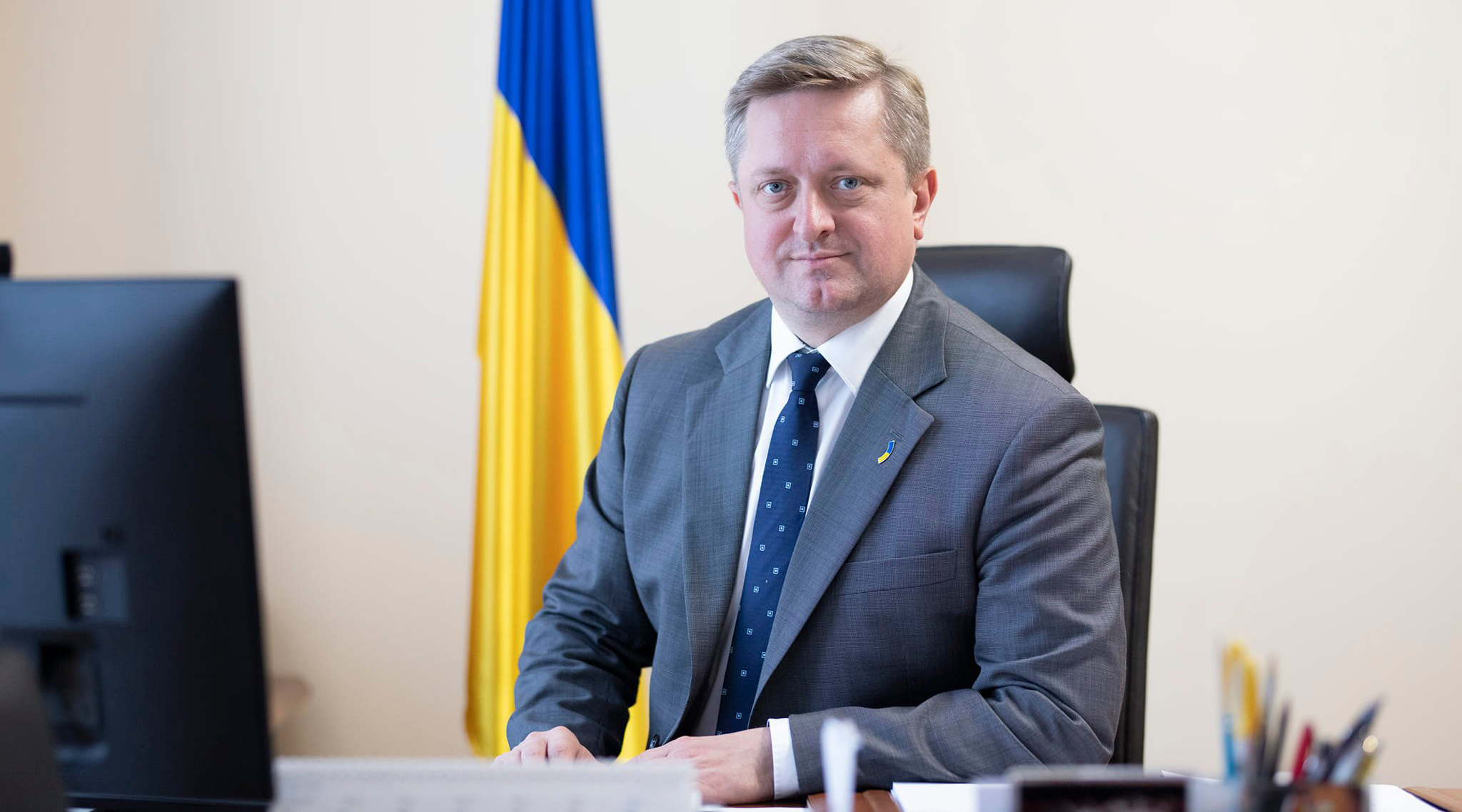
ANY DRASTIC CHANGES WITH RESPECT TO UKRAINIANS IN THE CZECH REPUBLIC ARE NOT TO BE EXPECTED
- Another topic that causes concern is the support for Ukrainian asylum seekers and the general attitude towards the huge Ukrainian diaspora in the Czech Republic. Especially if ANO invites the far-right SPD party**, known for its negative attitude towards refugees in general and Ukrainians in particular, as a partner. What are the prospects in this regard?
- This is indeed a topic that arouses a lot of emotions - both among Ukrainians and among the Czech society. Objectively, even with a possible partnership between ANO and the SPD, one should not expect any drastic or radical steps towards Ukrainians staying in the Czech Republic.
Firstly, the status of temporary protection and the rights of Ukrainian citizens are clearly defined at the EU level.
Secondly, the presence of Ukrainians has already become an important part of the Czech economy - hundreds of thousands of people work, pay taxes, integrate into communities, and this is well understood at both the local and national levels.
And we need to look at the numbers, which speak for themselves. Today, we can state that Ukrainians bring more to the Czech budget than they receive. Ukrainians do not take away jobs, but on the contrary, they nourish the employment market, fill those niches where Czech employers have difficulty finding workers. Ukrainians often work below their qualifications, and therefore do not create any competition on the labor market. We have never heard any complaints or reservations from Czech businesses about the presence of Ukrainians, exepting only praise for the quality, professionalism, motivation and creativity of our people.
Of course, the rhetoric of some political parties that may enter the government coalition may become tougher, there will be discussions about “revising the level of support”, or there may be some political initiatives that will be discriminatory towards Ukrainians. But practical decisions depend not only on the government, they go through the parliament, municipalities, and public organizations that remain sympathetic to Ukrainians.
For our part, as an embassy, we support and will maintain constant contact with Czech ministries, regions and non-governmental entities to ensure stability of support and prevent discriminatory decisions. The Ukrainian community in the Czech Republic is no longer a “temporary factor”, but part of the country’s social and economic reality. And this fact cannot be discarded by any government that wants to be responsible toward its own citizens.
THE CZECH REPUBLIC WILL NOT BLOCK THE START OF EU ACCESSION TALKS WITH UKRAINE
- Andrej Babis has been highly skeptical about the prospects of Ukraine’s membership in the EU. In the European Parliament, his political party has allied with very odious right-wing politicians from other countries. How much can this complicate the process of our European integration at a very critical moment? Will Babis become another head of government who will have to be asked to “go out for coffee” during the vote?
- I am saying that we need to work, not dramatize. There is always a difference between political slogans and real policy. The Czech Republic, a member of the European Union, directly benefits from stability and security on the eastern flank. This is understood by all responsible political forces in the country, whatever their rhetoric may be.
In addition, the process of Ukraine's accession to the EU is a multi-level and long-term procedure in which decisions are made collectively. Much also depends on us, on the level of progress in the pre-accession negotiations on EU membership, which have not yet begun due to opposition from one of the EU member countries.
My confidence is that the Czech Republic will not be the country that will block the start of EU accession talks with Ukraine or the prospect of Ukraine's membership.
Ukraine is ready for this dialogue, we are following the path of reforms and concrete results, not declarations.
So, I don’t think there will be need for “going out for coffee”. We should be ready, on the contrary, for a more substantive, businesslike conversation about how to make Ukraine's integration successful and beneficial for both sides and for all of Europe as a whole.
- The Czech Republic is a member of the Visegrad Four along with Slovakia, Hungary and Poland. At the moment, this alliance is experiencing a significant drift away from supporting Ukraine. Is this format important for us in general or can we ignore it?
- I would not characterize this format from the point of view of it being favorable or unfavorable to Ukraine. It was not created for this, and, obviously, one should not see a threat in it. The Visegrad Four plays its role and is a regional alliance that has its own history, certain traditions. It will continue to remain a platform for dialogue, especially on issues of regional security, infrastructure, energy cooperation and cross-border cooperation. The new Czech government intends to intensify interaction within the Visegrad Four, and we must take this aspect into account in our foreign policy work.
It is in our best interests to maintain dialogue and cooperation both with the Visegrad Four as a whole and at the bilateral level with its members. Even if there are differences in positions, we should use any platform to argue our point of view and seek common ground and promote common interests. Ukraine is open to dialogue with all our Western neighbors and regional formats. Moreover, we ourselves were among those who originated some of them, such as the Lublin Triangle (Ukraine-Poland-Lithuania) or the Ukraine-Romania-Moldova triangle. Such formats have added value. These are important tools, including on the path of Ukraine's European integration and the implementation of joint projects. Therefore, my answer is unequivocal: yes, we should pay attention to this regional format of cooperation.
- Do you hold meetings with Czech politicians during this important post-election period in the Czech Republic?
- Yes, of course. We do not stop working, and this is part of our daily work as diplomats. Even before the elections, I personally maintained contacts with politicians from the Opposition, who won the recent elections. Indeed, this is a non-public side of the work. This is normal for an open and democratic country such as the Czech Republic. The purpose of such meetings is to preserve and advance the Ukrainian-Czech strategic partnership. And I am convinced that it is in the best interests of our countries and two friendly peoples - Ukrainian and Czech, who equally love freedom and share common values - that our partnership only strengthens. Together we will always be stronger!
Olha Tanasiychuk led this conversation
* The Czech Ammunition Initiative is a coordination effort launched by the Czech government in early 2024 to source and deliver large-caliber artillery shells for Ukraine. It pools funding from a coalition of European countries and Canada to procure ammunition from sources outside the EU. The initiative delivered 1.5 million artillery rounds in 2024 and aims to deliver 1.8 million in 2025, according to outgoing Czech Prime Minister Petr Fiala. As of mid-October, the initiative had already arranged for 3.7 million shells to be sent, with 1.3 million of those delivered in 2025.
** Following the election, Babiš began talks with the far-right Freedom and Direct Democracy (SPD) and the right-wing Motorists for Themselves (AUTO). A three-party coalition agreement has reportedly been reached. Should the proposed coalition with SPD and AUTO be formed, it could signal a significant shift in the Czech Republic's foreign policy, potentially aligning it more with Hungary and Slovakia.
*** The reference to "going out for coffee" is a reference to a significant event at an EU summit in December 2023, where German Chancellor Olaf Scholz successfully suggested that Hungarian Prime Minister Viktor Orbán step out of the room for a coffee break, allowing the other 26 EU leaders to vote unanimously to open accession talks with Ukraine. It was a pivotal moment that allowed a critical decision on Ukraine's European future to proceed despite Hungary's prior objections.