
Canadian Senator Stan Kutcher has long been a champion of human rights, democracy, and global health. Recently, he introduced Bill S-210, an Act respecting Ukrainian Heritage Month, which would formally recognize the contributions of Ukrainians to Canada’s history and culture. But Senator Kutcher’s support for Ukraine goes far beyond symbolic recognition. At a time when Russia’s brutal war enters its fourth year, he has spoken out forcefully about the need for Canada to stand with Ukraine - not only through military and economic aid, but also by defending democracy, supporting mental health, and preserving Ukrainian identity.
In his conversation with Ukrinform, Senator Kutcher shares his vision for how Canada can continue to be a steadfast ally for Ukraine, why heritage matters in times of war, and why Ukraine is a global touchstone for democracy.
BY CELEBRATING UKRAINIAN CULTURE, WE STRENGTHEN CANADA AS A WHOLE
- Senator, you recently introduced Bill S-210 , An Act respecting Ukrainian Heritage Month, which passed in record time. What does this legislation mean for Ukrainian Canadians, and how do you see it shaping Canada’s recognition of Ukraine’s role in building this country?
- Let me start by saying that everyone who helped build Canada deserves to feel that their contribution is valued. Ukrainians have been doing this for over a century. This bill acknowledges that reality. It says Ukrainians are here - they’ve been here for generations - they’ve helped make Canada what it is today. It recognizes their rich heritage and vibrant culture, something Ukrainians want to share with all Canadians. In turn, Ukrainians also want to learn about other cultures that make up our country. By recognizing Ukrainian contributions and celebrating their culture, we strengthen Canada as a whole. That’s really the essence of why I brought this forward.
- Many Ukrainians are touched that Canada continues to celebrate Ukrainian heritage, but how can such symbolic acts translate into practical support for Ukraine?
- There’s a direct connection. When an Act respecting Ukrainian Heritage Month came through the Senate, senators came to better understand the importance of supporting Ukraine. They saw that there was a strong Ukrainian diaspora in Canada that expected and deserved that support. These symbolic acts raise awareness. When I highlight Ukrainian community activities - whether concerts, rallies, or cultural events - it helps parliamentarians grasp the depth of Canada’s connection to Ukraine. In my Senate work, I’ve hosted and welcomed delegations from Ukraine, introduced them to my colleagues, and facilitated one-on-one discussions. Every single effort, no matter how small, increases Ukraine’s visibility and strengthens Canadian support.
- This bill passed the Senate unusually quickly. Why was that?
- The bill had been introduced before but was delayed for political reasons. It had already cleared committee, but prorogation and a federal election intervened. When I reintroduced it in the current session, some of those who had previously opposed it were no longer in the Senate, and others had come to appreciate its importance. The result was overwhelming support. It passed unanimously on a voice vote, and I was deeply moved by that. It showed real solidarity with Ukraine.
WE’RE PRESSING TO USE FROZEN RUSSIAN ASSETS TO SUPPORT UKRAINE
- Beyond this bill, what other priorities are you focusing on that might interest Ukrainians?
- One is keeping senators engaged on Ukraine. Recently, Senator Patterson and I brought together a group of senators to discuss the Sky Shield initiative - the idea of creating an air defence system over Ukraine. We’re pushing for Canada to support this effort more actively. We’ve seen that by not closing Ukraine’s skies, Russia has extended drone attacks into NATO and EU countries. So this is no longer just about Ukraine - it’s about protecting Europe as a whole.
Another major issue is the return of children abducted by Russia. Canada has taken a leadership role here, but more needs to be done. I introduced a motion in the Senate condemning Russia’s genocidal actions against Ukrainian children and calling for stronger international efforts to bring them home. I’m also working on veterans’ and military issues, including urging Canada to invest more in the Danish model of military support. I visited Denmark earlier this year to discuss this and was pleased when Canada contributed $175 million - but I believe we can and should do more.
Together with Senator Donna Dasko, we’re also pressing for Canada and its allies to use frozen Russian assets to support Ukraine’s military victory. There’s also an immigration issue: many Ukrainians in Canada under temporary programs want to stay permanently. We’re advocating for the immigration ministry to create new pathways to permanent residency. Finally, I’m also advocating for stronger Canadian government support to improve logistical and operational cooperation between Ukrainian and Canadian businesses, especially following the signing of the updated Canada-Ukraine Free Trade Agreement.
- Canada has been one of Ukraine’s strongest allies since 2014, especially after the full-scale invasion. What more should Canada be doing to ensure Ukraine’s long-term victory and security?
- First, closing the skies - and that must happen in cooperation with allies. Second, greater investment in Ukraine’s self-defence capacity. Ukraine cannot rely on foreign “security guarantees” - those have failed repeatedly. It needs to build its own arms industry, and Canada can help by fostering joint ventures between Canadian and Ukrainian defence manufacturers. Finally, Canada should push for Ukraine to receive the long-range weapons it needs to strike legitimate military targets deep inside Russia. Ukraine has shown remarkable restraint by not attacking civilians, unlike Putin’s regime. Giving Ukraine these tools would change the course of the war.
THERE ARE NO PRO-RUSSIAN VOICES IN THE SENATE
- Some worry about “Ukraine fatigue” in Western countries. How can Canadian politicians help sustain public support for Ukraine?
- That’s a real concern, but there are ways to counter it. A few weeks ago, we held the first-ever Ukrainian Heritage Day in the Canadian Senate. The room was full - senators, MPs, diplomats - and the energy was incredible. Events like this renew enthusiasm and remind everyone why Ukraine matters. It’s also important to encourage Canadians to donate to organizations that support Ukraine. The Ukrainian Canadian Congress deserves special praise for keeping Ukraine top of mind for both parliamentarians and the public - they’ve done outstanding work. On my part, I use every platform available - social media, interviews, public events - to reframe this war as what it truly is: not just Russia’s war on Ukraine, but an assault on democracy itself. Ukraine is fighting for the values that underpin all Western democracies - the rule of law, free speech, individual liberty. Ukraine is fighting for us, too.
- Are there pro-Russian voices in the Senate?
- None that I’ve heard. I monitor this very closely and haven’t encountered any pro-Russian rhetoric or subtle propaganda. In fact, I initiated a Senate study on Russian disinformation and its impact on Canadian civil society. The report - which we expect to finalize soon - will include recommendations on how Canada can better counter Russian influence campaigns.
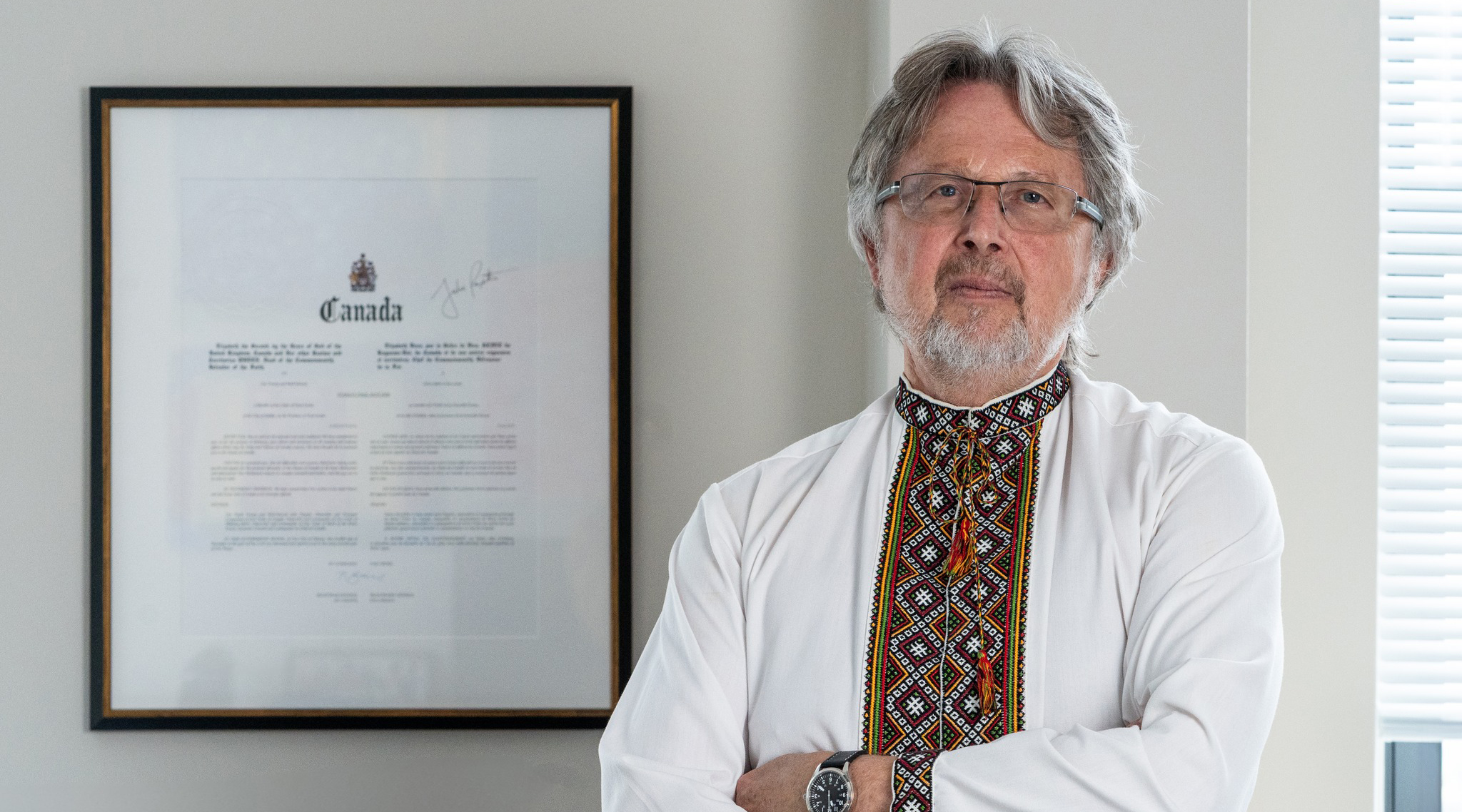
- You’re a well-known advocate for mental health. What lessons from Canada’s experience could help Ukraine cope with the psychological toll of war?
- The key lesson is that you can’t simply copy and paste another country’s mental health model. I’ve worked in more than 30 countries building mental health systems, and one thing I’ve learned is that interventions must fit the local culture. Canada has expertise to share, but we need to collaborate with Ukrainian experts to design programs that truly meet Ukraine’s needs. I’m glad that a Mental Health Collaborating Centre has been established in Ukraine - I’ve met their team and hosted them in Canada. We’re now working together to develop evidence-based programs guided by Ukrainian priorities.
Good intentions aren’t enough; coordination is crucial. Too often after wars or disasters, you see dozens of groups rushing in, sometimes duplicating or even undermining each other’s efforts. That can’t happen here. I’m really hopeful that whatever is done in the field of mental health will be carried out in close collaboration with Ukrainians and based on the needs of the Ukrainian people - not simply by importing a program developed in Canada and applying it in Ukraine.
DEMOCRACY CAN SURVIVE ONLY IF DEFENDED COLLECTIVELY
- Russia’s war on Ukraine is also a war on democracy and freedom. How do you see Canada’s role in defending democratic values globally?
- It’s vital for Canada to deepen its relationships with like-minded nations - politically, economically, and militarily. I’m encouraged to see this happening: closer ties with the EU, the Baltic and Nordic states, Japan, and Mexico. Democratic values can only endure if they’re defended collectively - through strong alliances and shared prosperity. Canada’s recent efforts in this direction are very promising.
- Ukraine is working toward closer integration with NATO and the EU. What role can Canada play in supporting that?
- Canada should continue urging NATO and EU members to welcome Ukraine. If Ukraine were already in NATO, we wouldn’t even be having this conversation. The process of meeting EU accession standards has already strengthened Ukraine’s institutions and governance. But its EU and NATO membership would also benefit those organizations - Ukraine’s experience with modern warfare and its innovation in drone defence, for example, are invaluable. Canada can and should use its diplomatic weight to accelerate Ukraine’s full membership in both.
- Beyond military and economic cooperation, where do you see opportunities for collaboration in areas like education, healthcare, or innovation?
- Those areas will naturally follow from deeper economic and political ties. The new Canada–Ukraine Free Trade Agreement is a great start. I’m especially enthusiastic about health research and AI collaboration. Hospitals like Toronto’s SickKids have already established partnerships with Ukrainian institutions. I’d love to see more professional exchanges - doctors, researchers, academics - working side by side. That will be essential in Ukraine’s reconstruction phase. Professional associations in both countries have a lot to learn from each other - not just what Canada can teach, but what Ukraine can teach us through its resilience and innovation.
WE CAN DISCUSS PEACE ONLY WHEN RUSSIA LOSES
- Since Ukraine doesn’t have an upper house, do you communicate directly with Ukrainian MPs?
- Occasionally, yes. Sometimes I ask them for advice. We’ve also invited Ukrainian MPs to testify before our Senate committee on Russian disinformation, to share their experiences. I meet Ukrainian parliamentarians at international events. These connections are extremely valuable - parliamentarian-to-parliamentarian ties help both sides understand how to work together more effectively.
- How can Ukraine’s victory be achieved?
- As a former history student - I actually dropped out of a PhD in history to study medicine - I can tell you that lasting peace rarely happens without one side winning decisively. Empires don’t stop colonizing until they’re defeated. That’s why a “brokered peace” with Russia won’t work. History shows those agreements collapse almost immediately. The only sustainable path is Ukrainian victory. When Russia loses, then we can talk about peace.
- You’ve been one of the Senate’s most active advocates for Ukraine. What motivates you personally?
- First of all, it’s deeply personal. Both my parents were Ukrainian refugees who came to Canada after World War II. They lost everything, and some of their family members were sent to the Gulag, executed, or starved. I still have family in Ukraine. So part of this comes from heritage and family history. But it’s also about values. I believe in democracy, the rule of law, and human dignity and Ukraine embodies those values at a time when they’re under threat globally. Meeting Ukrainian newcomers and hearing their stories keeps me motivated. Some time ago, I also hired a Ukraine Affairs Advisor who has helped me better understand many of the issues related to Ukraine. When I realized there was no one in the Senate consistently standing up for Ukraine, I decided to fill that role. I’ve since found wonderful allies in other senators, and together we’ve made Ukraine a priority across party lines. As I like to say, you don’t choose the cards you’re dealt, you just learn to play them well. I was given the opportunity to stand up for Ukraine, and that’s exactly what I’m doing.
Maksym Nalyvaiko, Ottawa