
The European Commission set up a new position of Commissioner for Defense and Space, and an experienced Lithuanian politician, former prime minister and former member of the European Parliament Andrius Kubilius was entrusted to take up this office while Europe is facing the gravest security threats since World War 2.
During a visit to Ukraine, Mr Kubilius sat down with Ukrinform to discuss EU’s efforts to ramp up its defenses, lessons being learned from Ukraine, and the new security architecture in Europe that he is currently working on. He separately focused on the SAFE loans for defense production, jamming and spoofing threats, and also space in the context of European defense.
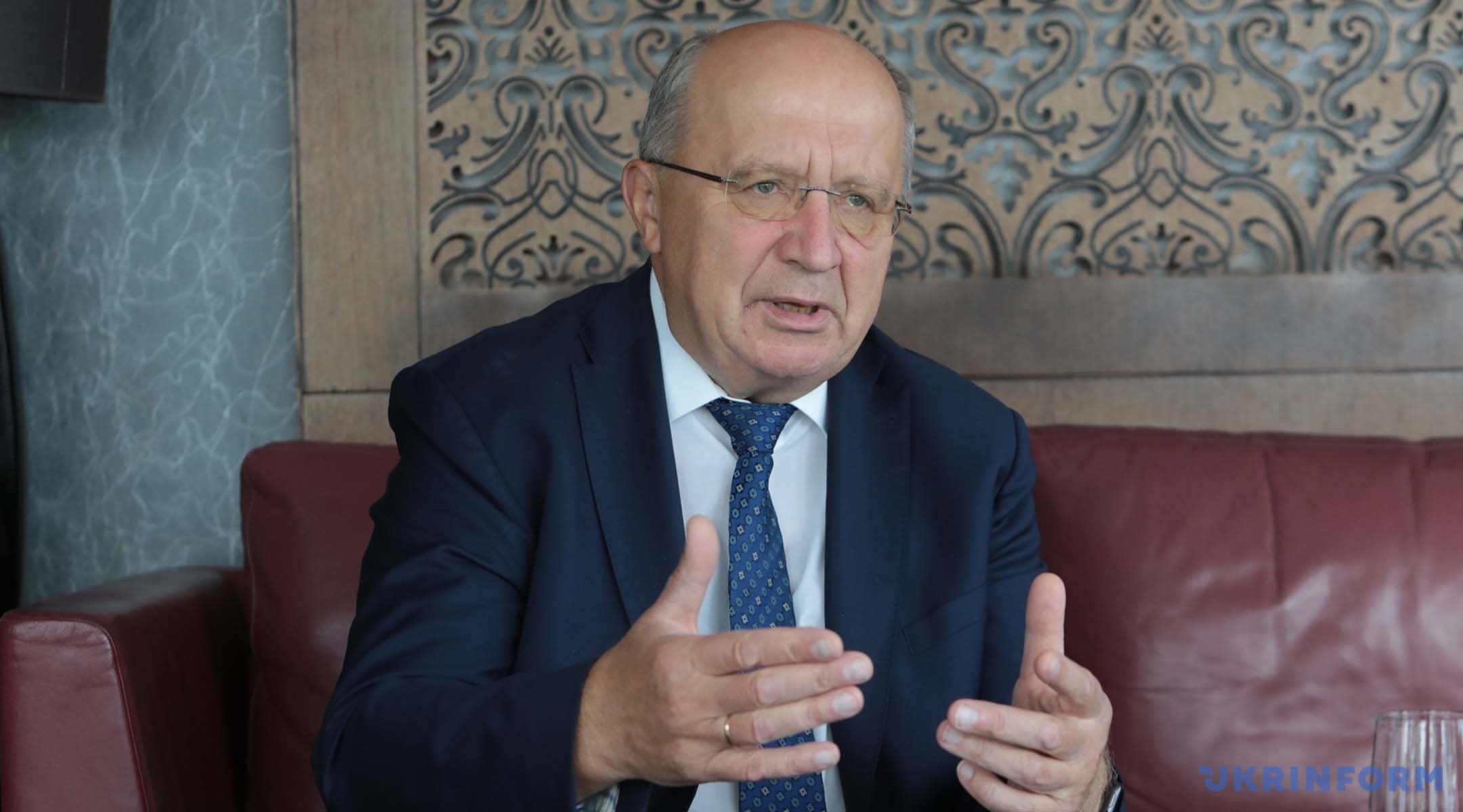
THIRTEEN COUNTRIES WILL USE SAFE LOANS TO SUPPORT UKRAINE
- The Commission positions the SAFE initiative as a success story and we know that EUR 150 billion has been tentatively allocated to member states. Do you have any information on the projects certain member states are already willing to implement together with Ukraine's defense industry?
- The procedure is that before the end of August member states had to notify us how much of the loans they wanted to take, their minimum and maximum requests. And the overall maximum was even bigger than EUR 150 billion, so we stayed almost on the minimum. Nineteen member states notified us of their request and the amount of money they want. And of those, 13 countries want to use SAFE loans to support Ukraine. But we were not asking them at that moment to tell us precisely how much money they will use for Ukraine. Now we’re moving into second stage. We approved how much of those loans will be given to each country as per their request, and now we're asking member states to present at the end of November precise investment plans – to what purposes they are going to use the money, and also those willing to help Ukraine will have to notify us on what projects they will use those loans.
Today, we shall have several very important meetings here in Kyiv with the defense minister, finance minister, and some other officials. Tomorrow we shall be in Lviv with First Vice Prime Minister Fedorov, and Defense Minister Shmyhal will also be there, and we will discuss how Ukraine should work with the member states which notified the Commission that they will use SAFE loans to support Ukraine, that Ukraine would be very proactive in coordinating all the efforts together with those member states on what needs that money has to be spent.
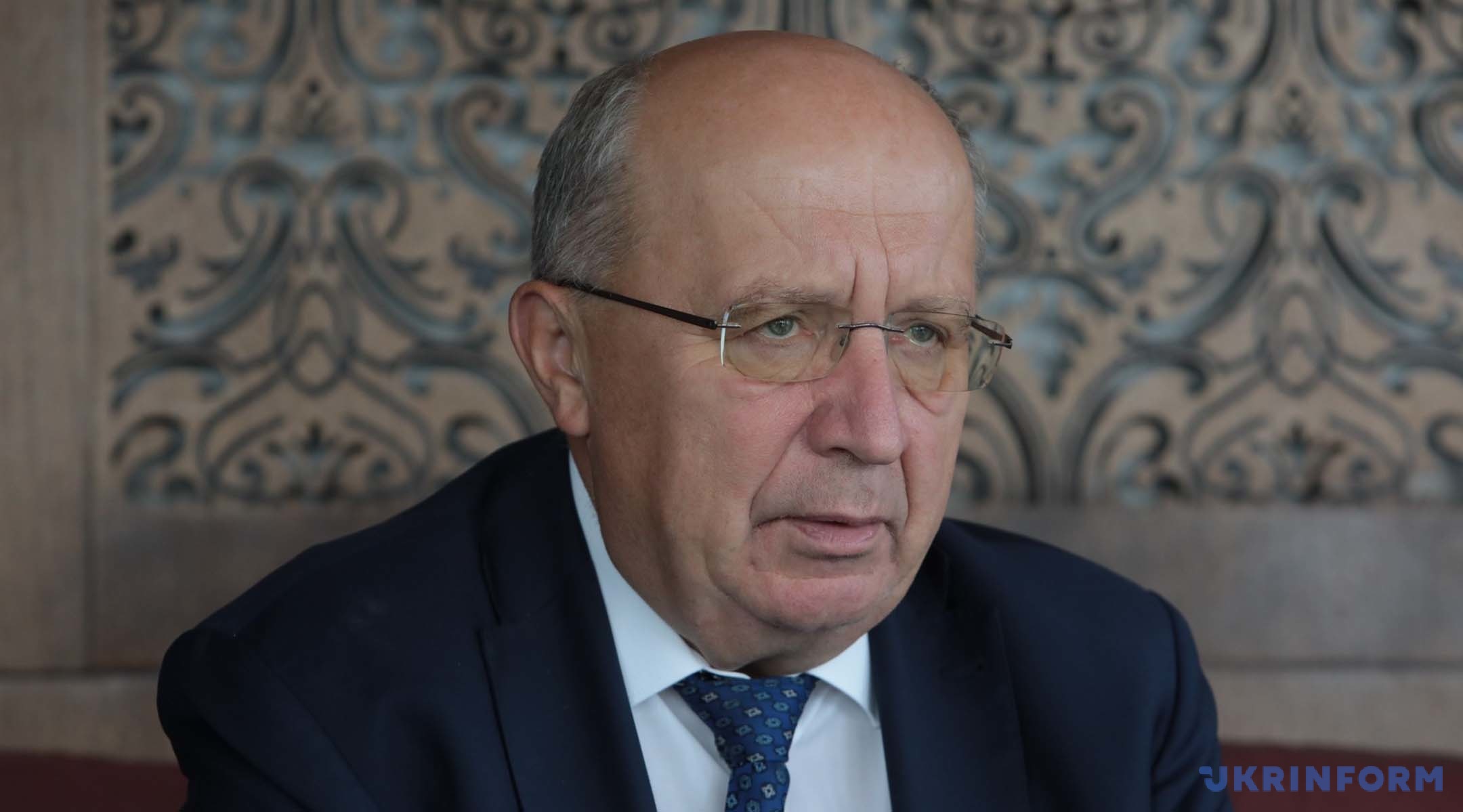
DRONE WALL HAS TO BE BUILT TOGETHER WITH UKRAINE
- Can you please give an update on EU's progress in learning from Ukraine in terms of overcoming bureaucratic barriers and streamlining defense production?
- There are perhaps several stories which we can tell. First of all, definitely, until now, we had been creating opportunities for member states to develop their defense capabilities. Now, we are moving into delivery stage in regards opportunities we are creating.
First of all, it’s financial ones, like SAFE loans, like the National Escape Clause, which allows member states to spend up to 1.5 percent of the GDP on defense and that will be not included into deficit calculation – that's also important. And also, we pushed the so-called Omnibus on simplification in defense where, as an example, I can say that some in some countries to get a permit to build a defense factory can take up to four years. Just a permit. So definitely, in such circumstances where our intelligence services are saying that Russia can be ready to test NATO’s Article 5 in terms of aggression against NATO, four years for permits is too much. I have this joke: should we go and ask Putin to postpone his plans? In our proposals we cut the time needed to get the permit to just two months. So the governments need to take decisions quickly.
But even more important, we are learning a lot about a new warfare doctrine that you are facing in defending from Russian aggression, and about new technologies. And that is why one of the recent very clear demands, of which the Commission President was speaking before and what we were discussing in the so-called frontier member states, when we visited them recently together with President von der Leyen, was what we call the Drone Wall. That’s for those frontier countries, and we need to make that Drone Wall together with Ukraine, and to include Ukraine into that project.
The incident with Russian drones over Poland showed that our capabilities to defend ourselves against possible drone attacks need to be ramped up very, very quickly. This has to be done, and that is why we shall cooperate together with Ukraine in developing that very important project.
HUNGARY SAYS THEY DON’T WANT TO BE INVOLVED IN A WAR BUT STILL TAKE MONEY FOR DEFENSE PRODUCTION
- President von der Leyen’s critics argued that her State of the Union address was too belligerent. Hungary complained that Ukraine was mentioned 35 times. What would you respond to the critics? When President says Europe is in a fight, those critics say that Europe should not be thinking about fighting. What is your take on that?
- What does it even mean? Sure, we want to avoid the war in our territory, but how you can avoid the war if you are not building your defense capabilities? What is important and interesting is that when we're talking about SAFE loans and that EUR 150 billion, that money is being taken not only by the Frontier countries like Baltic States or Poland.
Indeed, Poland took the biggest amount, but Italy, France, and even Hungary took quite a big amount of those loans. What does it mean? Hungary says they don't want to be involved in the war and that's why they are not supporting Ukraine, and so on. But they’re taking quite a big amount of money to develop their defense capabilities – to defend against whom? They're actually thinking the same – to defend against Putin.
So there’s clear understanding that if you want to avoid the war in your territory you need to get ready to defend yourself, and that is a way how you can deter the war. And the Commission President is very clearly speaking and taking very strong leadership on that topic, which allows us to move forward very quickly.
Everybody is quite surprised how fast the decisions are taken on SAFE loans – from the idea, then regulation adopted in a two-months’ time, and now to the money starting to come, especially knowing the usual low speed of such processes. So this is amazing. For Brussels, this is something quite unique.
Her message is very simple. We need to be independent and strong in order to be ready to defend ourselves.

EU HAS TO LEARN FROM UKRAINE’S NEW DEFENSE PROCUREMENT SYSTEM
- You agreed with the opinion that the European defense strategy needs requires a Big Bang approach. What do you mean by that?
- First of all, this all comes from a very clear understanding: when the intelligence services of Germany, Denmark, and the Netherlands, and then their leaders are saying that Putin can be ready to test Article 5 within the next three to four years, it means that we need to be ready before that moment comes. It means that we have three, four or maybe five years. That is why we're speaking about Defense Readiness 2030. In order to achieve that Defense Readiness 2030, we need to understand that the incremental approach, including to the improvement of our industrial capacities, and so on, is not what we need. Really, we need to take what I call a Big Bang approach. It’s about big money, quick decisions, quick development. That is what we need to achieve.
And here, again, we can learn from Ukraine. When I'm looking into your defense industrial numbers that in 2022, when the war started, Ukrainian defense industry was able to annually produce weapons with a value of 1 billion euros, now, you are producing weapons worth EUR 35 billion. It means a 35-fold increase.
In Europe, we don’t need a 35-fold increase, but at least we need to see and to learn how to build those capacities, what we need to deregulate, how we can make quicker decisions. For example, when we're talking about the Drone Wall, we need to learn from Ukraine not only how to produce some particular drones, long range ones, almost like Flamingo because producing a drone is just half of the. Very important is to learn how to create a whole ecosystem around that in order to use those drones most effectively. That is what we need to learn.
And that includes something that remains a big issue for us but the Ukrainians are already doing that – this is how you change your procurement system. That’s when even low-level army units, like platoons, can procure drones directly and in a very speedy way. In Europe, if the government decides to procure drones, it can take two years. So, definitely, in the circumstances that you’re facing as you are defending yourself, that would be totally unacceptable. That is why we, together with your First vice prime minister Mykhailo Fedorov this summer announced the creation of a new platform, Brave Tech EU. “Brave” comes from Brave 1, while “Tech” and “EU” speak for themselves very clearly. And we see that platform benefiting both sides. It will be used by European and Ukrainian startups, small actors in defense industry, in order to come together to develop new projects, to test their arms on the front line and also for Europeans to learn about the ecosystem which you created in Ukraine.
CONCEPT OF EUROPEAN DEFENSE UNION HAS TO INCLUDE UKRAINE
- The latest Eurobarometer poll showed that EU citizens, 68% of them, want the union to play a bigger role in protecting them against crises and security risks. At the same time, the support for Ukraine's accession is not even across member states. Given that it's Ukraine's Army that is now most experienced in modern warfare, what needs to be done to explain to EU citizens that with Ukraine the EU will only be stronger and safer?
- That is what we are trying to do. My message is very simple. If we take into account what our intelligence services are saying – that Russia can test Article 5 within three to five years, which means they will launch aggression against perhaps Frontier member states – we need to understand that the Russians will come with battle-tested army, which is much stronger than it was back in 2022, with capability to use millions of drones. Ukrainians are good with drones but Russians are not bad either. So that’s exactly what we shall face. And I'm not sure that we are on the peak of our form to defend ourselves against such battle-tested army.
But on the democratic side of our European continent, we have another battle-tested army, and this is Ukrainian army. Also, Ukraine has battle-tested defense industry. And not to include that in our defense planning would be a big mistake. That is why, we are preparing capabilities and now we shall deliver what is needed to increase our material defense readiness.
When I say “material” I mean, weapons, drones, and other arms – whatever we need to produce and to procure. But we need to start to speak, and that is what I embracing on different occasions, about institutional defense readiness. Having in mind not only know Russian threat but also the understanding that the Americans perhaps now slowly will start to shift more into the Indo-Pacific to mitigate Chinese military power, we need to look how we shall organize ourselves on the European continent.
That is my task, which is written by the Commission President into my mission letter, to develop and implement the concept of a true European Defense Union, which I see as some kind of new security architecture on the European continent, which would include Ukraine, the United Kingdom, and Norway in order for us to have all the capacities which we get to be as strong as we can get.
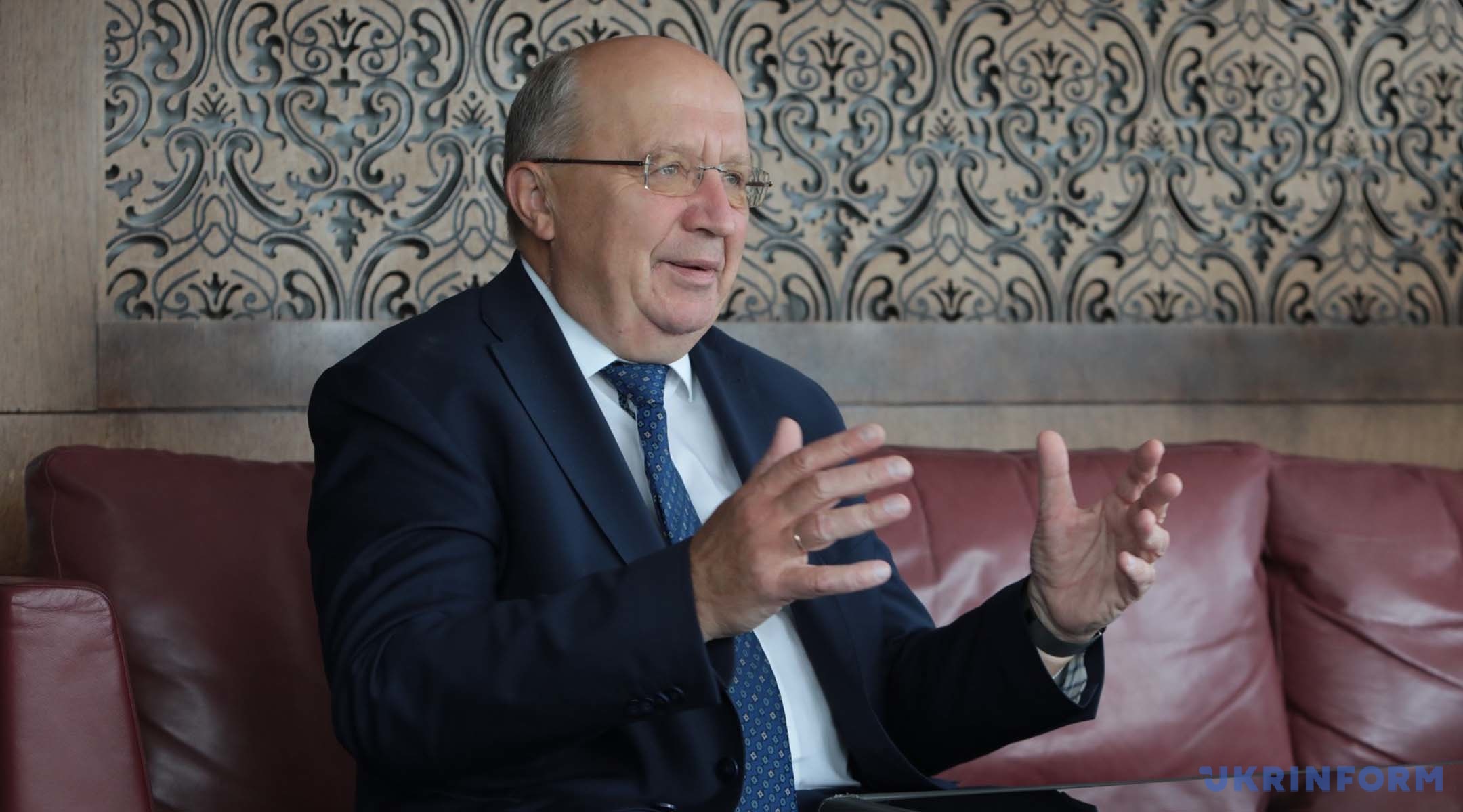
40 PERCENT OF ALL FLIGHTS IN EU EXPERIENCE JAMMING OR SPOOFING INCIDENTS
- The problem of Russia jamming signals is prominent for aviation and maritime industries. I heard that the EU is working, including together with IATA, on a more general plan to address such threats. What is the situation now with this planning and what concrete steps can be done to strengthen use resilience against jamming and spoofing? And also, how does the EU plan to protect its space projects?
- The space is part of my portfolio, and a very important one. Definitely, now to imagine modern defense without space services is impossible. So, on one side, we have space for defense, and on another side, we have defense of space. Those are the two priorities, and we are doing a lot for these space for defense capabilities. Like Earth observation governmental service, which will give us a possibility to have the most precise intelligence data from space. Now, we are building also a secure satellite communication to have a European system in order to not be dependent on Starlink. Our experts are saying that our “Iris Squared” satellite communication will be better than Starlink but it will take time. We will be gradually introducing some services, but the final date for the full service is 2030.
Now, on jamming and spoofing. Definitely, this is a big issue. I was speaking last week in European Parliament about it. You might remember the story when we were flying together with Commission president to Bulgaria, and luckily only after landing were we told that there was a problem not to make us too nervous.
The data on jamming and spoofing incidents is quite impressive. Our services are saying that now, in Europe, 40 percent of all the flights experience some sort of signal jamming. In Lithuania, for example, in August, 1,000 jamming incidents involving planes were registered. What we want is to understand what the dangers are and from the other side, we we are also taking steps forward in order to strengthen the security of our systems.
First of all, very soon, we will have the Galileo Public Regulated Service, which means that governmental entities will get access to encrypted signals, which will be much more secure.
Then we are moving ahead with our space capabilities to detect jamming and spoofing carriers, and to warn pilots, drivers, or captains of the ships. And also we’re working on something that will take longer to implement, which is called LEO PNT – additional Low Earth Orbit satellites to existing Galileo satellites. This will make the Galileo system much more secure against jamming or spoofing. If I am correct, the system will start to appear in 2027-2028.
ITALY HAS AMBITIOUS IDEAS ON FIGHTING DISINFORMATION
- Are you planning to integrate fighting disinformation into the European defense strategy?
- Yes, that is a very, very important point. There are some instruments, and some attempts that we’re making with tackling disinformation and all the hybrid threats, but definitely we need to do much more, these efforts have to be stronger and much more effective.
And I see certain ideas that are starting to come from some member states. For example, I was discussing recently some of those ideas with the Italian defense minister. And he has quite quite ambitious ideas on what needs to be done. So we shall see how we can develop that to make it practical, to be able to react to Russian hybrid threats in such a way that we stop only saying that “we are concerned” and then “very deeply concerned” but in such a way that Russia would also start to feel the pain.
Ievgen Matiushenko
Photo credit: Hennadiy Minchenko