Physicists and Clergy: Why the World Must Hold the Russian Orthodox Church Accountable
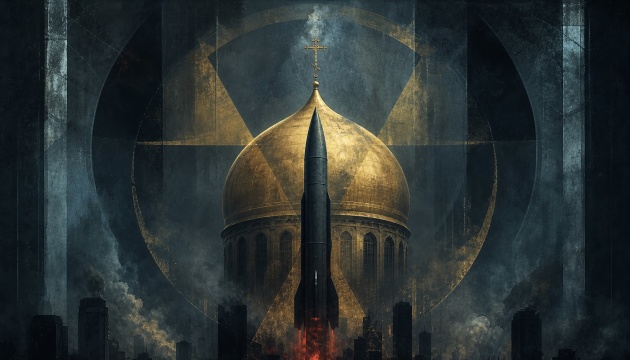
The European Union's latest sanctions package against Russia was the first to be adopted since Hungary's elections. Although Viktor Orbán is no longer in office, the package proved considerably less stringent than originally planned. Among its most notable omissions was Russian Orthodox Church Patriarch Kirill (Vladimir Gundyayev), who once again escaped sanctions.
The EU first attempted to sanction Kirill in 2022, but the effort was blocked by Orbán. This time, however, the role once played by the former Hungarian prime minister was assumed by Bulgarian President Rumen Radev, who threatened to veto the entire package if sanctions against Kirill were included. His argument was that politics should not interfere with religion.
The Russian Orthodox Church's August Nuclear Chronicle
Yet on the very first day of August, Kirill enthusiastically described the creation of the Soviet atomic bomb as "an act of God's grace." Once again, he stressed that the bomb had been developed in Sarov—formerly Arzamas-16, one of the principal centers of the Soviet nuclear project—on the very site where Saint Seraphim of Sarov had once prayed.
According to Gundyayev, the atomic bomb saved the Soviet Union "from catastrophic destruction that could have left neither the country nor its people." He claimed this had happened, in part, "through the prayers of our venerable and God-bearing Father Seraphim of Sarov, whose holiness helped ensure that our people and our nation continue to exist."
This was hardly the first time Kirill had advanced such claims. In 2023, he likewise argued that Soviet scientists had developed the atomic bomb "according to God's providence." A year later, he urged Russians not to fear either nuclear weapons or even the prospect of the end of the world.
Also on August 1, pro-Kremlin "Orthodox oligarch" Konstantin Malofeyev published an image depicting a bearded man—presumably Seraphim of Sarov—engulfed in flames.
"God's providence for Russia, the Third Rome, is truly wondrous. It is no coincidence that Seraphim of Sarov, whose name in Hebrew means 'fiery' or 'burning,' became the Heavenly Patron of Russia's nuclear shield, together with the Great Martyr Barbara, the patron saint of our Strategic Missile Forces—forces so vital to securing Russia's victory as quickly as possible."
That was the caption accompanying Malofeyev's post.
Meanwhile, Russia's nuclear rhetoric has steadily escalated. What began as threats to use nuclear weapons against Ukraine, the United States, and Europe has evolved into proposals to deploy them not only in Russia's so-called "new regions"—such as Robotyne in Ukraine's Zaporizhzhia region—but even within Russia's internationally recognized territory, including Siberia.
All of this has unfolded with the tacit blessing of the Russian Orthodox Church, which has long participated in ceremonies consecrating Russia's nuclear missiles. And that is precisely the problem.
How Seraphim of Sarov Became Responsible for Radioactive Ashes
The fact that the creation of the world and the invention of the atomic bomb capable of destroying it are fundamentally opposite acts is of little concern to today's Russia. In the service of Putin's ideology, not only the commandment "Thou shalt not kill," but virtually any biblical truth can be rewritten.
Commenting on Malofeyev's post, Ksenia Luchenko, one of the leading scholars of the history of the Russian Orthodox Church, recalled that the term "nuclear Orthodoxy" (atomnoye pravoslaviye) was coined by nationalist publicist Yegor Kholmogorov. He first introduced the concept at the 2005 International Theological Conference The Church's Eschatological Teaching.
Kholmogorov's argument can be summarized as follows:
"We have the right to defend our country, precisely as the center of Orthodoxy, with the ultimate weapon capable of destroying the rest of the world, because what we are preserving is more valuable than anything else in existence."
It was not until 2018 that Putin declared, "Why would we need a world without Russia?" Yet thirteen years earlier, Kholmogorov had been dismissed as a fringe ideologue. Over time, however, his pseudo-theological justification of Russia's "chosen" status—embodied in nuclear weapons as the ultimate guarantor of its sovereignty—gradually evolved from a series of conference papers, where physicists and clergy sought to capture the state's attention, into official state doctrine.
This is how Seraphim of Sarov came to be cast as the "venerable patron of radioactive ashes." Since the 1990s, the Russian Orthodox Church has increasingly referred to him as the patron saint of Russia's nuclear scientists. The rationale rests on an akathist composed in the early twentieth century containing the line:
"Rejoice, shield and protector of our Fatherland..."
In the brochure On the Wings of Seraphim, published during the Putin era for celebrations in Sarov, those words are reinterpreted to suggest that "Father Seraphim gave his blessing for the atomic bomb to be created here."
In 2007, Putin himself embraced the same narrative:
"Russia's traditional faith and its nuclear shield are the two pillars that strengthen our statehood and create the necessary conditions for guaranteeing our country's security."
As Luchenko explains:
"Nuclear Orthodoxy also conveniently serves to justify the idea of continuity between the Soviet Union and the Russian Empire. The historical mission of the USSR thus becomes providing Russian civilization with the atomic bomb through the efforts of the 'ascetics of the twentieth century'—its physicists. In this way, the Soviet Union itself was 'consecrated' and incorporated into the divine plan of Russian history. From Yulii Khariton's purely pragmatic decision"—the chief designer of the Soviet atomic project, who most likely knew nothing about Seraphim of Sarov—"there emerged this vast political mythology."
In Putin's Russia, the apparent contradiction between the country's Orthodox and atheistic past has therefore been resolved with remarkable simplicity: both are presented as successive stages of a single, grand historical mission.
"God's Providence" and a Global Apocalypse
There is another, more personalized dimension to this narrative of divine chosenness. Patriarch Kirill has repeatedly asserted that "Putin's authority is given from above." More recently, Foreign Minister Sergey Lavrov echoed the same idea. In an interview with TASS, he described the transfer of power from Boris Yeltsin to Vladimir Putin as "a historic turning point," signifying that Russia had been "marked by God."
"Whenever things become especially difficult, help comes to us from above."
Over the past three years, Putin himself has increasingly portrayed Russia as a nation enjoying "special divine protection."
Patriarch Kirill has also recently published a book entitled War: Beyond the Limits of Visible Causes and Consequences. In it, he argues that "war is beneficial," that "its outcome is determined by God," and that it "touches upon Russia's metaphysical frontiers and strategic purpose."
This is a profoundly dangerous inversion of religious teaching. When the state wages war and the Russian Orthodox Church presents it as "part of a higher plan," the Church ceases to be merely a spiritual institution. It becomes part of the infrastructure of war.
The issue, therefore, is not merely whether Patriarch Kirill should be placed under sanctions. More fundamentally, it is about the basic human response to the actions of a specific individual and a specific institution that has systematically moved beyond endorsing aggression to sacralizing violence—including the potential use of nuclear weapons—as part of an alleged "divine mission."
Those in Europe—and indeed those in Ukraine who still insist that "politics should not interfere with religion"—should consider where Russia's doctrine of "nuclear Orthodoxy" and its proclaimed "metaphysical mission" may ultimately lead not only Russia, but the world.
Max Meltzer