The Kremlin's Terrorist Label Is a Message to Durov
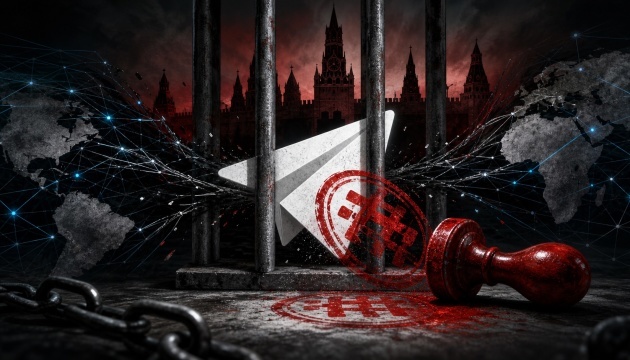
Russia has added Pavel Durov, the founder and owner of the Telegram messaging platform, to its list of terrorists and extremists. In response, Durov changed his profile picture to a meme portraying himself as a terrorist. The ironic gesture underscored the long-standing—and, to put it mildly, deeply strained—relationship between him and the Russian authorities.
From Hatred...
A few years ago, in an interview with Tucker Carlson, Durov explained that he had left Russia because of pressure from the country's security services:
"...In 2013, there were protests in Ukraine, where people used the VKontakte social network" (which Durov founded. — Ed.) "to organize themselves, gather in the central square, and express their disagreement with the government. We received a request—really, a demand—from the Russian authorities saying, 'You must provide us with the personal data of the organizers of these protests.' Our response was that this was another country. We would not betray our Ukrainian users."
Afterward, Durov sold his stake in VKontakte and left Russia.
Between October 2017 and April 2018, Russia's Federal Security Service (FSB) demanded that Durov hand over Telegram's encryption keys under the so-called Yarovaya Law. Durov refused, arguing that doing so would violate the constitutional right to the privacy of correspondence. On April 13, 2018, a Moscow court ordered Telegram to be blocked.
What followed was a technological farce of the Russian state's own making. Roskomnadzor attempted to block Telegram by blacklisting millions of IP addresses, disrupting infrastructure operated by Amazon Web Services, Google Cloud, and other third-party providers. Websites, online services, payment systems, and business applications were caught in the crossfire, while Telegram itself remained fully operational.
In other words, the Kremlin took a sledgehammer to the internet—but failed to hit its target.
Having conceded that Telegram could not be shut down through brute force, the Russian authorities officially lifted the restrictions in June 2020. Over the following years, the platform rapidly evolved into Russia's dominant messaging service and one of its principal sources of news. It came to be used not only by ordinary citizens but also by government agencies, which continue to rely on it today.
Following the launch of the full-scale invasion of Ukraine, Telegram effectively became part of Russia's critical communications infrastructure. It serves as the primary platform for propagandists, regional administrations, pro-war military bloggers ("voenkory"), security agencies, and the informal networks through which rival Kremlin factions communicate and compete for influence.
At the same time, the authorities continued constructing their vision of a "sovereign" internet—closed, tightly controlled, and subject to state oversight. Telecommunications operators were required to install equipment capable of filtering and analyzing internet traffic. Authorities rehearsed scenarios for disconnecting individual regions from the global internet. Meta was blocked, YouTube was systematically throttled, Signal and Viber were banned, while restrictions on WhatsApp and Telegram steadily intensified.
...to Open Hostility
In August last year, Moscow launched its first direct assault on Telegram. Under the official pretext of "combating fraud," it began blocking voice and video calls on the platform. From the beginning of this year, the pressure escalated into widespread outages and systematic throttling. On February 10, 2026, Roskomnadzor officially acknowledged that it was deliberately slowing Telegram traffic across Russia.
In the spring, the messaging platform was formally blocked altogether. At the same time, Russian security services placed Durov on a wanted list, while legal and financial pressure on both the company and its users intensified. Purchasing Telegram Premium subscriptions or placing advertisements on the platform is now officially treated as a violation of Russian law. Then, in July, Moscow delivered what is, so far, its most severe blow by adding Durov himself to the country's list of terrorists and extremists.
There is, however, one striking irony.
...to "Love"
In August 2024, Russia witnessed a sweeping pro-Durov media campaign following his detention in France. Russian state media, public figures—including some who describe themselves as members of the opposition—and influential foreign commentators such as Elon Musk and Tucker Carlson all joined what became a remarkably unified information campaign under the slogan: "Hands off Durov!" Even pro-war "patriotic" Telegram channels circulated photographs of artillery shells bearing the inscription "Za DuroVa" ("For Durov"), stylized with the now-familiar wartime Z.
Russia's Foreign Ministry demanded consular access to Durov on the grounds of his Russian citizenship, but his legal team declined the offer. Senior Russian officials—including Dmitry Medvedev, Maria Zakharova, Margarita Simonyan, and Vladimir Solovyov—publicly rushed to his defense. Even Foreign Minister Sergey Lavrov declared:
"Now that Durov has apparently been detained, on someone's advice, and threatened with severe punishment—presumably in an attempt to gain access to Telegram's encryption keys—it has been proven that Telegram is indeed a reliable and highly popular platform."
The panic quickly spread through Russia's own bureaucracy. Government officials reportedly received instructions to remove sensitive information from Telegram. Pro-war military bloggers warned that "Telegram is effectively the communications backbone of our army." Prominent Z-blogger Roman Alyokhin argued that the military would become "even more vulnerable if Durov hands over the encryption keys to Western intelligence services."
Watching this nationwide Russian infatuation with Durov—complete with claims that the West was "crushing free speech" and that "Orwell is back"—was almost surreal.
The spectacle was all the more ironic because Telegram itself had already become one of the digital platforms facing the harshest repression inside Russia.
That repression included forcing channels with more than 10,000 subscribers to reveal their administrators' identities, as well as prosecuting and imprisoning Telegram channel administrators—including Alyokhin himself—when they found themselves on the wrong side of the Kremlin's internal information wars.
Seen from today's perspective, those fervent declarations of support for Durov have acquired a distinctly ironic quality.
The Russian Cage Sends a Signal
Yet there is little for Russia to laugh about now. Members of the State Duma have been scrambling to justify the decision. Oleg Matveychev, deputy chairman of the Duma's Committee on Information Policy, put it this way:
"Durov has been warned repeatedly not to side with our enemies. Apparently, he fails to understand that he's about 20 years behind the times. Back then, there were global platforms and a global internet. That will not exist in the future—the world has entered an era of fragmentation. Durov may have been a man of the future in the 2000s, but today he represents the past." Even Oleg Tsaryov—a Ukrainian traitor and pro-war blogger—mocked the statement:
"Durov represents the past. He and Elon Musk are dragging us back into the past. Damn retrogrades."
Yet the irony is hard to miss. The "terrorism" case against Durov is about far more than his personal fate. It demonstrates that the Kremlin is incapable of guaranteeing even temporary loyalty to anything beyond its direct control—not even a digital platform on which the Russian state itself has come to depend.
Today, government agencies run Telegram channels, the military relies on the platform at the front, and propagandists use it to cultivate audiences and raise funds for that same military. Tomorrow, the very same Telegram could be officially branded an instrument of terrorism and banned altogether.
That is the defining logic of Putin's information cage: everything global is treated as a threat, everything autonomous as an act of defiance, and everything popular as a resource to be either broken or absorbed by the state.
Durov is undoubtedly a complex figure, and Telegram is a problematic platform for many countries. But Russia's case against him is not fundamentally about security.
It is about the Kremlin's fear of decentralized communication.
Moscow is not merely sending Durov a personal "terrorist" telegram. It is sending a warning to everyone who still believes it is possible to exist outside Russia's information cage.
Incidentally, during the Tucker Carlson interview mentioned earlier, Durov sat between two chairs. One held spade-shaped ornaments; the other displayed sculptures resembling male genitalia. Many interpreted this as an allusion to a notorious piece of Russian prison folklore—a crude initiation question traditionally posed to new inmates before they are accepted into a cell, asking them to choose between "sharpened spades" or... (the rest can easily be found online).
It appears Durov already sensed that his high-stakes game with the Kremlin had gone too far. Even then, he seemed to be sending a signal.
Now, the Kremlin's cage has sent one in return.
Max Meltzer