Drapatyi's New Mission: Leading Ukraine's Armed Forces Through Their Toughest Challenges
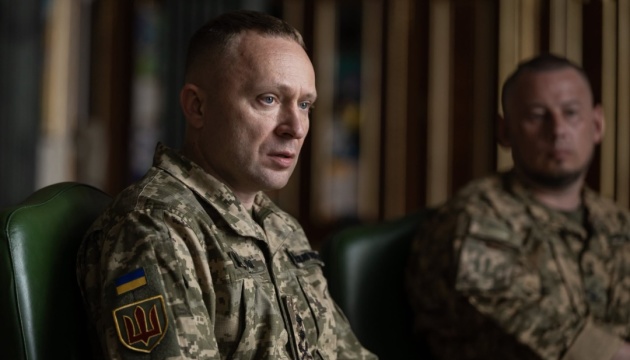
Major General Mykhailo Drapatyi's combat record demonstrates his ability to act decisively when circumstances demand the seemingly impossible.
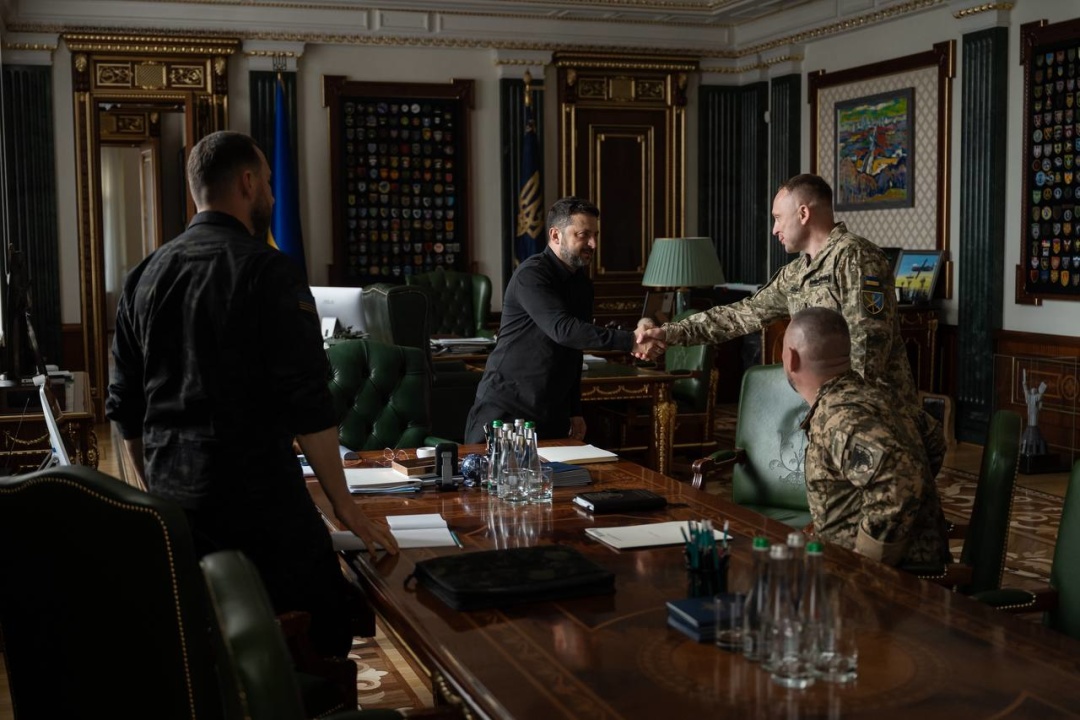
On July 21, President Volodymyr Zelensky officially announced the appointment of Major General Mykhailo Drapatyi as the new Commander-in-Chief of the Armed Forces of Ukraine. In this highly demanding role, he succeeds Oleksandr Syrskyi, who had led Ukraine's military since February 2024.
Commenting on his appointment, Drapatyi displayed the restraint and respect for institutional continuity that have become his hallmarks:
"Serving Ukraine has always been an honor for me, and during a war for independence it means bearing absolute responsibility. I am grateful to Commander-in-Chief of the Armed Forces of Ukraine Oleksandr Syrskyi for his consistent efforts to strengthen the Ukrainian military. I was shaped under his command."
His pledge to serve with responsibility, unwavering focus, and, above all, profound respect for those in uniform became the central theme of his first address. Yet both Ukrainian society and the military expect from the new Commander-in-Chief not only the right words, but also decisive—at times unpopular, yet necessary—measures to strengthen the front line and modernize the armed forces.
A COMBAT GENERAL: DRAPATYI'S MILITARY CAREER
Drapatyi's career is a textbook example of steady, merit-based advancement from a tactical commander to the country's highest military office. Born on November 21, 1982, in Kamianets-Podilskyi, Khmelnytskyi Oblast, into a family of teachers, he chose the path of a career military officer. In 2004, he graduated from the Command Faculty of the Kharkiv Institute of Tank Forces and began his service as a lieutenant in the ranks of the legendary 72nd Separate Mechanized Brigade.
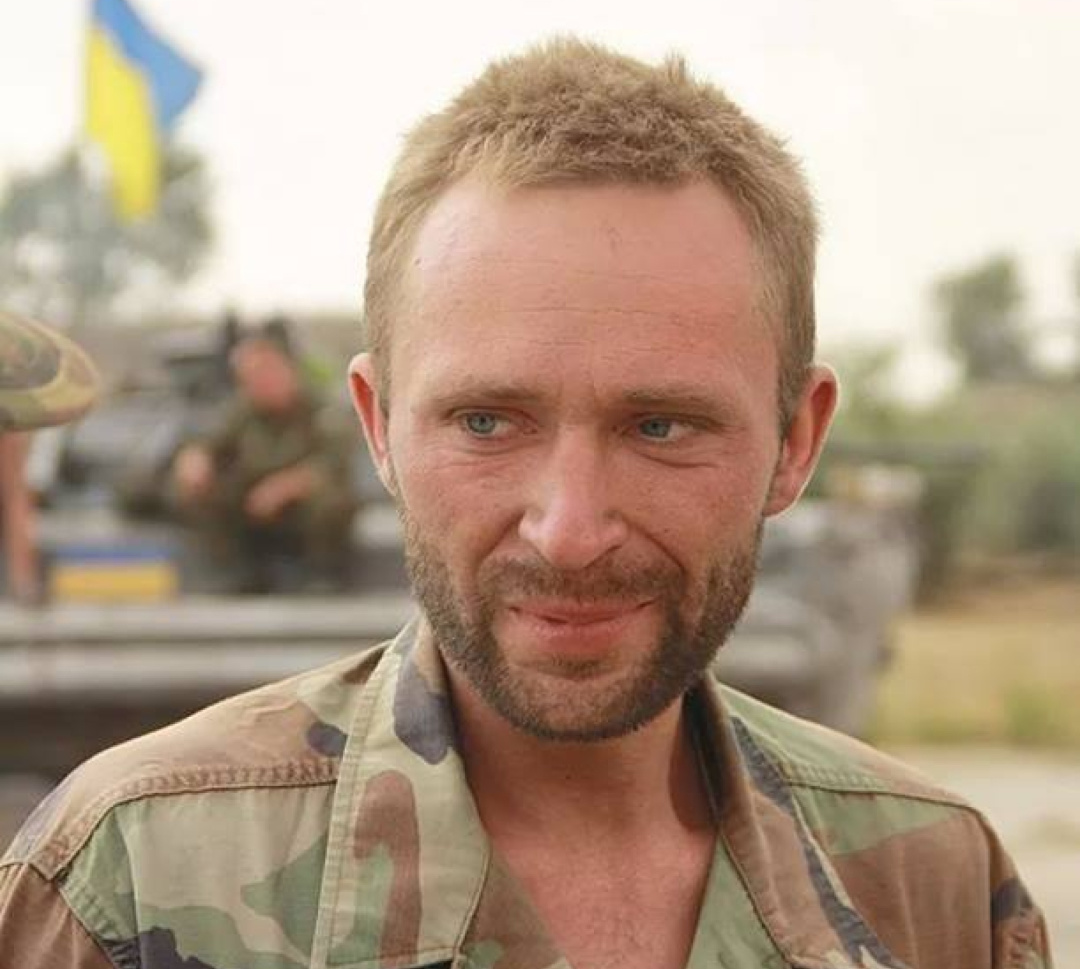
This was Mykhailo Drapatyi in August 2014, leading Ukrainian troops out of encirclement.
Drapatyi's true baptism by fire came in the spring of 2014, as Russia's hybrid aggression erupted into all-out war and the Ukrainian military found itself operating under extreme conditions. Holding the rank of major, he assumed command of the 2nd Mechanized Battalion of the 72nd Separate Mechanized Brigade.
On May 9, 2014, he secured his place in Ukraine's military history by organizing and leading a lightning assault that broke through to the center of Mariupol, then under the control of pro-Russian militants. Footage of the Ukrainian commander's infantry fighting vehicle (IFV) literally vaulting over an enemy barricade quickly went viral, becoming one of the earliest and most enduring symbols of the Armed Forces of Ukraine's resilience in the face of Russian aggression. As Drapatyi later recalled in an interview with Army FM, the decision was made in an instant: when his driver reported a one-meter-high obstacle blocking the road, he issued a simple order—to take it by storm.
Later that summer, Drapatyi's tactical skill saved the lives of hundreds of Ukrainian servicemen during the brutal encirclement near Izvaryne. When units from several brigades found themselves completely surrounded and subjected to relentless Russian tube and rocket artillery fire from across the state border, he took command of a composite combat-ready force. Rather than attempting the retreat the enemy expected, he organized an unprecedented three-day, 160-kilometer march along the border, leading more than 260 servicemen out of the encirclement while preserving around 30 armored vehicles. The operation showcased Drapatyi's ability to think asymmetrically, adapt under pressure, and make unconventional decisions in the most critical circumstances.
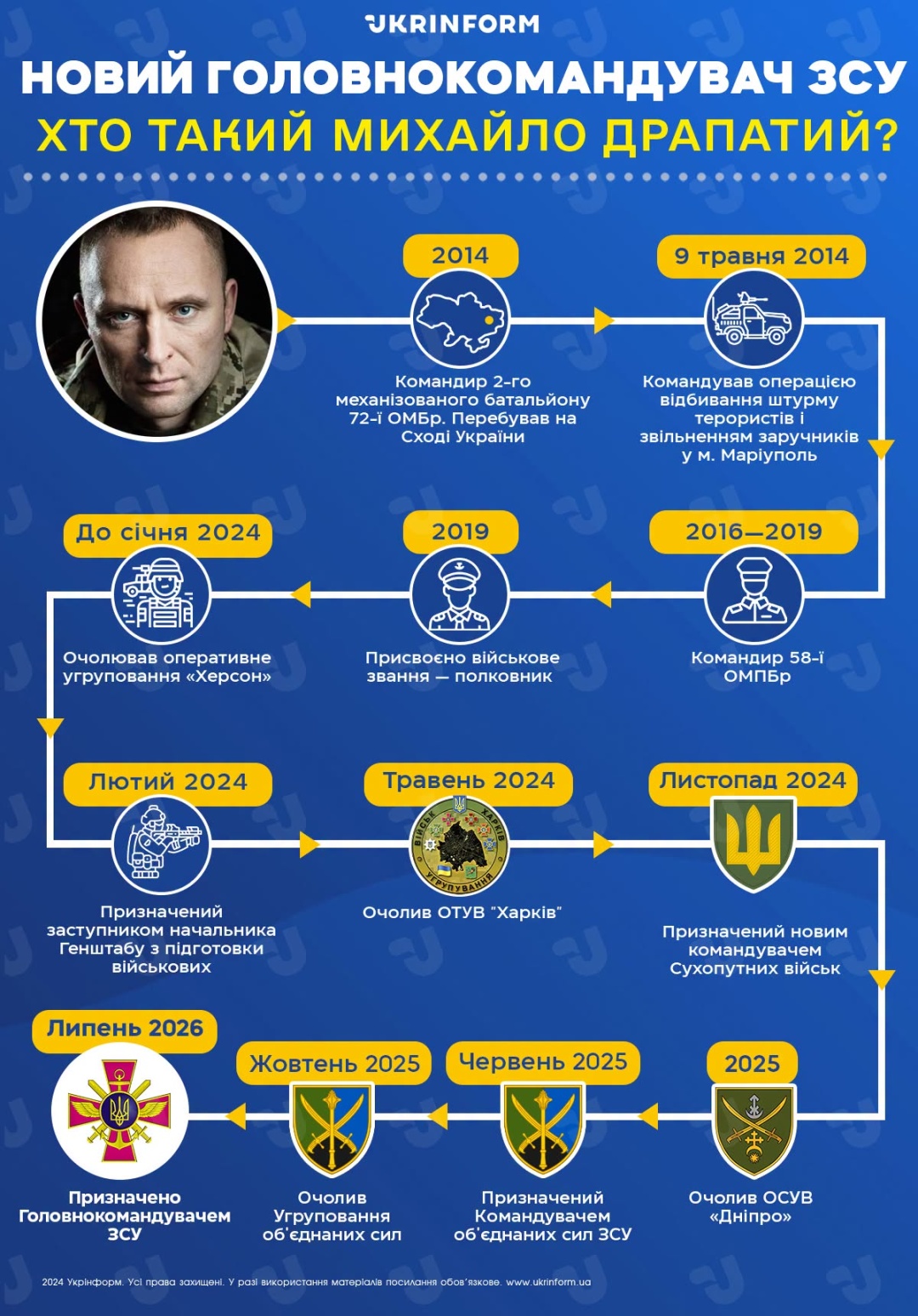
Major General Mykhailo Drapatyi's military career continued on a steady upward trajectory.
2016–2019: Commander of the 58th Separate Motorized Infantry Brigade. In this role, he led the brigade's combat operations in the Anti-Terrorist Operation (ATO)/Joint Forces Operation (JFO) area, including some of the fiercest fighting in Donetsk and Luhansk oblasts, earning a reputation as a demanding yet deeply respected commander who cared for his troops.
Military education: In 2019, He graduated with distinction from the Ivan Cherniakhovskyi National Defense University of Ukraine, earning the institution's gold medal.
2019–2021: Served as Deputy Commander of the Joint Forces, overseeing operational planning and coordinating the activities of different branches of the armed forces.
The outset of the full-scale invasion (2022): Drapatyi was appointed commander of the Kherson Operational Group of Forces. He became one of the principal architects of Ukraine's successful counteroffensive in the south, which culminated in the liberation of the west bank of Kherson Oblast and the city of Kherson in November 2022.
By early 2024, Drapatyi had firmly established his unofficial—but highly telling—reputation as the military's "frontline firefighter." During Russia's offensive in northern Kharkiv Oblast in May, he was swiftly appointed commander of the Kharkiv Operational Tactical Group. He quickly stabilized the line of contact and organized a robust, layered defense, effectively thwarting one of the Kremlin's key operational objectives. His leadership was subsequently called upon when he took command of the Luhansk Operational Tactical Group, and in November 2024 he was appointed Commander of the Ukrainian Ground Forces.
A defining moment that underscored Drapatyi's moral leadership came after the tragedy at a military training ground in Dnipropetrovsk Oblast in June 2025. An enemy strike killed 12 servicemen and wounded more than 60 others. In a break with the deeply entrenched post-Soviet tradition of shifting blame onto junior officers, Drapatyi publicly accepted responsibility as the senior commander and submitted his resignation. President Volodymyr Zelensky declined to accept it, instead retaining him as Commander of the Joint Forces of the Armed Forces of Ukraine.
At the time, Drapatyi articulated the leadership philosophy that has since become closely associated with him:
"We will not win this war unless we build an army where honor is not merely a word but a principle put into action, and where accountability is not a punishment but the foundation of trust."
It is this philosophy, many observers argue, that distinguishes him from many of his fellow generals.
EXPERTS' ASSESSMENT: WHY DID THE PRESIDENT CHOOSE DRAPATYI?
A decision to replace the Commander-in-Chief is never made lightly. President Volodymyr Zelensky reportedly considered a shortlist of highly respected candidates. Defense analysts and the media widely discussed several senior commanders, including Andrii Biletskyi, Yevhen Apostol, Ihor Obolenskyi, and Ihor Horbatiuk. In the end, however, the President placed his confidence in Drapatyi.
Political analyst Volodymyr Fesenko believes the final decision most likely came down to two candidates: Mykhailo Drapatyi and Yevhen Apostol. According to Fesenko, Apostol was widely regarded as a protégé of Oleksandr Syrskyi, meaning his appointment would likely have been viewed as little more than a cosmetic personnel change—one unlikely to deliver the desired political impact or signal a genuine reset of the military leadership.
The other contenders also had their limitations. Biletskyi was seen as a commander with a political background and a reputation that could prove problematic for some of Ukraine's international partners, while Horbatiuk's experience was considered better suited to a senior role within the General Staff than to overall strategic leadership.
At the same time, Fesenko views Drapatyi's appointment positively:
"I view this appointment positively. Mykhailo Drapatyi meets most of the requirements for this position. He enjoys considerable authority within the armed forces and has extensive leadership experience both on individual sectors of the front and at the strategic level... When Zelensky appointed Drapatyi as the new Commander-in-Chief of the Armed Forces of Ukraine, he was also hoping the move would, at least in part, help defuse the political tensions that had developed around Syrskyi and Fedorov."
Military and political analyst Dmytro Sniehyrov describes the new Commander-in-Chief as a decisive crisis manager with exceptional organizational skills. In his assessment, Drapatyi's ability to stabilize critical situations rapidly—whether by containing the dangerous Russian breakthrough in Kharkiv Oblast or by directing counteroffensive operations that significantly slowed the enemy's advance toward Pokrovsk—has been a defining factor in his rise through the ranks.
Sniehyrov also emphasizes Drapatyi's deep understanding of the military institution:
"Drapatyi is a strong-willed, energetic leader who is not afraid to take responsibility. He has an excellent understanding of the Armed Forces of Ukraine—the institution itself, its strengths, and its weaknesses."
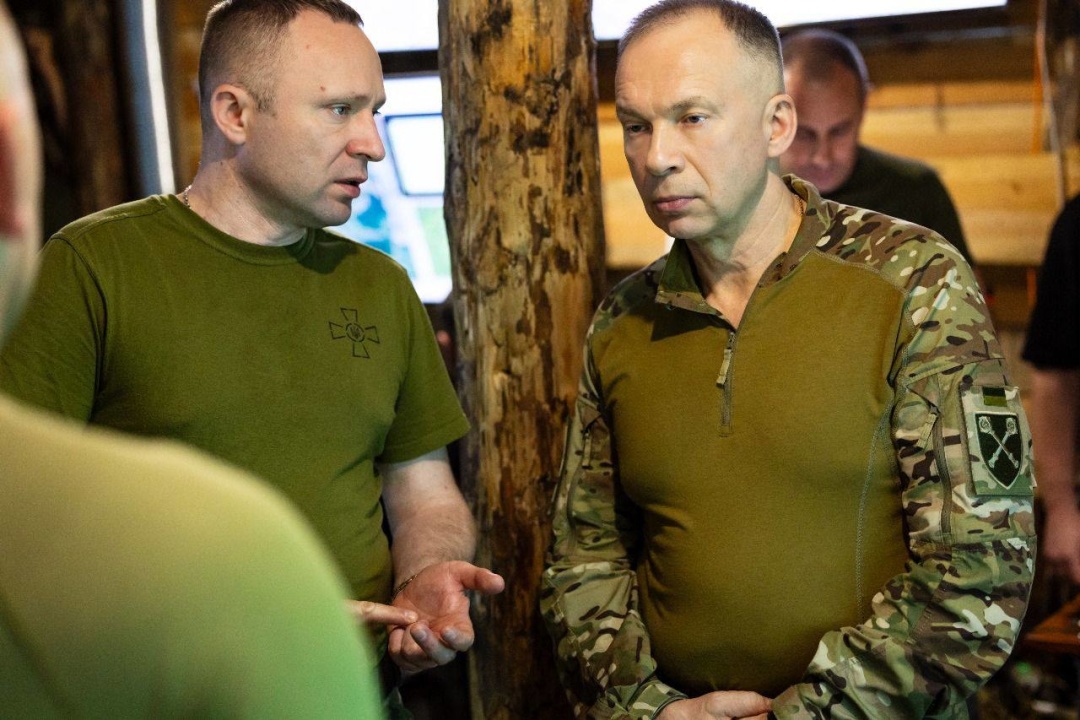
Mykhailo Drapatyi and Oleksandr Syrskyi
Military analyst Denys Popovych argues that one of the key factors behind the President's decision was the broad support Drapatyi enjoyed both among the Ukrainian public and, in particular, within the professional military. According to Popovych, Drapatyi's authority has been forged through years of successful combat leadership, with the defense of northern Kharkiv Oblast in 2024 serving as just one of many examples of his strategic acumen.
"Mykhailo Drapatyi's name was mentioned more often than any other by both protesters and military personnel. Clearly, that played a significant role in the President's decision."
Military analyst Oleksandr Kovalenko of the Information Resistance group agrees that the new Commander-in-Chief has rightfully earned the reputation of a "firefighter general." According to Kovalenko, Ukraine's senior military and political leadership repeatedly sent Drapatyi to the most dangerous and crisis-ridden sectors of the front to put out tactical "fires."
Kovalenko points to operations in the Kupiansk sector, where Drapatyi halted Russia's offensive from the Dvorichna bridgehead by isolating the area from enemy sabotage and reconnaissance groups. He also highlights operations in the Dobropillia sector, where forces under Drapatyi's command not only stopped the advance of Russia's 51st Combined Arms Army but also drove Russian troops back, in some areas even encircling them.
Assessing the political context of the appointment, Kovalenko concludes:
"The President placed his confidence in the best-known, most broadly acceptable, and at the same time one of the most experienced candidates. Mykhailo Drapatyi is a combat officer with enormous practical experience against whom there are virtually no serious complaints or criticism—from either the military or society... That is why I view this appointment in the most positive terms. Drapatyi is fully equal to the responsibility that comes with serving as Commander-in-Chief of the Armed Forces of Ukraine."
Former Security Service of Ukraine (SBU) officer and military analyst Ivan Stupak candidly argues that Ukraine's political leadership had, to a considerable extent, created the crisis that ultimately made replacing the Commander-in-Chief necessary. Nevertheless, he believes that appointing Drapatyi proved to be a timely and worthy response to the resulting political turbulence.
At the same time, Stupak urges a measured and pragmatic approach:
"I view the decision to appoint Mykhailo Drapatyi as overwhelmingly positive. He is absolutely the right choice. At the same time, we should not turn people into idols. Ukrainians have a tendency to place excessive expectations on a single individual—as if a new commander will arrive and everything will immediately change. But Drapatyi is only human. He possesses no magical abilities or superhuman powers. Our task is to support him to the greatest extent possible."
KEY CHALLENGES: FRONTLINE REALITY AND INSTITUTIONAL INERTIA
The honeymoon period following such an appointment is traditionally brief. Like Oleksandr Syrskyi before him, Mykhailo Drapatyi assumes command of the Armed Forces at an exceptionally difficult moment. Syrskyi took over in the aftermath of Ukraine's unsuccessful 2023 summer counteroffensive, while Drapatyi inherits the post amid an acute personnel shortage and expectations that Russia will further intensify its mobilization efforts.
Yet these are only some of the challenges awaiting the new Commander-in-Chief.
Military analyst Oleksandr Kovalenko believes one of the greatest obstacles to implementing new approaches could be resistance from within the existing system—particularly from members of the previous Commander-in-Chief's team who have grown accustomed to different management practices and may be reluctant to embrace modernization.
Equally important, he argues, is ensuring close coordination with the Ministry of Defense, since logistics and sustainment are the lifeblood of any military. As for the battlefield itself, Kovalenko identifies the Sloviansk–Kramatorsk axis as a particular concern. In his assessment, Russian forces continue to retain the initiative there, albeit gradually, making a strategic reassessment of Ukraine's defensive posture imperative.
Military and political analyst Dmytro Sniehyrov likewise argues that the new Commander-in-Chief will face the immediate task of stabilizing the most critical sectors of the Donetsk front. He also expects Drapatyi to come under sustained information pressure, much like his predecessors, and stresses the importance of allowing him to assemble his own leadership team without political or bureaucratic interference.
As Sniehyrov puts it:
"The key question is whether the new Commander-in-Chief will be allowed to assemble his own team and implement the necessary changes within the General Staff, the planning system, and the command-and-control structure for combat operations."
Military analyst Denys Popovych notes that Ukraine's fundamental strategic challenges remain unchanged. The country must continue building a robust, layered defense in Donetsk Oblast while preparing for potential escalations elsewhere along the front.
In Popovych's words:
"The challenges are essentially the same as those faced by Oleksandr Syrskyi. They include preparing to repel a possible Russian offensive in northern Chernihiv Oblast... The Kupiansk sector, our strikes against targets in Russia and the occupied territories, and offensive operations in the south."
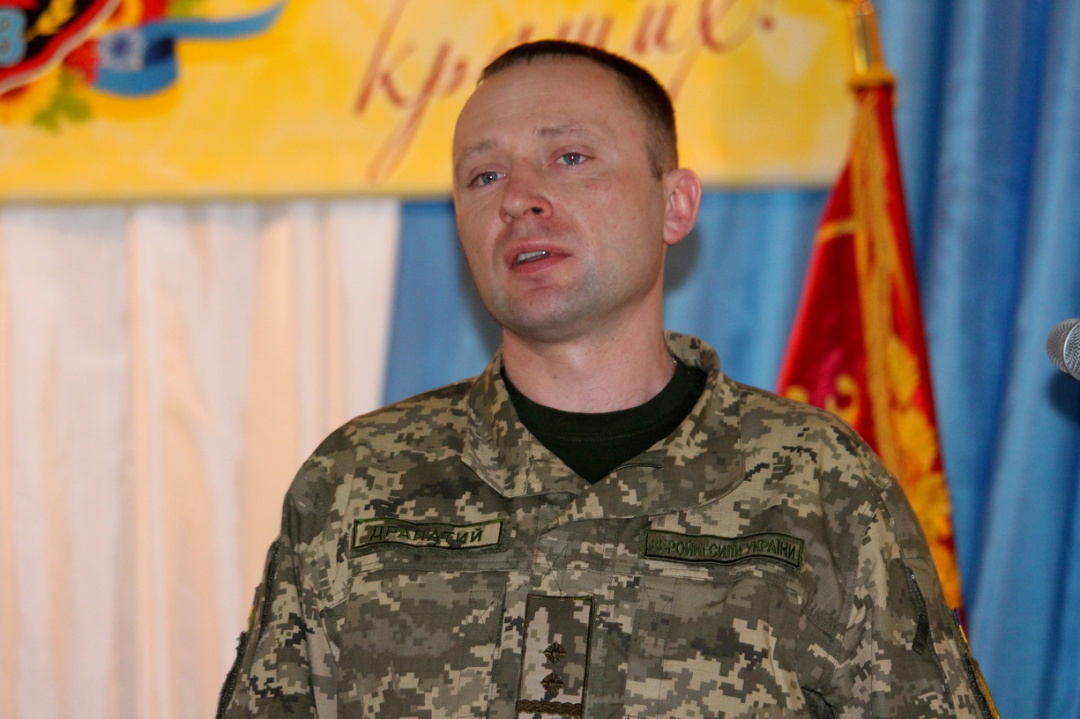
Military expert Ivan Stupak urges a balanced assessment, noting that the previous Commander-in-Chief, despite intense public criticism, was far from an ineffective leader and achieved tangible results within the objective constraints he faced. At the same time, Stupak argues that the new commander must fundamentally reshape the army's internal culture.
He identifies personnel policy as the foremost priority:
"Drapatyi's first challenge is personnel. Without a strong team, even the best leader will be unable to change anything... Commanders who tolerate unacceptable treatment of their subordinates must be removed, and, where warranted, held criminally accountable. That alone would go some way toward easing tensions in society."
Political analyst Volodymyr Fesenko shares a similar assessment. He argues that both Ukrainian society and the country's international partners expect a firm response to internal military scandals—such as the controversy surrounding the Skelia Regiment—which tarnished Syrskyi's public standing and must not be repeated under Drapatyi's leadership.
Fesenko sums it up succinctly:
"A great many internal problems for which Syrskyi was criticized still have to be addressed... But the greatest challenge facing Drapatyi, President Zelensky, and the country as a whole is mobilization."
IMMEDIATE PRIORITIES AND EXPECTATIONS: BETWEEN MILITARY PRAGMATISM AND PUBLIC HOPE
According to Ivan Stupak, the public's foremost expectation is to minimize battlefield casualties. In his view, this can—and should—be achieved through the accelerated adoption of modern technologies, above all by expanding the use of unmanned systems and robotic platforms in place of high-risk infantry assaults.
Stupak also argues that Ukraine's mobilization process must become more humane. Rather than relying on aggressive street detentions of draft-eligible men, he advocates a more civilized approach: after receiving a draft notice, individuals should be granted a clearly defined period—five to seven days, for example—to settle their personal affairs before reporting to a training center.
Within the armed forces, meanwhile, the overriding expectation is to overcome institutional inertia. As Stupak explains:
"Service members expect the military to eliminate excessive bureaucracy—the so-called 'paper army.' It is one of the issues they raise almost constantly... At the same time, many of these reforms depend not only on the Commander-in-Chief. The President, the Minister of Defense, and the Commander-in-Chief must function as a single team."
Military analyst Oleksandr Kovalenko believes that, in the near term, the new Commander-in-Chief will also have to contend with the challenge of public perception. Although mobilization policy and the operation of the Territorial Recruitment and Social Support Centers (TCRCs) fall primarily under the authority of the Ministry of Defense, Drapatyi is likely to bear much of the public criticism and media scrutiny whenever controversies arise.
From a military perspective, however, Kovalenko argues that Ukraine currently has a window of opportunity created by the gradual depletion of Russia's offensive potential, enabling the Defense Forces to shift toward more systematic counteroffensive operations.
He cautions, however, that this opportunity may prove short-lived:
"This period must be used as effectively as possible before Russia is able to capitalize on the consequences of a possible general mobilization. If such a mobilization takes place, its effects will most likely begin to be felt on the battlefield by the turn of 2026–2027. That is why it is crucial to weaken the enemy's potential as much as possible now."
Political analyst Volodymyr Fesenko succinctly defines the psychological mandate Ukrainians have entrusted to the new Commander-in-Chief. In his view, the public expects him to preserve the valuable experience the Armed Forces have gained through years of brutal warfare while "addressing the shortcomings that became apparent under Syrskyi."
Denys Popovych, meanwhile, urges the public to remain realistic about the scale of the task ahead. The Armed Forces are a vast institution that cannot be transformed overnight. He sums up the road ahead in straightforward terms:
"What lies ahead is mobilization, war, and hard work. Drapatyi does not possess a magic elixir that will bring us victory tomorrow. The changes expected of him within the military will require time, patience, and sustained effort."
THE ENEMY IS ALARMED: HOW RUSSIAN PROPAGANDISTS REACTED TO THE APPOINTMENT
The caliber of Ukraine's military leadership can sometimes be measured by the reaction it provokes in Russia's information space. The response of the so-called "Z-war correspondents" and official Kremlin media to Drapatyi's appointment ranged from restrained concern to outright alarm. Russian commentators clearly recognize that the Armed Forces of Ukraine are now led by a commander who has been systematically disrupting their battlefield plans since the spring of 2014.
There is a certain irony in the fact that Russia's Investigative Committee has chosen to indict a Ukrainian general in absentia for doing precisely what any military commander is expected to do—defend his sovereign country against foreign aggression. When the aggressor places an opposing commander on its wanted list for "commanding military operations," it is less a meaningful legal act than an inadvertent acknowledgment of his effectiveness on the battlefield.
The Russian state news agency TASS promptly issued a statement declaring:
"The new Commander-in-Chief of the Armed Forces of Ukraine, Drapatyi, has been placed on Russia's wanted list... According to the Investigative Committee, in 2017 and 2019 he exercised overall command of Ukraine's Joint Forces Operation."
Among Russian military bloggers, the prevailing mood was one of unmistakable pessimism. The pro-war blogger known as "Voevoda Veshchayet" made little effort to conceal his concern:
"This is bad news for us. Drapatyi genuinely hates us..."
Another prominent pro-Kremlin commentator, "Romanov Light," drew a comparison that was hardly reassuring from Moscow's perspective:
"Zelensky has dismissed Syrskyi as Commander-in-Chief of the Armed Forces of Ukraine. He was the equivalent of our Gerasimov. And for us, that's bad news."
Another influential voice in Russia's pro-war information space, Yuri Podolyaka, focused on Drapatyi's rapid rise through the ranks and his exceptional combat record. He even urged Russian commentators to mention Drapatyi as little as possible to avoid fueling anxiety among Russian troops. Podolyaka bluntly acknowledged:
"Drapatyi is only 43 years old. He started this war as a battalion commander... A general who built his career in wartime and truly understands war is an extremely formidable opponent."
The contrast is telling. While Ukrainians are only beginning to welcome their new Commander-in-Chief, Russian propagandists are already openly acknowledging that they face a serious new challenge, warning their audiences that difficult times may lie ahead.
By appointing Major General Mykhailo Drapatyi as Commander-in-Chief of the Armed Forces of Ukraine, President Volodymyr Zelensky has placed his confidence in a new-generation combat officer—one unburdened by Soviet military traditions and with a proven record of leading troops effectively in times of crisis.
Drapatyi is neither a political figure nor a commander with a magic formula for ending the war overnight. Yet his battlefield experience, willingness to accept responsibility, and emphasis on accountability and respect for human life offer an opportunity to renew Ukraine's military institution. Whether he succeeds will depend not only on his own leadership, but also on the willingness of the country's political leadership and society as a whole to support the difficult—but necessary—reforms within the Defense Forces.
The military expects justice and innovation. The enemy expects setbacks. It is now Mykhailo Drapatyi's task to meet both expectations.
Myroslav Liskovych, Kyiv