Frontline “Couriers”
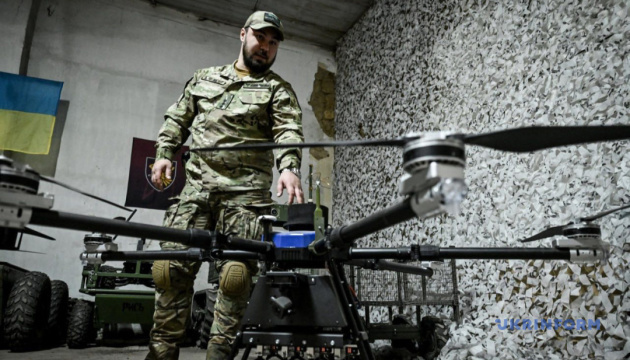
Fighters from an air assault brigade defending the Dnipropetrovsk region describe a new kind of “courier service” on the front line—one run by drones and robotic systems.
There are no easy sectors in this war. Each has its own dynamics, forcing units to adapt quickly and continuously introduce new solutions. Soldiers liken the fighting to a constant tug-of-war: lose focus or loosen your grip, and you risk losing positions, personnel, equipment, and territory.
As the battlefield becomes increasingly technological, success hinges on the speed of producing and deploying both aerial and ground-based unmanned systems. Brigades are forming dedicated robotic units that conduct reconnaissance, adjust fire, carry out strikes, and support evacuations. Meanwhile, logistics drones can deliver supplies to frontline infantry in a matter of minutes. Soldiers joke that they now operate their own in-house courier service.
Ukrinform correspondents spoke with soldiers of the 95th Separate Air Assault Brigade—currently defending the Dnipropetrovsk region and involved in liberating nearby settlements—about the growing role of ground robotic systems (UGVs) and unmanned aerial vehicles (UAVs).
Soldier with the callsign “Lynx”
“DID YOU ORDER A DELIVERY?”
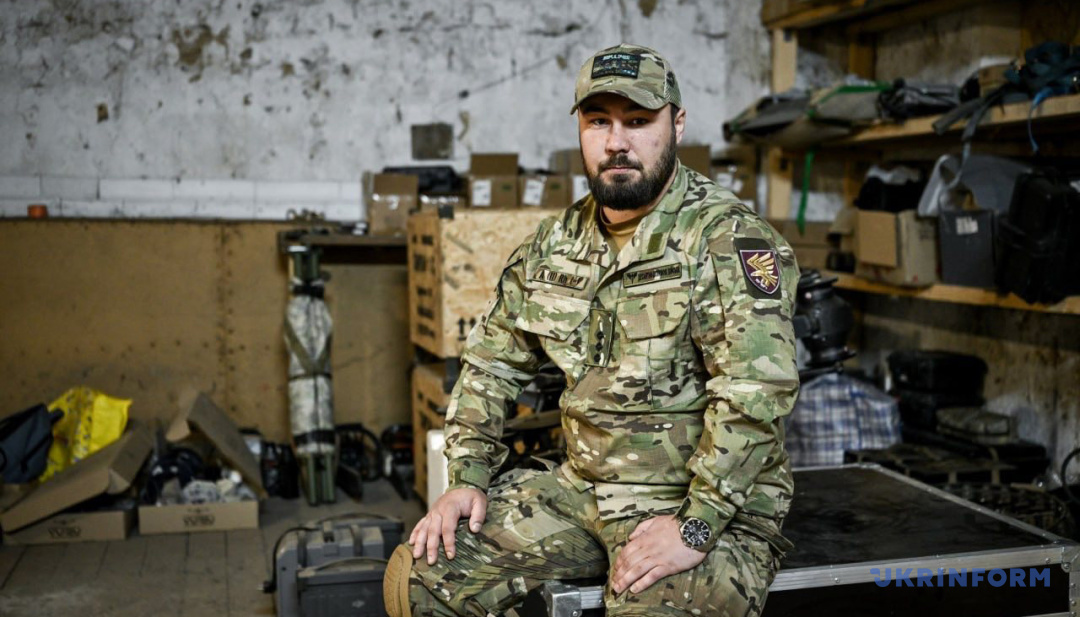
— We were operating in the Pokrovsk sector in Donetsk region when we received orders to redeploy to Dnipropetrovsk region. While the infantry was on the move, our crews advanced ahead to the new sector. We established reconnaissance posts, monitored enemy activity, and identified firing positions as well as launch sites for Mavics, Molniyas, and other hostile drones. Once the brigade began assault operations, we delivered fire strikes, — says the commander of the unmanned strike aerial systems unit of the 95th Brigade, callsign “Rys“ (“Lynx”), describing the opening phase of the counteroffensive.
He leads a company of heavy strike bomber drones and explains that his unit handles large-payload delivery, bombing enemy positions, detecting and eliminating enemy infantry, and executing a range of logistical missions. The unit is continuously evolving, with pilots shifting toward longer-range, more remote control of drones.
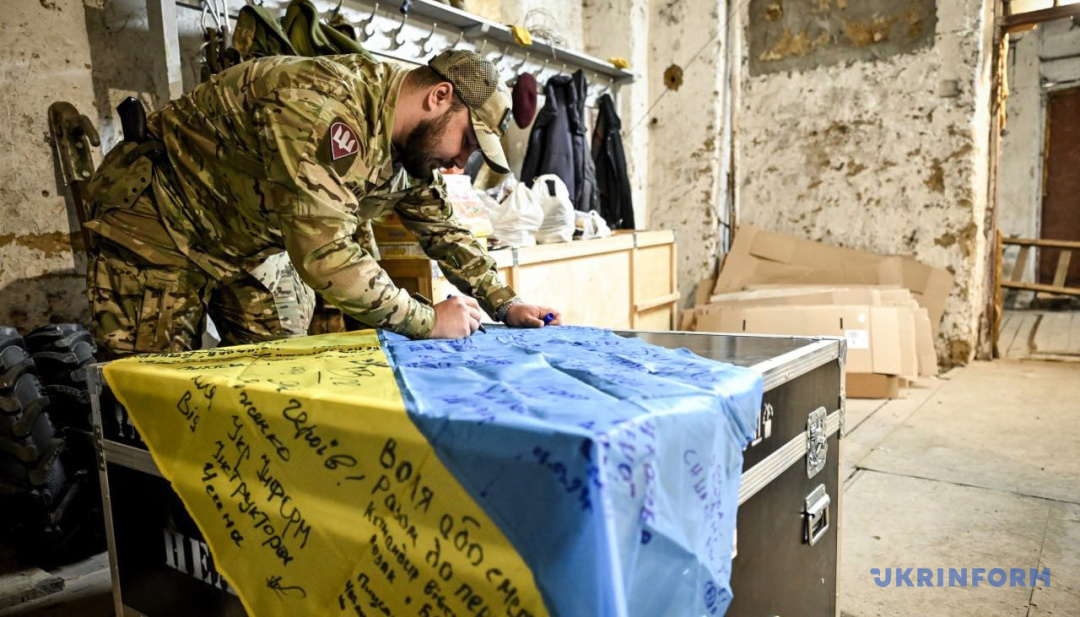
— Previously, we operated at distances of about 10–12 kilometers. Now we’re positioned farther back, but our effectiveness hasn’t decreased. The kill zone—the area fully covered by concentrated fire—has expanded, and we can fully control it. It used to be around 5–7 kilometers wide, mainly focused on protecting our infantry’s positions. Now we can also target enemy drone operators. If the enemy moves farther away, it doesn’t mean they’re safe. We can reach both their pilots and their logistics hubs, — the soldier explains.
In today’s war environment, drones are steadily taking over a significant share of tasks once performed by personnel. Soldiers explain that previously, a group of infantry had to be sent to a position: they would travel part of the way by pickup truck and then, for example, walk the remaining 15 km on foot, carrying their full combat load, ammunition, water, food, and essential gear. This approach came at a high cost in manpower. Now, much of that logistical burden has shifted to drones, significantly improving infantry survivability.
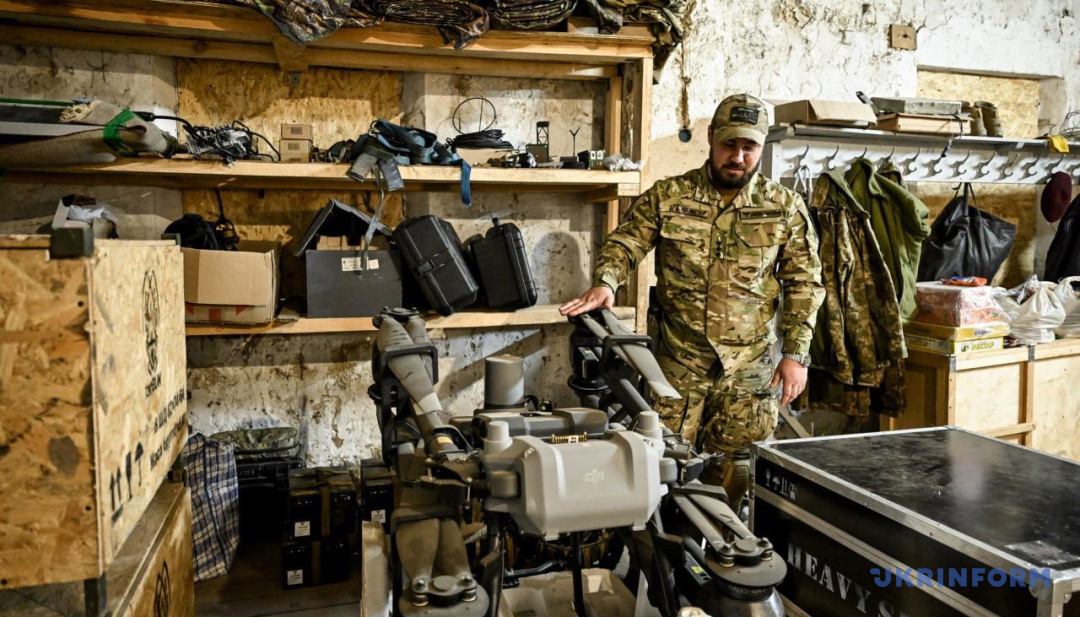
— Heavy bombers deliver the “packages,” while fighters can move in light. Supplies reach positions not in a day or two, but in just 10–15 minutes, — says “Lynx.”
Soldiers joke that the front line now has its own version of Nova Poshta and a courier service. Asked about the most unusual deliveries, he doesn’t hesitate:
— Broth in jars. I’m serious. It was cold, the infantry asked for vodka and joked they’d prefer broth—“like mom makes,” one of the guys said. I told them I’m not exactly mom, but we’d work something out. And we dropped them broth—it was still warm. They thanked us over video and said we were the first to deliver something like that. The point is: you can deliver anything.
WHEN 100 METERS IS NOT JUST A DISTANCE ON THE MAP
“Lynx” is from the Dnipropetrovsk region and joined the military before the full-scale invasion. In 2022–2023, he served as a reconnaissance soldier and admits he knew little about drones at the time. He recalls that his entire recon company once had just two Mavics.
— I joined the military that wasn’t particularly high-tech, and now I’m part of this rapid adaptation and integration of new systems. When you see an enemy TOS-1A “Solntsepyok” [heavy thermobaric multiple rocket launcher system] and realize it fears you—not the other way around; when you strike a tank advancing on your infantry—that’s euphoria, an incredible feeling, — he says.
According to him, 2023 marked a turning point with the rapid development of FPV drones. At that stage, Ukrainian forces held a clear technological edge. However, he acknowledges that Russian UAV units have also grown stronger, particularly formations like “Rubikon.”
— We’ve had unfinished business with that unit since the Kursk operation. Now we’re settling the score, “Lynx” notes.
In the Dnipropetrovsk region, the 95th Brigade took part in the liberation of Novooleksandrivka, Verbove, Vyshneve, Stepove, Oleksiivka, Berezove, Novomykolaivka, Zlahoda, and Ternove.
—While for someone 100 meters is just a distance on a map, for me those 100 meters represent an immense collective effort — the coordination of numerous actions across units, all of it difficult. Every operation is meticulously planned and approved, the soldier explains.
He stresses that this sector of the front is particularly challenging — though, in reality, there are no easy sectors in war.
— Most of the fighting here takes place in rural areas, where nearly every house has a basement. That allows enemy infantry to use them as shelters. They seal the entrances and assume we won’t “come knocking.” But we work in a coordinated way: reconnaissance identifies and assesses the target, determines whether an FPV drone can enter; if not, a strike drone “opens” the entrance, after which the FPV goes in — and then infantry follows. The enemy didn’t expect this. They assumed no reinforcements would arrive, and they didn’t have time to entrench or redeploy reserves. This area was effectively a junction of several enemy formations.
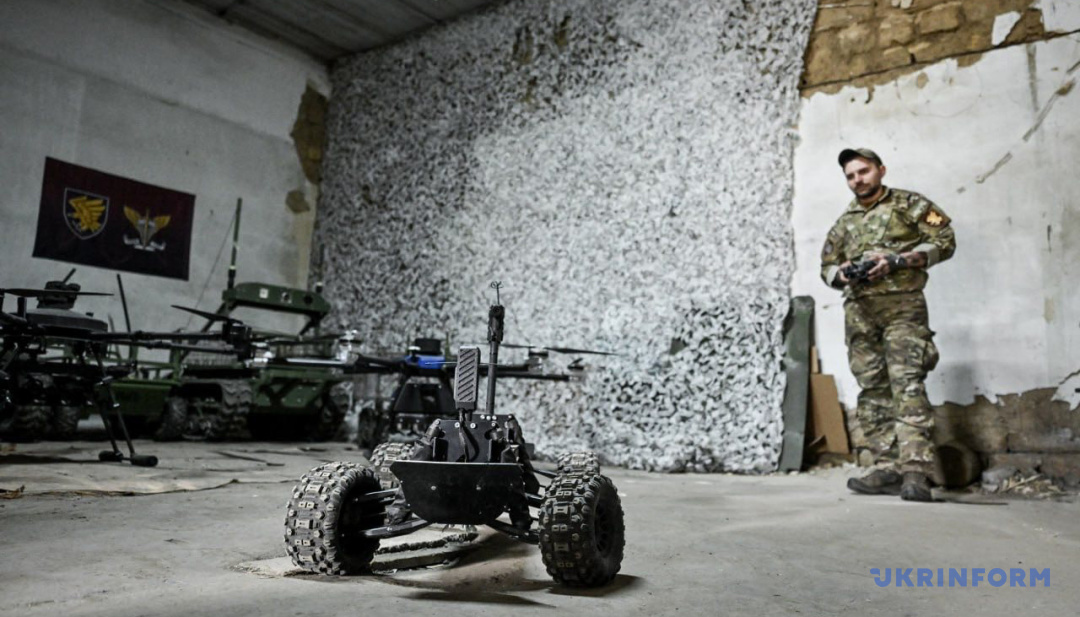
Behind such operations lies extensive preparation by the Air Assault Forces. Their core doctrine is rapid, effective assault action.
— We take losses too, but fewer. Every cleared kilometer — every 100 meters — comes at a cost: casualties and wounded. But the enemy pays just as heavily in personnel and equipment for every meter of our land. Clearing our territory of the enemy is a matter of principle. They have no place here. It doesn’t matter which region we are defending. I’ve fought in Donetsk region and in Dnipropetrovsk region; I have friends across the country. Where you’re from doesn’t matter — what matters is liberating all of Ukraine, — “Lynx” emphasizes.
RUSSIANS FEAR “VAMPIRES” AND “BABA YAGA”
In military slang, robots are often described as expendable. Yet even among drones, some prove remarkably durable.
“Lynx” notes that one logistics drone in his unit set a record with more than 70 successful delivery missions.
— It’s very hard to pin down (laughs). It’s our frontline “Nova Poshta,” making sure infantry always have water, food, and ammunition. An outstanding drone. I hope it keeps breaking records. We also have a strike drone with over successful 40 sorties. Of course, some drones complete a mission and are destroyed on the way back — that’s normal. In war, one drone might fly dozens of missions, while another lasts only one, — the commander explains.
He shows his “army,” affectionately referring to one of his “iron fighters” as “the baby.”
The “baby” turns out to be a drone known as the “Vampire,” or “Baba Yaga,” which Russian forces reportedly fear.
— This “little one” can carry up to 15 kilograms of explosives to enemy positions and drop them. One such “Vampire” carried out an especially challenging mission — destroying a two-story building that housed at least seven enemy soldiers.
There is also another “guy” — the “Heavy Shot,” a Ukrainian heavy multi-purpose unmanned aerial system used both as a strike bomber and for logistics. It has logged around 20 combat sorties.
— It was slightly “wounded,” but we patched it up. We also have another system capable of quickly delivering large, heavy payloads. To reduce visibility, we try to operate mostly at night and camouflage the drones, — the soldier explains.
“Lynx” recalls several operations he describes as “crazy.” In one case, a reconnaissance drone detected a group of enemy infantry moving in for rotation. A strike drone flew nearly 19.7 kilometers and dropped munitions on the group, eliminating five soldiers.
In another incident, a heavy strike drone crew captured a Russian soldier while executing an entirely different task.
— It happened in the Pokrovsk area. The “Vampire” crew was conducting reconnaissance — assessing both enemy presence and terrain. In one house, there was a basement that suddenly began returning fire. The crew responded by dropping munitions inside. Two enemy soldiers were killed, and one chose to surrender. We evacuated him, provided first aid, and applied a tourniquet. It was a truly crazy mission, — the commander recalls.
Asked about the prisoner and his level of preparedness, “Lynx” emphasizes that Russian forces are not to be underestimated.
— People say they don’t know how to fight. That’s simply not true. If they didn’t, the war would have ended in 2022 or 2023. But 2025 has passed, and 2026 is underway. Any opponent is still an opponent — they have weapons and know how to use them. These aren’t just “mobilized troops”; they are trained soldiers. Give them two months, and they’ll learn to shoot — and that’s their primary task in war, — he says.
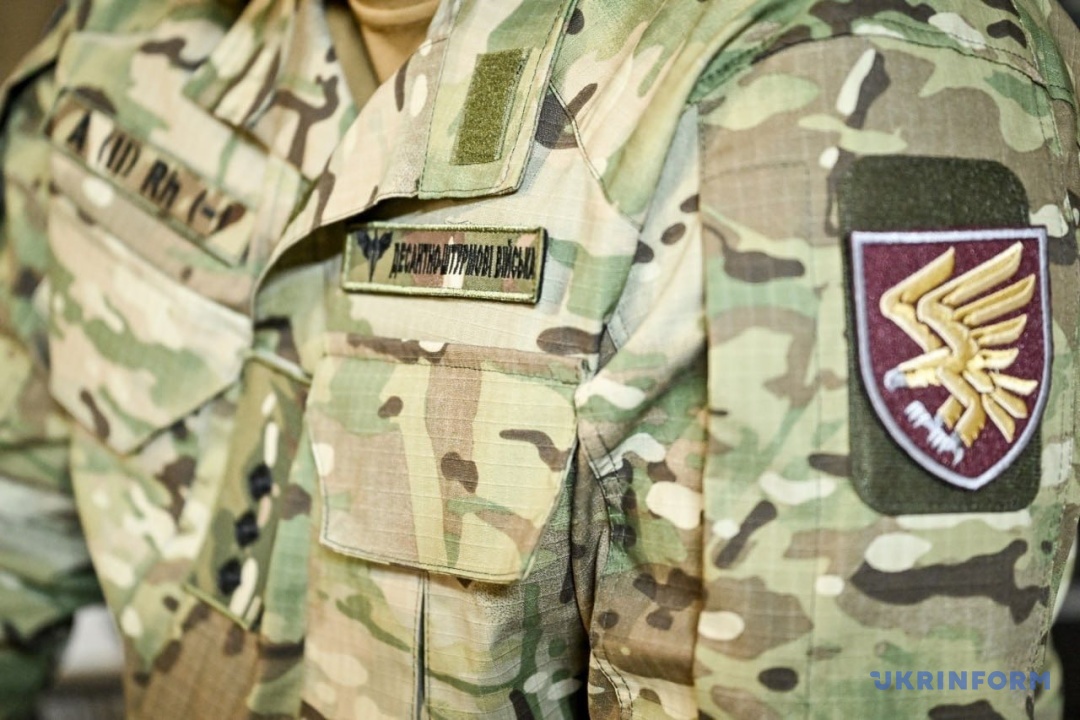
I ask whether there is anything in the Russian arsenal he would want Ukraine to have.
— Yes — “Shaheds.” A lot of them. I want those people to experience what they’re doing to Ukrainians. They call it “strikes on infrastructure,” but in reality they’re hitting civilians. I’d like us to have an endless supply so that that country, if you can call it that, feels the consequences of what it has done. They thought they’d take Kyiv in three days, but instead got bogged down in fighting. I never compare sectors of the front — each brings something new. In the Kursk sector, we encountered fiber-optic-controlled drones. When I saw one fly into my vehicle and electronic warfare didn’t stop it, it was baffling at first — but then we understood. At the same time, in Kursk we showed the enemy that we, too, can enter their territory and dictate the terms. It’s a constant tug-of-war: sometimes they innovate first, like with fiber optics; sometimes we do, like with strike drones, — the UAV unit commander concludes.
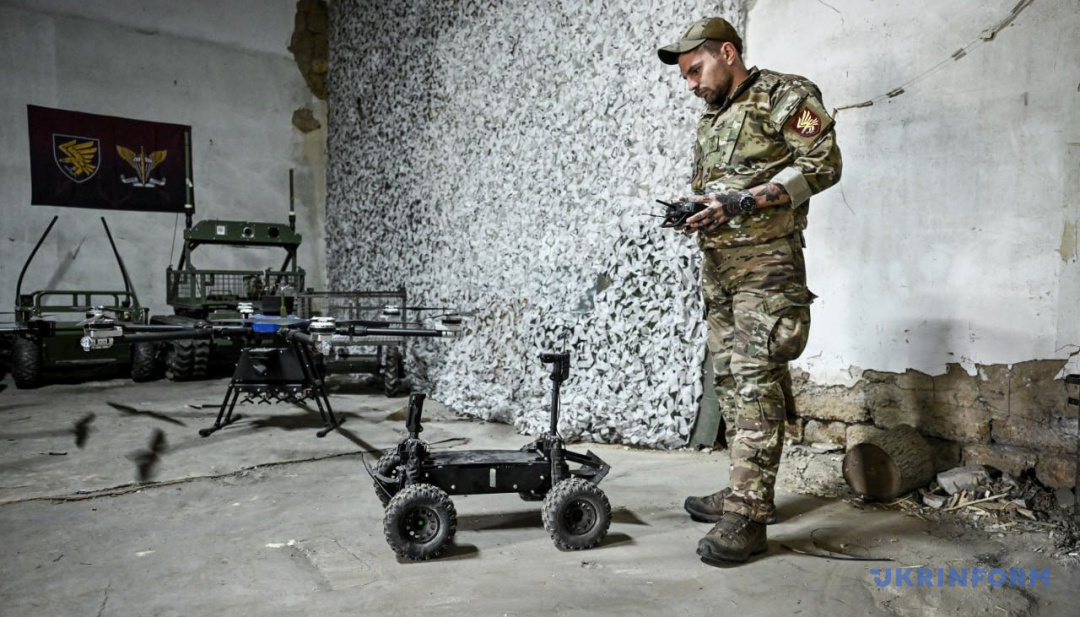
“Pastor”
DRONES SAVE SOLDIERS’ LIVES
A comrade of “Lynx,” Zakhar (callsign “Pastor”), who leads a company of ground unmanned systems, echoes that the war has transformed dramatically in just a few years.
At the start of the full-scale invasion, MT-LB tracked vehicles — “motolyhas” — could move relatively freely to frontline positions. Today, those roles are increasingly performed by ground robotic systems (UGVs) and heavy bomber drones. Zakhar demonstrates several robotic platforms now used for logistics, casualty evacuation, and delivering fire strikes.
Among them are kamikaze UGVs — unmanned platforms designed to self-destruct upon impact, used to destroy fortifications, armored vehicles, and firing positions.
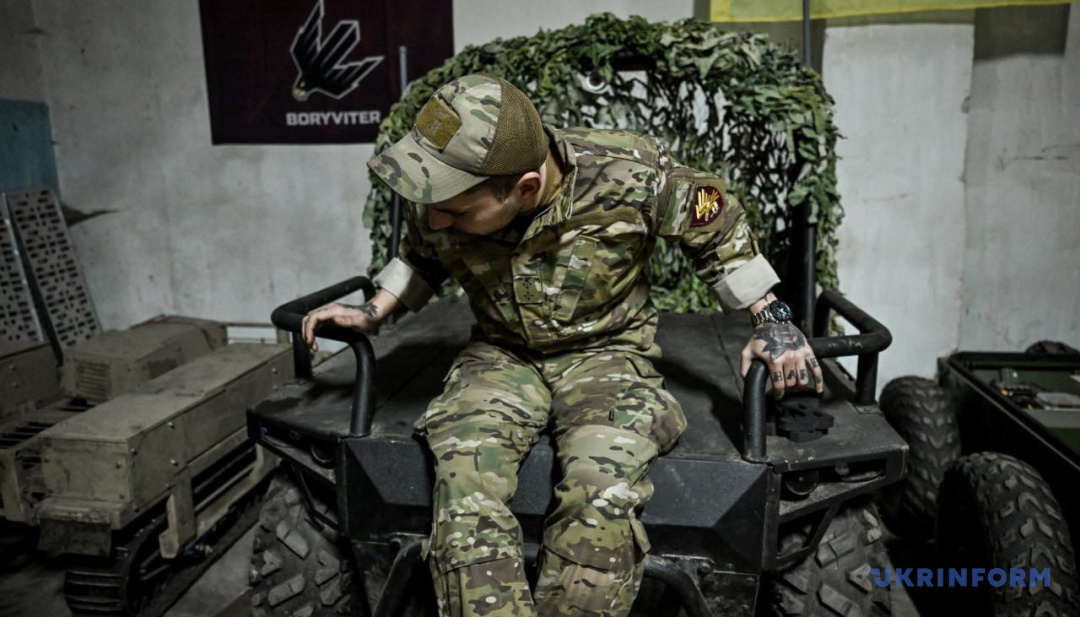
He points out systems such as the “Vepryk,” “Termite,” and “Rys Pro,” and highlights the RATEL M UGV, which has accumulated significant combat experience.
— It’s been stuck in just about every type of engineering obstacle imaginable, but it still completed its logistics tasks, — he says, adding that some platforms can carry payloads of up to 400 kilograms.
— The enemy targets these systems, of course — but it’s better they hit a robot than our personnel. Once a UGV is spotted, all fire is directed at it instead of our troops. Even a small “cockroach”-type robot will draw fire. That’s the point — it absorbs attention.
We had a case where we sent a robot into an open field. Everything the enemy had was directed at it, while our personnel used that window to move into position and complete their mission, — Zakhar explains.
He also describes a UGV nicknamed “Kolobok,” which operated for two weeks on the front line.
— That’s a normal lifespan for this kind of system. It was targeted by two enemy fixed-wing drones — two “Molniyas” — but they missed. Eventually, an FPV drone caught up with it and burned it out. Still, it operated over long distances and delivered around three tons of cargo. When it was finally detected, it just didn’t have enough time to get out, — he says.
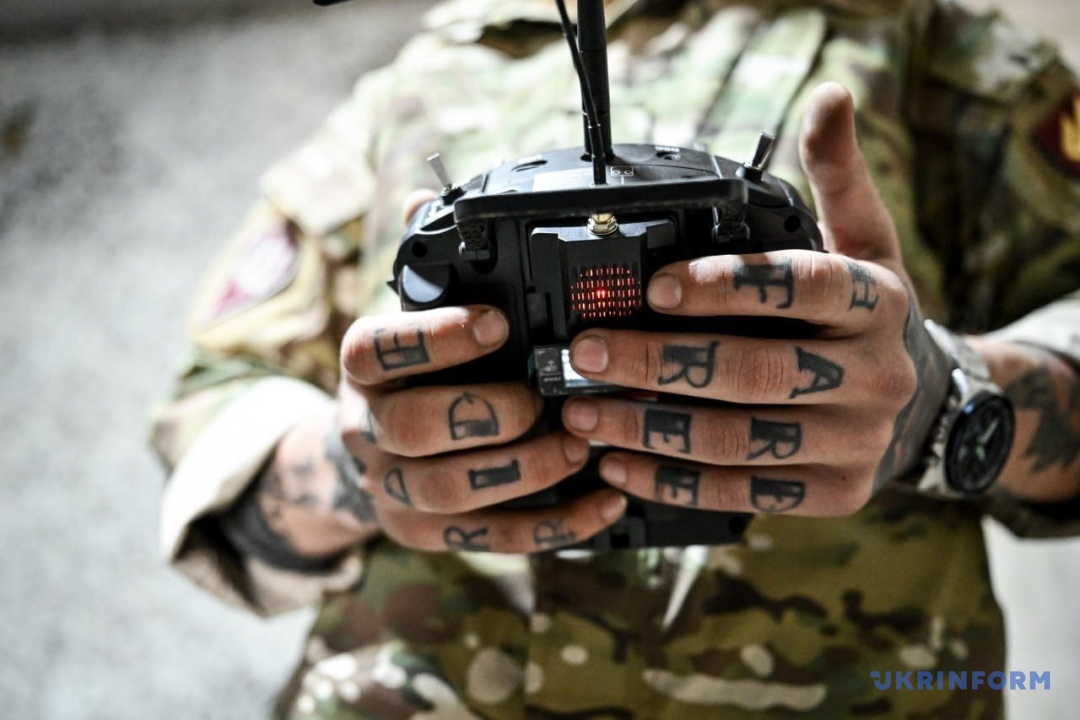
Speaking about casualty evacuation, Zakhar recalls that at the outset of assault operations in this sector, his unit used the “Termite” UGV to extract wounded comrades — and the mission was carried out successfully.
One of the most difficult tasks, he says, was recovering the bodies of fallen soldiers. That operation was conducted using a “RATEL N” drone.
— The guys had tried to retrieve the fallen before, but enemy drones kept disrupting the effort. So we decided to use a UGV — we had that capability. It was damaged in the process, but it completed the mission. Most importantly, it preserved the lives of the evacuation team that would otherwise have gone in. We were able to return our fallen comrades to their families so they could say goodbye and lay them to rest, — the commander says.
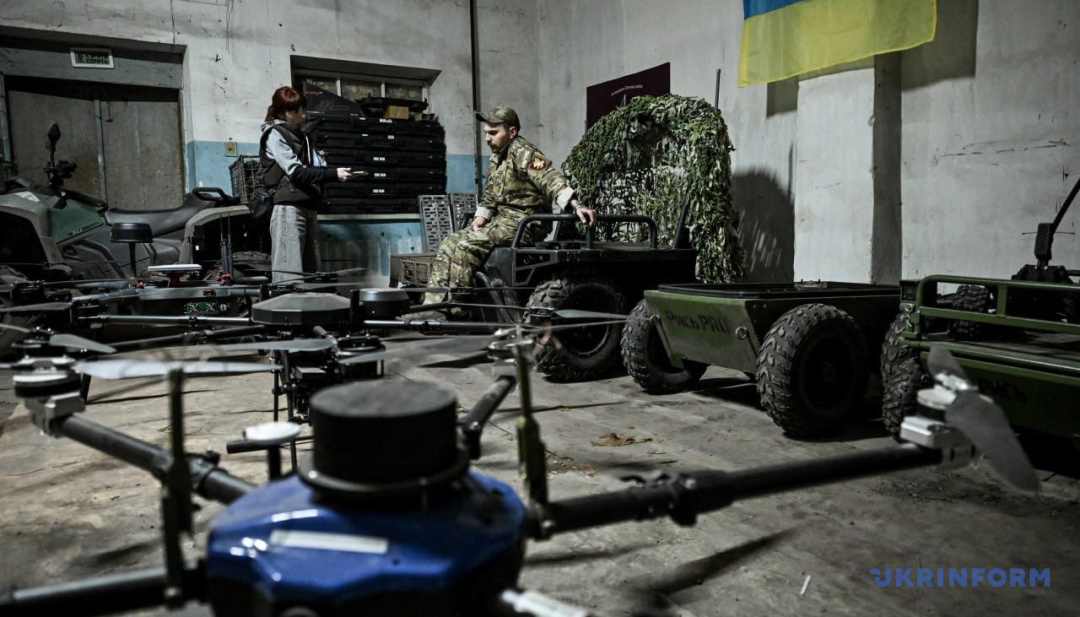
His unit’s baptism by fire came in the Dnipropetrovsk region, where they carried out complex evacuation and logistics missions. He emphasizes that meticulous planning is critical: if a UGV fails to deliver supplies, the consequences for troops on the line can be severe.
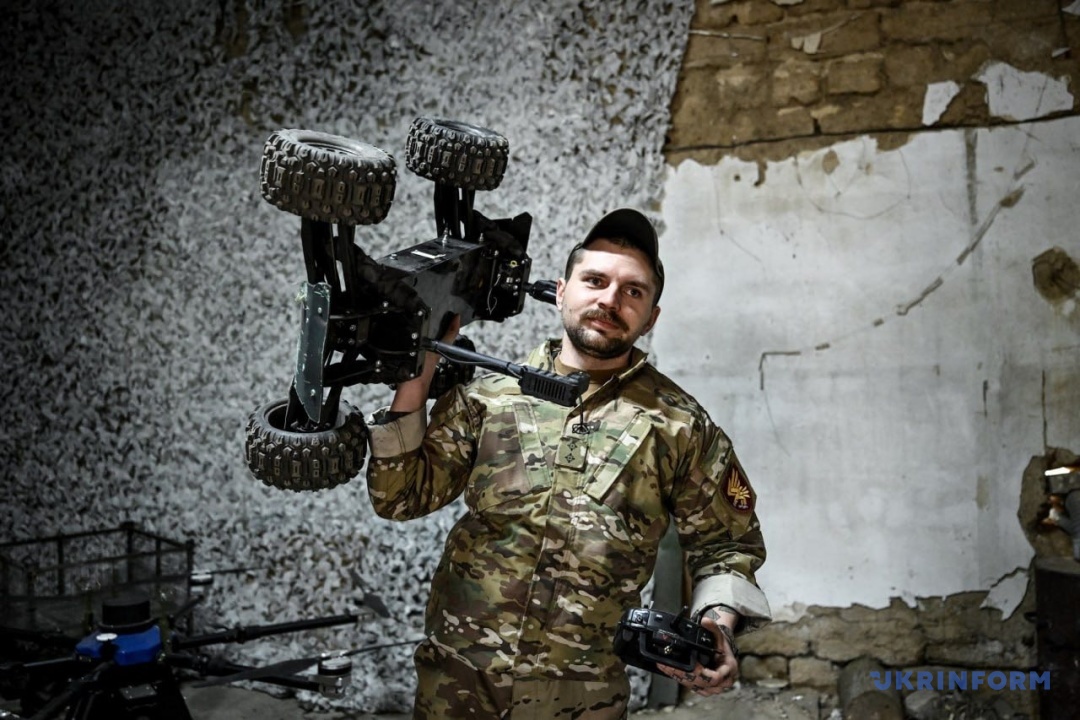
— Without UGVs, clearing territory would likely come with higher losses. The reason is simple: the enemy is now deliberately targeting logistics, — Zakhar explains.
During the liberation of settlements in the Dnipropetrovsk region, his unit delivered several tons of supplies, supporting not only their own troops but also personnel from other units operating in the area.
Olha Zvonariova
Photos: Dmytro Smolienko / Ukrinform