Germany calls for tougher course toward Ukrainian refugees – media
According to Ukrinform, the Munich-based outlet Merkur stated this in an article, following a draft CSU resolution for the party's winter conference, which will take place in the coming days at Seeon Monastery in Bavaria.
"The CSU in Seeon will enshrine the position of not allowing return trips by refugees ['vacations to the homeland']. If a refugee travels to their country of origin for this purpose, they should automatically lose their protection status, 'because by their behavior they refute their own need for protection'," the article says.
Separately, the CSU declares its intentions regarding Ukrainian men of conscription age who have found refuge in Germany. The head of the CSU regional group in the Bundestag, Alexander Hoffmann, argues that "Ukrainian men fit for service" should be returned to Ukraine, where they must "make their contribution to the defense of their country".
In addition, the party insists on the financial participation of asylum seekers in the costs of their stay. The draft resolution states that for all asylum seekers – "from April 2025 this will also apply to newly arrived Ukrainians" – a rule should apply whereby their available assets are to be "used to cover the costs of staying in Germany".
Overall, the draft resolution of the CSU winter conference, whose representative Alexander Dobrindt currently heads Germany's Interior Ministry, declares a general tightening of migration policy. According to it, border controls in Germany should be maintained, and return centers should be established in countries outside the EU for rejected asylum seekers whose countries of origin refuse to take them back. Lawmakers also demand to "expand the deportation offensive in 2026" and to carry out deportations via regular commercial flights, including to Syria and Afghanistan.
"The civil war in Syria has ended. The country is in a phase of reconstruction," the draft resolution states. According to it, with regard to Syrians who do not leave voluntarily, "return procedures should be initiated as quickly as possible". The first step, regardless of this, should be the consistent deportation of offenders.
As Ukrinform reported, about 1.2 million Ukrainians live in Germany. Recently, their number has been increasing, mainly due to young men under the age of 22.
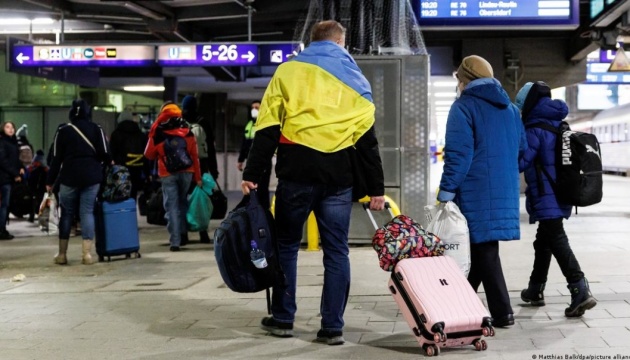
Photo: dpa, illustrative