AFU develop alternative logistics routes in case of damage to Pechenizka dam - military officials
According to Ukrinform, this was reported by the 16th Army Corps of the Ground Forces of the Armed Forces of Ukraine on Facebook.
The Pechenizka dam has been the target of systematic Russian attacks for a long time, the military said.
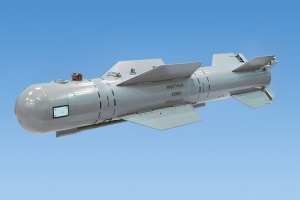
The Russians tried to hit it with Iranian Shahed drones, guided aerial bombs, various types of missiles, Molniia drones, and FPV drones.
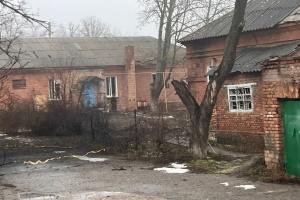
Several attempts to hit this area have been recorded in recent days. The day before yesterday, according to the military, a Russian missile struck a nearby cottage community, destroying more than ten houses.
"The Ukrainian side has long been aware of the potential risks and is prepared for the dam to suffer critical damage. Appropriate response plans were developed in advance," the military said.
They reported that alternative routes had been developed in case the dam was hit.
As noted by the military, these routes have been actively used before and now fully allow for the necessary logistics.
Secondly, the military emphasized that Ukrainian units have accumulated the necessary reserves of material and technical resources. Therefore, the temporary loss of the ability to move across the dam will not have a critical impact on the conduct of hostilities.
And thirdly, the military stated that, if necessary, the Ukrainian Defense Forces are ready to restore the crossing as soon as possible. For this purpose, there are special engineering tools and specialists who are already working according to established procedures.
The Pechenizka dam is a critically important facility that provides water supply, ecosystem stability, and security for dozens of settlements in the Kharkiv region.
Attempts to destroy the dam have no military justification, and strikes against it are an indiscriminate attack on a civilian object, which is expressly prohibited by Article 52 of Additional Protocol I. The Russian military's strike on the Pechenizka dam is a gross violation of international humanitarian law and qualifies as a war crime.
According to Article 56 of Additional Protocol I to the Geneva Conventions (1977), it is prohibited to attack structures containing dangerous forces, namely dams, and nuclear power plants, if such actions could cause significant losses among the civilian population, flooding of populated areas, or a large-scale humanitarian disaster.
The strike on the dam had no legitimate military necessity and is therefore an indiscriminate attack on a civilian object, which is expressly prohibited by Article 52 of Additional Protocol I.
Such actions endanger the lives of thousands of civilians, could lead to large-scale flooding and a man-made disaster, and are intended to terrorize the population, which is a violation of Article 51 (2) of Protocol I, which prohibits attacks aimed at intimidating civilians.
As reported by Ukrinform, the Russian military struck the dam of the Pechenizke Reservoir in the Kharkiv region.
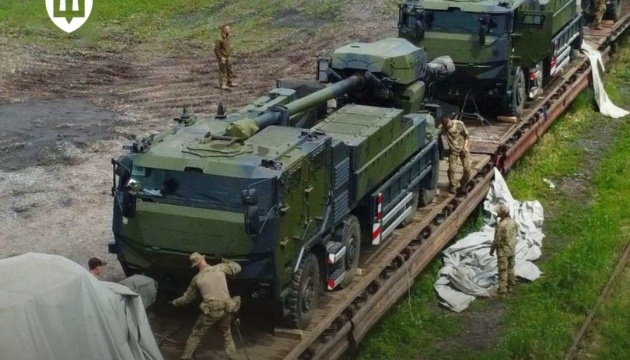
Illustrative photo: mil.gov.ua