NATO should act proactively, not reactively in response to Russian drone incursions into Poland, Romania
The continuation of the aggression against Ukraine and Europe poses a tangible threat for the Kremlin. Here Ukrinform explores, together with invited experts, how adequate the Alliance's response to the Russian drone attack on Poland is and what is still missing.
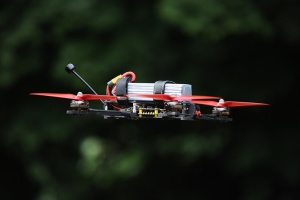
Russian drones intruded into Polish airspace in two separate incidents in September 2025. The first and more significant incident, involving up to two dozen Russian drones, occurred on September 9–10, with another incursion reported on September 13.
Between 19 and 23 Russian drones were detected entering Polish airspace, most of which entered via Belarus.
Polish officials stated that the drones did not carry explosive warheads and were likely intended as decoys to test NATO's air defenses and reaction speed. However, one of the drones crashed into a residential building, causing a scandal when it was revealed that a missile from a Polish F-16 fighter may have been responsible for the damage.
Poland, a NATO member, invoked Article 4 of the North Atlantic Treaty, which allows members to bring security concerns to the attention of the North Atlantic Council. NATO then launched Operation Eastern Sentry to bolster defenses along the eastern flank.
The drone incursion followed Russian military exercises with Belarus, and Ukrainian President Volodymyr Zelensky suggested the drones were used to discourage NATO from providing Ukraine with additional air defense systems.
The massive attack of dozens of Russian strike drones that breached Polish airspace overnight on September 10 has become an unprecedented challenge for NATO. This was not an accidental trespass of a single aircraft, but a deliberate, bold provocation that brought the Kremlin's hybrid war against the West to a new, much more dangerous level. Almost a week has passed. What response is the Alliance demonstrating? It looks much more convincing than previous episodes of "deep concern", but it leaves open the key question: is this response adequate to the extent and nature of the threat, or is the West again responding to the symptoms, ignoring the disease proper?
At first glance, the measures look large-scale. Operation Eastern Sentry – a NATO military operation announced by NATO Secretary General Mark Rutte on September 12, 2025, after Poland invoked Article 4 of the North Atlantic Treaty – was launched to bolster the security of the alliance's eastern flank following Russian drone incursions into Polish and Romanian airspace.
The operation is designed to increase NATO's capacity—in the air, at sea, and on the ground—to counter military threats posed by Russia. It establishes a more integrated and flexible collective aerial defense policy for the eastern flank.
Several NATO member states have committed resources to the operation:
Denmark is committing two F-16s and an air defense frigate.
France, even before the official announcement of the operation, has dispatched three Rafale fighter jets to protect Polish skies.
Germany is expanding its air patrol mission to four Eurofighter aircraft and is reinforcing the Baltic states with Patriot air defense systems.
United Kingdom is committing Typhoon fighter jets, supported by Voyager air-to-air refuelling aircraft.
The Czech Republic is providing Mi-171Sh helicopters and a military force of up to 150 personnel.
Poland, aware of itself as a frontline state, is deploying about 40,000 troops on the borders with Belarus and Russia amid drone attacks and the Zapad 2025 exercises.
It is also important to recognize Ukraine’s unique experience: Polish anti-drone teams will receive training from Ukrainian operators at a NATO training center in Poland to help defend against future attacks. “This is something that the public and the governments in the west need urgently to integrate in their thinking … that it is the Ukrainians who will be training us how to stand up to Russia, not the other way around,” Polish Foreign Minister Radosław Sikorski told The Guardian in Kyiv. " The Ukrainians have better equipment for dealing with Russian drones, and they have much deeper and more up-to-date experience of resisting the Russian army,” he added.
Against the backdrop of these actions, discussions have been revitalized regarding the Sky Shield for Ukraine initiative, which involves Western aircraft intercepting Russian missiles and drones over Ukrainian territory as they approach the EU borders. The plan is intended to protect critical infrastructure in western and central Ukraine, including nuclear power plants, as well as major cities like Kyiv, Lviv, and Odesa. It envisions a coalition of willing European nations flying patrols with up to 120 fighter jets to create an "Integrated Air Protection Zone" over specific parts of Ukraine. Proponents argue that it would free up Ukrainian air defenses for the eastern front, protect vital economic corridors, and potentially bring Russia closer to a ceasefire. And London has threatened with the use of force if Russian drones again invade the territory of NATO member states.
But is this enough to stop Moscow?
Evolution of the response: from silence to a show of force
The first thing analysts note is the very fact of the appearance of a coordinated and forceful response. Previous incidents involving the violation of Romanian airspace or the fall of a missile on Polish territory did not provoke such decisive and, most importantly, collective actions. This indicates although painful, but still an evolution in the perception of the threat.
Political scientist Volodymyr Fesenko considers the paradigm shift positive in itself. “It’s good that there is a response at all. Because previously, where there were violations of NATO member countries’ airspace, there was no meaningful response from NATO at all,” he notes. According to the expert, the key point is that the Alliance has finally moved from words to deeds, having begun to physically destroy hostile objects in its sky. “Strengthening the air component on the borders with Russia, Belarus and Ukraine is also relevant. It is absolutely correct that the Poles will study the Ukrainian experience of combating Russian drones,” Fesenko comments.
At the same time, he notes that the concentration of the 40,000-strong Polish force should be considered not only as a response to the drone threat, but also as a preventive measure amid the Russian-Belarusian exercises Zapad-2025. This, in his opinion, is the right signal: “The Russians will have to showcase strength and readiness to fight back.”
Oleh Sahakyan, a political analyst, however, suggests a different view of the situation. He agrees that some progress has been made, but regards the current measures as just a tactical response given as part of an outdated strategic concept. “Europe, like the West in general, is gradually evolving in its understanding of threats from Russia. This process takes time, but it can already be noted that the reaction to recent events has become much more adequate than it was before. Despite numerous warnings and signals, Europe has long repeated the mistake that Ukraine committed in 2022 — ignoring the reality of the threat,” says Mr. Sahakyan.
However, in his opinion, the actions being currently taken, despite their scale and extent, do not change the main thing — they remain reactive rather than proactive. “If we talk about specific measures and responses to the recent attacks, then, despite the obvious progress made, they still remain within the framework of the old paradigm — the paradigm of deterring Russia. This approach has exhausted itself and does not demonstrate effectiveness,” the expert emphasizes.
The key problem, according to Sahakyan, lies in the misunderstanding of the Kremlin’s ultimate goal – it is not the breakthrough of the Suwałki Gap, but the exhaustion and division of the West through continuous hybrid attacks. “After all, provocations have now become an end in themselves for the Kremlin. It is this “thousands of cuts” tactics that Moskow is hopeful will weaken the Western coalition, fragment it, sow discord and create a critical mass of minor points of conflict. Moscow’s stake is on disunity – on differences in responses, the growth of determination of some and indecision of others, the creation of permanent points of tension within Europe,” the political analyst explains.
From this point of view, NATO’s response, although strong, misses the mark. The Alliance demonstrates readiness for a major war, while Russia is waging a war of “minor provocations”. And in this war, it does not suffer any losses, which only encourages it to escalate further.
What the West still lacks: from deterrence to prevention
If the current response is insufficient, what should be an adequate response then? Experts agree that it is time for the West to move from a defensive, wait-and-see stance to a proactive strategy that will make the price of any aggression unacceptably high for Russia even before it begins.
Volodymyr Fesenko outlines a number of specific actions that are missing right now. “First, it is necessary to strengthen our defense capabilities more quickly and effectively, in particular, to create a layered air defense system optimized for repelling both missile attacks and massive drone attacks. The most suitable option would be to make Ukraine integrated into this system (at least in the future, and now at least partially),” he says. In his opinion, it is critically important to develop clear protocols for responding to different scenarios in order to avoid hesitation in a moment of crisis.
But the main thing, Fesenko emphasizes, is the willingness to act instantly and decisively, without being confined to own airspace. "NATO troops should not turn a blind eye to Russia's violation of NATO airspace, but immediately shoot down Russian drones and missiles, including over Ukraine’s territory, in regions bordering NATO member countries. And finally, Russia should be firmly warned that it is unacceptable to attack Ukrainian areas bordering NATO countries," the expert urges. This, in his opinion, is the only way to avoid recurrence of such incidents and prevent the risk of real military attacks on the Alliance’s infrastructure in the future. And, of course, an integral part of this strategy should be to strengthen military support for Ukraine, primarily through bolstering its air defenses.
Oleh Sahakyan goes further on this idea, suggesting going over from symmetric military responses to asymmetric actions in other areas that will hit the Russian regime's most vulnerable points. “Europe and the West should switch over from a policy of deterring Russia to a policy of preventing its aggression,” he emphasizes.
What might this look like in practice? The expert suggests several hypothetical but quite realistic scenarios. “For example, Europe and NATO could announce major naval exercises in the Baltic Sea, effectively blocking Russian oil exports from this region for two weeks. Technically, this could be explained by the impossibility of guaranteeing shipping safety, just as Russia once did by blocking the Black Sea under the pretext of exercises,” Sahakyan models the situation.
Another option is to use the West’s technological superiority. “It could also be stated, in clear terms: in the event of a new incursion of Russian drones into the airspace of NATO countries, the West will launch cyberattacks on the infrastructure that enables these drones to be launched from Russian territory — up to and including disabling power plants or other critical facilities,” he explains.
Mr. Sahakyan believes that the arsenal of possible actions is extremely wide and is not limited to military actions: these are cyber operations, trade and financial instruments, sanction mechanisms. Such actions, while not amounting to a declaration of war technically, will have a clearly pronounced offensive nature. They are supposed to create a situation for the Kremlin where any provocation inevitably entails significant economic or technological losses, making hybrid aggression unprofitable.
Conclusion notes
The week that has passed since the attack on Poland has demonstrated that NATO is able to respond quickly and in a coordinated manner. Operation Eastern Sentry and other measures have become the most powerful demonstration of collective defense seen from a long time. However, as analysts note, the Alliance seems to be preparing for a war of the past, responding to the challenges of the present following the Cold War patterns.
Russia, on the other hand, is waging a war of attrition, where every drone is not only a weapon of war but also a political weapon designed to sow doubt, fear, and discord. Passive defense and a simple buildup of forces on the border cannot be an effective response to such a strategy. As Oleh Sahakyan concludes, “The West has only used about 40% of its capabilities. And it did so, unfortunately, within the framework of the old paradigm.” The true turning point will not be in the strengthening of the shield, but in the willingness to use the entire arsenal of influence for proactive, preventive actions that will force the aggressor to pay an exorbitant price for every step it takes. Only then will the awakening of the “Sentry” become not just a reaction to anxiety, but the beginning of a new, much more effective policy of coercing Russia into peace.
Myroslav Liskovych. Kyiv
Photo: NATO