
She has become one of the first Ukrainian women elected to a local council in the Netherlands.
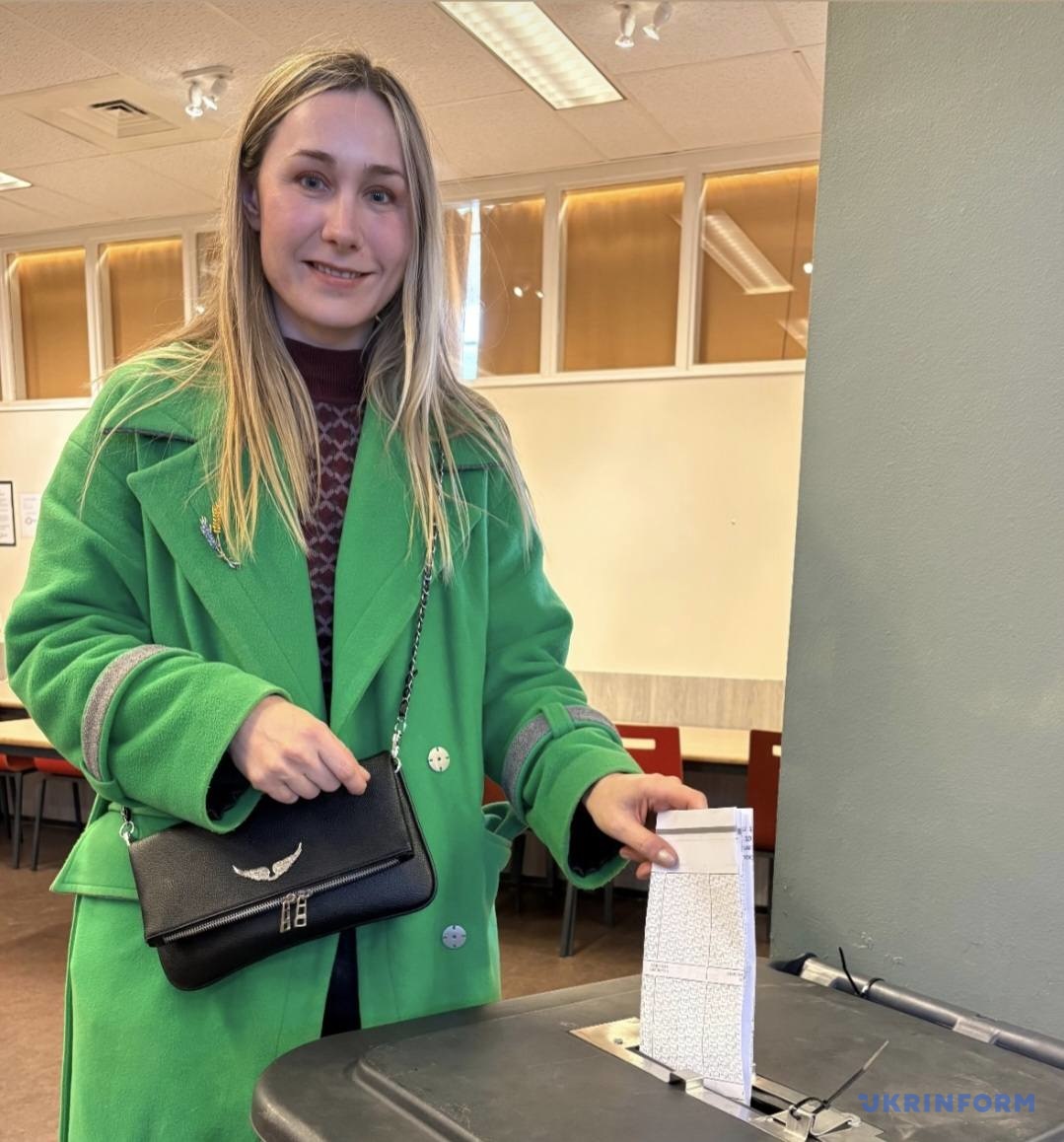
Vita Kovalenko, a Ukrainian-born resident of the Netherlands for nearly two decades, has been elected to the city council of Dordrecht following local elections.
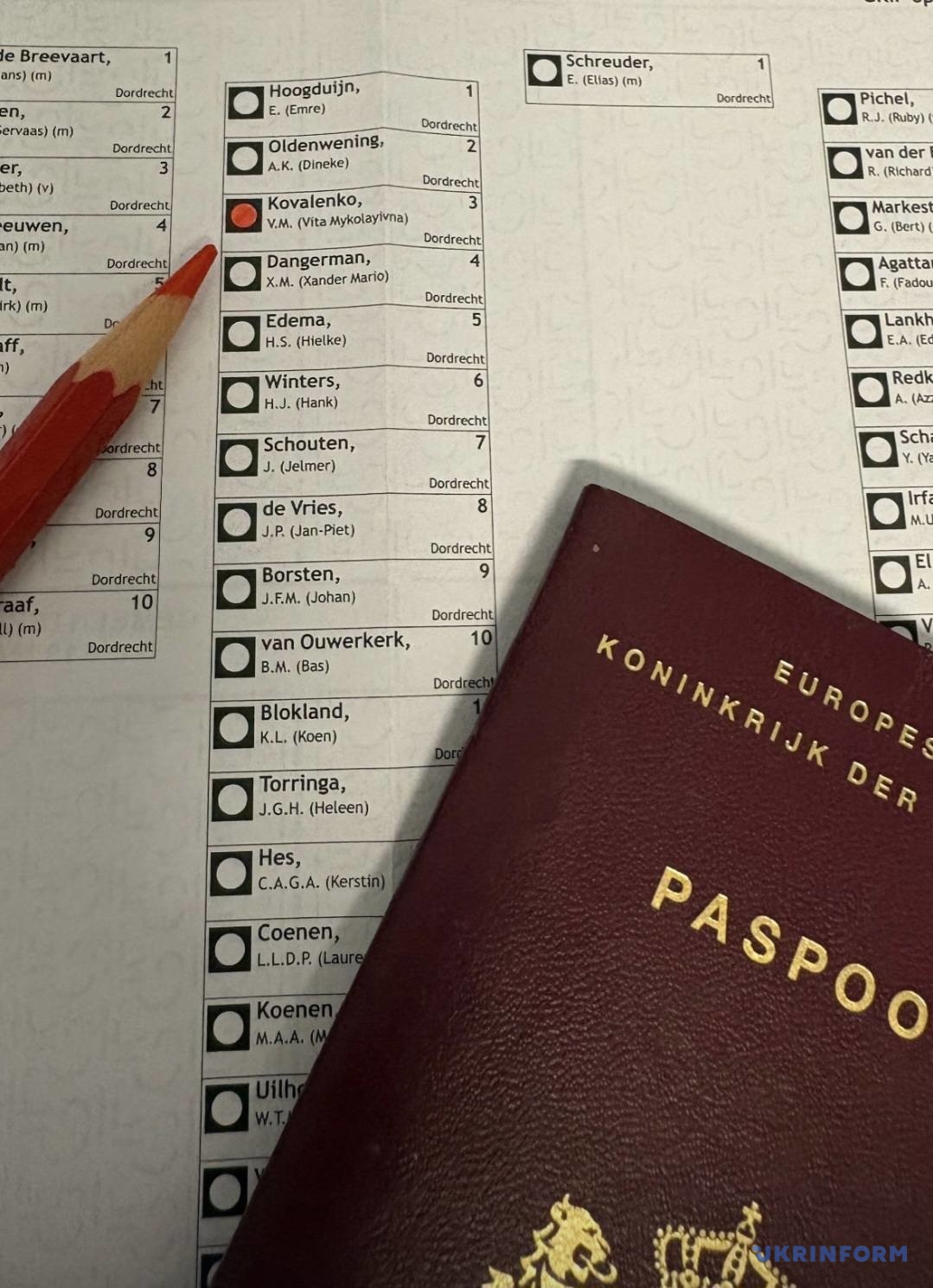
Representing D66—the party of current Dutch Prime Minister Rob Jetten—Kovalenko placed third in the vote, securing a seat on the council.
As a newly elected councillor, she plans to focus on integration, community support, and the development of Dordrecht, while also advocating for Ukraine and the Ukrainian community.
Her journey to public office—shaped by years of activism, efforts to counter Russian propaganda, and a strong sense of purpose—was the focus of her interview with an Ukrinform correspondent in The Hague immediately after the election results were announced.
A NEW PATH: FROM ACTIVIST TO POLITICIAN
Q: First of all, congratulations on your victory. How this idea came about? What motivated you to enter politics?
A: Thank you. Since the beginning of the war in Ukraine, I have been active in the Netherlands, regularly engaging with politicians, diplomats, and government officials regularly advocating for Ukraine’s interests At a certain point, you realize that you are only influencing the process from the outside, while the actual decisions are made by those in office.
It was a long journey. The turning point came at the end of 2024, during a chance conversation with a Dutch politician. We were discussing Ukraine, and she asked me: “Why don’t you do this yourself?”
That was the moment the idea first took shape. My initial reaction was hesitation—I had built a 15-year career in the corporate sector and had never seriously considered politics. I was balancing activism, professional life, and family responsibilities. But eventually I thought: why not try?
I began exploring the options. I visited three parties: VVD (the People’s Party for Freedom and Democracy, formerly led by Mark Rutte), Volt—a pro-European movement that strongly supports Ukraine—and D66, which also actively supports Ukraine.
With D66, I immediately felt a strong alignment in values, vision, and ambition. It is a progressive party committed to democracy and individual freedoms.
I joined, began attending meetings, speaking with members, and gradually mapping out my next steps.
Q: Rob Jetten became one of the youngest prime ministers in the Netherlands, while you are starting your political career at 40. Is it difficult to begin a new chapter from scratch after an established career?
A: When I was exploring my options, I realized that VVD offers an excellent training ground for future politicians, but opportunities are limited. If you haven’t demonstrated political ambition early on, by your forties you are no longer a priority for them.
D66, even before Rob Jetten became prime minister and before its electoral success, was actively looking for new people—new talent, as they describe it. At my first meeting, I simply introduced myself, spoke with members, and asked about their experiences. They were open and supportive of my ambitions. For me, Ukraine was a central issue. I was advised to gain practical experience by running in local elections—where one can make a tangible impact both for Dutch society and for Ukrainians, and build a foundation for the future.
What truly inspired me was the example of a Dutch woman who became a city councillor in Utrecht at 39 and, and, just five years later, a member of parliament.
Q: Why Dordrecht?
A: I currently live in Dordrecht, a city of about 123,000 residents. As a first-generation immigrant, I built my career here and have been advocating for Ukraine’s interests since 2014. Within D66, this experience was considered highly valuable, although I personally felt I lacked political experience.
The candidate selection process was also quite rigorous. Once applications opened, candidates had to complete a full procedure: submit a motivation letter, provide references, and go through several rounds of interviews.
The interviews were conducted by an independent committee, which then evaluated all candidates. I received a very high score—something that genuinely surprised me. I could hardly believe they saw such potential in me. After that, everything moved quickly: I was placed third on the list, and we launched the campaign.
A new path—from activist to politician.
MH17 MADE THE DUTCH MORE AWARE OF REALITY
Q: What exactly did you write in your motivation letter? What goals and priorities did you outline?
A: I drew directly on my personal experience. When I first moved to Dordrecht, I lived in one of the city’s more disadvantaged neighborhoods. At the time, as a divorced woman, I simply could not afford to live in safer, more central areas. After three years there, I realized that many residents had needs and concerns that were not being represented.
The city council was largely composed of men and native Dutch citizens. In my motivation letter, I emphasized that significant groups were underrepresented—migrants, divorced women, and modern blended families.
I am divorced myself and raising children. While I have support from my ex-husband—we remain on good terms—I am ultimately responsible for decision-making and for managing everyday and financial matters.
As a Ukrainian, I am not afraid to fight—I am ready to act. Safety, particularly for women, is one of the core priorities of my program. I have a 14-year-old daughter, and I know how essential it is to feel safe in your own city. My personal experience, my understanding of underrepresented groups, and my life circumstances all contributed to my strong position on the party list. And, of course, Ukraine—support for Ukrainians and our defenders—remains central to my work.
Q: How did your journey as an activist begin? You are often seen on television defending Ukraine’s interests, explaining the country’s position, and helping shape key messages so that Ukraine is heard. How did it all start, and how did you build that platform?
A: My activism began during the Maidan and continued throughout the war. At the time, a group of us organized a symbolic “Maidam” in Amsterdam—on Dam Square, playing on the name. Every weekend, we gathered people, explaining what was happening in Ukraine, the revolution, and the values we were fighting for.
In 2014, my aunt’s family found themselves under occupation in Antratsyt. At the same time, my cousin went to the front to defend his homeland—because Luhansk region is Ukraine. Like many others, both in Ukraine and abroad, I began helping: collecting supplies for him and trying to learn more about the situation facing my family.
At that time, Ukraine’s Armed Forces were very different from what they are today, so we searched for body armor, helmets, and other essential equipment. We first equipped my cousin, and then his entire unit. That is how it all began.
For me, it was crucial to make people in the Netherlands understand that Ukraine needed support—and to explain what was truly happening on the ground. I reached out to journalists, shared personal stories about my family and the occupation, and worked consistently to counter Russian propaganda.
Unfortunately, Ukraine received very limited media attention in those years. Still, in 2014 we managed to secure several publications in major Dutch newspapers. By 2015, I realized that one person alone cannot make a lasting impact. Together with several Ukrainian women, we organized ourselves, established a foundation, and began representing Ukraine’s interests more systematically—bringing Ukrainian stories into the media and countering the strong influence of Russian propaganda.
We later launched a large-scale campaign in the Netherlands focused on the situation of the Crimean Tatars and the persecution they faced in Crimea. We brought a major exhibition, collaborated with partners in Canada, and told their stories. It was during this campaign that I first appeared on national television, representing their voice.
Q: Did the situation change after the MH17 tragedy?
A: The MH17 tragedy forced the Dutch to pay closer attention to what was actually happening—more so than after the annexation of Crimea. For us, it created a sense of hope that they would finally begin to understand.
Our foundation organized commemorations for the victims of MH17, shared information, and gave interviews on behalf of the Ukrainian community. At the time, it seemed clear to us who was responsible for the tragedy—that the war was much closer to them than they realized, and that it required a response.
However, that sense of urgency faded in 2016, during the referendum on the EU–Ukraine Association Agreement. Russian propaganda in the Netherlands at the time was extremely influential. Some political forces actively amplified these narratives, portraying Ukraine as deeply corrupt, while the substance of the agreement itself received little attention.
During that period, national television hosted debates on the referendum, and I took part in them as a representative of Ukraine.
Since then, I have maintained close relationships with various media outlets—particularly national television, which has become more open to factual reporting. I was educated in Ukraine; I am a linguist and speak five languages, so I continue to actively communicate the truth about Ukraine.
NO ONE WANTED TO BELIEVE IN A FULL-SCALE WAR—BUT THERE WAS A SENSE THAT IF IT CAME, IT WOULD BE BLOODY
Q: You mentioned the foundation you created. Does it still operate?
A: No, it no longer exists. The foundation was called Brand New Ukraine. We addressed important—and often difficult—issues through cultural initiatives, exhibitions, and public events, including organizing the first “Days of Ukrainian Cinema” festival in the Netherlands.
At the same time, we were not alone—other foundations were also active. I was deeply involved in this work for about five years.
Later, I had my second child, secured my dream job, and began traveling frequently, which made it impossible to devote enough time to the foundation. When another team member also stepped away, the organization eventually ceased to exist.
That said, I never stopped advocating for Ukraine. I simply shifted my focus—from cultural projects to promoting pro-Ukrainian narratives in the media space.
Q: How long have you been living in the Netherlands? Did you come as a student?
A: This summer will mark 20 years. I moved to the Netherlands in 2006. I first studied international economics at Erasmus University, and later completed a master’s degree in marketing and communications.
Q: How has Dutch society’s attitude toward Ukraine changed over time?
A: It has changed completely. When we first launched the foundation, it was extremely difficult to get people interested in Ukraine. Over time, I even experienced burnout.
In 2022, discussions about a possible war intensified. I was invited to panels and frequently asked what was happening in Ukraine and what the public mood was like. I worked closely with journalists, and I remember that about a month before the full-scale invasion, everyone was asking: will there be a major war?
At the time, no one wanted to believe it—but there was a strong sense that if it did happen, it would be both bloody and prolonged. Unfortunately, that is exactly what followed.
From the very first days of the invasion, I began receiving frequent invitations to appear on television. For the first six months, I was on air two or three times a week, explaining developments in Ukraine. After news broadcasts, I often took part in political talk shows, providing context and analysis.
In those early months, there was a noticeable tendency among some in the Netherlands to “write Ukraine off.” But I consistently emphasized: we will not surrender—we need support.
And we held the line. Within the first six months of the full-scale war, there was a profound shift in public sentiment—from indifference to clear and sustained support. It was, in effect, a 180-degree transformation.
When the full-scale war began, I realized I could contribute in two ways. First, by communicating Ukraine’s message to Dutch audiences through various media platforms.
Second, through personal involvement. My cousin served in the military both at the start of the war and throughout the full-scale invasion, and I feel a deep personal connection to those on the front line. As in any family, you want your loved ones to return home alive. So I volunteered—supporting our soldiers in rehabilitation, providing translation assistance, helping with everyday needs, and organizing trips to concerts and events so they could feel both supported and appreciated.
DUTCH AND UKRAINIANS SHARE COMMON VALUES
Q: Today, the Netherlands is among the top five countries actively supporting Ukraine. I clearly remember how, after the full-scale invasion began, the Dutch opened their homes to Ukrainian families—many of whom are still living there. Why has the level of support been so high?
A: Ukrainians and the Dutch share very similar values. Both societies are highly sensitive to injustice, and this war has genuinely outraged people here.
Back in 2014, when the war first began, Russian propaganda still had considerable influence. Narratives circulated suggesting that “nothing is black and white,” that Crimea had always been Russian, or that people in Donbas wanted to break away from Ukraine or join Russia. But after the full-scale invasion, it became unequivocally clear who the aggressor was.
For the Dutch, it was shocking that such blatant aggression could occur in the 21st century. As a relatively small country, the Netherlands could easily relate to Ukraine’s position in the face of a much larger neighbor. It raised fundamental questions: how can international law fail—and can the stronger side simply act with impunity?
They also came to see that Ukrainians are much like themselves—open, hardworking, and grateful. It is worth noting that the Dutch are generally cautious in their attitudes toward migrants. Yet their direct experience with Ukrainians has led many to become more open and receptive.
The Netherlands is also a prosperous country with a deeply rooted culture of philanthropy. Donations and volunteering are part of everyday life, instilled from an early age.
Dutch society places a strong emphasis on justice, human dignity, international law, and the right to life. In this sense, our values are closely aligned.
Q: Migration was one of the central issues in these elections. Slogans such as “the Netherlands for the Dutch” were widely heard, and migration policy has become increasingly sensitive. At the same time, Russian narratives appear to be exploiting these tensions. Is this affecting attitudes toward Ukrainians, and is support for Ukraine changing?
A: Yes, quite noticeably. I was genuinely surprised by the number of seats won by the pro-Russian party FVD (Forum for Democracy) in local councils.
That said, we must continue to push forward. Russian gas is still entering Europe through third countries, which underscores the need to accelerate change and diversify energy sources.
Take Dordrecht as an example: the city has around 57,000 residential properties, and only about 7,000 are not dependent on gas heating. I myself live in a new building that is fully electric.
This is where local policy becomes crucial. We need to create the conditions for transition—expanding solar and wind energy, encouraging residents to switch to alternative sources. While some decisions are made at the provincial level, municipalities can still play a significant role: raising awareness, providing incentives, offering subsidies for insulation or heat pumps, and supporting households in moving toward more energy-efficient solutions.
It is essential to work toward making our city more energy independent. Given current global developments, this issue has become critically important—and there is still a great deal of work ahead.
Propaganda is another major and highly relevant challenge. For me, it is deeply personal—not only professionally, but also as someone who has been countering Russian disinformation for more than twelve years and has even written a book on the subject. To answer your question briefly: when it comes to decision-makers responsible for supporting Ukraine, I am confident there is no immediate cause for concern.
However, Russian propaganda continues to have a significant impact at the societal level. Among ordinary Dutch citizens, it is influencing perceptions and, in some cases, redirecting support toward the pro-Russian party FVD. This presents a potential long-term risk. The party consistently promotes pro-Russian narratives and has yet to acknowledge that Russia invaded Ukraine. It has a substantial support base that actively echoes these messages.
This influence is not abstract—it manifests in everyday life. Even my son, who was born in the Netherlands and is half Dutch, half Ukrainian, has faced remarks at school such as “go back to your Ukraine” and “the Netherlands is for the Dutch.” As for the online harassment directed at me, I have grown used to it to the point that I simply avoid reading comments. But children are different—they are far more vulnerable.
Q: Do you believe there is an issue with education, where, for example, people in rural areas may be more susceptible to propaganda, more critical of migrants, and more inclined to support anti-immigration narratives?
A: Just a few weeks ago, in one village, a local election campaign centered on the message: “We will not approve the construction of housing for Ukrainians.” Unfortunately, this shows that resistance persists.
I must also acknowledge—somewhat reluctantly—that Dordrecht has taken in proportionally fewer Ukrainians than cities like Rotterdam. Larger urban centers tend to be more accustomed to diversity—different languages, cultures, and backgrounds. But the Netherlands is not only Amsterdam or Rotterdam. In smaller towns, such narratives can spread more easily: “Why should we provide housing for Ukrainians and pay for everything? All resources should go to the Dutch—even those who have never worked.”
In reality, Ukrainians here receive relatively limited support compared to countries such as Germany. Many take on jobs that locals are unwilling to do, while a growing number have already transitioned to renting their own housing and paying taxes. Around 75% of Ukrainians who arrived after the full-scale invasion are employed—starting businesses, contributing significantly to the Dutch economy, and actively integrating into society.
The Netherlands has achieved a high standard of living in part because people can provide for their families even without higher education. Unlike in Ukraine, a university degree has not always been seen as essential.
I recall that in our previous home, my neighbor—a gardener—earned no less than I did, despite my three university degrees and knowledge of five languages. As a result, there is less pressure in Dutch society to pursue higher education, as people know they can succeed without it.
However, there is another side to this. People tend to trust the media, and many do not critically question the information they consume. They read something online and accept it at face value, without verifying sources or engaging in deeper analysis.
So while the ability to achieve financial stability without higher education is undoubtedly a strength, it can also mean that some people lack the tools to assess information critically, making them more susceptible to propaganda. This creates challenges both for society and for local authorities, which must invest in strengthening public awareness and media literacy.
LOCAL COUNCILLOR: A PART-TIME ROLE
Q: After your victory in the local elections, how do you see your mission going forward? What does it mean to serve on a city council?
A: I want to be useful—to share my experience and do everything I can to support the city’s development and bring important issues to the forefront. I also want to set an example: that even at 40, and as an immigrant, it is possible to achieve meaningful goals.
The issues I care about most include support for women, public safety, the transition to clean energy, equal access to the labor market for migrants, assistance to families at risk of poverty, funding for children’s access to sports, and programs that promote healthy lifestyles. And, of course, support for Ukraine remains central. I am committed to ensuring a decent standard of living for all residents and access to basic needs.
At present, only about one-third of city council members are women, so advancing gender equality is also a priority for me. Migration is another key issue. As an immigrant myself, I want everyone—regardless of ethhnicity -- to feel that they belong here and have equal opportunities in education, employment, and personal development. In this election, migration was a particularly sensitive topic.
Q: How do you balance political work with your career? Were you able to keep your previous job?
A: In The Netherlands, serving as a local councillor is considered a part-time role. I have retained my main job and will work four days a week, as council meetings are held on Tuesdays.
Unlike in Ukraine, councillors here often get around by bicycle, there is no dedicated parking at city hall, and the compensation is largely symbolic—it is not a salary, but rather an allowance for time spent. It is important that councillors maintain their primary professions. City councils are composed of people from diverse backgrounds—lawyers, doctors, teachers, and others. The idea is that representatives from different professions and social groups bring forward the needs of their communities and contribute to improving the quality of life in the city.
Q: What would you like to wish Ukrainians living in the Netherlands?
A: I know what it means to start from scratch in a foreign country, in a different culture and language. I was 21 when I arrived in the Netherlands, and as a student I initially couldn’t even find a job as a cleaner. You don’t yet understand how the system works or how society is structured, and to others you may not seem to have much value at first. That can have a real impact on your self-esteem.
For those who arrived because of the war, it is even more difficult. So my main advice is this: learn the language, acquire knowledge and skills here, make the most of the opportunities available—and then use that experience to grow and help rebuild our country.
Iryna Drabok led this conversation. The Hague
Photos via Anton Frolov, Marfa Vasylieva, Vita Kovalenko’s Instagram page