
Everyone is familiar with the dramatic episodes of the naval war that has become an integral part of Ukraine’s broader struggle against Russian aggression. Not only Ukrainians but people around the world know where the Russian warship was famously told to go. The liberation of Snake Island, the recapture of the so-called Boyko Towers, and the sinking of the Russian Black Sea Fleet flagship, the cruiser Moskva, have become defining moments of the war. These are remarkable achievements and a source of justified pride for Ukraine.
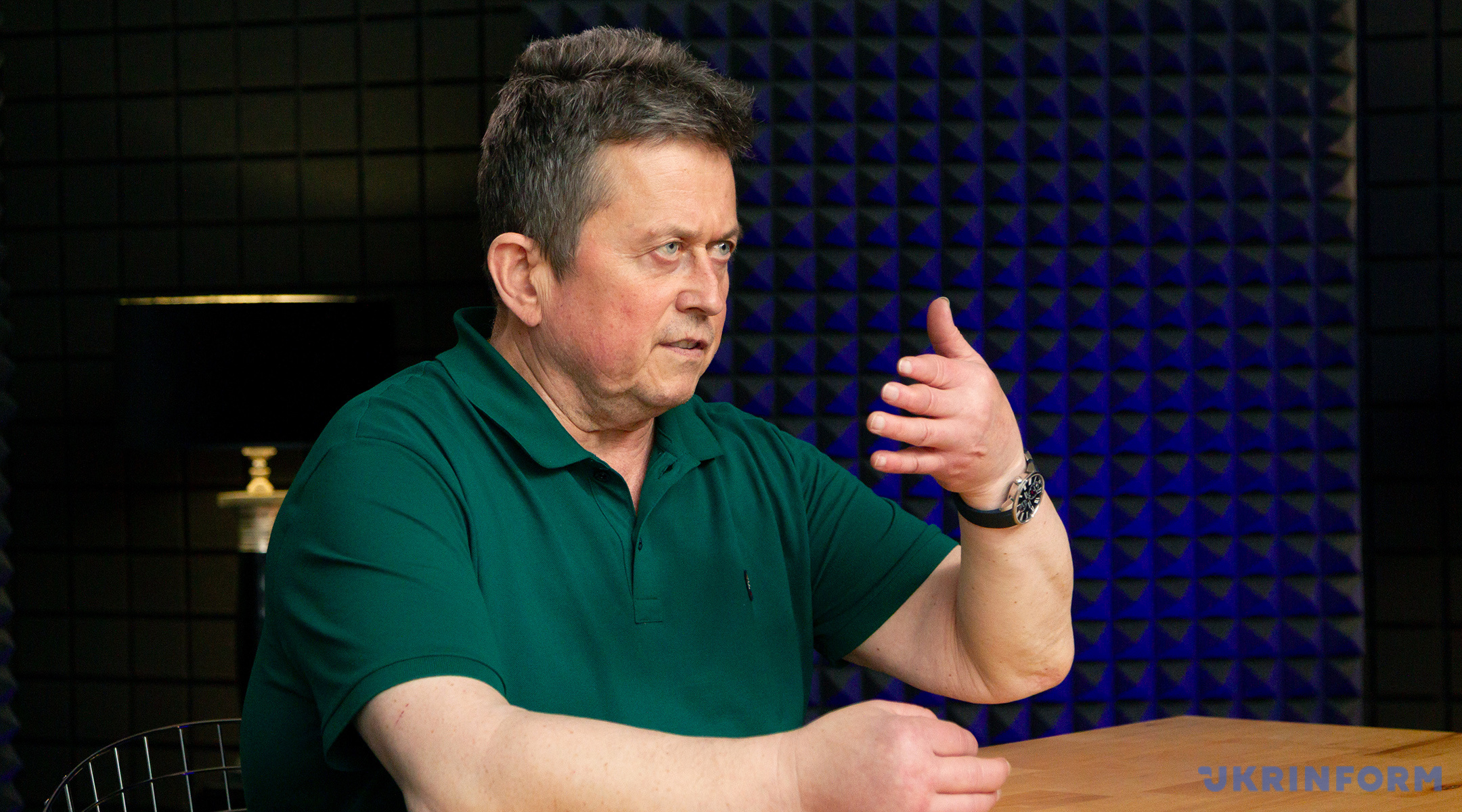
Yet beyond these headline-grabbing operations lies a larger story: how modern, technology-driven warfare is reshaping the maritime domain and how the Ukrainian Navy has adapted to confront a vastly superior adversary in the Black Sea. To explore this broader picture, Ukrinform spoke with Captain First Rank Andrii Ryzhenko, former Deputy Chief of Staff of the Naval Forces of the Armed Forces of Ukraine.
Ukrinform: What was the condition of the Ukrainian Navy after the occupation of Crimea? What is the Navy’s primary mission?
Andrii Ryzhenko: I remember that period very well—2014 and the occupation of Crimea. Russia acted suddenly, and we were completely unprepared to resist, especially from a psychological standpoint. We had prepared for many different contingencies, but we had entirely ruled out the possibility that Russia itself could become the aggressor.
For example, the so-called Boyko Towers, which generated substantial revenue for Ukraine’s state budget, were left completely unprotected, even though we had the forces and capabilities to secure them. Another critical vulnerability was the Kerch Strait. When Russia began blockading Ukrainian military units, one of its first moves was to prevent our ships from putting to sea. Why? Because had those vessels—including missile corvettes and anti-submarine corvettes—managed to leave port and block the Kerch Strait, Russia’s plan to occupy Crimea would most likely have been disrupted.
In the end, only a small portion of personnel—around 30 percent of servicemembers—managed to leave Crimea and relocate to Odesa. Incidentally, this was the highest evacuation rate among all Ukrainian security and defense institutions stationed on the peninsula at the time. The same situation applied to the fleet. Russia effectively blockaded our principal warships, and by the summer of 2014 the Ukrainian Navy was left with only about 20 small, aging boats and a single marine infantry company.
Despite these setbacks, the rebuilding process began. The Naval Institute was established, the command structure of the Ukrainian Navy was restored, and several bases remained available to receive redeployed naval aviation units. These steps laid the foundation for the gradual recovery and future development of Ukraine’s naval capabilities.
At that point, we began thinking seriously about how to rebuild and develop the fleet, and our international partners were ready to support us. Their first question was always the same: What is your vision? What is your strategy?
That was where we encountered a major challenge. No one had given the issue sufficient thought. For some reason, officials within the General Staff and the Ministry of Defense viewed strategy as something that could only be defined by the President of Ukraine.
To address this gap, we organized a series of seminars and brought together representatives from partner countries, including the United States, the United Kingdom, Norway, and Sweden. We specifically involved Norway and Sweden because they face a strategic environment in some ways similar to ours: a challenging neighbor, extensive coastlines, and limited resources for naval development. It was through these discussions that the foundational principles for rebuilding the fleet and restoring Ukraine’s maritime power began to emerge.
UI: But Ukraine did not have time to rebuild its fleet before the full-scale invasion began. Russia launched its invasion and simultaneously blockaded all Ukrainian ports.
It was an extraordinarily difficult situation for Ukraine on every level. First and foremost, a significant portion of our foreign trade came to a standstill. We lost the ability to export our key commodities—agricultural products, iron ore, steel, and other products that had traditionally been shipped by sea.
At the same time, many imports entered Ukraine through Black Sea ports, particularly Odesa and Chornomorsk. Maritime transport effectively ceased, severing one of the country's most important economic lifelines.
The situation became even more challenging because the blockade of Ukraine’s ports also severely restricted the delivery of military assistance that the country urgently needed to defend itself. With maritime routes closed, weapons and supplies could be transported only by road and rail.
Ensuring the steady flow of arms and ammunition therefore became a mission of critical importance. It had to be accomplished under conditions of a naval blockade, at a time when Ukraine had no practical means of influencing the situation at sea or reopening its ports.
At the same time, the disruption of Ukrainian food exports created the conditions for a potential global food crisis. As a result, the search for a solution became an international priority, with the United Nations playing a central role. Thanks to the efforts of the UN and Turkey, an agreement was eventually reached on the so-called Grain Corridor.
Did the Ukrainian Navy play a role in making that possible?
AR: By the time of the full-scale invasion, the Ukrainian Navy had developed a number of important capabilities, although its overall potential remained limited.
At the end of 2018, the Commander of the Navy approved a naval development strategy that clearly defined the service’s priorities. The first stage focused on protecting Ukraine’s ports and maritime economic zone. For that mission, large warships were not considered essential, since operations would primarily be conducted within a range of roughly 100 nautical miles from the coast.
The concept was based on the idea that Ukraine’s immediate maritime security requirements could be met through a force structure optimized for coastal defense and the protection of critical maritime infrastructure. Nevertheless, a decision was later made to pursue the construction of heavier classes of vessels.
There was, however, one important advantage: Ukraine had developed its own coastal missile system. Although it was not fully operational when the invasion began, it was deployed within the first weeks of the war. Its successful use sent a clear message to Russia that Ukraine possessed a credible sea-denial capability—the ability to prevent an adversary from operating freely in a maritime area. In practical terms, the missile system forced Russian forces to push the blockade line farther from Ukraine’s coast, beyond the range at which they could operate safely.
Another critical factor was the deployment of naval mines before the outbreak of hostilities. This was a lawful defensive measure carried out within Ukraine’s territorial waters. The minefields played a key role in preventing Russia from conducting the amphibious landings it had planned near Odesa and Mykolaiv.
It is worth recalling that, in preparation for the invasion, Russia transferred six large landing ships from its Northern and Baltic Fleets to reinforce its Black Sea grouping. These vessels were organized into two amphibious task forces. One operated in the Sea of Azov, where Russian troops were landed with little resistance. In contrast, attempts to create the conditions for a landing near Odesa never materialized, despite several clear demonstrations of intent during March.
The limited naval forces available to Ukraine at the time were primarily focused on countering Russian sabotage and reconnaissance groups. Following the capture of Snake Island, Russia sought to use the island as a forward operating position from which to infiltrate Ukraine’s coastline, disrupt activity in the Danube Delta, and create favorable conditions for an amphibious operation against the Odesa region.
As for the Grain Corridor, both the United Nations and Turkey played indispensable roles in making it a reality. In my view, Turkey's involvement was driven not only by significant economic interests but also by broader geopolitical considerations and its ambition to assert regional leadership.
It is important to note, however, that Russia began working to undermine the arrangement almost immediately. From the second day of the corridor’s operation, we witnessed deliberate obstruction: lengthy inspection queues, administrative delays, and various forms of interference intended to slow maritime traffic. Eventually, Russia withdrew from the agreement altogether.
In fact, Moscow had prepared the ground for that decision in advance. In July 2023, Russian forces demonstratively destroyed the Ukrainian corvette Ternopil using a missile launched from the missile boat Ivanovets—a vessel that Ukraine would later sink. The message was unmistakable: continue operating, and we will target your ships.
Despite these threats, Ukraine's Armed Forces chose to take a bold—and highly risky—step. By that stage, the international maritime coalition had already begun providing tangible support. Ukraine had received dozens of small vessels for its so-called mosquito fleet, capable of securing coastal waters and supporting maritime operations, along with additional air-defense assets.
These capabilities enabled Ukraine to establish control over a limited but strategically vital maritime corridor stretching from Odesa to Snake Island. On that foundation, Kyiv created an alternative shipping route independent of the original grain agreement. The government also introduced additional insurance guarantees for shipowners, helping to restore confidence among commercial operators.
As a result, although Ukraine was unable to return to its pre-war annual cargo-handling capacity of roughly 150 million tonnes, maritime exports recovered far beyond what many had considered possible. Cargo throughput approached 100 million tonnes—a remarkable achievement under wartime conditions and a testament to Ukraine’s ability to restore a significant degree of maritime connectivity despite ongoing Russian threats.
UI: The Ukrainian Armed Forces liberated Snake Island before the Grain Corridor became operational. The corridor was launched in July, whereas the island had already been retaken in June. So, when the Grain Corridor began functioning, was Snake Island under Ukrainian control?
AR: I would say that the key fact was not that Ukraine fully controlled the island, but that Russia no longer did. We kept the surrounding maritime area and the shipping route under fire control, although we did not have a permanent presence on the island proper.
At that time, our air-defense capabilities were still limited, and Russian forces subjected Snake Island to frequent air strikes—virtually on a weekly basis.
Before withdrawing, the Russians had deployed substantial military assets there, including air-defense systems, electronic warfare equipment, and other hardware. Much of it was abandoned during their retreat, and a significant portion was later destroyed by Russian air strikes targeting the island after their withdrawal.
Our control was exercised through periodic raids, reconnaissance missions, and sustained fire control rather than through a continuous military presence. The crucial point was that Russia no longer maintained forces on the island. During its occupation, Moscow had used Snake Island as a forward outpost, deploying electronic warfare systems, air-defense assets, and sabotage groups in an effort to extend its influence over the northwestern Black Sea.
UI: So, with support from its partners, Ukraine acquired the ability to control part of the maritime domain, making it possible to secure commercial shipping. Another widely noted development is that the Russian fleet was effectively forced to abandon many of its bases in Crimea. Is that an accurate assessment?
AR: Partly. The process began in late 2022, when we started deploying naval drones. By the end of the autumn, these systems were operating across large areas of the Black Sea, and their first major attack proved highly successful.
At that time, Russia routinely maintained up to fifty warships and support vessels at sea on any given day. Once Ukrainian naval drones entered the battlefield, however, the situation began to change. The threat posed by these new capabilities forced the Russian Navy to reconsider how and where it operated, marking the beginning of a gradual withdrawal from the active maritime posture it had maintained earlier in the war.
At the time, Russia routinely maintained up to 50 warships and auxiliary vessels at sea, carrying out a wide range of missions. Once Ukraine began deploying naval drones, however, the Russian Navy gradually reduced its presence and pulled many of these assets back from active operations.
The first major warning sign came with the attack on the frigate Admiral Makarov and the minesweeper Ivan Golubets while they were anchored off Sevastopol. At that stage, the Magura naval drone was still a relatively lightweight platform and did not carry a sufficiently heavy warhead. Subsequent upgrades significantly increased its striking power, enabling it to threaten—and potentially destroy—warships of that class.
The attack served as a serious wake-up call for the Russian Navy. From that point on, Russian commanders became increasingly cautious, and the fleet began to retreat from its previously aggressive operating posture. The process accelerated further once Ukraine started employing Western-supplied cruise missiles against targets in occupied Crimea.
A major turning point came with the destruction of the submarine Rostov-on-Don while it was in dry dock in central Sevastopol. The strike demonstrated that even heavily protected naval assets were vulnerable deep inside what Russia had considered a secure rear area. After that, the threat posed to the fleet became impossible to ignore.
The headquarters of the Black Sea Fleet was also targeted, further underscoring the growing vulnerability of Russia’s military infrastructure in Crimea. As a result, Russia began a phased withdrawal of naval assets from Sevastopol, prioritizing the relocation of its newest and most valuable vessels—particularly those commissioned after 2014.
At the same time, part of the Black Sea Fleet’s command structure was transferred to Novorossiysk. By the end of 2023, all of the fleet’s newer surface combatants—around twenty vessels in total—had been redeployed there, reflecting a significant shift in Russia’s naval posture in the Black Sea.
However, several hundred vessels remain in Sevastopol, the vast majority of them support and auxiliary ships rather than frontline combatants. Many of these vessels are aging platforms, some between 45 and 60 years old. Despite their age, they continue to play an important logistical role, and Russia has invested heavily in protecting them.
A dense defensive network now surrounds Sevastopol. The area is heavily shielded by air-defense systems, while specialized measures have been put in place to detect and counter Ukrainian naval drones. Following the occupation of Crimea, Russia upgraded its air-defense architecture, replacing many of its S-300 systems with the more capable S-400s.
As a result, although Sevastopol no longer serves as the principal operating base for Russia’s most modern warships, it remains a key logistics, maintenance, and support hub protected by a layered air- and coastal-defense network.
UI: So, if we were to summarize the current situation in the Black Sea, several conclusions emerge. First, Ukraine’s actions at sea have compelled Russia to redeploy additional air-defense assets to Crimea. Second, a significant portion of the Russian fleet—particularly its newer and more valuable vessels—has been moved to the comparatively safer, though by no means invulnerable, ports of Novorossiysk and other locations. Third, with the assistance of our partners, Ukraine has acquired capabilities that allow it not only to secure commercial shipping and exert control over parts of the maritime domain, but also to maintain situational awareness and influence across both the air and maritime environments at considerable range. This has significantly strengthened our operational confidence and freedom of action.
What capabilities does Russia still retain in the Black Sea? Before the war, Moscow reinforced its Black Sea grouping by transferring additional large landing ships into the theater. Four of those vessels, if I am not mistaken—or perhaps even more—have since been destroyed or rendered inoperable. The cruiser Moskva lies on the seabed near Snake Island, and a number of other high-profile strikes by Ukrainian drones and uncrewed surface vessels have attracted worldwide attention.
AR: At the beginning of the full-scale invasion, the balance of naval forces in the Black Sea was approximately twelve to one in Russia’s favor. Today, that ratio has narrowed to roughly four to one. Indeed, about one-third of Russia’s core combat fleet has been destroyed, including 33 warships and two submarines. The operational freedom of the vessels that remain has been significantly curtailed.
From an operational standpoint, Ukraine has achieved what military planners would describe as the containment of enemy naval forces within their bases. Russian warships now spend the vast majority of their time anchored in port. When they do sortie, they typically operate for only limited periods, under substantial protection, complete narrowly defined missions, and return to base as quickly as possible.
At the outset of the war, Russia’s naval forces were tasked with three primary missions:
Launching missile strikes against Ukraine;
Conducting amphibious landing operations;
Enforcing a blockade of Ukrainian ports.
Over time, Ukraine’s combination of coastal-defense systems, naval drones, precision strikes, and other asymmetric capabilities has significantly reduced Russia’s ability to execute these missions with the freedom and confidence it enjoyed during the early stages of the invasion.
Russia still launches Kalibr cruise missiles from the Black Sea, but nowhere near the scale or frequency seen during the earlier phases of the war.
As for the naval blockade, Russian forces are now capable of effectively threatening only those ports located close to occupied territories, such as Mykolaiv, Kherson, and Ochakiv. More broadly, Russia’s occupation of much of Ukraine’s coastline has continued to affect maritime operations. However, the naval forces concentrated in Novorossiysk and Sevastopol are employed only intermittently and with considerable caution.
Amphibious operations, once one of Russia’s principal naval missions, are now far less feasible. Roughly half of its landing ships have been destroyed, damaged, or otherwise rendered unavailable. In practical terms, Russia no longer possesses the capability to conduct a major amphibious assault against Ukraine’s coast.
In fact, from a military perspective, an attempted landing would likely be extremely costly for the attacker. Any such force would have to survive the transit to the landing area before even reaching shore, making it highly vulnerable to Ukrainian strikes.
UI: Interest in the situation in the Black Sea extends far beyond Ukraine. Military analysts around the world are studying these developments. In one interim assessment, British intelligence concluded that “the Russian Navy’s ability to control maritime spaces in the region and beyond has been significantly constrained, forcing it to rely on constant tactical maneuvering within a limited operating area.” Would you agree with that assessment?
AR: Absolutely. There is a concept in naval strategy known as sea control. It refers to the ability not only to monitor activity at sea but also to respond effectively to threats and shape events within a maritime area.
Russia has largely lost that capability in the Black Sea. It can still observe what is happening, but any attempt to act decisively now carries the risk of an immediate and effective Ukrainian response.
At the same time, we should be realistic: Ukraine does not enjoy full sea control either. As a result, much of the Black Sea has become a kind of gray zone—a maritime space that neither side fully dominates. We are steadily pushing the Russians farther from our coast, but we have not yet restored the level of maritime freedom and commercial activity that existed before the war.
UI: So, during the course of the all-out war, the naval balance has shifted from roughly twelve-to-one in Russia’s favor to about four-to-one today. Has Ukraine fundamentally altered the balance of power in the Black Sea through asymmetric methods?
AR: Yes. By relying on innovative and asymmetric approaches—capabilities the enemy neither expected nor was adequately prepared to counter—we have effectively prevented Russia from capitalizing on even its remaining four-to-one numerical advantage.
Rather than engaging in a conventional contest of fleet against fleet, Ukraine has focused on exploiting vulnerabilities through coastal missile systems, naval drones, precision strikes, intelligence integration, and other nontraditional methods. The result is that a fleet that remains numerically superior has nevertheless been forced into a largely defensive posture, spending much of its time confined to protected bases rather than exercising freedom of action at sea.
In practical terms, Russian naval forces are now largely confined to their bases. The principal threat they continue to pose is the disruption of Ukrainian port operations, but even that threat is increasingly delivered from the air rather than from the sea. Most attacks against Ukraine’s port infrastructure are now carried out using Iskander ballistic missiles and Shahed attack drones.
The fleet itself no longer plays the central role it once did. Russian warships rarely venture far from their bases, and they no longer routinely put to sea even to launch Kalibr cruise missiles. As a result, the burden of striking Ukrainian ports and coastal infrastructure has shifted primarily to land-based missile systems and unmanned aerial vehicles.
UI: Let us turn to a different theater. The full-scale war in Ukraine has now been underway for more than four years, while a new conflict has emerged around Iran—the war involving the United States and Israel, the disruption of shipping through the Strait of Hormuz, and the broader security situation in the Persian Gulf. Looking at events there, one could almost conclude that the lessons of the Black Sea have been ignored.
The United States and Israel, together with the Gulf states—which operate some of the most advanced American military equipment in the world—have struggled to neutralize Iran’s comparatively modest naval capabilities. Even after months of conflict, Iran appears capable of threatening and, to some extent, controlling traffic through the Strait of Hormuz. How do you explain that?
AR: First of all, one feature of current U.S. policymaking is that major decisions—including military ones—can sometimes be made in a highly centralized manner. Many active-duty and retired American military officers I have spoken with hold a rather different view of how such situations should be approached.
The initial phase of the operation was, by all accounts, highly successful. Within the first 48 hours, Iran’s senior leadership was decapitated, its strategic and operational command structures were disrupted, its ballistic-missile capabilities were targeted, and much of its conventional naval force was effectively neutralized.
What was underestimated, however, was the asymmetric dimension of the conflict—the capabilities concealed in tunnels, underground facilities, caverns, and other hardened infrastructure. Iran retained enough of these assets to continue exerting pressure where it mattered most: the Strait of Hormuz.
And that, in itself, was sufficient.
The Strait of Hormuz is one of the world’s most strategically important maritime chokepoints, serving as a critical artery for global energy exports. Yet from a military standpoint, it is not particularly difficult to disrupt. The navigational channels are only about three kilometers wide in each direction, while depths can reach approximately 200 meters.
From the perspective of naval mine warfare, these are highly favorable conditions. Even mines designed decades ago can remain effective in such an environment. A force does not need a powerful blue-water navy to threaten shipping in a narrow strait; relatively simple and inexpensive systems can create a level of risk that commercial operators find unacceptable.
That is one of the central lessons of modern maritime warfare: controlling a strategic chokepoint often depends less on the size of a fleet than on the ability to impose uncertainty, risk, and cost on anyone attempting to pass through it.
In addition, Iran possesses a range of asymmetric capabilities, including suicide boats and short-range missile systems that can be employed against commercial shipping. To disrupt maritime traffic through the Strait of Hormuz, it is not necessary to sink a tanker. A relatively small missile strike against a vessel’s bridge or superstructure may be enough to force it to turn back. Once that happens, dozens or even hundreds of other ships are likely to follow suit rather than risk entering a threatened area.
In other words, maintaining a blockade of a narrow maritime chokepoint does not require a powerful blue-water navy. A combination of naval mines, small attack craft, and limited missile capabilities can generate sufficient risk to deter commercial traffic and disrupt global shipping on a massive scale.
Yet the United States has deployed a carrier strike group to the region, along with seven Arleigh Burke-class destroyers. Why are those forces unable to solve the problem?
The Arleigh Burke is, in my view, the most capable destroyer of its class in the world. However, it also has a vulnerability: its ability to counter certain asymmetric threats is limited, and much of its defensive capability is focused on protecting itself and nearby high-value assets. That is the first point.
The second point concerns mine warfare. The United States previously maintained dedicated mine-countermeasure vessels in the region, but those assets were withdrawn several years ago. As a result, one of the most important tools for securing maritime chokepoints is no longer readily available in sufficient numbers.
At the same time, the Gulf states collectively possess approximately 200 small and medium-sized naval vessels. However, military capabilities alone are not enough. Because the conflict was initially perceived as an initiative undertaken primarily by the United States and Israel, without broad regional coordination, it did not enjoy strong political backing among all potential partners—at least not in its early stages.
That lack of political cohesion complicated the formation of a unified maritime-security effort. As the experience of both the Black Sea and the Persian Gulf demonstrates, protecting critical sea lanes requires more than advanced ships and weapons. It also requires coordinated political support, integrated command structures, and the ability to combine the capabilities of multiple countries into a coherent system.
UI: As you noted, the U.S. decision-making process does not always appear to fully reflect military assessments. That seems to be one explanation for President Trump’s public statements suggesting that the U.S. Navy could guarantee the unhindered passage of tankers and commercial vessels through the straits. Yet, as you have just explained, that is not a straightforward task. The naval forces currently deployed in the region were not designed primarily for escorting large volumes of civilian shipping.
Nor do the Americans presently possess sufficient mine-countermeasure assets in the area to rapidly clear the Strait of Hormuz or its approaches. As events have demonstrated, the specialized vessels required for such operations are no longer deployed there in significant numbers.
At the same time, the United Kingdom has taken the lead in exploring the formation of a multinational coalition dedicated to safeguarding freedom of navigation. However, such an initiative is likely to be a longer-term undertaking, one that may only become fully viable once active hostilities subside.
For now, the maritime situation remains effectively frozen, with no immediate or comprehensive solution in sight.
AR: Yes, the problem remains unresolved. However, following visits by Ukrainian military specialists to the region, there has been considerable interest in Ukraine’s interceptor-drone technology. These systems can effectively address one of the three principal threats facing maritime traffic—the threat from the air.
The drones themselves are relatively simple and cost-effective, and Ukraine has already demonstrated their practical effectiveness in combat conditions.
As far as I understand, Ukrainian specialists also provided a number of highly practical recommendations. One of the key observations was that the region contains many technologically advanced and financially capable states, yet their air-defense and surveillance systems largely operate independently of one another.
What is needed is a single, integrated network for air surveillance and air defense—one capable of combining sensors, command-and-control systems, and interception assets into a unified architecture. Without that level of integration, even sophisticated individual systems cannot deliver their full potential in defending critical maritime infrastructure and shipping routes.Початок форми
The Strait of Hormuz is not particularly large—roughly 50 by 100 nautical miles. The challenge is to synchronize and integrate all available capabilities so that they complement rather than interfere with one another. In that context, our interceptor drones could serve as the first layer of defense.
The second issue concerns naval mines. Today, highly advanced unmanned mine-countermeasure systems are available. These are robotic vessels about 12 meters long, equipped with the same sensors and mission systems as a conventional minesweeper. However, they are much smaller and can even be deployed from an aircraft. They can independently search for, identify, and neutralize mines, then report the results back to their operators.
It is a highly sophisticated technology. In my view, over the next five to ten years, the backbone of our surface forces should consist of small boats and robotic systems of this kind.
UI: To conclude our discussion, let us consider the broader global context. The blockade of Ukraine’s seaports created a dangerous situation that could have triggered a global food crisis, and only international intervention helped alleviate the problem. The war involving Iran has led to the blockage of the Strait of Hormuz, creating severe energy-market tensions around the world.
In other words, the sea—which for centuries attracted people to discover new lands and engage in trade—has increasingly become a stage for the projection of geopolitical power and a means of creating global disruptions from very limited geographic areas.

As far as is known, Iranian officials have threatened that if strikes against their energy infrastructure continue, they could close the strait from the other side as well—through the Bab el-Mandeb Strait and the Red Sea. According to various sources, China is also closely watching these developments, particularly with regard to the Strait of Malacca.
As a result, the vulnerability of major maritime routes is becoming an increasingly pressing concern, placing the global trade and logistics system at greater risk. This reality underscores the need for more effective protection of sea lanes—a mission that has traditionally fallen to naval forces.
At the same time, the war in Ukraine, particularly in the Black Sea, as well as recent developments in the Persian Gulf, have demonstrated that modern asymmetric tactics and emerging technologies can significantly diminish the advantages traditionally enjoyed by conventional naval power.
What lessons should be drawn from these developments? What kind of navy does Ukraine need, and what should our partners be considering as they shape the fleets of the future?
AR: The first lesson is that modern navies can no longer be built around large combat ships alone. Major surface combatants remain important, but they are becoming increasingly vulnerable and cannot operate effectively without a broader ecosystem of supporting capabilities.
The second lesson is that unmanned systems are no longer an auxiliary component of warfare—they have become a permanent and indispensable feature of naval operations. Naval drones, aerial drones, autonomous surveillance platforms, robotic mine-countermeasure systems, and networked reconnaissance assets are rapidly becoming core elements of maritime power.
The third lesson is that control of the sea is no longer determined solely by the number of ships a nation possesses. Increasingly, it depends on the ability to build an integrated combat network. The side capable of linking satellites, drones, coastal missile batteries, air-defense systems, naval forces, and real-time intelligence into a unified operational architecture gains a decisive advantage.
In modern maritime warfare, effectiveness is measured less by the size of individual platforms and more by the ability to connect sensors, weapons, and decision-makers into a single, responsive system capable of adapting to rapidly changing conditions.
For Ukraine, these lessons point to a future fleet built around several key pillars:
Coastal missile forces capable of denying hostile fleets freedom of action near Ukraine’s shores;
Unmanned maritime systems, both surface and subsurface;
Small, fast, and cost-effective combat craft able to operate in contested environments;
Advanced mine warfare and mine-countermeasure capabilities;
Integrated air-defense systems to protect ports, coastal infrastructure, and maritime approaches;
Robust intelligence, surveillance, and reconnaissance networks that provide real-time situational awareness.
Large warships may still have a role to play, but they should no longer serve as the centerpiece of Ukraine’s naval strategy. Instead, they should complement a broader force structure built around flexibility, survivability, and technological innovation.
UI: For Ukraine’s partners, the lesson is somewhat different. Major naval powers must preserve their blue-water capabilities while adapting to a rapidly evolving threat environment. Aircraft carriers, destroyers, and frigates remain essential instruments of power projection, but they can no longer be viewed as sufficient on their own. Modern fleets must also be equipped to counter drones, naval mines, small attack craft, and other low-cost asymmetric threats capable of disrupting global trade at critical maritime chokepoints.
The broader lesson emerging from both the Black Sea and other contemporary maritime theaters is that relatively inexpensive technologies can now challenge military platforms worth billions of dollars. This does not mean that traditional fleets have become obsolete. Rather, it means that twenty-first-century naval power must combine conventional strength with adaptability, autonomy, and technological innovation.
The future belongs not to the side with the largest ships, but to the side that can most effectively integrate advanced technologies, exploit asymmetries, and adapt to the changing character of warfare at sea.
Ultimately, the decisive factor is no longer simply who possesses the largest fleet. The decisive factor is who can adapt most rapidly to a constantly evolving maritime battlefield.
AR: Exactly. The sea has been central to human civilization for thousands of years. Before the full-scale invasion, roughly 90 percent of Ukraine’s imports and exports moved by sea. The war has underscored a reality that perhaps was not always fully appreciated: the provision in Ukrainian law stating that the Navy is responsible for ensuring freedom of navigation is not merely a formal declaration—it reflects one of the Navy’s most important responsibilities. In many respects, it is its primary mission.
The development of the fleet should therefore be guided by that mission above all else. Every decision about force structure, procurement, and modernization should be evaluated through the lens of how effectively it contributes to safeguarding maritime commerce and securing access to the sea.
At the same time, we must recognize the realities of modern warfare. Today, the flight time of missiles, drones, and other aerial attack systems is measured not in hours but in minutes—or even seconds. Under such conditions, any large naval platform becomes increasingly vulnerable. In my view, any vessel longer than approximately 40 meters faces significant survivability challenges in a highly contested environment.
That is why I believe the future lies in a combination of small manned vessels and unmanned systems, organized around two classical naval missions.
The first is sea control: protecting ports, maritime economic zones, offshore infrastructure, and shipping routes, particularly within Ukraine’s near-sea operating area. This mission is fundamentally about ensuring the safe and uninterrupted use of the maritime domain.
The second is sea denial: preventing an adversary from deploying forces freely, operating beyond its bases, or projecting power into areas where it may seek to threaten Ukraine’s security and economic interests.
Together, these missions form the foundation of a modern naval strategy—one focused not on matching a larger opponent ship for ship, but on securing maritime access for oneself while denying it to the enemy.
This mission set encompasses a remarkably broad spectrum of capabilities: naval operations, missile warfare, mine warfare, electronic warfare, intelligence gathering, and precision-strike missions. Modern technology now makes it possible to field relatively small yet highly capable and resilient vessels that can perform these tasks effectively while contributing to national maritime security.
UI: Let us hope these lessons are fully absorbed.
One final question concerns the navies of major maritime powers such as the United States and the United Kingdom. Strategic nuclear deterrence will, of course, continue to require ballistic-missile submarines as a core component of the nuclear triad. But what about large frigates, cruisers, long-range deployments, and the traditional role of naval power projection? Has the war in Ukraine changed how these issues are viewed?
AR: There is no doubt about it. Everyone is paying close attention. The way a navy develops ultimately depends on two factors: a country's strategic ambitions and the resources it is prepared to commit. If you have a naval budget of $100 billion a year, you can afford to build and operate aircraft carriers.
To put the economics into perspective, the annual operating cost of a single aircraft carrier is roughly $3 billion. And that figure covers only routine operation and maintenance—the so-called operational cost. It does not include combat operations, munitions expenditures, or wartime deployment costs.
For comparison, that amount is roughly equivalent to the entire annual defense budget of the Swedish Armed Forces.
That reality illustrates an important point: every country must carefully define what it expects its navy to accomplish and then build a force structure that aligns with those objectives. The question is no longer simply whether large warships remain relevant, but whether they represent the most effective use of resources in an era when relatively inexpensive technologies can impose serious constraints on even the most sophisticated fleets.
Ultimately, every country must decide what it expects its navy to achieve and build its force accordingly.
As for the influence of the war in Ukraine on military development around the world, there can be little doubt that its impact has been profound. The lessons of this conflict are being studied closely by naval planners and defense establishments across the globe.
For example, the United States has established its first dedicated unmanned systems formation in San Diego. The United Kingdom has launched similar initiatives, while Germany, Australia, Japan, and Turkey are all investing heavily in the development of unmanned maritime capabilities, both on the surface and underwater.
More fundamentally, the war has highlighted the enduring importance of asymmetry in military affairs. What is asymmetric warfare? At its core, it is the ability to identify and exploit an opponent’s vulnerabilities rather than confronting its strengths directly.
That principle lies at the heart of maneuver warfare at sea. Instead of lining up fleets and engaging in a direct contest of firepower—as was common in the age of battleships—the objective is to locate the enemy’s weak points and exploit them to maximum effect.
In military theory, this is often described as attacking an adversary’s center of gravity. The rapid development of drone warfare is a direct manifestation of that concept. Unmanned systems have proven effective precisely because they allow a smaller force to challenge a stronger opponent by targeting critical vulnerabilities at a fraction of the cost of traditional naval platforms.
Everything is changing. Countries around the world are studying Ukraine’s experience and drawing lessons from it. The most important task, however, is to ensure that Ukraine itself continues to learn from its own successes and failures.
What Ukraine needs above all is a combination of pragmatism and technological innovation, because technology is what the enemy fears most. Technological superiority creates uncertainty, imposes costs, and forces a larger adversary to adapt on unfavorable terms.
UI: So, the future belongs to technology, innovation, and effective combat performance. And the goal should be to continue improving the balance of capabilities between the Ukrainian Navy and the Russian fleet, steadily shifting that balance in Ukraine’s favor.
AR: Exactly. In modern warfare, victory at sea is determined not only by the number of ships a country possesses, but by how effectively it can integrate technology, innovation, intelligence, and operational creativity. That is the direction in which naval warfare is evolving, and it is where Ukraine must continue to focus its efforts.
Ihor Dolhov led this conversation
Photos by Kyrylo Chubotin / Ukrinform
Watch the conversation in full on Ukrinform’s YouTube channel
’s YouTube channel