
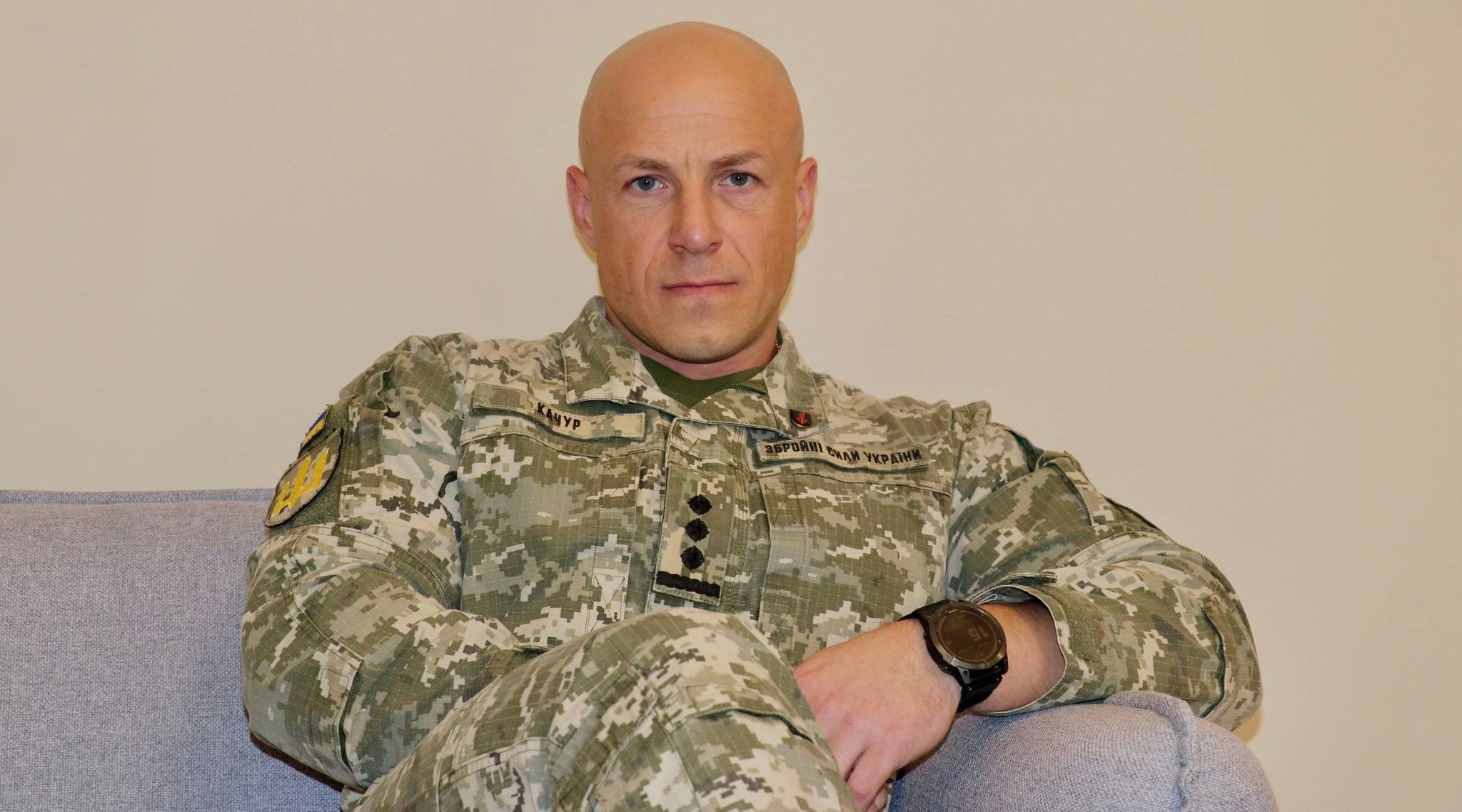
For more than a year, the National Army Academy in Lviv has been led by Roman Kachur, a Hero of Ukraine and Armed Forces Colonel who took over the institution following a Ministry of Defense inspection triggered by mounting criticism over cadets’ training conditions and living standards.
In an interview with Ukrinform, Colonel Kachur spoke about his combat experience, the unusual process through which he was appointed head of the academy, and the reforms already introduced in the educational system, daily routines, cadets’ living conditions, and the overall attitude toward cadets within the institution’s leadership culture.
COMBAT-PROVEN: FROM DONETSK AIRPORT TO ARTILLERY COMMAND
Ukrinform: Roman Volodymyrovych, please tell us about yourself and your combat experience during the Anti-Terrorist Operation and the full-scale war.
Roman Kachur: Like most of my fellow officers, I began my combat career in 2014. At the time, I was commanding a checkpoint near Kramatorsk. I later served in the 81st Separate Airmobile Brigade, including during the battles for Donetsk International Airport. Afterward, I became commander of the 55th Separate Artillery Brigade, where I ultimately met the beginning of the full-scale invasion.
Before being appointed to the academy — that is, prior to early 2025 — I also gained experience commanding a tactical group on the Zaporizhzhia front.
UI: How did you react to your appointment as head of the National Army Academy? After all, this is a completely different role from commanding a combat unit. How difficult was the transition?
RK: I had mixed feelings. On the one hand, there was a sense of satisfaction and pride. On the other, there was also concern, because I was being entrusted with an exceptionally difficult and highly responsible mission. Higher military education was not a field in which I had previously built my professional career. Nevertheless, I accepted the appointment and followed the same principle that guided me in all my previous assignments: to ensure that the unit or institution under my command is as much effective as possible in carrying out its mission and performs better than its peers.
UI: You were appointed head of the National Army Academy in a rather unusual way — through the results of a vote conducted via the Army+ app. Do you consider this method effective?
RK: I believe there is a rational basis to this kind of appointment process. After all, the people voting for a particular candidate either know that person personally or are familiar with their reputation from other sources. In such circumstances, your entire record begins to matter — your experience, your personal qualities, and your professional competence. Frankly speaking, I did not expect to win, but neither did I rule out the possibility. I believe any appointment should take into account a person’s effectiveness in their previous positions.
CADETS WERE NOT THE ACADEMY’S TOP PRIORITY
UI: You became head of the National Army Academy after General Pavlo Tkachuk, who had led the institution for more than twenty years. Before that, the Ministry of Defense conducted an inspection of the academy and uncovered a number of violations. An audit followed. What exactly did it reveal?
RK: First of all, I would say that remaining in one position for more than twenty years is simply too long. After such an extended period in the same role, a person’s engagement with the work inevitably declines, and effectiveness suffers.
Over those two decades, virtually everyone serving here had become loyal to the existing leadership. In practice, it was impossible to join the academy or continue serving there without demonstrating that loyalty. And that undermines professionalism. The audit therefore revealed, among other things, a number of officers holding academic and teaching positions who did not meet the required standards, lacked combat experience, and so forth.
The second issue was something I noticed from my very first days here. Cadets were not treated as the academy’s “number one priority”: living conditions were inadequate, everyday accommodations were poor, mentorship and upbringing were problematic, and there was an excessive emphasis on drill routines. As a result, cadets became disconnected from both the real army and the world around them.
Third, the educational process itself was entirely unadapted to the realities of modern warfare. Instead of dedicating the maximum amount of time to professional military subjects, cadets spent their time on drill training and memorizing regulations that should not even be taught as standalone disciplines at a higher military educational institution.
At the same time, it must be said that the foundation of any effective military education — practical training — was nowhere near the level it should have been. Live-fire exercises, driving instruction, tactical training using combat simulation systems such as LaserTag, the integration of unmanned aerial systems and ground robotic platforms, and the study of software such as Delta and Kropyva were almost entirely absent.
ONLY THE BEST CAN TRAIN THE BEST
UI: Slightly more than a year is already enough time to draw some initial conclusions about your work in this position. What changes have you managed to implement at the academy during this period?
RK: You know, one year is not really a long time when it comes to serious reforms. More time is needed. Under the conditions in which we are operating today, we need at least another year — and ideally two or three more. We need the opportunity to graduate at least one full class of cadets trained entirely under these new realities and according to the reforms we have introduced. Only then will it become clear whether our approach to running the academy is truly effective. After all, the ultimate measure of our work is a highly qualified officer.
That said, we have already changed several obvious and unacceptable things. First and foremost — the people who teach here. At my initiative, a number of officers were transferred to the academy who, within the Armed Forces, were among the very best in their respective fields and who possess real combat experience. And this process is ongoing.
My logic is simple: only the best can train the best. Among these instructors are also academy graduates who went through long and difficult combat deployments and have now returned to these walls as mentors for a new generation.
UI: It is known that cadets complained about poor access to medications, low-quality food, and similar issues. How has the situation changed in these areas?
RK: We have completely rethought our approach to cadets’ living conditions and everyday life. A human-centered — or more precisely, cadet-centered — approach is now one of the academy’s core principles. We are working to create conditions in which cadets feel comfortable and can focus fully on their studies and personal development. We are continuously renovating and improving living facilities and everyday accommodations.
UI: And what financial support does a cadet at the National Army Academy receive today?
RK: It ranges from 10,000 to nearly 23,000 hryvnias, depending on the cadet’s year of study and academic performance. Formally, this is not considered a scholarship but monetary support. In addition, cadets are fully provided with accommodation, meals, uniforms, and equipment, as well as medical care.
I RUN AND EAT TOGETHER WITH THE CADETS
UI: Among the cadets’ complaints were allegations of humiliation, including by officers. What mechanisms exist today to protect cadets?
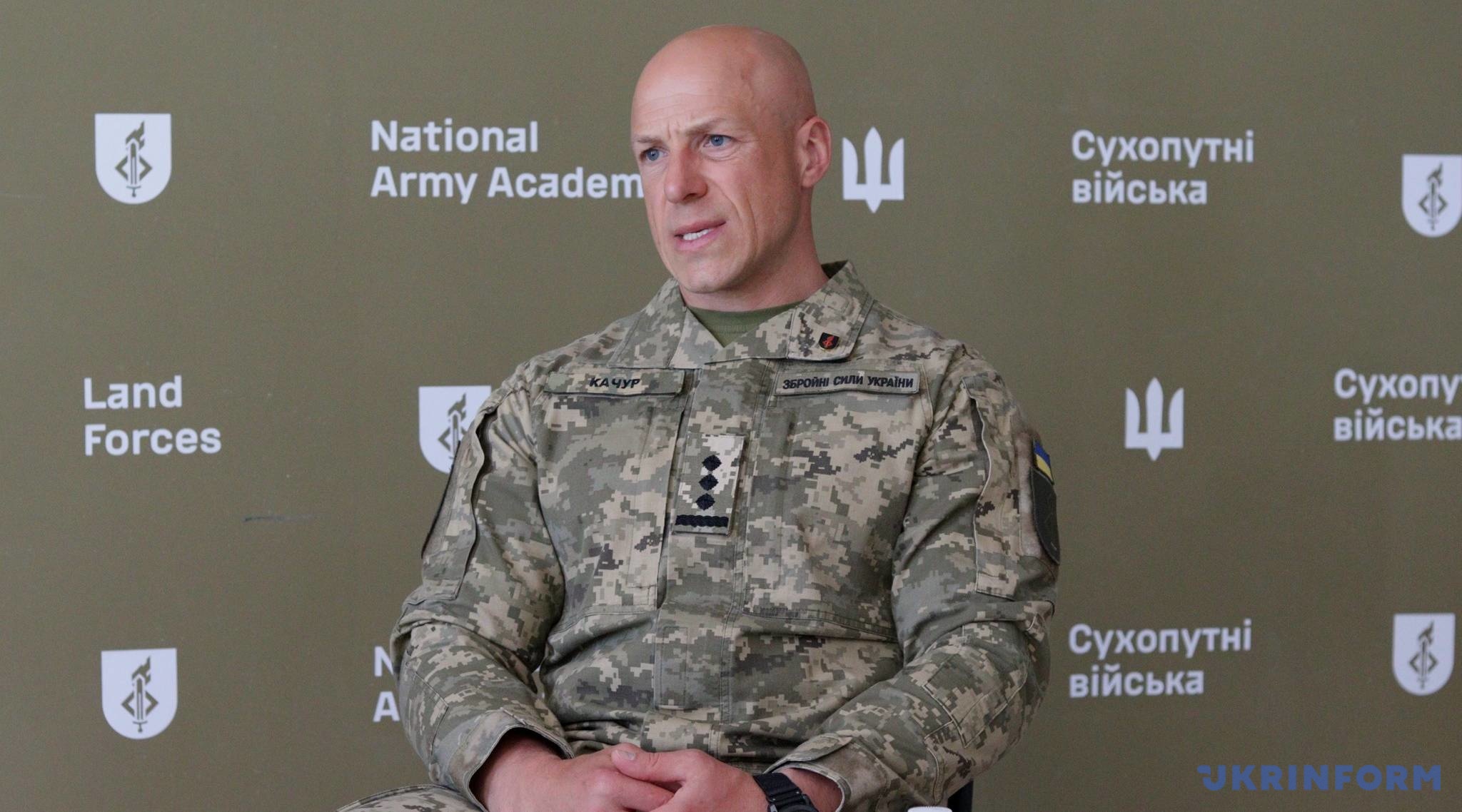
RK: We are doing everything possible to ensure that such behavior becomes completely unacceptable within our institution. Personally, I try to maintain constant communication with the cadets. I set myself the goal of meeting and speaking with every group at least twice a year. Sometimes I gather entire courses together and speak with them without their supervising officers present.
They are free to raise any issues that concern them — from the educational process to the fairness of disciplinary measures and everything in between. All cadets also have my phone number, as well as access to an open online form where anyone can submit suggestions or report problems.
At first, they felt somewhat uncomfortable with how constantly present I was around them, but by now they have gotten used to it.
In general, I try to immerse myself as much as possible in the cadet environment — I run with the cadets, attend classes alongside them, and eat with them in the cafeteria. By the way, I can say that the quality of food here is at a fairly high level.
UI: At one time, a significant part of cadets’ daily life — and often even their studies — was consumed by cleaning duties around the academy grounds. That is hardly what future officers should be spending their time on. What is the situation now?
RK: Today, our cadets are no longer assigned to work details, duty shifts, or routine assignments, except for maintaining order within their own living quarters. Cleaning across the academy grounds is now handled by civilian maintenance staff whom we added to the personnel structure.
I also relieved cadets of unnecessary guard and ceremonial duties. For example, they previously had to stand guard at the central entrance to the main building or outside the office of the academy head.
More broadly, I reorganized the cadets’ daily schedule, especially their time after lunch. That period is now designated for “self-development,” and each cadet independently decides how to use it: preparing for classes, visiting the library, engaging in sports, or simply resting.
At the same time, the academy now offers a broad range of opportunities for well-rounded personal development. Some cadets focus on sports and are able to compete at both national and international levels. Others choose clubs, meetings with prominent guests who regularly visit the academy, or participation in the city’s cultural and civic life. The key requirement is that discipline be maintained and academic performance remain strong.
By the way, I also changed the format of the morning physical training routine.
UI: Physical exercise had always been considered one of the essential elements of a cadet’s daily schedule…
RK: The thing is, I have been actively involved in sports my entire life. I was once a cadet myself, and I remember very well how those morning exercises used to be conducted. They did not provide the benefits they were supposed to. Now, participation in morning exercise is required only for those who demonstrate unsatisfactory results in physical fitness tests. As for everyone else, if they meet the required standards, there are no issues.
FIELD TRAINING NOW MATCHES THE CONDITIONS OF A REAL BATTLEFIELD
UI: And if we speak directly about the educational process itself, what key changes have taken place?
RK: The first thing we tackled was a full-scale revision of all training curricula.
For example, we removed the previously mentioned drill training and the study of military statutes as standalone disciplines. We reduced the number of hours allocated to certain subjects while significantly expanding instruction in areas such as tactics, ground robotic systems and UAVs, firearms training, combat deployment of missile and artillery units, engineering troops, and related fields.
At the same time, we substantially increased the practical component of training and changed the overall approach to how exercises are conducted. Today, when training sessions take place in the field, they are designed to replicate the conditions of a real battlefield as closely as possible.
I also prohibited scheduling three different subjects in a single day. In practice, this leaves instructors without enough time to properly teach the material in full, while cadets struggle to prepare for so many disciplines simultaneously — their attention becomes too fragmented. As a result, no more than two different subjects are now taught in a single day.
In addition, before my arrival, academy graduates were effectively trained only to the level of platoon commanders. We changed that. During the first year, cadets learn to command a squad; during the second year, a platoon; during the third year and the first semester of the fourth year, a company. The final semester of the fourth year is already focused on battalion staff-level work.
What made us adopt this approach? Because our graduates may become company commanders after only a short period of time — or even immediately after graduation. Thanks to the training they receive here, however, they are already trained to operate at the company level or within a battalion staff.
We also reorganized the academic departments: some were reduced or merged, while others were newly established — including the Department of Unmanned Systems, whose relevance in modern warfare hardly needs to be explained.
At my initiative, we also introduced an experimental approach to teaching English. The idea is that first-year cadets study the language intensively every day during their first three months at the academy. The goal is to give them a strong foundation that will allow them to represent the academy internationally, participate in exchange programs, and communicate confidently with foreign cadets and visiting delegations. It also makes it easier to work with Western weapons systems. Later, once they become officers, English will serve as an essential working tool in communication with foreign counterparts.
UI: Since we have already touched on foreign languages, could you tell us more about the formats of the academy’s international cooperation today?
RK: At present, the academy cooperates with more than ten foreign military higher educational institutions from Poland, Lithuania, Romania, Latvia, Denmark, Finland, Sweden, the United Kingdom, and several other countries.
These partnerships take a variety of forms. They include overseas training opportunities for our cadets, exchange programs involving participation in tactical exercises, and faculty exchanges. Our instructors, for example, travel to foreign military academies to teach disciplines related to the employment of mechanized and engineering forces.
Recently, our cadets returned from Italy, where they participated in the “International Forum for Peace, Security and Prosperity.” They also took part in International Cadet Week in Lithuania. In turn, cadets and officers from military academies in Denmark, Finland, Sweden, and Lithuania visited us to participate in the half marathon dedicated to Infantry Day.
Another important area is academic cooperation, including participation in international scientific forums and opportunities to publish in specialized journals.
There are also numerous international sporting events and reciprocal delegation visits in which I personally take part. I am genuinely interested in seeing how officer training is organized within other military education systems.
“OUR GRADUATE IS A PROFESSIONAL WARRIOR AND A LEADER-COMMANDER”
UI: What is the academy doing today to encourage the younger generation to enroll?
RK: We are building active partnerships with regional administrations, city councils, schools, and military lyceums. We send our representatives there — including cadets themselves — to speak directly with young people about the opportunities offered by studying at the academy.
We also organize joint training programs with Centers for National-Patriotic Education, youth organizations, and civic groups, giving prospective applicants the opportunity to experience the realities of military education firsthand.
Our recruitment approach is designed to be as creative and dynamic as possible. We actively use radio, television, and social media, where cadets themselves are the main protagonists. And this strategy is already delivering results: we have managed to build our own growing pool of prospective cadets, and that number continues to expand steadily.
In addition, we are expanding our media outreach by producing engaging and informative social media content, maintaining a consistent public presence, and cooperating with PR units at combat brigades and civic organizations. The academy also actively participates in public events throughout the city to promote higher military education and the cadet path.
UI: Finally, what would you say to young Ukrainians considering the National Army Academy as the place to build their future profession?
RK: First, we are focused on the individual we are training — the cadet. Second, our educational program is fully adapted to the realities and demands of modern warfare. Third, throughout the educational process we use the same weapons, equipment, drones, robotic systems, and software currently employed on the battlefield.
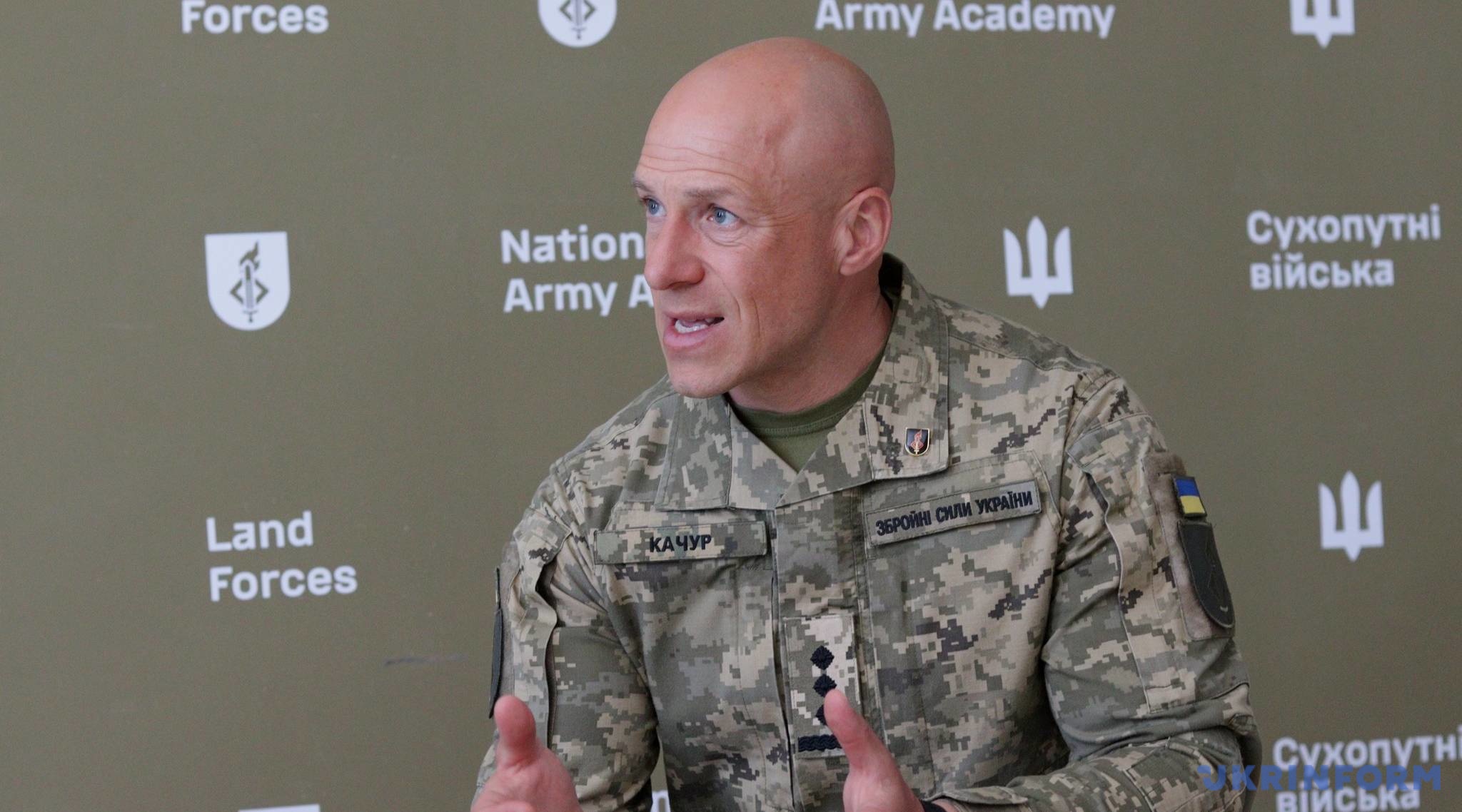
Fourth, cadets have the opportunity to study in one of the best cities in Ukraine — and that truly matters. And finally, our graduate is a strong individual, a professional warrior, and a leader-commander.
Ihor Fedyk led this conversation
Photos via Author and courtesy of the National Army Academy’s Press Service
National Army Academy’s Press Service