
Even before the United States and Israel escalated the war in Iran in early February, President Volodymyr Zelensky announced that Ukraine would begin exporting weapons in 2026. What does this signal? What is Ukraine prepared to bring to the global arms market? How strong is the demand for our products—and can they return Ukraine to a leading position among the world’s arms exporters?
Between 2009 and 2014, Ukraine ranked among the top ten global arms exporters. Today, however, according to the Stockholm International Peace Research Institute (SIPRI), Ukraine is the world’s largest importer of weapons. The war has forced the country into the role of the biggest buyer and recipient of arms.
At the same time, the pace of wartime innovation has been extraordinary. Ukraine has advanced so rapidly that it now possesses entirely new products—solutions that, in some cases, have no direct equivalents on the global market. And it is precisely these capabilities that Kyiv is preparing to export.
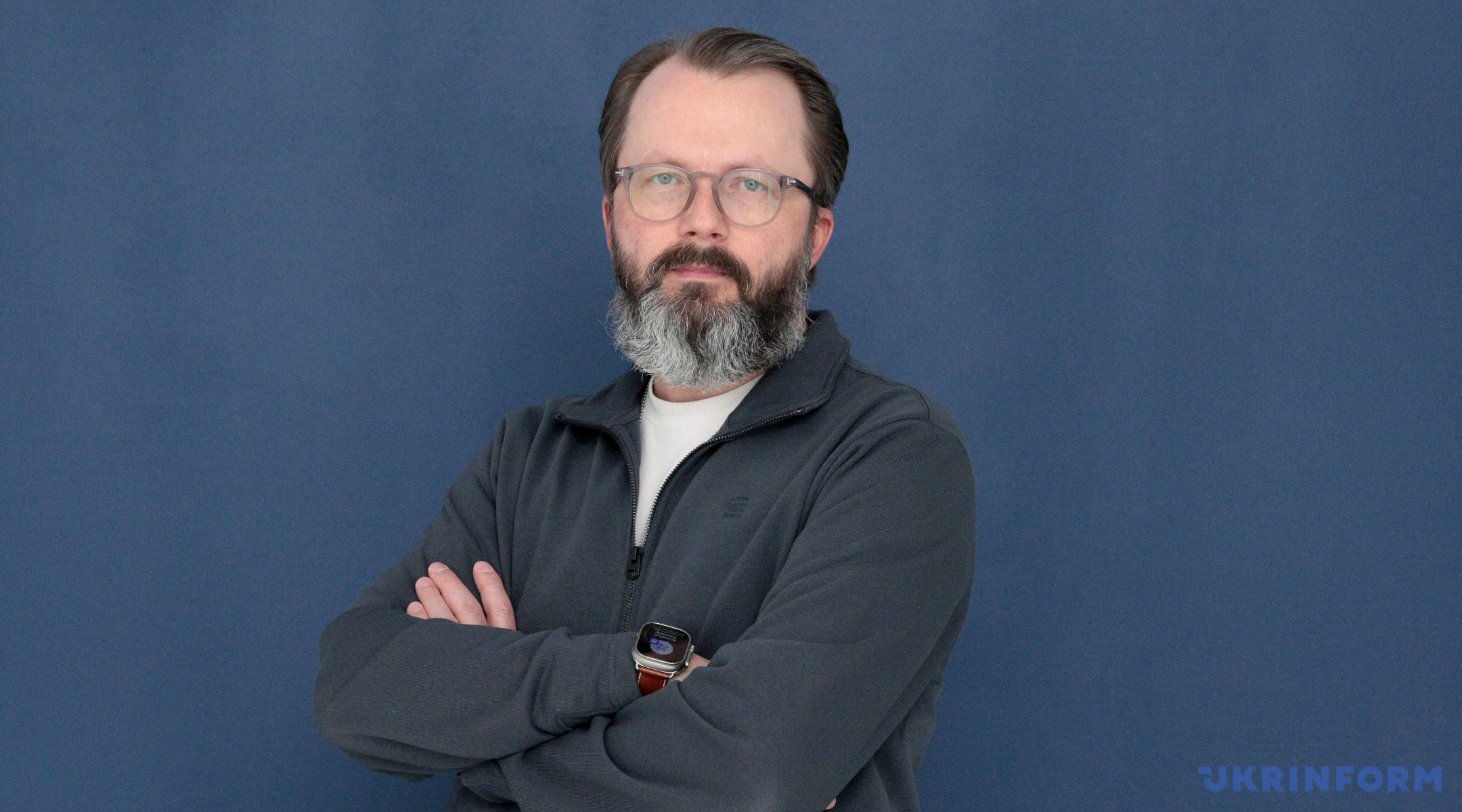
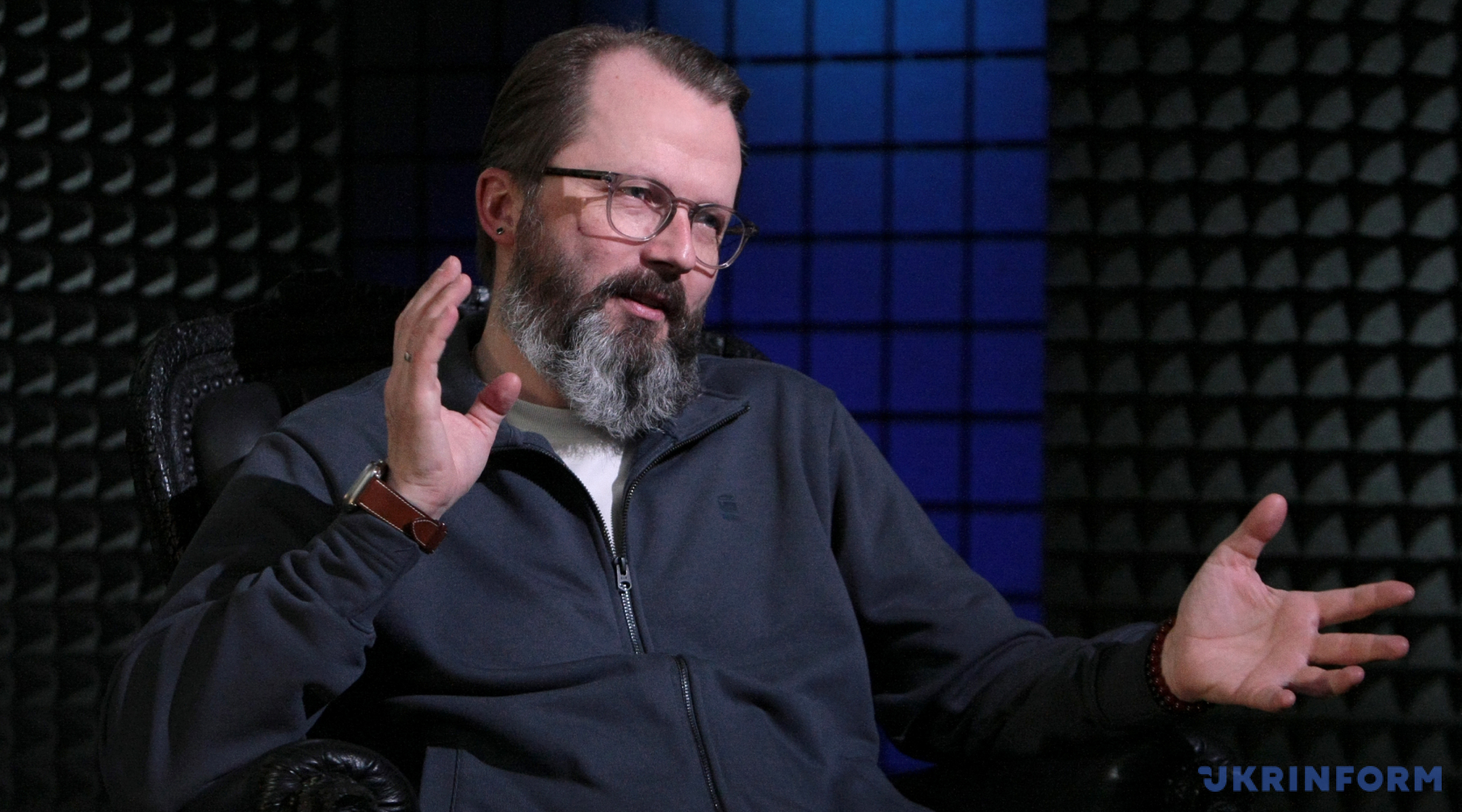
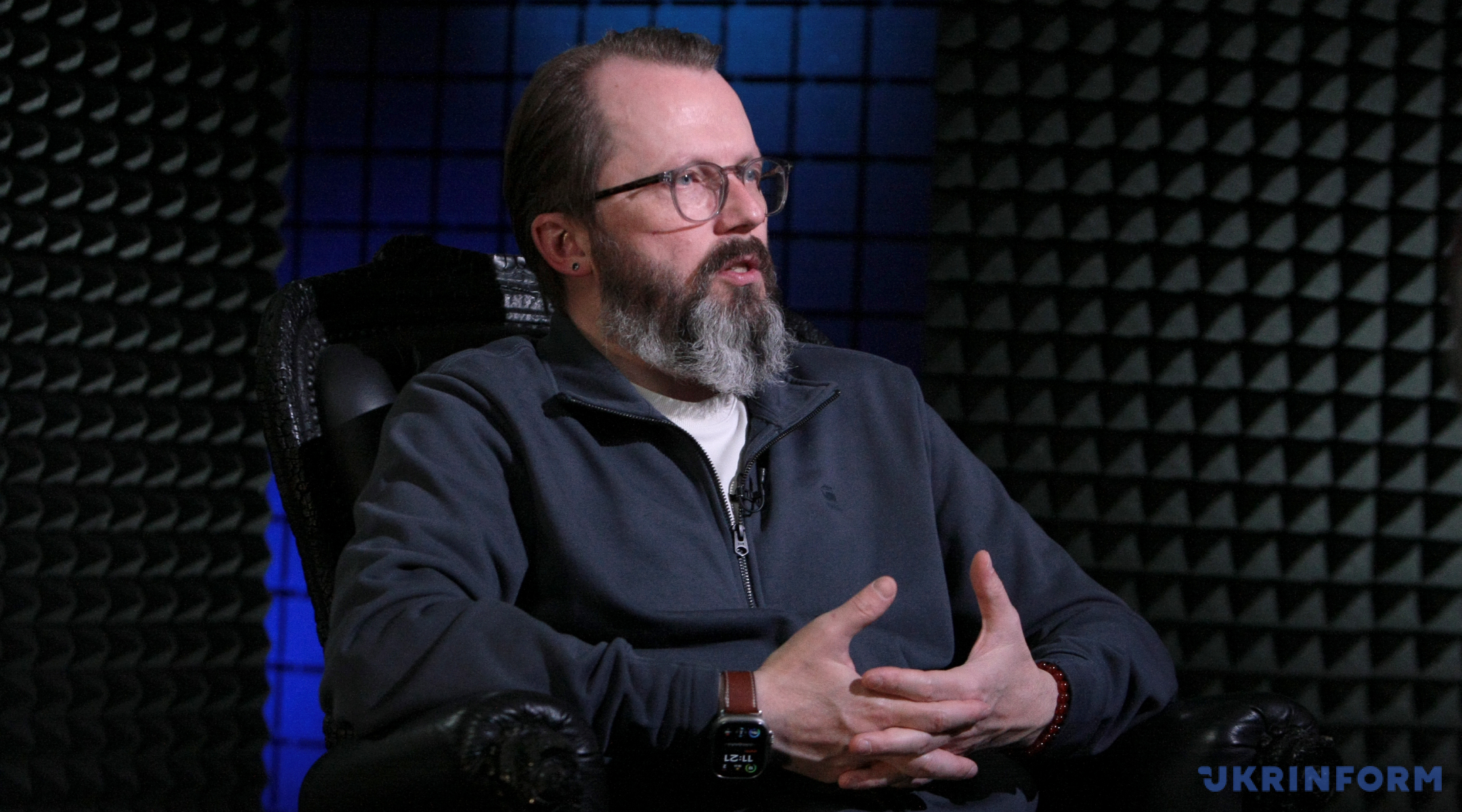
Ukrinform discusses this complex and highly specialized topic with defense industry expert and head of an arms manufacturing company, Anatolii Khrapchynskyi.
Q: Mr. Khrapchynskyi, you not only produce the systems we are discussing today, but also have a strategic understanding of global arms markets and Ukraine’s potential role in them. When—and with what—can Ukraine realistically return to the global arms market?
A: At one time, Ukraine was among the top arms exporters. But let’s be honest: we were largely selling off Soviet-era stockpiles. There was little real technology behind it—only a misguided drive to disarm the country. In hindsight, that was not an asset but a critical vulnerability, one that worked against us in both 2014 and 2022.
When we eventually began receiving Western weapons, they were not intended to secure our victory—they were designed to help us endure. Yet even under those constraints, we stabilized the situation and held the enemy back.
That is why returning to the global market today must be done differently. It is not enough to declare ambitions—we must create the conditions for private companies to operate freely and competitively. I strongly support the idea of a “green corridor” with partner countries. In peacetime, arms exports are a matter of trade; in wartime, they must become a framework for joint problem-solving and technological cooperation.
We need joint ventures and mutually beneficial technology exchange. For a long time, our partners did not provide us with long-range weapons—and what is the result? We developed our own capabilities. Today, our systems can reach targets such as the Votkinsk plant and ports in the Leningrad region, contributing to a reported 40 percent reduction in Russian oil exports.
This became possible because we built our technologies from scratch. We leveraged the democratization of high technology: what was once restricted to a narrow military sector is now widely accessible in the civilian domain. We took these solutions, adapted them, and integrated them into weapons production.
That is why Ukraine must return to Europe not with isolated weapons systems, but with a full ecosystem. When Russia launched its full-scale invasion, we requested the world to secure our skies. Today, we are already being requested to help secure the skies over NATO facilities in the Middle East. We once sought security guarantees—now we must position ourselves as a provider of security for Europe. That is our most valuable export.
Q: Your approach is entirely logical: we need a clear understanding of what we bring to the market, where we are entering, and how to secure a sustainable presence—not just a short-term breakthrough. Achieving this requires several structural shifts.
First, private companies have emerged in Ukraine’s defense sector that are ready to operate in export markets. Second, the state’s regulatory framework must evolve accordingly. Third, robust protection of intellectual property rights must be ensured.
A: On that point, it is worth recalling the recent interview by Rheinmetall CEO Armin Papperger in The Atlantic. There were long-standing concerns in the West that Ukraine might simply copy foreign weapons systems. In reality, the opposite has happened: we have developed our own indigenous solutions.
This is why safeguarding intellectual property rights has become a critical issue. Many Ukrainian manufacturers are creating innovative products but are not properly registering or protecting them. Yet without a stable legal framework, it is impossible to compete globally or safeguard these technologies.
Q: Exactly. Intellectual property created by private companies must be protected if we are to bring it to international markets. For instance, President Trump recently stated that the United States no longer needs Ukrainian assistance in countering Iranian drones in the Middle East. At the same time, there are reports that American and Ukrainian companies are jointly producing and deploying interceptor systems. Is that accurate?
A: Take Merops, for example—an American interceptor drone intended for use in the Middle East. Its effectiveness, however, is largely the result of Ukrainian combat experience. At the same time, it costs around $15,000, while Ukrainian interceptor drones, even in their most advanced configurations, are roughly three times cheaper. This clearly demonstrates why cooperation matters. This is the economics of security—something that should bind allied nations together.
Why are we now observing signs of strain within NATO? In part, because of renewed pressure to prioritize American-made systems. But this dynamic is not new—Europe has long depended on U.S. fifth-generation aircraft and Patriot air defense systems. Only recently has the EU begun developing alternatives, such as the Franco-Italian SAMP/T system, which is capable of countering ballistic threats.
Today, competition is no longer just about platforms—it is about technology. The United States, for example, does not grant licenses for the production of its latest PAC-3 missiles, largely due to concerns over reverse engineering. As a result, most countries continue to produce the older PAC-2 systems. The irony, however, is that PAC-3 itself reached its current level of sophistication during the war in Ukraine—as a response to significantly upgraded Russian Iskander missiles.
This brings us to the most sensitive issue: ownership.
The United Kingdom is currently commissioning ballistic missiles for Ukraine, with a projected range of 600 kilometers and a unit cost of up to $1 million. The program is state-funded, with three companies involved in research, design, and development, and the system is expected to be ready by the end of 2026. But who will own the technology? The British government—because it is financing the project.
Now compare this with Ukraine’s model.
When we faced shortages of Javelin and NLAW systems, FPV drones emerged as a battlefield solution. These were developed by private Ukrainian companies. The technical requirements did not come from ministries, but directly from military units communicating with engineers. Despite the absence of a unified state strategy for the defense-industrial sector, the private ecosystem has become the primary engine of innovation. Over the course of the war, the number of private arms manufacturing companies has grown from around 20 to approximately 1,500. Of these, roughly 800 are already capable of entering international markets, pursuing Initial Public Offerings (IPOs), and partnering with major European firms.
In the West, development pipelines—particularly those associated with institutions like DARPA—can take years, involving lengthy certification processes and substantial costs. In Ukraine, this cycle can sometimes be compressed to weeks: from frontline feedback to deployment of an improved system back in combat conditions. This speed is a critical advantage, though it comes with a trade-off—limited financial capacity. As a result, we are often forced into reactive, short-term solutions rather than systematic, long-term capability development, such as comprehensive coverage of communication frequencies.
This is precisely why Ukraine’s entry into the global market represents an opportunity to disrupt the existing model. Not through scale alone, but through speed, adaptability, and cost-efficiency—factors that challenge traditional defense giants.
What we need is not merely procurement contracts, but a genuine framework for technology exchange. Europe brings industrial capacity and established systems; Ukraine contributes ingenuity and rapid iteration, dramatically shortening the cycle from threat identification to operational solution. We are no longer recipients of security—we are becoming contributors who help define its future.
Q: That said, a regime of free technology exchange is only viable where there is trust and alignment among allies. As you noted, in the United States, when the government places a contract with multiple companies, they effectively become co-developers, while the government retains ultimate control over the intellectual property. It is also the government that regulates exports and procurement. This model is difficult to circumvent under current conditions—even within the European Union. Perhaps this will evolve with initiatives such as a “military Schengen,” but for now, government oversight remains a structural constant.
As you noted, we are capable of producing solutions within 14 days—sometimes even faster—depending on battlefield requirements. Most foreign partners simply cannot operate at that speed: they are bound by approvals, procedures, and compliance requirements. Perhaps this gap will narrow with the emergence of a new EU-centered defense framework—one that Ukraine may eventually join.
At the same time, private companies have become full-fledged actors in Ukraine’s domestic defense market. Is that a strength? Undoubtedly. Is it also a weakness? At times, yes. Intense competition has produced what you aptly describe as a “zoo”—an overabundance of diverse, often incompatible systems. This fragmentation will inevitably require consolidation and systematization based on clear principles. Yet formulating such principles is extremely difficult under the constant pressure of war. Still, preparation for a post-war environment must begin now—and it is likely that both developers and manufacturers are already moving in that direction.
A: Our well-known “14-day” R&D cycle is both a strength and a vulnerability. Limited funding often forces us into reactive, situational decision-making rather than long-term strategic planning.
Take electronic warfare (EW) systems as an example. We frequently omit internal monitoring and control subsystems because they increase cost. The reasoning is pragmatic: why invest more in a system that may be mounted on a pickup truck with a frontline lifespan of only a few weeks? But this is precisely where the trap lies. Without a broader strategy, we ultimately incur greater costs over time.
Instead of continuously producing “disposable” solutions, we need to transition to modular architectures.
I consistently stress the need to eliminate this “zoo” of systems. The way forward is unification and standardization. Rather than trying to integrate every function into a single platform, we should design separate modules—a power generation unit, a power supply unit, an antenna—each independently codified and interoperable.
This is also the foundation for effective cooperation with Europe. It creates a genuine win-win dynamic: we can transfer our advantage in speed—our ability to adapt technologies to battlefield realities within weeks—while European partners can instill a rigorous certification culture. Not the superficial acquisition of ISO certificates, but real compliance through audits and quality control. This is a critical mechanism for reducing design and construction faults and scaling production sustainably.
As for the so-called “secret technologies,” the reality is far less romantic. We are witnessing a full-scale democratization of technology. Much of what underpins modern weapons systems is based on commercially available components. The barriers to entry have eroded. This is why, on training grounds in countries like Poland, we now see drones that are nearly identical to Ukrainian designs. In fact, even Ukrainian companies are beginning to dispute who borrowed which airframe concept.
Much of this is already in the public domain. But there is one thing you cannot buy on the market. Ukraine’s unique asset is experience and expertise —our ability to rapidly absorb what is available and immediately turn it into an operational advantage. That experience is our most valuable export.
Q: Indeed, hardware is becoming increasingly commoditized. Components evolve quickly and can be integrated with relative ease. But other layers—software and communications—remain critical. How can they be protected?
A: What we are doing today to secure information and counter enemy electronic warfare is the result of an enormous effort by our software developers and engineers. This is not just “code,” but an integrated toolkit embedded within weapon systems. And notably, many of the underlying tools are publicly available. Our advantage lies in how Ukrainian engineers refine, adapt, and integrate them into effective solutions.
However, this leads directly to the key challenge for our export potential. We must be realistic: by the end of the war, we risk losing a significant portion of this talent. Many specialists may leave for markets offering better conditions.
How do we retain them? Only by building strong, competitive companies. We need to shift the paradigm: technology should not reside with a single brilliant engineer—it must be institutionalized within the company. In other words, it must become intellectual capital embedded in the organization.
For companies to take intellectual property seriously, they must operate internationally. Global markets impose stricter rules, higher standards, and true competition. This environment forces discipline. It also incentivizes Ukrainian manufacturers to consolidate efforts and develop more complex, scalable joint products.
And once we reach that level, competing with Ukrainian firms will become a serious challenge—even for established European players.
Q: That is a compelling argument. But there is an additional dimension: if technology should not belong to an individual engineer, perhaps it should not belong exclusively to a single company either—at least where it concerns national security. Developments of strategic importance may require a broader ownership model that reflects state interests.
At the same time, deeper cooperation—joint production, shared development, pooled intellectual property—carries inherent risks. Tensions may arise between large defense corporations such as Lockheed or Rheinmetall and smaller, more agile players capable of delivering fast, cost-effective solutions. This so-called “Lego versus housewife” dilemma reflects a fundamental clash: large firms prioritize complex, high-cost systems and market dominance, while smaller actors specialize in speed, flexibility, and asymmetric responses. The latter model, which Ukrainian private companies have demonstrated, can disrupt traditional hierarchies—and is therefore not always welcomed by incumbents.
A: Imagine a simple scenario: if you have a meeting at noon and leave at 9:00, you move at a relaxed pace—coffee, window shopping, no urgency. But if you leave at 11:30, you have thirty minutes—you move fast, decisively.
Most global defense contractors are still “walking through the city,” not realizing that time has already run out. Ukraine, by contrast, is operating in that final half hour. We are forced to adapt instantly—and that is precisely where our advantage lies.
The world today is not prepared for war. Europe is unprepared, and even countries in the Middle East have proven unprepared—that is precisely why interest in Ukrainian interceptor drones is growing. What they lack is not just equipment, but an integrated ecosystem: early warning, detection, and the neutralization of strike UAVs. Instead, many still operate under a peacetime mindset—slow, procedural, and disconnected from the realities of modern conflict.
Ukraine faces a different imperative—to win. We are not interested in a prolonged war; we seek peace and freedom. That is why we prioritize fast, unconventional, and adaptive solutions.
When major Western defense corporations speak of their “technological superiority,” they reveal a structural weakness: a failure to adapt at speed. We have seen this firsthand. Highly touted systems, such as Excalibur artillery shells, proved far less effective under real battlefield conditions, while a number of advanced drones were neutralized by enemy electronic warfare. This is the reality of modern conflict—one that many were not prepared for.
Today, simply possessing advanced weapons is no longer sufficient. Europe must consolidate around a unified defense strategy. What is needed is not another declarative framework, but a functional defense alliance—one that ensures security through shared technologies, operational integration, and the incorporation of Ukraine’s core advantage: speed.
Q: That trajectory is already emerging, albeit with difficulty. Europe has demonstrated limited flexibility and scrambles to adapt to rapidly changing conditions. Against the backdrop of Russian aggression, it now faces an urgent internal challenge: a gap between EU-level leadership, which increasingly understands the scale of the threat, and national governments, whose interests remain fragmented and difficult to align.
Two conclusions are becoming unavoidable. First, without Ukraine, no viable European security architecture can exist. Second, Europe has recognized that an arms race is underway, as reflected in its rearmament initiatives.
However, there is still no clear understanding of what this arms race entails in modern terms. It is no longer about the quantity of tanks or traditional platforms—it is about technological superiority, adaptability, and systems integration. Even recent conflicts, including developments in Iran, suggest that the lessons of Ukraine’s war have not yet been fully absorbed.
A: At a deeper level, the problem is that the world still does not fully grasp the nature of the threat. Few believed that Putin would escalate further—and the only reason he has not done so is Ukraine’s resistance.
At the same time, Russia continues to deploy asymmetric tools. One need only look at the so-called “Gerasimov Doctrine” and developments across former Warsaw Pact countries: the rise of pro-Russian political forces, the financing of loyal elites, and the systematic shaping of influence networks.
For decades, Europe distanced itself from even the possibility of war. In strategic terms, this was a profound miscalculation that resulted in systemic unpreparedness. Today, Ukraine remains the only force with real, recent experience in confronting and containing this type of threat. Even the United States, by its own operational patterns, has not yet fully adapted its military structures to the realities of contemporary warfare.
To defeat such an adversary, sympathy is not enough—resources are required. The priority is clear: consolidate efforts and deliver a decisive, coordinated response to Russia.
The international community observed the events of 2014, labeled the seizure of Crimea an “annexation,” but overlooked the broader pattern: Russia was systematically building strategic alignment with Iran, China, and North Korea. Europe, meanwhile, continues to hope that the crisis might somehow resolve itself. It will not.
If Ukraine falls, the war will not end—it will move closer, until it stands at every European doorstep.
Q: It will not pass—there is no third option, no alternative path. And I believe that understanding has finally taken hold. Today, defense is unquestionably the priority, and the defense industry must become the engine that unites both Europeans and Ukrainians.
Ukraine now has both the opportunity and the necessity to enter the global market. Modern war is fundamentally different—it demands new solutions and new types of products. We already have them. What is needed is a shared understanding of what the post-war world of security and defense will look like, and a clear recognition of the capabilities Ukraine brings to that future.
In 2024, you said: “Ukraine has once again been given a chance to take a highly visible place on the global stage—once again at the great cost of its freedom. Therefore, let us work together to turn Ukraine into a global leader in defense technologies, where every innovation becomes a shield, and every idea becomes a weapon that protects our future.”
It is difficult to put it more precisely. The task now is to turn that vision into reality.
A: We need to act—and, above all, to consolidate our efforts. I emphasize this repeatedly because cooperation and the free exchange of technologies are foundational. Europe operates under a robust Code of Conduct on arms exports, rigorously observed by its signatories. Ukraine must internalize and implement these standards, as they are not yet fully functional domestically. We have signed the UN Arms Trade Treaty, but it remains unratified. Ratification would be a decisive step toward deeper and more effective international cooperation.
At the same time, the State must learn to fully trust and rely on private manufacturers. Today, private companies are delivering extraordinary results in support of the frontline. For them, exports are not primarily about profit—they are a mechanism for reinvestment: acquiring new equipment, localizing component production, and reducing dependency on external supply chains.
Moreover, we are approaching a point where the development of privately driven air defense systems becomes realistic. In principle, I support the idea of private military companies. However, there is a fundamental rule: soldiers must fight with equipment provided by the State. The State defines requirements, procures systems, and supplies them to the armed forces. Much remains to be done, but even under current conditions, Ukraine is already capable of shaping—not just following—the global agenda.
Q: In conclusion, it is worth recalling that Ukraine is moving toward the European Union as a community of shared values. Paradoxically, security has not historically been one of those shared values. It must become one—a collective good that requires collective investment.
Security cannot exist without trade-offs. Without a willingness to sacrifice certain comforts in order to live freely, independently, and securely, no system will hold. Ukraine still faces significant challenges, and much work lies ahead. But there are already functioning models—both in military units and in private industries—where systems work effectively.
The next step is clear: scale what works. If we do that, the outcome will follow.
A: We are scaling up. We are working.
Ukraine is paying an extraordinarily high price for freedom. And today, it is Ukraine that holds the capacity not only to defend itself, but to provide security for Europe as a whole.
Q: At this point, there is no alternative—and the leaders of Europe’s major member countries understand this. Those who do not are still operating within short electoral cycles rather than strategic time horizons. Yet Europe does have leaders with vision—and that is crucial. What is needed now is for their number, and their influence, to grow.
Ihor Dolhov led this conversation
Photo: Hennadii Minchenko / Ukrinform
Watch the conversation in full on Ukrinform’s YouTube channel