
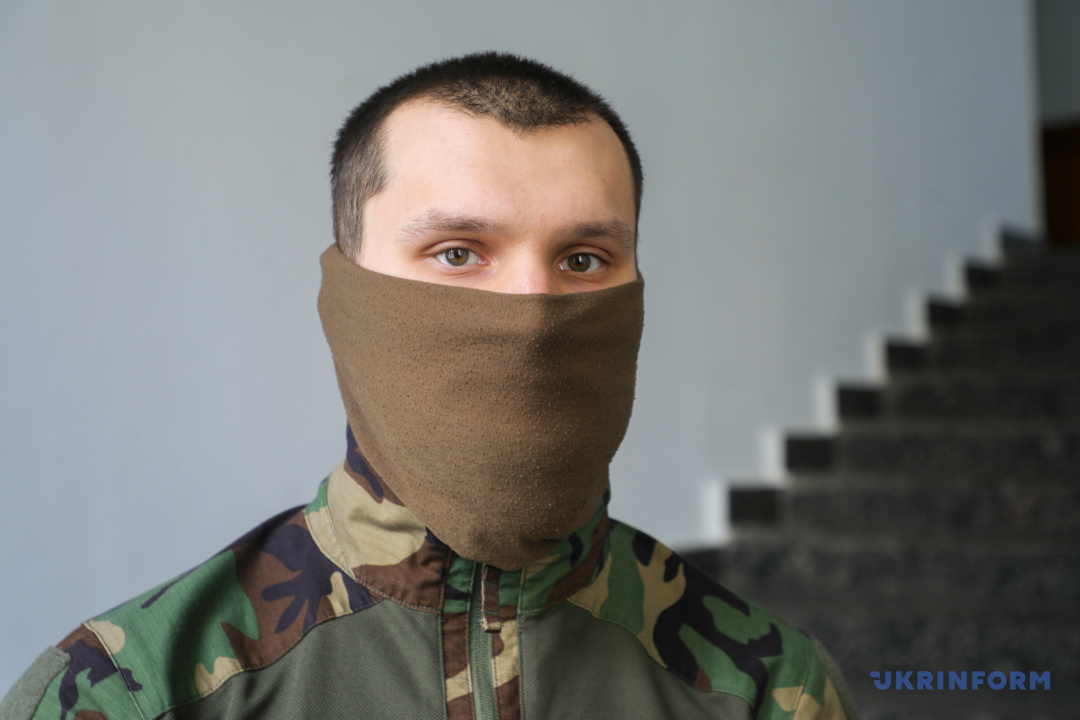
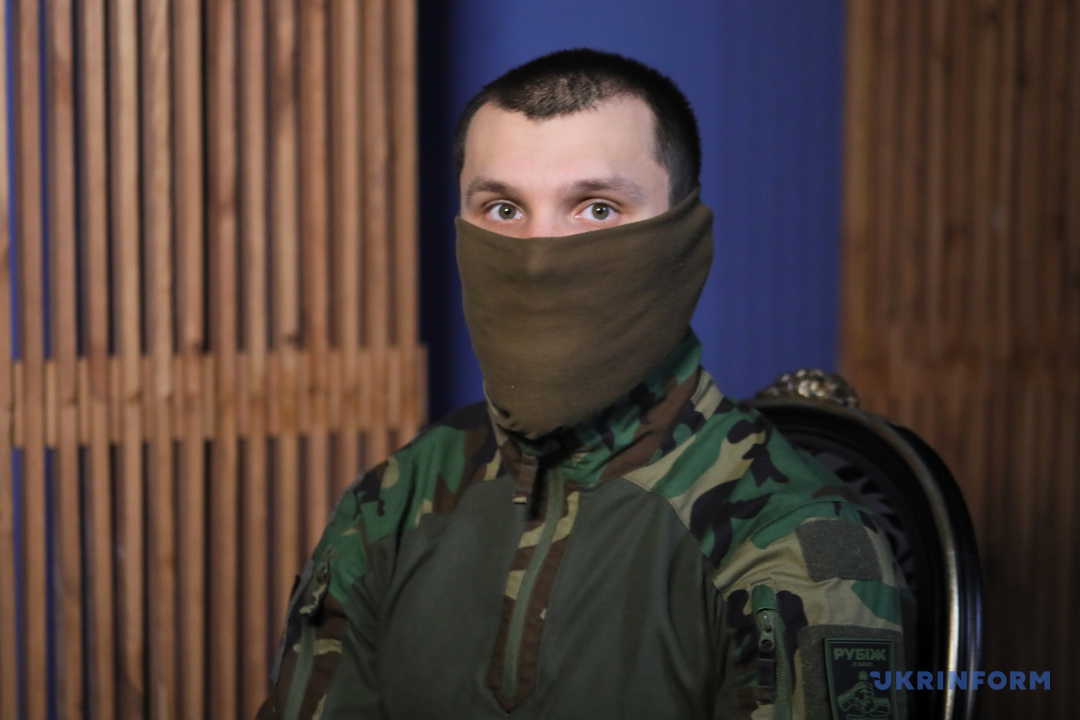
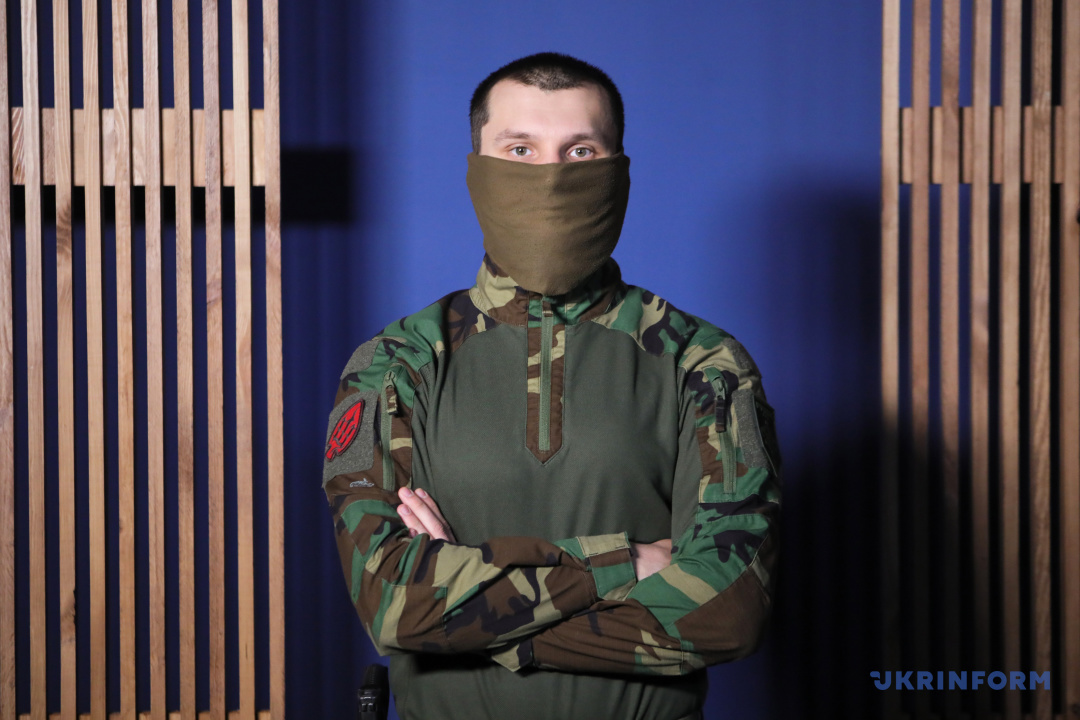
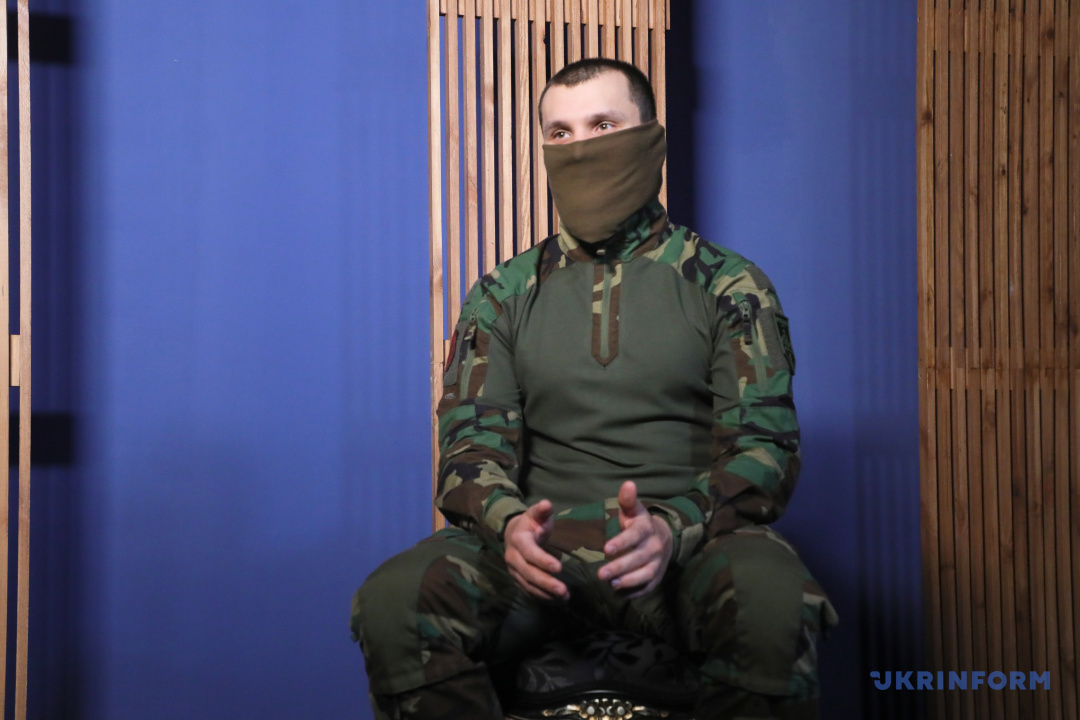
An officer of Ukraine’s National Guard with the call sign “Barbar” (“Barbarian”) is among those who, in effect, never had a “pre-war life.” Military lyceum, then the academy—and by his third year, the full-scale invasion had begun. Since 2023, serving with the “Rubizh” brigade, he has fought in key hotspots across Donbas, been wounded in combat, commanded a company, and now serves as a deputy battalion commander. His unit is deployed on one of the most demanding sectors of the front—near Dobropillia.
In an interview with Ukrinform, “Barbar” reflects on a warfare that is constantly evolving—and on the people who bear its weight.
FROM LYCEUM TO THE FRONT LINE: WHY HE CHOSE THE “RUBIZH” BRIGADE
Q: Ihor, tell us about your life before the war. Where are you from? What did you do as a civilian? Did you always plan a military career?
A: To be honest, I barely had a civilian life—essentially only up to the ninth grade. I’m from a small settlement in Poltava region: quiet, steady, an ordinary community. But war was always close to home. My uncles fought in 2014–2016, during the ATO and JFO. They served in serious units—one of them lost an arm.
That’s where my pull toward the military began, back in childhood. Of course, no one imagined it would turn into a war of this scale. But the desire to stand with the best—for me, it has always been about protection: of my country, my family, my home. That was the priority.
After the ninth grade, I enrolled in a military lyceum, studied there for two years, and then joined the National Guard of Ukraine Academy, command-and-staff department. By my third year, the war had caught up with us. Let’s just say—it started very “dynamically.”
Vovchansk, February 24, 2022. At the time, I was a squad leader. Around three in the morning, all the sergeants were assembled and told: there’s information that a war may begin—but no panic, don’t wake anyone, let the guys sleep. At first, I thought it was an exaggeration, something the media had overhyped. But as a soldier, I decided to act on my own judgment. I woke my squad:
“Gentlemen, take only the essentials. Pack your gear so that, if anything happens, we can hold out for a while.”
I lay down, but couldn’t sleep. I kept running the situation through my head: the Russian border was about twenty kilometers away through the forest. If something was already in motion, it would reach us soon enough. Toward morning, I drafted a message to my mother—told her the war had started, that I was okay, that she shouldn’t worry and should look after my younger brother… But I never sent it. It stayed in drafts.
At around 4:15–4:20 A.M., the first strike hit—powerful, right next to our barracks. It wasn’t a concrete structure but a light-frame building, so the blast blew the windows out instantly. We were on our feet in seconds, getting dressed on the move. Then they began methodically working us over with artillery and MLRS.
The base was an obvious target—easy to identify even on a map: a parade ground, tents, an obstacle course, a tactical training area, and, 800 meters away, a full training range with trenches. This wasn’t random—they had clearly reconnoitered it in advance.
We followed procedure: grabbed weapons and moved into concrete shelters. From there, we were redeployed to the Kharkiv ring road, toward Derhachi. We held defensive positions—several platoon strongpoints—for about three months. After that, we were pulled back, trained for another eight months, graduated early, and I was assigned to a brigade.
That’s when the most meaningful phase of my service began.
Q: What motivated you to go to war? And why choose the “Rubizh” brigade?
A: Because “Rubizh” is a brigade of the future. I had friends already serving there as officers. They were constantly sending videos from training grounds—how they worked, what equipment they used. Some had already been on combat missions along the Svitlodarsk salient.
That got me hooked. I understood that “Rubizh” meant a certain standard—modern weapons, proper training, solid logistics.
I made a conscious decision to move toward special operations. I don’t see myself in public order units or convoy duties—that’s simply not who I am. Even after the war, I plan to stay in the military. I’m the kind of person who trains with every weapon available, sets an example, keeps learning. And when people ask, “Haven’t you had enough of war?” I answer: “No.” I’ve found my place. And as long as this team exists, I’ll stay with it.
Q: How did your family react—especially your mother?
A: Like any mother—she worries. After my first rotation, I started telling her I was deep in the rear, at headquarters. In reality, I was in the hottest sectors. They tried to kill me more times than I can count—almost everything they had was used against us. Maybe not direct hits from heavy artillery or guided bombs, but everything else was in play.
Still, I told her: “Everything’s calm here. No one’s shooting.” I rarely called first. Because I knew—if I did, shelling would start at that exact moment, and she’d worry even more.
There was one episode near Makiivka that stuck with me. By then, I was already a company commander. My command-and-observation post (COP) sat just 200 meters from enemy positions—one tree line between us, a hundred meters to our infantry, another hundred to me. The infantry there wasn’t organic to us, and their morale was shaky.
We were in a basic dugout with a single layer of cover—I understood perfectly well that one direct hit would finish us all. Still, I had a full command setup: Starlink, a laptop, radios.
Then—an incoming strike. I hear footsteps on the roof of the dugout. The infantry breaks and pulls back. In that moment, it becomes clear: my command post is now the front line.
We went out, pulled them together, talked them back into position:
“Men, we’re not 40 kilometers in the rear. I’m your company commander—I’m right here with you. If there’s a fight, we fight together.”
We had underbarrel grenade launchers—we were ready to engage directly from the COP. We stabilized the situation.
And at that same moment, I was on the phone telling my mother I was safely sorting paperwork somewhere in the rear.
It was easier for her that way.
Q: You’ve gone from platoon commander to deputy battalion commander. How did that happen?
A: I joined the brigade in 2023 and spent about a year to a year and a half as a platoon commander. Initially, I operated within one battalion, but I was eager to transfer to another—one that focused more on assault operations, what you might call a “special forces style” of work. At first, they weren’t taking career officers, but eventually the opportunity opened up and I got in.
I carried out missions there, and toward the end of one rotation I was wounded. In a way, it was almost absurd—no one had ever been wounded-in-action (WIA) fighting in that sector before. Shrapnel tore through my legs, side, and arms. Fortunately, it wasn’t critical—no broken bones. Somehow, on my own two battered legs, I managed to get myself out. I recovered, and as soon as I could walk properly again, I went straight back to the line with my platoon.
My progression to higher positions began unexpectedly. After we were pulled back to our permanent deployment point, a staffing need came up: one officer had to be reassigned along with a sizable group of personnel. The deputy battalion commander said, “One of you two platoon commanders will go.” I assumed I’d quickly handle the paperwork, transfer the personnel, and return to my unit.
I moved fast, wrapped everything up, and reported back: “Task complete—I’m heading back to my guys.” But the deputy battalion commander stopped me: “No. You’re staying here. We’ve seen how you work.”
I pushed back, even argued with higher command—but the decision stood. First, I was appointed deputy company commander, then company commander—a role I held for about a year. And just as I had built a solid core within the company—assembled a team of truly reliable, hardened fighters—I was offered the position of deputy battalion commander. I didn’t want to leave, but an order is an order.
Q: What are your responsibilities now?
A: On paper, everything is clearly defined. In reality, war reshapes those definitions. If I had to distill it, my responsibilities fall into three main areas: training personnel across specialties, maintaining discipline in execution, and ensuring the unit fulfills its combat tasks.
A separate and critically important component is command of the armored group. So, in essence, three pillars: combat operations, professional training, and armored assets. Within each of those—hundreds of details that have to be monitored and managed every single day.
Q: Where did your call sign “Barbar” come from?
A: It’s a simple story. There’s a tactical clothing brand called “Varvar Clothing.” We had just arrived in the brigade—young, inexperienced officers. My comrade (he’s since been killed in action) and I went in for an interview with the company commander. He asked about call signs. I hadn’t even thought about it.
I said, “Ihor works fine for me.”
He replied, “No—come up with something.”
While he was talking to another officer, I tried to come up with something—nothing came to mind. So I said: “Why don’t you come up with something?” I’m standing there in front of him, wearing a T-shirt with a big “VARVAR” printed on it. He looked at me, at my tattoos, and said: “Well, there you go—you’ll be Barbar. You’ve already got your call sign written on your chest.” And that’s how it stuck—just because of a T-shirt.
SEREBRIANKA FOREST, KLISHCHIIVKA, MAKIIVKA: THE HOTTEST POINTS OF THE WAR
Q: Which episodes of the war and which battles stand out the most? Where was it the hardest, and why?
A: Every rotation has its own distinct edge. I started fighting back when FPV drones weren’t yet used on a massive scale. You could move along a tree line, hear a drone buzzing overhead, and know: it won’t kill you—it’s just adjusting artillery fire. You hear the outgoing shot—you drop, wait 5–10 seconds for the fragments to disperse, and keep moving. You literally advanced “from outgoing to incoming.”
Now the trend has changed. The war has become much more technological. UAVs, ammunition drops, ground robots are being added—and each new rotation becomes progressively more complex. There are no “quiet” sectors where you can relax in a T-shirt without armor and grill meat. When you’re at an observation post, you’re being hammered with everything in the arsenal. In just a few hours, the landscape in front of you can become completely unrecognizable.
So it’s hard to say where it was physically the toughest. Probably the physically hardest part is the constant weight of body armor—and the endless digging into the Donbas soil.. But morally, the hardest part is the losses. When you’ve been on position with the guys, and someone gets killed. And then you have to explain to their parents how it happened.
I never lie or give false hope. I say it as it is: “He was killed. We couldn’t get him out.” Civilians find it hard to understand what it means—“couldn’t.” There are barrages where you can barely save yourself. Of course, we never leave our own behind—we’ve carried wounded men on our backs for eight kilometers. But the worst is when parents, in the heat of emotion, ask: “Why didn’t you die there, but my son did?” And I have no answer. Not everyone understands the nature of war and fate.
For example, I got wounded in a place where nothing had ever hit before. We were moving through a trench with a distance of about one and a half meters between us. Two VOG grenades came in—I took them both. The guy in front of me and the one behind me weren’t even scratched. But I was torn up all over. That’s just fate.
Q: And in terms of frontline sectors—where has the war taken you over these years?
A: We started on the Kharkiv axis—held the line, took hits from precision glide bombs and MLRS fired from Belgorod. I remember once, at night, a comrade and I were on duty under a shelter. Suddenly, in the middle of the night, it was like the sun was rising. We looked—and a fire cloud was falling on us. Probably air defense shot down a Smerch rocket, and this huge chunk fell just a couple of yards away from us and, miraculously, didn’t detonate.
Then came the Serebrianka Forest—that was total hardcore. After that, Klishchiivka, where I thought I’d be killed-in-action (KIA) for sure. We had just arrived to rotate into position when we heard the sound of vehicles. Straight at us—at our lone fortified point in the middle of a field—a column of 6–7 vehicles rolled in: tanks, BMPs with infantry. We were incredibly lucky those idiots hit their own anti-tank mines. The lead tank stopped about 300 meters away. We had two Fort-600 grenade launchers, and on pure adrenaline we fired them like it was our last fight. We did a solid job on them there.
Then came Makiivka, Udachne near Pokrovsk, Lozova-Nadiia… Now we’re holding the line on the Dobropillia axis. The only place I haven’t been is the Zaporizhzhia sectlor.
Q: What’s the situation like near Dobropillia? What are the main challenges you’re facing?
A: The enemy dies there regularly—and on an industrial scale. The brigade employs all available means to make that happen. But the hardest part is that they act like thick-skulled battering rams. They’re told to advance—and they go. There are places where anti-tank ditches have been dug, with narrow passages left. Within a radius of 150–200 meters, everything is littered with their own corpses, burned-out motorcycles and ATVs. They don’t care—they move straight over their own.
I asked one prisoner who surrendered right away: “You saw what was going on there—why did you go?” And he answered: “Right in front of me, our own guys zeroed one of ours because he got wounded and tried to pull back. If I hadn’t gone forward, they would’ve shot me.”
But it would be a mistake to think we’re fighting fools. Technologically, they’re evolving too. If it were just a herd of savages, the war would have ended long ago. They have enormous manpower reserves. There are days—especially in fog or rain, when our drones are less effective—when they try to push forward as much infantry as possible. In one such night, on a 1–1.5 km stretch of the front, we can eliminate 22–25 of them. They move in groups of 6–8, like zombies. If we had the same numbers, it would be much easier to fight.
On our side, we also “lay it on” properly—conduct targeted counterattacks. As soon as we detect the enemy, everything we have is directed there. Even if we can’t hold that ground, we won’t let them hold it either.
Q: Have you taken many prisoners?
A: It happens… When an occupier ends up in our custody, of course, he needs a few physical “reminders” so it sinks in that he crossed the border with a weapon and intended to kill me. But without brutality or the kind of abuse they practice. This is professional work, not sadism.
From speaking with prisoners, you begin to understand the composition: some were facing prison, others released early—convicts, marginal elements. In many ways, they are simply clearing out socially dangerous groups at home. There are exceptions, of course—fighters from units like the RDK, Russian citizens who are highly motivated and capable. But broadly speaking, the Russian army today is made up of people the state does not hesitate to expend. That doesn’t make our job any easier—but we will keep wearing them down.
FLUFFY ANTI-STRESS AND COMBAT DISCIPLINE: LIFE ON THE FRONT LINE
Q: What does daily life in a combat unit look like? Is it fair to say that “war is also life”?
A: There are plenty of positive moments—far more than people sometimes assume from social media or headlines. We have a young command team; it’s almost like a family. There’s constant banter, jokes, mutual support. When we rotate out to recover, we can even gather and play online games like Squad.
For me, sport is essential. I’ve trained my entire life, competed in martial arts. Even at the front, I managed to find a couple of dumbbells and a bar—enough to work out the back and legs after long hours in armor. At first, I trained alone; then others joined in. It gradually became part of the routine. Of course, during intense fighting, there’s no time for that—it’s work around the clock.
We also have our own “anti-stress therapy.” A cat wandered into our HQ and recently had kittens. The recon guys—especially one of our fighters, call sign “Forest”—built her a proper shelter and look after her. We also have a dog we raised ourselves. Small things—but they help stabilize the atmosphere.
And I have to mention our commanders—they’re top-level. People who have been through everything: real combat, real pressure, real responsibility. This isn’t theory, and it’s not about fresh graduates who’ve never seen war—it’s about those who understand it from the inside. They’re strict, sometimes tough—but fair. Most importantly, they’re present. They advise, support, cover you when needed. You know you can follow them.
I’ve experienced that support firsthand. Once, we were evacuating a critically wounded soldier. We were moving through ruins—collapsed concrete trenches, exposed rebar. Heat, exhaustion after a week on position, carrying him on rigid stretchers that were nearly impossible to grip properly. He was fading—we had to move faster, but we were already at our limit.
Then, over the radio, the battalion commander: “Come on, guys, we see you. You’re moving well—keep it up.”
I remember thinking, stepping over barbed wire, “Moving well? This is a nightmare.” But the fact that he was watching, guiding us, keeping us going—it gave us a surge of strength.
Q: How do you think this war will end—through negotiations or on the battlefield?
A: Every war ends in negotiations—unless one side is completely destroyed. I don’t pay attention to online “experts” or TikTok commentators who claim it will all end tomorrow.
The front tells a different story. The enemy hasn’t abandoned its objectives. They want Pokrovsk. They want to push into Dobropillia. They continue advancing and constantly adapting technologically. I see no indication they intend to stop.
And we have no intention of letting them through. If we let up, they’ll push further—and tomorrow they’ll be in my home region, Poltava. That’s not an option.
Q: How has the war changed you—your views on life, fear, friendship, love?
A: Completely. There were many moments when I was certain it was the end. That kind of experience clears your head. You stop postponing life—you start living in the present.
Since childhood, I’d wanted a Staffordshire Terrier. I kept putting it off. And then I thought: how much time is there, really? I’m constantly going out on missions—I don’t know when my line will end. So I went and got a dog. I named him Knight.
It changed the way I rest completely. When I’m back at base, I don’t look for noise or company anymore—the war drains you, strips away any illusions. I take Knight, some water, and head into the forest. We walk 15–20 kilometers. No headphones. Just silence. I raised him myself—he understands me instantly.
The battalion commander once joked: “Aren’t you tired of all those forests and tree lines after the front?”
But that’s exactly where I recover.
As for fear and missions—I follow a principle they taught me early on: don’t ask for missions, but don’t refuse them either. That’s how you stay balanced. I’ve seen guys who pushed to go out, who chased the fight—and they were the ones who came back on their shields.
War isn’t about heroism—it’s about endurance and a clear head.
I chose this path, and I’ll see it through. As long as I have people on the front line I’m responsible for, I stay with them.
Q: What about friendship?
A: Since the war began, half of those who once called themselves friends simply disappeared. A real friend—there’s usually only one. I had one. He was killed.
Officially, he’s listed as missing in action. That’s how it works in war: when there’s a direct hit from an SPG and all that can be recovered are fragments—or when almost nothing remains at all. His family still believes he might be alive, or in captivity. But I’m a soldier—I understand what that usually means. And it’s hard.
Now, my circle is my unit. With these men, I’m ready for anything. I trust them completely—I know they won’t leave me behind.
I still have a few civilian friends. One of them is a successful businessman. He told me honestly: “I’m afraid to fight—I wouldn’t be useful there. But I can help in other ways.” When we needed a pickup, he bought one and handed it over. When we open a fundraiser, he mobilizes his entire office and closes the need.
That’s something I respect—when a person understands their limits and still does the maximum.
Q: What remains of the “pre-war you”—habits, dreams, hobbies?
A: Sport. Before the war, I was 96 kilos of pure muscle, no fat. It’s harder to stay in shape now, but I try. The dog was also a long-held dream—and now he’s with me.
As for big, sweeping ambitions—there aren’t any. Just small wishes. The one impossible dream is that all the guys we lost would come back.
And the real one? To end this war—to complete the mission, and for the men to return home alive.
Q: Give a short answer: a Russian soldier is…
A: A bastard. Someone who should either go back to his cage and keep eating dirt with a shovel—or die here, in our fields: Donbas, Zaporizhzhia, Sumy, Kharkiv. There is no third option.
Q: What would you say to civilians who are hesitating—whether to join the Defense Forces or not? And where can they find openings in “Rubizh”?
A: Don’t be afraid. Start with a clear assessment of your skills and what you can contribute. If you’re a strong IT specialist, you’ll be in demand immediately—every battalion needs people like that. This is a war of drones and technology.
If you’re a driver, a mechanic, a communications specialist—there’s a place for you.
Even a cook plays a critical role. Our cooks prepare proper meals—cutlets, fried potatoes—vacuum-pack them, and drones deliver them straight to frontline positions. A soldier opens it and eats real, hot food—not just rations. As one of our officers says: give a soldier water, food, a cigarette, and communication with his commander—and he’ll complete any task.
We work directly with recruitment centers. A person passes the medical board, comes in—we talk, figure out where they fit best, arrange the assignment, and bring them into the brigade. The 18–24 contract program is fully operational as well. We had one young guy—looked like a kid, but with absolute steel inside. Always first on mission. A real fighter.
If someone wants to join us, reach out through our official channels. The fastest way is via our battalion’s Instagram page, “Vanguard”—they respond quickly and guide you through the process. Or visit the brigade’s official website—contacts and chat are all there.
We’ll take you in, equip you, train you—and teach you how to fight.
Myroslav Liskovych led this conversation. Kyiv
Photo: Yuliia Ovsiannikova / Ukrinform