
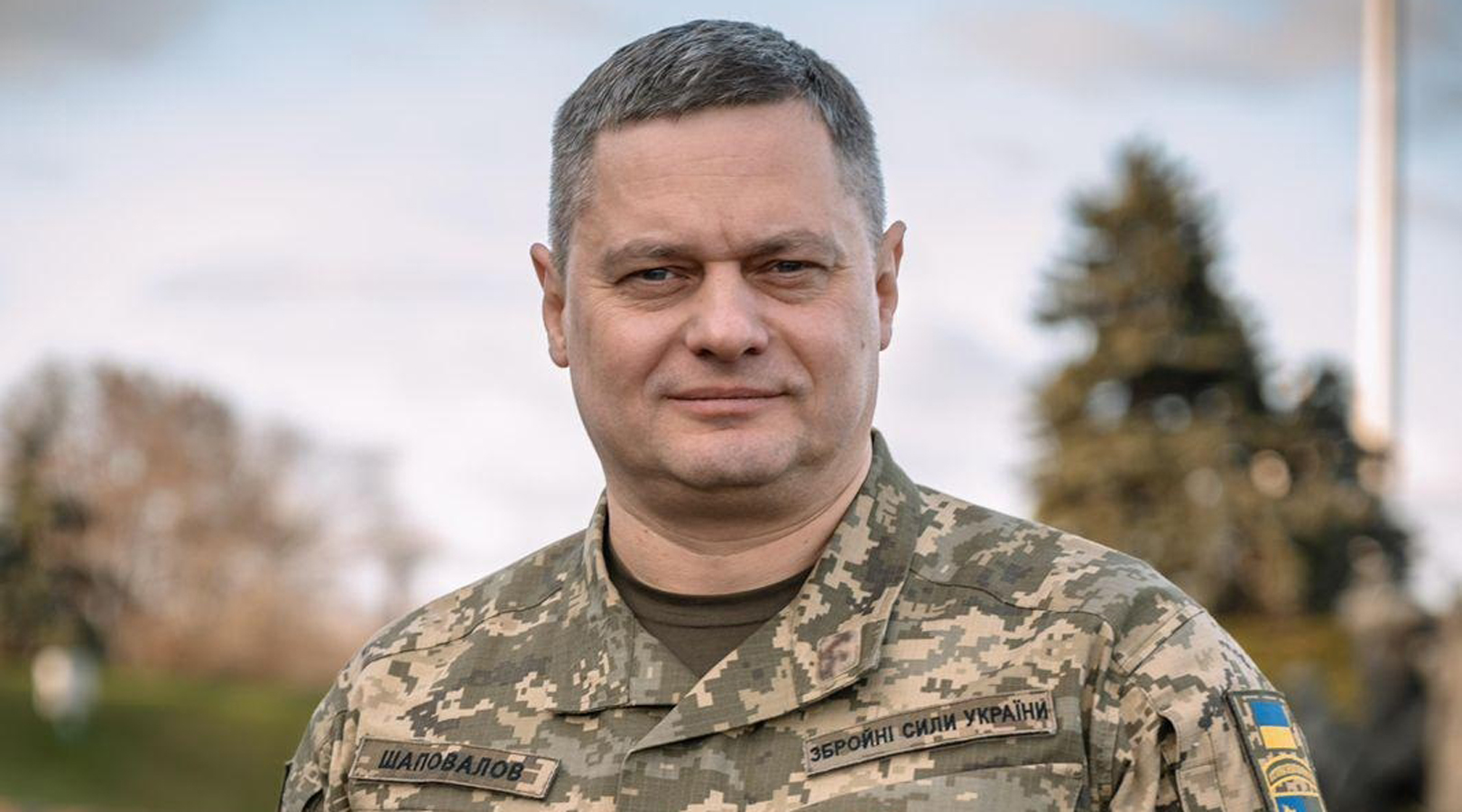
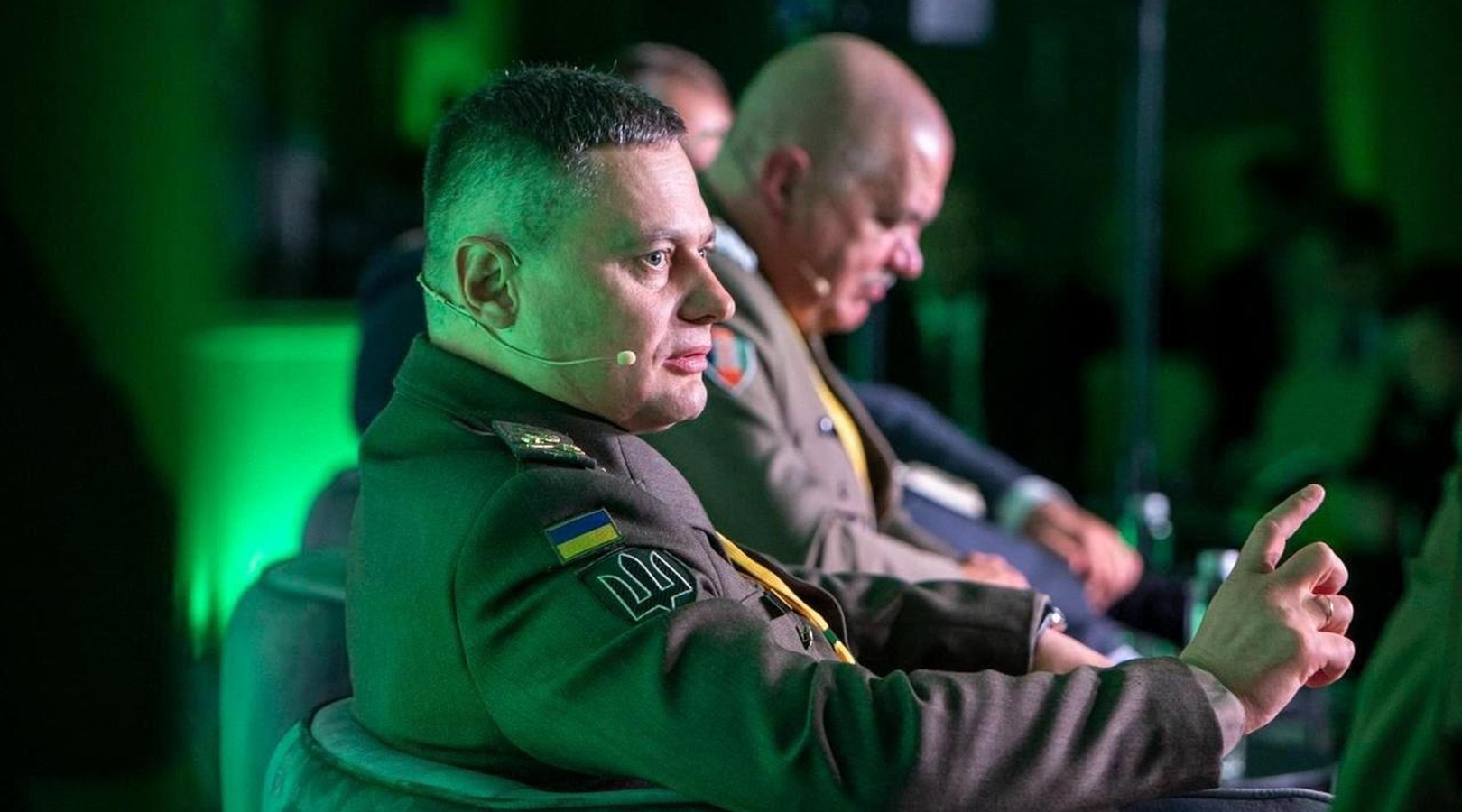
General Hennadiy Shapovalov, Commander of the Ground Forces of the Armed Forces of Ukraine. On June 19, 2025, General Shapovalov assumed command of the Ground Forces, the largest and most central component of Ukraine’s military. His appointment came at a time when the nature of the war is rapidly evolving, marked by the declining role of large mechanized formations and the growing dominance of small, highly mobile units and advanced technologies, including drones, electronic warfare, and robotic platforms. In his first interview with Ukrinform in this new position, Shapovalov explains how he views the Ground Forces’ adaptation, which of the mistakes on the battlefield are most concerning for him, what makes motivation no less important than equipment, and what a victorious army should be like.
“APPROACHES TO CONDUCTING COMBAT OPERATIONS HAVE CHANGED RADICALLY”
- You often note that the current war involves continues adaptation. What kind of adaptations have been the most difficult to implement over the past year?
- Modern warfare is characteristic for constant adaptation. The most difficult challenge has been the need for continuous adjustment to changes in both enemy and friendly tactics, as success now depends on the ability to evolve faster than the opponent. While experience gained since 2014 remained relevant in the early stages of the full-scale invasion in 2022, today combat operations, command-and-control methods, and the deployment of forces and capabilities have undergone a profound transformation. The modern battlefield imposes continuously changing requirements, to which forces must adapt without interruption.
- Which of the requirements are most difficult to meet?
- One of the most significant shifts has been the move away from large, cohesive formations operating at the platoon, company, battalion, or brigade level. Instead, small-unit tactics currently prevail, with two- and three-person teams operating at high speed and using light motorized vehicles such as quad bikes, motorcycles—including electric models—and scooters. This approach significantly increases mobility and flexibility.
At the same time, the use of armored vehicles has become far more constrained due to the widespread employment of unmanned systems. The use of drones has made armored platforms increasingly difficult to protect, both for Ukrainian forces and for the adversary. As a result, approaches to conducting combat operations have changed substantially and continue to evolve.
- Are there any areas of the front line where we managed to overtake the initiative thanks to new approaches?
- Yes, of course. In several sectors of the front, the introduction of new approaches and technologies has made it possible to alter the operational situation and regain the initiative. This is largely due to the extensive and integrated use of various unmanned systems, including fiber-optic drones, which are particularly difficult to counter. The rapid development of electronic warfare (EW) and electronic intelligence (ELINT) capabilities has further enhanced their effectiveness.
The combined use of these technologies has repeatedly forced the adversary to lose momentum and adjust plans and objectives during ongoing operations. This, in turn, has enabled more effective mission execution, improved the ability to hold or enhance positions, reduced losses, and increased the overall effectiveness and efficiency of strikes against enemy forces.
- What has the Ukrainian army learned about modern warfare over the past six months?
- Over the past six months, it has become evident that the modern battlefield leaves little room for “yesterday’s” solutions. Methods that proved effective even recently no longer deliver consistent results. The speed of decision-making has therefore become a decisive factor.
We live in conditions where there is simply no time for reflection. We need to respond instantly, sometimes relying on experience, sometimes on intuition and instincts, because there is not always a complete picture for a perfectly balanced assessment of the situation and all the risks involved. Today, both the commander and the ordinary soldier have to make decisions very quickly. This is extremely difficult and always associated with risks, because the enemy also learns and adapts.
We are confronting a regular enemy army with greater resources, mobilization capabilities and a wider material base. Therefore, I can note in conclusion that we constantly have to look for asymmetric solutions that allow us to make up for the enemy's superiority in numbers and resources.
"VIOLENCE AGAINST THE MILITARY MAN UNDERMINES DEFENSE CAPABILITY"
- It follows from your words that you see the army from the inside, know all the problems and nuances not from analytics, but immediately from the battlefield. So, what decisions currently really motivate personnel, in your personal opinion?
- First of all, balanced decisions that do not leave room for hesitations are those that motivate. A soldier, sergeant, officer should not see doubts in the eyes of his commander. When a commander is confident, takes responsibility, clearly formulates the objectives to be achieved and takes measures to ensure everything necessary is in place, this makes subordinates more steadfast and confident in success.
Provision is another important component. Ideally, a warfighter should understand that the government and the command are doing everything possible to give him the necessary means to perform tasks. But here a lot depends on the circumstances. So, I am sure that a motivated soldier equipped with less effective means is sometimes able to achieve more than an unmotivated one having the most advanced, up-to-date-technology. Therefore, motivation is what it all starts with, followed by drones, electronic warfare technologies, modern weapons, aid from partners, other technological advantages. They are necessary for motivated warfighters who know how to use them. Indeed, the issue of motivational factors is very debatable in the current situation, but I do everything I can to achieve this result.
- My next question is about murders of and attacks on employees of military registration and enlistment offices (TCC/SP)*. Why does society respond so ambiguously to such incidents?
- It is a crime where servicemen performing their duties of enforcing legislation regarding military personnel accounting and recruitment are demonized, humiliated, or physically attacked. It must be considered as an attack on a serviceman. Period. It does not matter where he serves - in an assault brigade, in artillery or in a military registration and enlistment office. Everyone in his place performs important tasks. Especially considering the fact that most of the TCC/SP servicemen are those who have battlefield wounds and therefore cannot continue serving in combat units.
A uniformed soldier who performs tasks at the home front is also part of the Defense Forces, and criminal actions against him undermine our defense capability in the same way as an attack on a soldier on the front line.
It must also be admitted that there have been and are cases of individual TCC/SP servicemen behaving in a rude manner, exceeding their authority, or violating the law. Law enforcement agencies should investigate each such occurrence and legal convictions should be inevitable.
People respond painfully to such situations, because at stake are fates, families, and health. I am not going to turn a blind eye to such instances. The government is already updating the system. Recruiting centers have been set up, legislation is being updated, mechanisms of contracting with clear deadlines are being implemented, and approaches to personnel selection and training are being upgraded.
But there is a basic principle: Lynching is not a solution to problems with recruitment, conscription, and registration of military personnel. They are resolved through established legal mechanisms, through supervision, inspections and judicial processes. The TCC/SP authority has set the task for its employees: work with respect for people, remember that there is someone's life behind each decision.
And what I want to say to society is: without replenishing the army, we will not be able to hold on the front line. We need cooperation, not a domestic confrontation between people in pixel camouflage uniforms and the civilians.
- Do you think that NATO membership, which has been talked about so much recently, is what motivates our soldiers among other things?
- As a matter of fact, we have long been integrated into the NATO community in terms of armaments, equipment and a significant portion of the training standards. Our service members take courses, training, participate in training programs with instructors from partner countries.
That is to say, we are fighting with Western weapons, apply the standards that our partners taught us. And the formal membership status is a political decision that goes beyond the purely military domain. What matters most for us is to ensure that each soldier who has undergone appropriate training can use this knowledge on the battlefield to the maximum effect possible. NATO is not only about standards for the military, but also about standards for all of the country. Our partners likewise benefit from studying our integration experience and updating and upgrading military doctrines of their own. To put it shortly, it is our warfighters who motivate NATO with the results and achievements they attain.
“MODERN WAR REQUIRES A GREAT VARIETY OF DIFFERENT PEOPLE”
- What measures do you think are critical for strengthening the Ground Forces’ warfighting capability?
- Firstly, this is high-quality recruitment. We are now setting the goal of avoiding “mechanical” filling of vacant positions. The command have made relevant decisions regarding contracting with clearly specified terms and favorable conditions and decent pay. So, I believe, this will contribute to our strengthening and will ensure the times and circumstances where military personnel, mobilized or contracted, were sent anywhere, remain in the past. We are currently trying to take due account of each man’s background: previous experience, educational background, and professional skills to ensure he is placed where he can really be most effective. Qualitative changes cannot be implemented instantly, so we are trying to do it as quickly as possible, with account taken of the current circumstances.
Secondly, we do our utmost to ensure that people have a choice, the opportunity to consciously choose a service field, the branch of the military, the specialty, which is also an element of motivation. So, there are currently many ways for you to fulfill your duty. For me, the Land Forces’ current personnel policy is more about quality, rather than the “number of positions filled”.
- What category of people is best, so to speak, to adapt and join the troops?
- Today, in conditions where the Russian military continues its offensive without caring too much about the costs, seeking to increase pressure both on the front line and the media discourse, each person who joins the army can be useful.
Separately, I would single out the personnel working with uncrewed systems. Here, the experience from civilian life matters much. Young people with skills in computer games, robotics, and programming, for example, quickly adapt to operating various classes of drones and to engineering technology solutions. Their experience “on the computer” is transferred to a real-world battlefield or training ground. They quickly learn how to handle interfaces, control logic, are able to work under stressful situations and make decisions in a matter of seconds.
Therefore, I will say it thus: modern warfare requires a variety of different people, both those who can defend the country serving in the assault infantry, and those who are most effective piloting a drone or working at a workstation organizing and planning rear-area operations.
- What kind of training is critically lacking today? What kind of people join the army?
- Any training is critically important today. You need to have basic skills in handling weapons, waging a battle, defensive or offensive, or conducting assault actions and maneuvers. And this all in conditions of constant presence of unmanned robotic platforms on the battlefield, in large quantities, both strike drones and reconnaissance drones that transmit the battlefield picture online and help make decisions or carry out fire strikes.
You also need to be able to operate in intense EW/ELINT countermeasure environments, with communication or navigation signals jammed or completely lost. Also, take into account that you are constantly under the threat posed by the use of highly lethal munitions such as high-precision, long-range bombs (KABs).
Moreover, soldiers often have to operate separated from the main forces: Points of medical and logistical support and points of other support are usually located far away from frontline positions precisely because of the drone threat. And you need to be prepared to operate and organize work under such challenging conditions. Therefore, virtually every skill is of importance today, and one has to take due account of every factor that can impact on the course of the battle.
- Then, are there any plans to change the training standards?
- Yes, and we never stop doing so. Our objective is not just to “change something”, but to adapt systematically. We collect and analyze combat experience on a daily basis: what situations arise on the battlefield, how forces respond, what had worked out and what had not. Based on this analysis, recommendations are compiled and promptly integrated into training programs.
We are constantly updating and improving basic training programs, professional training programs, officer training courses. We look at what an officer needs to be taught today, what he should be prepared for tomorrow, what new methods and approaches have appeared in recent months. The tactics of 2014, built on the massive use of armored vehicles and large formations, are no longer relevant today. The battle waging tactics have changed. And we have to update training standards accordingly.
It is essential to remember: two regular armies are fighting on the territory of Ukraine, equipped with all capabilities and using all military branches and services. But our army is defending its land and its people, while the enemy's army destroys everything around and kills everyone in its path. Today, there is perhaps no type of weapon left that has not been put to use. Excepting, perhaps, nuclear weapons.
“MODERN TECHNOLOGIES SHOULD REPLACE A HUMAN ON THE BATTLEFIELD TO THE MAXIMUM EXTENT POSSIBLE”
- What is your assessment of the Israeli policy of “training comes first”? And is it realistic to have it implemented here in Ukraine?
- It is not just fully realistic, but is critically necessary. Training must really come first. A poorly trained serviceman on the battlefield is always vulnerable. An appropriately trained soldier, on the contrary, has more opportunities to save his life, fulfil his mission and help his comrades. Not only is this true for soldiers. For sergeants and officers, training is the foundation of professionalism. The level of commander’s training determines how effectively he is able to manage the unit he leads, make decisions in a timely and qualitative manner, taking into account all risks involved and possible changes in the situation. Therefore, for us, the guideline “training comes first” is absolutely relevant today. The only matter is the extent and systematicity. This should not be a one-time campaign, but a consistent, long-term policy.
- You've said above that motivation is essential for a soldier to be effective. But what do you think is the biggest investment in forces’ sustainability?
- I would say that it is not a single investment, but an integrated system, where each of the elements is interconnected with others. First of all, this is, of course, about training. It gives a serviceman much greater opportunities to save the life of his own and that of his comrades and fulfill the mission, as I noted before. The equipment and personal gear come second. Battles cannot be waged with "bare hands". We need to have modern means of destruction, communication and protection, as well as drones, EW and ELINT capabilities, engineering equipment, in a word, everything that gives an edge on the battlefield.
Management comes third. It is management that sets the pace, organizes coordination, and allows forces, weaponry, logistics and medical support services to operate as part of an integrated network.
And there is a fourth element - analysis and training. This involves continuous studying of the lessons learned from combat experience, the rapid integration of these lessons into updated training programs, tactics and organization. It’s only a combination of these elements that makes forces sustainable, effective and efficient.
- The Ground Forces are currently the largest consumers of new battlefield technologies. Which of the technologies do you think has changed the course of hostilities the most?
- The Ground Forces, being the numerically strongest branch of the Ukrainian military, is indeed the largest consumer of battlefield resources, including particularly technologies. Today, these are primarily drones, AI-enabled technologies and modern EW equipment. It is these technologies that have a significant impact on the battlefield situation and facilitate the transformation of how combat missions are executed. With the advent of these technologies, the very logic of combat has changed. Historically, war has acted as a powerful accelerator for technological progress, forcing rapid innovation to gain military advantage. The First World War brought tanks to the battlefield. The Second World War brought nuclear weapons. And this war has brought the large-scale use of artificial intelligence and drones of all types: air, ground, surface, underwater. We are already seeing them being successfully deployed by Ukraine’s Armed Forces. Electronic warfare has also become an indispensable element. And artificial intelligence today helps not only in decision-making, but also in performing missions autonomously, without a man-in-the-loop requirement.
- What do you think will the future balance between human beings and technologies on the battlefield be in the next two years?
- My opinion is that a human on the battlefield should be replaced with hardware and state-of-the-art technologies to the maximum extent and wherever possible. We must preserve the lives of our warfighters. We cannot afford to treat personnel the way the enemy does. Ukraine is a civilized country. We do have losses, unfortunately, but we are different, mentally and consciously, from the enemy in this respect as well. Therefore, wherever it is possible to use technologies in place of humans, we must do so. Though true consciousness and complex judgment remain human domains, where new, unusual situations arise that artificial intelligence alone is unable to handle.
- What prevents innovations from being deployed to the battlefield in the fastest manner possible? Is it bureaucracy, logistics, or perhaps some other hidden obstacles?
- Everything comes down to the human factor, I believe. A human being can be the main driver of change, but also the cause of delays or even a rollback. What do I mean? Where the commander or manager is a true leader, technologies are introduced much faster and immediately begin to work for results. If the man is shy of responsibility or doubtful about his actions, then no reform will produce a desired result. I have seen units and entire sectors of the front where proprietary, innovative engineering solutions -- bold, unorthodox - were implemented in a matter of weeks and really worked. But I have also seen the opposite: where one waited for months for someone else to show initiative and suggest a solution. On the modern battlefield, there is no place for lengthy reflections, and decisions must be made and implemented quickly.
Everything that is useful and effective must be implemented. Decisions should complement each other, create a synergy rather than destroy each other in the fight for someone's interests. Personal ambitions and disputes amid war should be stopped. The effect on the battlefield is what must matter most.
"NO OTHER COUNTRY HAS THE COMBAT EXPERIENCE THAT WE HAVE"
- What is the weakest link in decision-making?
- A commander in the army is responsible for everything, and so throughout the command-and-control hierarchy. It is difficult to say where the weakest links are in decision making, since we are in a protracted war that inevitably depletes not just resources, but also combat-experienced personnel. But it is at the tactical level, in close proximity to the soldier, where everything depends very much on the quality of commanders at the platoon, company, and battalion levels. It is this category of trained officers that we lack the most today.
That said, no other country worldwide has as much combat experience as we do now. We adopt from our partners their experiences related to processes, standards and approaches to decision-making, but we already know better what decisions to make. And so, today we are already being approached by lots of the countries that are interested in learning from us, and we are working a lot on this aspect with them.
- Can the army afford to make mistakes today, and where is the line between a mistake and negligence?
- Everyone makes mistakes, both in the army and outside it. The only man who never makes a mistake is the man who never does anything. Today, mistakes are part of the battle and part of reality. There is not always a readily available standard or algorithm for every situation we encounter on the battlefield.
This is true for lower-level units, for operational and strategic levels. There are many challenges that simply did not exist before, and no one had ready-made answers to the question of how to deal with them. Only through trials, testing and analysis do we improve. Therefore, a mistake is part of the path to advancement.
But negligence is different. Negligence means violating the rules or orders that have already been established and are often “written in blood,” where everyone knows that wrong actions are guaranteed to lead to losses or other serious consequences. Especially if it leads to the loss of our Ukrainian territories or, God forbid, to the death of people.
We analyze the mistakes and draw conclusions. Negligence must be stopped even when you see the very first signs of it. This is where a fundamental difference lies. A service member must be held accountable for negligence actions.
“GROUND FORCES’ DEVELOPMENT SHOULD BE GUIDED BY STRATEGIC, LONG-TERM PROGRAMS FOR MANY YEARS TO COME”
- Which are the three of the Land Forces’ capabilities you want to be strengthened the most?
- First is high-quality personnel recruitment. This is what I’ve mentioned above and which is part of my ongoing personnel policy. Second is training – systematic, high-quality, and grounded in the realities dictated by the battlefield and actual combat experience. This applies to soldiers, sergeants, and all levels of command – tactical, operational, and strategic. Third is technology: developing all modern capabilities, including uncrewed systems, electronic warfare, engineering, and automated command and control systems. These are the three main pillars we are currently building.
- What does the future Ukrainian army look like to you?
- To me, the army of the future is an army that makes maximum use of technology and is able to counteract a numerically stronger enemy. This is an army where each unit is provided with drones, electronic warfare systems, in a word, provided with everything it needs to perform its missions and defend the country and its people. This is an army that employs professional sergeant corps -the foundation of resilience. It is an army where commanders make decisions based on maximum real-time information, supported by a command system that allows for rapid responses to changing circumstances. This is an army that every strategic partner would want to have among its allies and one that any potential aggressor will carefully consider before attempting an attack.
- What size such an army should be?
- The size of the army should not be determined by emotion but by a strategic assessment of threats. Planning must factor in potential challenges we may face in the coming years, the level of danger posed by potential adversaries. It should be based on calculations, realistic scenarios and consultations with partners. It is also worth considering the country’s economic capacity and capabilities.
- What decisions should the government make about Ground Forces development?
- Current-generation technologies, engineering projects, training, logistics, decent financial provision and many other factors - all this combined cannot form part of one single budget. Strategic programs are needed, structured on a multi-year period framework.
A person who connects his life with defense must be aware of his/her career prospects, how his/her career will go, what provisions s/he will be eligible for during and after service. I studied in the United States, and there is a concept of “grand strategy” there – a comprehensive set of policies, plans, and actions a nation uses to achieve its long-term objectives and advance its core interests by utilizing all available tools of statecraft. It is essential to follow it consistently, and not change course every few years.
“THE ADVERSARY MAKES TARGETED STRIKES ON TRAINING CENTERS AND RANGES USED BY UKRAINE'S ARMED FORCES
- What qualities in a commander do you value the most?
- For me, the most important qualities in a commander are endurance, fairness, responsibility, honesty, preparedness, and the ability to act under pressure while maintaining contact with his unit. It is essential to be able to make decisions in difficult conditions, in a state of being continuously subjected to an adversary's actions and pressure. Commanders must be able to heed their subordinates. Subordinates should be free to offer any suggestions or comments arising from their personal experience, knowledge, and observations. The commander, in turn, should factor or discard them in decision-making. He must be able to view the situation not just 'from his own level,' but also through the eyes of the people assigned to a specific mission, and to assess how this will impact on the achievement of the objectives at hand.
- Could you give examples of the commanders or units that meet these criteria?
- We have many units that currently demonstrate a high level of professionalism in defensive and offensive operations, in the use of artillery, uncrewed systems, and robotic platforms among other types of weaponry. We study their experience, generalize and integrate it into training programs. But I will deliberately not name specific brigades or units. Within the Ground Forces, there are many formations that are holding the most challenging sectors of the frontline. Different sectors involve different conditions, different threats, and different levels of pressure from the enemy.
Saying that some are "better" and others "worse" would be incorrect in respect to those who carry out tasks in other, equally challenging sectors. To me, every unit that is fighting today deserves respect and support. The situation in Ukraine is very complicated; everyone can see that. And I am grateful to every warrior — from the commander to the soldier on the front line. We stand in the same ranks; we are one team carrying out one mission. I am extremely grateful that they do not confine their involvement to commenting on social media, but actually defend the country with weapons in their hands.
- Do the Ground Forces have a vision for how to protect people at training grounds located near the Belarusian and Russian borders? Why, after so many incidents, has the public not seen anyone held accountable for the victims at training centers?
- There are several important factors. First and foremost, Russia is to blame for these strikes, and it is important to clearly record this. The enemy deliberately strikes at places where our military personnel are being trained. For us, each such tragedy is not only pain, but also the obligation to draw concrete conclusions.
When a strike hits a training ground or training center, a comprehensive commission immediately begins work. All circumstances and causes that led to the consequences are checked: how training was organized, how orders regarding dispersion of personnel, use of shelters, and engineering protection are being carried out. If officials are identified whose inaction led to severe consequences, especially to the death of personnel, we, in addition to disciplinary responsibility, forward the materials of the service investigations to law enforcement agencies and provide them with maximum assistance.
At the same time, I’ll be honest: the issue of discipline concerns not only commanders but every service member. Violations of requirements on dispersion, gathering people “in a convenient place,” ignoring alarm signals, using phones and recording positions — all of this increases the risks. We do not shift the blame onto the soldiers lone, but we must speak plainly: following safety rules saves lives just as armor and shelters do.
The enemy strikes at us constantly, and we minimize risks where it depends on us: we change the order of training when and wherever possible, we conduct some classes in shelters and underground structures, we strengthen engineering protection, we disperse training units, we constantly revise standards in line with evolving enemy tactics and real-world combat experience.
- What is the appropriate place for the sergeant corps in the Ukrainian army of the future?
- The sergeant corps must be the central, supporting link. The sergeant must be the foundation of a combat unit. In modern armies across the world, it is the sergeants who ensure discipline, order, coordinated actions, and maintain their units combat ready. They are constantly beside their soldiers, know every soldier, their strengths and weaknesses. The commander focuses more on management, coordination, support, and planning. The sergeant focuses on everyday work with personnel. For me, a sergeant must be a mentor, an organizer, and a person the soldier can turn to for help all at the same time. The sergeant corps is the foundation of the Defense Forces."
“WE NEED PEOPLE WHO REALLY CAN CHANGE THE SITUATION ON THE BATTLEFIELD”
- What was the hardest decision you’ve made this year?
- The hardest decisions always concern people, their lives and health. There have been situations where I had to make very difficult, sometimes unpopular decisions. They are hard to make, they stay with you for a long time. Because of some of them, you then stay up at night, you go back in your mind, analyzing what could have been done differently. But, despite all the internal pressure, the commander has no right to show doubt. Even the most difficult decision must be communicated to the unit confidently, but at the same time being aware of the possible consequences. Because the personnel must see in the commander's eyes the readiness to be responsible.
- How do you maintain this clarity in these really difficult psychological circumstances, when everything is on fire and you need to make decisions quickly?
- Only experience works here. I have been constantly in the process of war since 2014. There were breaks, but they were only related to training to improve my personal preparedness. I have gone through all the levels – from brigade chief of staff to commander of the Ground Forces during the war since 2014, and before that, alternately holding command and staff positions beginning from platoon commander. And at each level I accumulated experience that now helps me maintain clarity in the most difficult moments. If you give in to emotions, start making decisions only from the position of 'I want to / don't want to', there will be no success. A commander has the right to feelings as a human being, but he must make decisions with a cold head."
- What would you like Ukrainian society to know and understand more about the military, especially now amid war?
- I want our people to clearly understand: the Armed Forces are a cross-section of our society. A service member is yesterday's civilian who lived an ordinary life, had a job, a family, his own plans, and then joined the ranks of the Defense Forces because the enemy attacked us.
While the serviceman holds the line of defense, the country has the opportunity to live an ordinary life in abnormal conditions of war: to work, argue, criticize, go to cafes, concerts, cinemas. It is important to understand: each our daily habit exists as long as the soldier fights on the front line.
We are currently observing a certain division between those who wear “pixels” and those who wear civilian clothes. Part of this tension is created by war fatigue, but a significant part is intentionally fueled by the enemy through fakes, manipulations, and information warfare campaigns. It benefits them when Ukrainians quarrel among themselves, instead of standing together against the aggressor.
Every Ukrainian has to understand that without replenishing the army, it will be very difficult for us to contain the enemy; we may lose our statehood. There is an opportunity to voluntarily come to recruiting centers, choose a unit, specialty, and terms of service. Not everyone dares to do this, but we are working to make them choose more boldly. But being a military man, I can say one thing: we need people who actually change the situation on the battlefield and do not want the war to reach their city or home."
Maryna Shashkova
* The military registration and enlistment office is the term used in Ukraine and other post-Soviet countries for the local bodies responsible for military administration, recruitment, conscription, and registration of military personnel. In Ukrainian, these offices are formally called Territorial Centers for Recruitment and Social Support (TCC and SP)