
The total value of military and humanitarian aid that the Netherlands has provided to Ukraine since the start of Russia’s full-scale invasion has exceeded EUR 8.5 billion.
The assistance includes combat aircraft, armored vehicles, artillery, air defense systems, ammunition, unmanned aerial vehicles, medical equipment, and logistical support.
This aid is aimed at strengthening Ukraine’s defense capabilities, supporting its resistance against Russian aggression, and ensuring that Kyiv can negotiate with Moscow from a position of strength.
Among the main deliveries are F-16 fighter jets, anti-aircraft and missile systems, armored personnel carriers, tanks, and hundreds of thousands of artillery and infantry munitions. Ukrainian forces have also received advanced equipment for drone operations, military engineering, and medical support.
The total amount covers not only the supply of weapons but also their maintenance, modernization, and the training of Ukrainian personnel.
The Netherlands pays special attention to developing Ukraine’s capabilities in the field of drones - from supplying UAVs to organizing joint training and experience exchange programs.
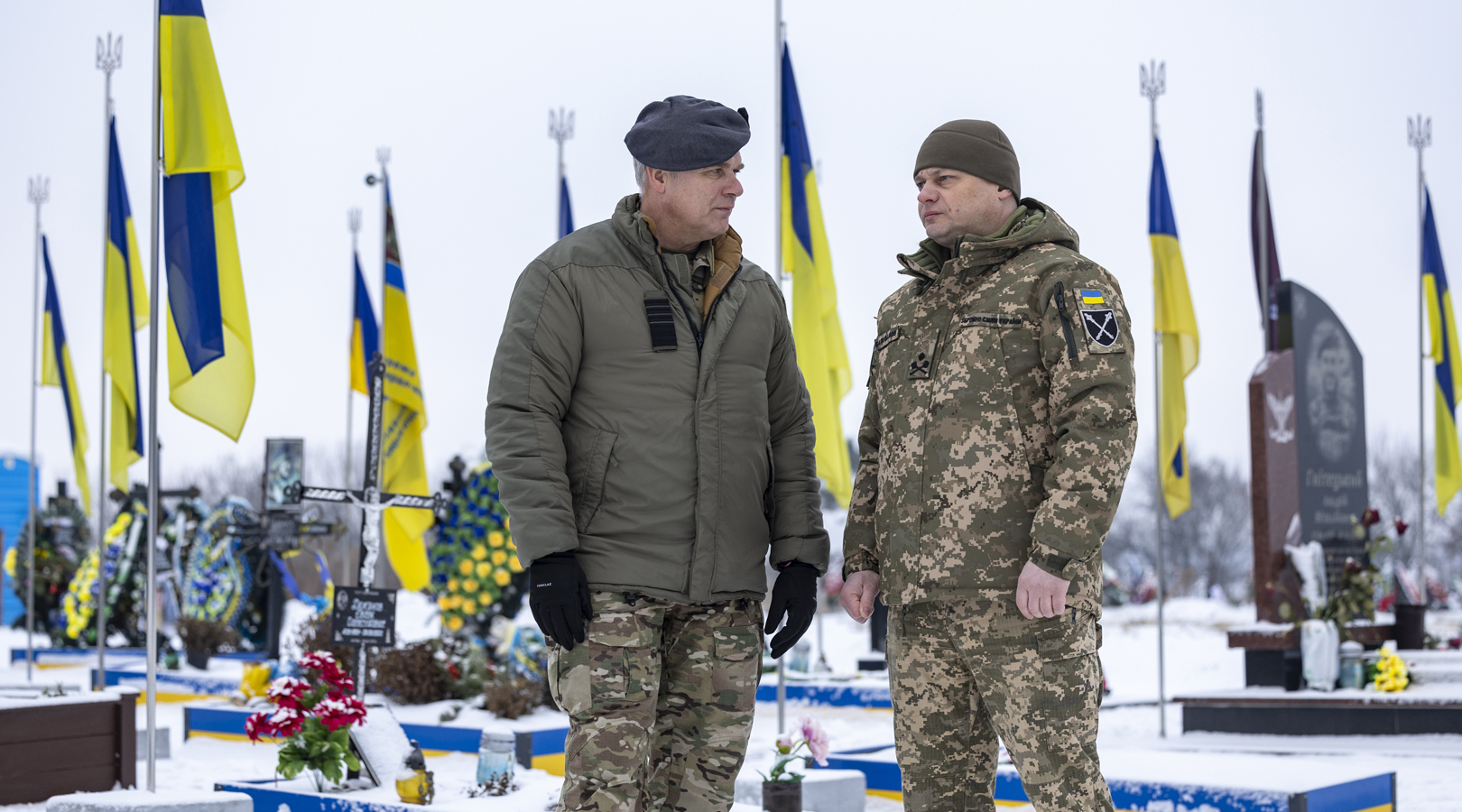
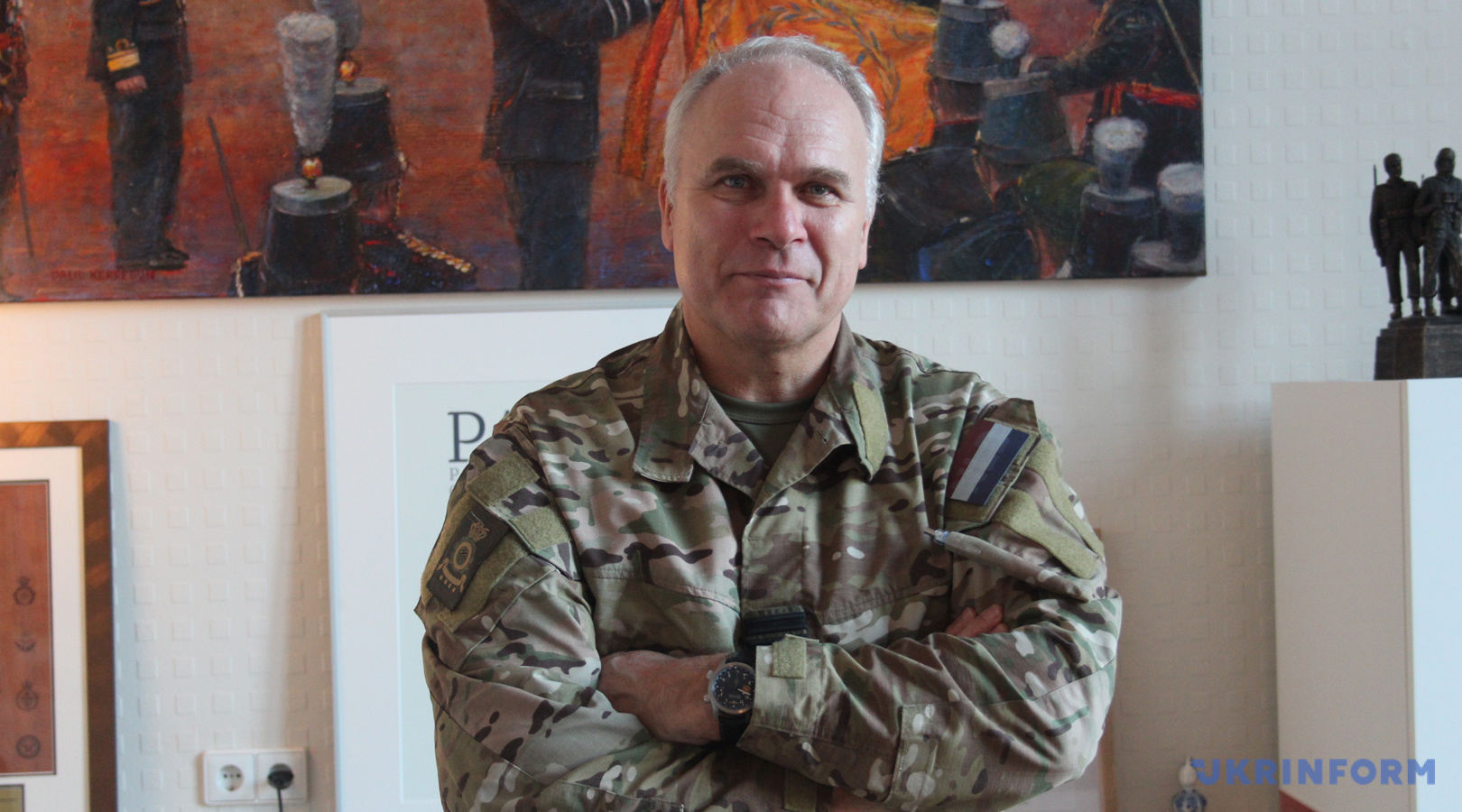
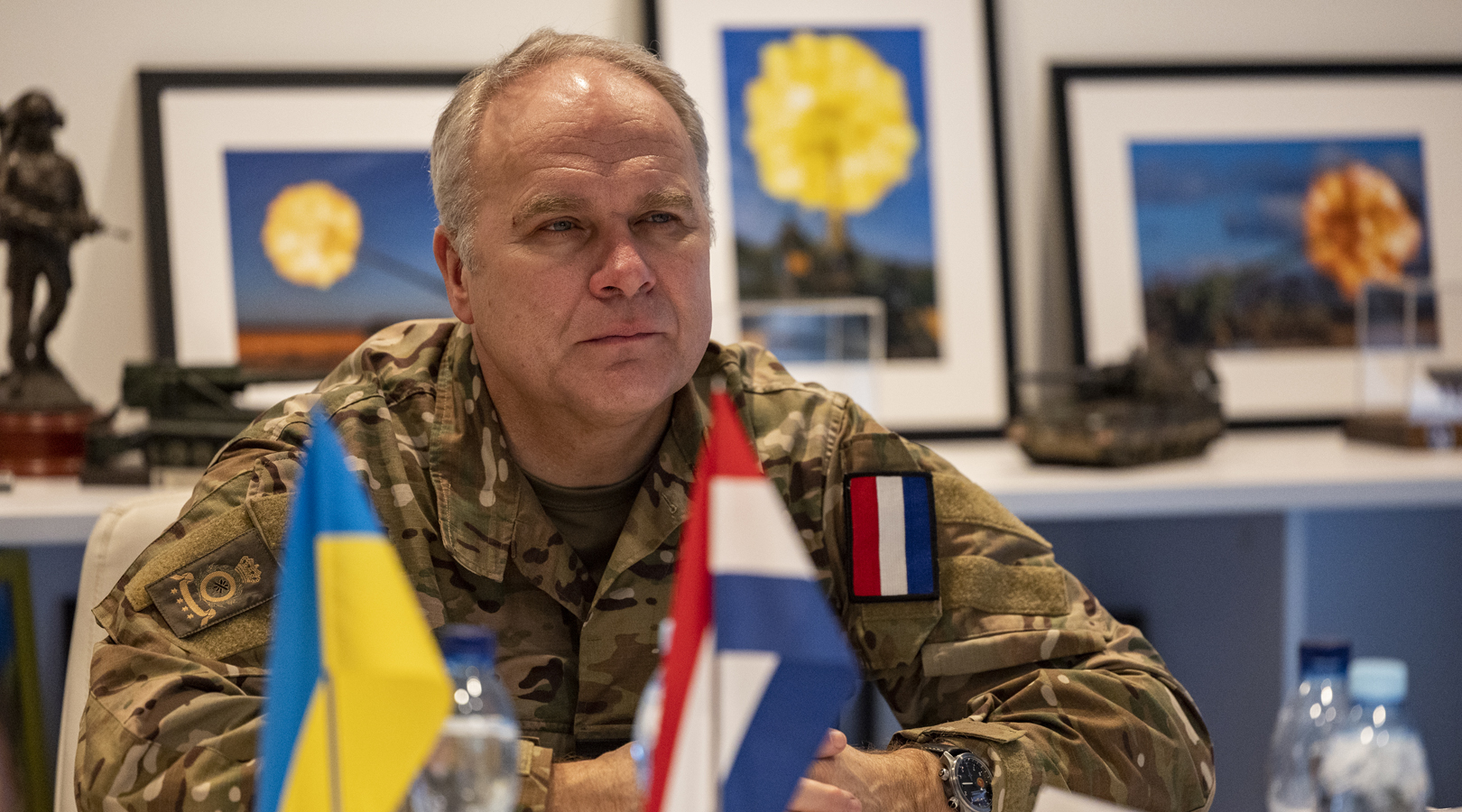
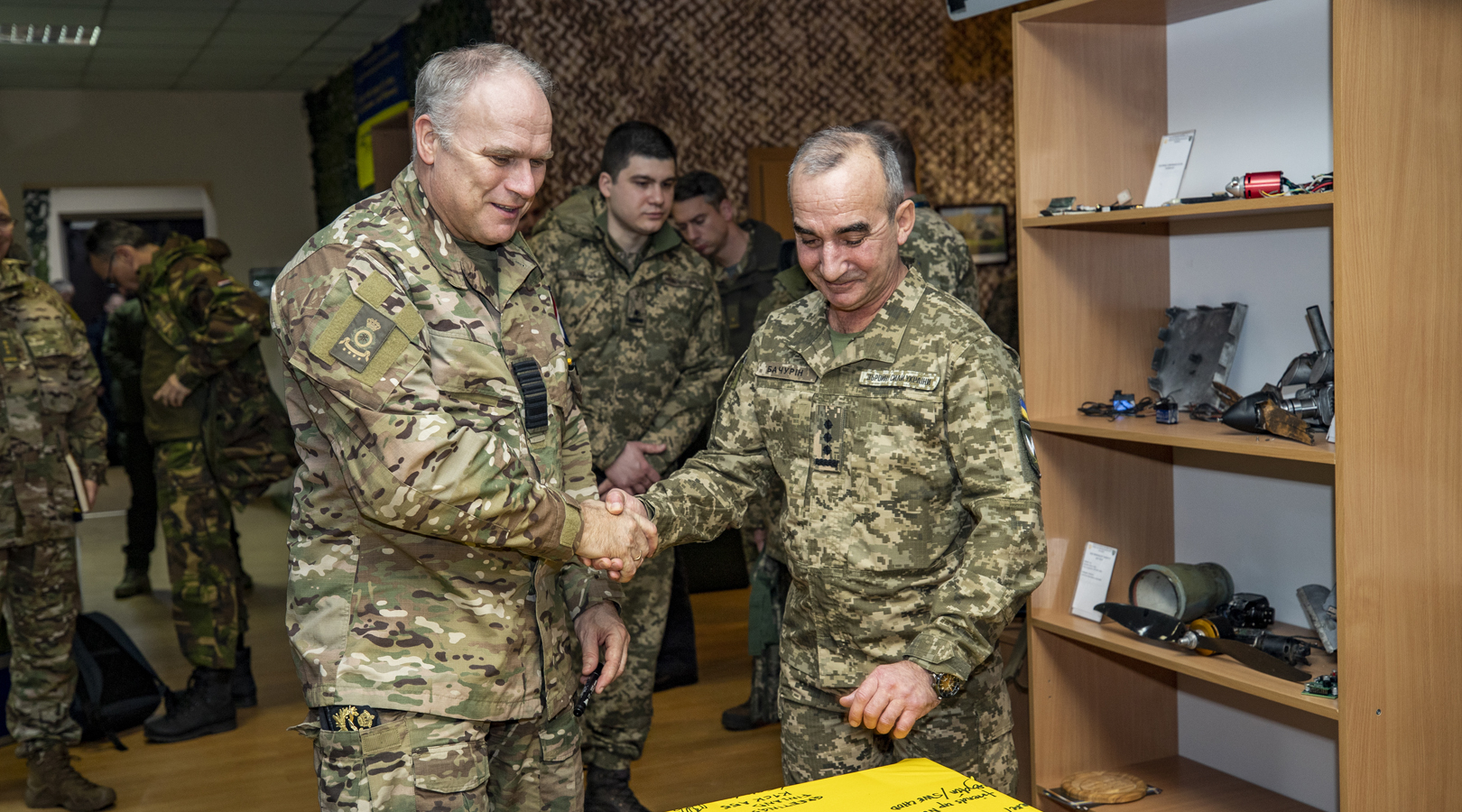
The interview with General Onno Eichelsheim, Chief of Defense of the Netherlands, took place at the Dutch Ministry of Defense headquarters in The Hague.
In a conversation with an Ukrinform correspondent, General Eichelsheim emphasized that the Netherlands continues to look for the most effective ways to support Ukraine, which, in turn, shares its battlefield experience and helps its partners adapt to the realities of modern warfare.
UKRAINE EXPERTLY DEVELOPS DRONE WARFARE TACTICS
- First of all, I would like to sincerely thank you for taking the time for this interview and for inviting me to the Ministry of Defense. At the beginning of October, together with the Dutch Minister of Defense, you visited Ukraine. Where did you go? What did you see? How would you assess the current situation in Ukraine from a military point of view?
- Yeah. It was, as always, quite an experience for me to be in Ukraine, because what you keep seeing is that the Ukrainian people remain very resilient and brave, still coping with numerous attacks from the Russian Federation. I’m always impressed by how courageously they act as a nation. When you’re there, you can see that life goes on, even under enormous pressure. I’ve always had great respect for the Ukrainian people — that’s always the first thing that strikes me.
This time, we went to Kyiv and Odesa, including their surrounding areas. When we arrived in Kyiv, much of the power and water supply was out due to drone attacks the night before. You can really see the scale of the Russian Federation’s attacks on cities and critical infrastructure.
We also visited some Ukrainian plants that produce drones and technologies to counter this threat. It was amazing — we were there around 09:30 in the evening, and the entire facility was full of people. Thousands of workers are ensuring that drones were ready on time and that the technology is constantly being improved. It’s incredible to see their motivation and the high-end technology they use. We went to one of these plants to see new developments and explore how we could help.
We also visited the Drone Line Initiative at the institution we support financially. We saw how they collect feedback from military units using the drones, learn from their experience, and immediately apply that knowledge to improve the next models. They also analyze data to identify which units perform best. For me, it’s impressive to see how this system works in Ukraine right now. It’s good to see that the funds we contribute and the initiatives we support are really making a difference on the front line.
We also visited the F-16 program. I had been there before, when the F-16s hadn’t yet arrived. It’s remarkable how quickly they’ve learned to operate them and how effectively they can now use these aircraft. I was very impressed by that. We discussed how we could further assist in supporting the F-16s in the coming months and years.
We also met with the President and the Minister of Defense to discuss broader areas of cooperation — strengthening air defense, drone capabilities, artillery, and long-range strike systems — and how we could continue to help Ukraine.
I met the Navy Chief to discuss training on mine countermeasure ships and other future capabilities for mine clearance in the Black Sea. We also witnessed how effective Ukraine has become at countering drone incursions. They can repel a large number of drones — not 100%, of course — but I’m impressed by how well Ukraine has developed its drone warfare tactics. We can learn a lot from that.
Every time I return, I feel that I’ve learned so much that can be applied back in the Netherlands. I come back full of energy and knowledge, but above all, I’m deeply impressed by how bravely Ukraine and its people continue to stand up to Russia.
- Thank you very much for such kind words. Before your visit to Ukraine, large-scale production of unmanned ground vehicles, drones, and military batteries officially started in Born, in the province of Limburg. Could you tell more about the production of drones and military systems for your own army and for Ukraine? What types of UAVs are being developed, what tasks are they designed to perform, and which systems are already being delivered to Ukraine?
- Exactly. There are already drones being sent to Ukraine from that facility. We have a couple of production lines there, based on the needs of Ukraine and certain types of drones — FPV drones, as well as one-way attack drones. The factory is built in a way that allows them to respond to what Ukraine needs. The first drones are already being shipped to Ukraine at this moment.
And about Born — the good thing about Born is that it has more capacity. We are working with Ukraine to see if we can set up more production lines there and also increase production of other capabilities that Ukraine needs, as well as what the Netherlands needs. Of course, it’s also beneficial for us to use that technology in our own armed forces.
- Ukraine and Denmark have agreed to jointly produce drones on Danish territory. Is similar joint production planned in the Netherlands?
- Yeah, well, in a way, it will be the same as in Denmark. We are currently in the phase of having an agreement with Ukraine and working on the details of that agreement. Then we will move into co-production. So the Dutch company will produce Ukrainian drones for Ukraine, using your knowledge and, most likely, also your technology for production. So yes, we will do something partly similar to what Denmark does, but we will go a bit further because we will do it in co-production with Ukrainian companies. And I think that’s even better for both sides. It’s good for the Netherlands and our armed forces, but it’s definitely good for Ukraine.
CONTINUOUS SUPPORT FOR UKRAINE WILL PREVENT RUSSIA FROM GAINING AN ADVANTAGE
- How would you describe the current actions of the Russian army in Ukraine, and what do you see as their main objectives?
- What Russia is doing is still fighting a war. They're not going to win. So, the first thing is: Ukraine will win this, as long as we continue to support Ukraine and stay united as we are. We will make sure that Ukraine wins this war and Russia loses it. Russia, however, is doing everything to affect the mindset of the Ukrainian population by hitting infrastructure—water, energy systems—especially with winter approaching. That’s still part of their strategy: to have an impact on the population. But, as I said at the beginning, the Ukrainian population is brave and resilient, and they will withstand it. I’m fully convinced of that.
The second part is the frontline. Yes, Russia makes progress, but it’s very, very slow because Ukraine is able to defend itself with drones and the technology they have. It will continuously be difficult for Russia. They have changed their tactics and are trying to work more effectively, but there is still a lot of death on the frontline. I don’t see Russia gaining a significant advantage in the coming period because Ukraine is able to withstand their attacks.
I think that by continuously supporting Ukraine with what they need, we can prevent Russia from making gains from their current attacks.
- As you already mentioned, Russia is attacking Ukrainian cities daily with drones and missiles, causing numerous casualties and leaving people without power and heat. What are your expectations for the course of the war during the winter? What strategies and weapons could help Ukraine most effectively? Which types of assistance, particularly military, are the top priorities for the Ukrainian Armed Forces?
- First of all, I think what is happening is that Ukraine is being helped to rebuild its energy infrastructure as soon as it is hit. There is a lot of work coming from European nations to do that. But to defend Ukraine, they need more air defense capabilities — specifically, a layered system. I know they need more air defense capabilities, particularly counter-UAS systems, but also Patriot systems and, for instance, Hawk systems. So, air defense is what I meant when I said they need support, and I think we are able to support them further.
We also have this support in the Critical Ukraine Requirements List (CURL) and Prioritized Ukraine Requirements List (PURL) projects.
The CURL project covers the overall capabilities that Ukraine needs, while PURL focuses on U.S. capabilities required for Ukraine, such as Patriot missiles, etc. The ways we can support Ukraine include air defense assets, artillery, and long-range fires. This allows them to strike deeper into Russian territory, ensuring that drone factories are disrupted and the Russian logistical infrastructure is hampered.
As a result, the frontlines will not be adequately supplied — for instance, some systems may not work well enough to get fuel to the front line. In this way, I am convinced that we can hamper the Russian offensive. So, it is both about defending and striking deep to make sure that the capabilities of the Russian Federation are not built up and therefore do not operate over Ukrainian skies.
PURL is therefore a means of meeting and fulfilling the Ukrainian demand for US systems and capacities within the critical areas as included in CURL (being Air Defense, (extended-range) artillery and the other areas I mentioned before).
- Are there signs that Russia is running out of its military resources?
- No, I don’t think so, not directly. They are operating under a war economy at the moment. They are still capable, together with their allies in Iran and North Korea, of supplying what they need at the front line. Unfortunately, that’s what we see, even though the economy is not doing very well. Putting more sanctions on them, ensuring that the shadow fleet is no longer operational, and making sure that gas and oil are not being sold to other nations — I think that will help keep the Russian Federation’s economy down. They will have less money to sustain their war economy. But I also think we have to be honest: they are still able to produce enough to maintain operations on the front line. Therefore, we need to continue supporting Ukraine, remain united in Europe, the United States, and other countries, as well as together with the UN in providing humanitarian assistance.
READINESS FOR WAR AND DETERRENCE OF RUSSIA — A GUARANTEE OF EUROPE’S SECURITY
- In your opinion, how many more years do you think Russia can continue the war?
- Like I said, if we are more active on sanctions and make sure that they work, we will be able to reduce the capabilities of the Russian Federation both economically and in terms of production. If raw materials and chips are not getting into Russia, we need to be more strongly aligned to make this happen. That will help us and it will help Ukraine. But if you ask me how long they can sustain this, unfortunately, I think at least for another year—yeah, at least.
- The mass use of drones has completely changed the nature of warfare. Which technologies are critical for victory in conflicts involving large-scale drone use? How can artificial intelligence contribute to this?
- I think that’s why I’m always so full of energy when I’m in Ukraine — because I see them using AI in their command and control systems, in their planning, and in the conduct of their operation, specifically with drones. It’s something we need to adopt as well. I use that knowledge with companies back in the Netherlands and with our own forces, applying AI specifically in the analysis and planning phases. That’s what we learn from Ukraine, and that’s what we need to continue doing.
AI will gradually play a bigger role, ensuring that the sensor-to-shooter loops are very fast, enabling faster planning, and ensuring that all the data from pictures and sensors is analyzed quickly enough to achieve the desired effect on the battlefield in real time. We are learning a lot from Ukraine, which makes sense because they are actively fighting a war, while we are safe and able to learn from their experience.
- Drones and missiles have no borders, and Putin’s ambitions have only grown since 2013. What threats do you perceive in the Netherlands and other NATO countries?
- War can come here, yeah. We always have to be prepared for war. I think if you prepare yourself for war, you will make sure that it's not going to happen. That's how I look at it as a Chief of Defense.
So, we have to prepare ourselves to deter the Russian Federation on all levels, including drone incursions or aircraft that fly into our airspace. We have to respond immediately, but we also have to build our forces in a way that Russia will not take that step.
I think, as we have said earlier, if the war in Ukraine comes to an end, it will take Russia 18 to 24 months to be ready to take any further steps. And we have to be prepared for that. We have to be sure that our forces are strong enough to deter Russia at that moment. That's how I look at it — to make sure that Europe stays safe. Ukraine is, for me, a part of the European continent, so it plays a very big role in making sure that Russia will not take this step again.
And the only way, like I said, to show Russia that we are ready is to deter them — to be strong and have armed forces that are ready to defend, including the Baltic states.
UKRAINE MUST BECOME STRONG FOR NEGOTIATIONS WITH RUSSIA
- Recently, Russia has been frequently sending drones into NATO countries. What do you think is their primary objective? Are they aiming to assess the Alliance's preparedness?
- I think you can look at it both ways. How I look at it: any drone that comes into our airspace is a violation of our airspace. So no matter where it comes from, it's a violation. We have to react to it.
Russia plays a hybrid war, and part of that is always to influence our population, like they do in Ukraine. We have to show that we don’t accept them being in our area. And I think that’s the message that everybody should understand, including Russia: we will defend ourselves against the drones.
It’s not easy because you need a layered system. You need sensors, you need radars, you need drone shooters, you need EW capabilities like Ukraine does. So it takes time to defend yourself against drones. We will not be completely, 100% effective in the near term. But wherever possible, we will counter drones to ensure that any opponent - whether it’s Russia or someone else - understands that this is not something they are allowed to do.
- In your opinion, what are the possible future scenarios for the development of the conflict?
- In the end, Russia will not win. So, we have to support Ukraine so they can be as strong as possible and force Russia to the negotiation table. We will have negotiations at some point in time. From my perspective, those negotiations should be conducted by a strong Ukraine, supported by allies, supported by the coalition of the willing, and supported by Europe and the U.S. From that position, they can conduct very strong negotiations and force Russia to come to an end and to stop this war under the terms that Ukraine deems wise.
Our efforts should focus on making Ukraine as strong as possible. I think that will be the path to follow. Ukraine is not there yet, so we have to continue supporting them. We must make sure to show Russia that we will not back down and that Ukraine will be the one to win this.
- Is it possible that this could become a frozen conflict, and why would that be dangerous for all of us?
- I think when this war becomes a frozen conflict, it means that every moment Russia can start its hostilities again. And if that happenes Ukraine will continue to fight back, and we will continuously support them.
So the situation of a frozen conflict that can always escalate, I think that is something we have to avoid.
Having a frozen conflict will mean that Ukraine cannot be economically strong. Ukraine has a population that is smart, innovative, and has a lot of potential to be a very strong partner of the European Union and NATO, but a frozen conflict prevents that development. If you have a frozen conflict, progress is not fast enough, in my opinion.
So I think that’s the risk of having a frozen conflict. That’s why we have to do everything to make Ukraine as strong as possible and bring them to the negotiation table with Russia.
Iryna Drabok, The Hague
Photos provided by Iryna Drabok and the Netherlands Ministry of Defense