‘Gray’ logistics schemes allow Russia to circumvent sanctions, Vlasiuk says commenting on Jenty investigation
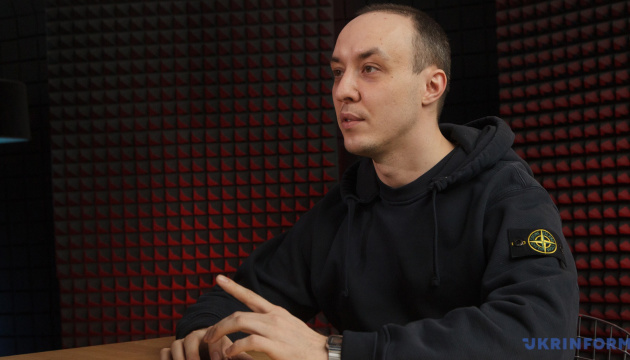
This was stated by Ukraine’s Presidential Commissioner for Sanctions Policy Vladyslav Vlasiuk in a comment to Ukrinform.
“The recent joint investigation by European journalists exposed a large-scale scheme in which the Belarusian logistics holding Jenty adapted to EU sanctions pressure. The investigation was triggered by a fatal road accident in the outskirts of Stockholm involving a truck branded with Jenty. At the time of the crash, the vehicle was transporting medical products manufactured at a Swedish pharmaceutical giant AstraZeneca facility to Russia,” he said.
According to Vlasiuk, pharmaceutical trade itself is not subject to restrictions, as the EU does not ban the export of medicines to Belarus or Russia. However, Russian and Belarusian transport companies are not allowed to carry such goods within EU territory.
He noted that these sanctions were introduced in April 2022 in response to Russia’s full-scale invasion of Ukraine and Belarus’s involvement. Later, the restrictions were tightened, banning EU operations even for companies with more than 25% Russian or Belarusian ownership.
“To circumvent these bans, Jenty created a hidden network: formally, the orders for AstraZeneca were carried out by a Polish subcontractor DSPL (registered to a Georgian citizen), while the trailer had Kazakh registration. However, journalists proved that the entire infrastructure is fully controlled by Jenty’s beneficiaries, including the family of Russian-Belarusian businessman Vasily Smetanin. The use of such ‘gray’ logistics schemes under the guise of humanitarian cargo is deeply concerning,” he emphasized.
Vlasiuk stressed that the case once again shows sanctions enforcement is not only about specific goods or companies but also about logistics chains.
“The same transport networks can be used not only for delivering medicines but also for goods critical to Russia’s military-industrial complex, including microelectronics,” he said.
He added that any signs of sanctions evasion must be thoroughly investigated, and Ukraine expects the Swedish authorities’ official findings while valuing cooperation with partners in identifying and stopping sanctions circumvention.
As reported by Ukrinform, the European Commission on Tuesday proposed a new, 21st package of sanctions against the Russian Federation, targeting, among other areas, the energy sector, financial services, cryptocurrency trading, and, for the first time, the fishing industry.